Tag Archives: cobalt nodules

Mining the Seabed: By hook or by crook

The Trump administration is reportedly considering an executive order that would accelerate deep-sea mining in international waters by allowing companies to bypass a United Nations-backed review process. The order would affirm the United States’ right to extract critical minerals from the ocean floor, enabling companies to seek permits directly from the National Oceanic and Atmospheric Administration (NOAA).

The International Seabed Authority (ISA), established in 1982 under the UN Convention on the Law of the Sea (UNCLOS)—which the U.S. has not ratified—has spent years developing regulations for deep-sea mining.  In 2021, the island nation of Nauru sponsored Canada’s The Metals Company (TMC) to begin deep-sea mining, forcing the ISA to draft rules before any company could start extracting minerals in international waters. The 36-member ISA council has since met repeatedly to finalize regulations. In March 2025, officials gathered in Jamaica to review hundreds of proposed amendments to a 256-page draft mining code, but the session ended without a resolution.

Frustrated by the ISA’s slow progress, TMC in March 2025 formally urged the Trump administration to issue deep-sea mining permits, arguing that “commercial industry is not welcome at the ISA.” “The Authority is being influenced by a faction of States allied with environmental NGOs who see the deep-sea mining industry as their ‘last green trophy,’” TMC chairman and chief executive, Gerard Barron. “They have worked tirelessly to continuously delay the adoption of the Exploitation Regulations with the explicit intent of killing commercial industry.”

Governments interested in developing deep-sea mining within their territorial waters — typically 200 nautical miles from shore — include the Cook Islands, Norway and Japan.

Proponents of seabed mining contend that its environmental impact is lower than land-based extraction. Critics warn that the long-term consequences remain uncertain and advocate for further research before large-scale operations begin.

Excerpt from Cecilia Jamasmie, Trump eyes executive order to fast-track deep-sea mining, Mining.com, Apr. 1, 2025
The Communist Chinese Party and the Protection of the Ocean Seabed

A disagreement between deep-sea miner The Metals Company (TMC) and researchers over a new scientific study is threatening efforts to mine the ocean bed for metals critical to supporting the green-energy transition. A study in the journal Nature Geoscience suggested that deep-sea nodules, which contain metals such as nickel critical for electric-vehicle batteries, produce oxygen despite the absence of light at the bottom of the ocean. The researchers making the claim called for further studies into how oxygen is produced on the ocean floor while environmental groups called for a halt to disrupting the seafloor and mining of nodules. TMC and some scientists are questioning the claim and accusing the lead authors of the study of plagiarism… The study comes at a time of troubled waters for the deep-sea mining industry, with political uncertainty and TMC struggling for new sources of investment.

In the U.S., the outlook for the industry has improved recently. On the corporate side, both Tesla and General Motors shareholders have said they wouldn’t back a moratorium on deep-sea mining. Ocean-floor minerals are seen as key to making electric-vehicle batteries because of the presence of cobalt, nickel and manganese in nodules. In Washington in September 2024, a House hearing was held on the subject of deep-sea and critical minerals, as many see the metals found on the ocean floor as important for defense purposes. In a meeting co-chaired by Democrat Kathy Castor of Florida and Republican Robert Wittman of Virginia as part of the Select Committee on the Chinese Communist Party, Barron made the case for deep-sea nodules to become part of the U.S.’s critical mineral supply chain.

Meanwhile, industry leaders have gathered in the Cook Islands in September 2024 where a conference on deep-sea mining is taking place. The Pacific nation is home to thousands of tons of nodules, which are also rich in copper.

Excerpts from Yusuf Khan, Deep-Sea Mining Hits Crunch Point Amid Academic Battle Over Ocean-Floor Resources, WSJ, Sept 24, 2024

Saving the Climate by Fouling the Oceans

The Norwegian government in June 2023 opened the door for deep-sea mining in its waters, despite opposition from environmental groups and a growing list of nation states arguing to ban the practice.  The government said it was proposing parts of the Norwegian continental shelf be opened for deep sea mining and other commercial seabed mineral activities…Companies and countries are scouring the planet to find and secure additional sources of metals and minerals critical for the energy transition, including cobalt, manganese and nickel.  To date deep-sea mining has focused on the extraction of seabed nodules—tennis-ball sized pieces of rock which contain manganese, cobalt and nickel, all of which are used in electric-vehicle batteries

So far much of the attention has centered on the Clarion Clipperton Zone in the Pacific Ocean: An area of water between Mexico and Hawaii that contains millions of tons of nodules.  In Norway however, the focus will be on seabed crusts on the country’s continental shelf. The target crusts contain copper, zinc and cobalt, as well as some rare-earth elements, according to the Norwegian Petroleum Directorate…

Countries including France and Germany have called for moratoriums on deep-sea mining, while in May 2023 a report found that when researching the pacific seabed, 90% of the more than 5,000 marine creatures found living in the Clarion Clipperton Zone were new species. Companies including Maersk and Lockheed Martin have also been divesting their deep-sea mining investments. 

Excerpts from Yusuf Khan, Norway Opens Door for Deep-Sea Mining of Copper and Other Critical Materials, WSJ, June 20, 2023

The Pitfalls of Green Energy Revolution

Video footage from a deep-sea mining test, showing sediment discharging into the ocean, has raised fresh questions about the largely untested nature of the industry, and the possible harms it could do to ecosystems as companies push to begin full-scale exploration of the ocean floor as early as this year. The Metals Company (TMC), a Canadian mining firm that is one of the leading industry players, spent September to November of 2022 testing its underwater extraction vehicle in the Clarion Clipperton Fracture Zone, a section of the Pacific Ocean between Mexico and Hawaii.

But a group of scientists hired by the company to monitor its operations, concerned by what they saw, posted a video of what they said was a flawed process that accidentally released sediment into the ocean. The scientists also said the company fell short in its environmental monitoring strategy, according to documents viewed by the Guardian newspaper.

As the push for deep-sea mining intensifies, experts are increasingly concerned that companies will kick up clouds of sediment, which could be laden with toxic heavy metals that may harm marine life. At least 700 scientists – along with France, Germany and Chile – are calling for a moratorium on deep-sea mining.

In a post to its website, TMC acknowledged the incident, but framed the discharge from its cyclone separator as a “minor event” in which “a small amount” of sediment and nodule fragments spilled into the ocean. The company said it fixed the issue in its equipment to prevent further overflows and concluded that the incident “did not have the potential to cause serious harm”.

Experts and critics caution that the incident highlights the relative uncertainties surrounding deep-sea mining. Companies are scrambling to scavenge the ocean floor for valuable metals, used in electric vehicle batteries and a host of other technologies such as green energy production, amid a global fight for stable supply.

Excerpts from Leaked video footage of ocean pollution shines light on deep-sea mining, Guardian, Feb. 6, 2022

The Plight of Electric Cars: Cobalt Batteries and Mining

About 60% of the world’s cobalt is found in Congo, scattered across the copperbelt that stretches east into Zambia. The people of Kawama, Gongo grumble that too much land has been sold to mining firms. “We used to dig freely,” says Gerard Kaumba, a miner. “But now the government has sold all the hills.” There are still some sites where miners can turn up and dig, but they have to sell to whoever owns the concession. A sweltering day’s work might earn you $7. Many people have found they can make more at night, pilfering cobalt from industrial mines.

Glencore, a commodities giant with two mines in Congo, reckons that some 2,000 people sneak into its pits every day. Other companies have even more robbers to contend with. In 2019 Congolese soldiers chased thieves out of a mine owned by China Molybdenum where, it was reckoned, 10,000-odd people were then illegally digging. Sneaking into Glencore’s mines is hardest, says a Kawaman, as its guards do not collude with thieves—and often chase them away with dogs.

Congo’s industrial miners are not all angels.  Gécamines, the state-owned company, has enriched crooked politicians for half a century. Global Witness, a watchdog based in London, says Congo’s treasury lost $750m of mining revenues to graft between 2013 and 2015. ENRC, which has mines in Congo, has faced allegations of corruption and an investigation by Britain’s Serious Fraud Office (it denies wrongdoing). So has Glencore, which has worked with Dan Gertler, an Israeli billionaire. Mr Gertler, a close friend of a former Congolese president, Joseph Kabila, is under American sanctions… 

While big firms rake in millions, many of the little guys languish in jail. The prison in Kolwezi, the largest city in the mining region, is crammed with men caught stealing copper and cobalt. More than a hundred inmates occupy one stinking room, sitting in rows on the ground, each wedged between another’s legs. Prissoners are allowed to use the toilet only once a day, so they often urinate in their clothes

Excerpt from Cobalt blues: In Congo the little guys are jailed for stealing minerals. Economist, Oct. 17, 2020

Mining the Ocean: the Fate of Sea Pangolin

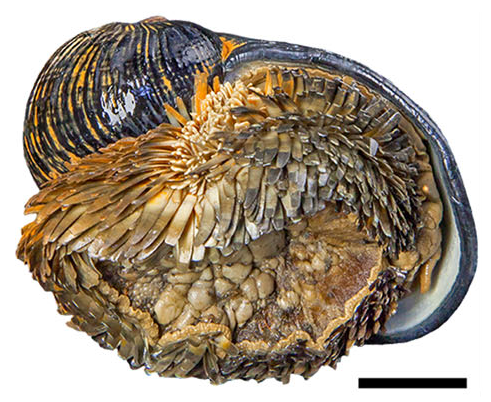
A snail that lives near hydrothermal vents on the ocean floor east of Madagascar has become the first deep-sea animal to be declared endangered because of the threat of mining.  The International Union for Conservation of Nature (IUCN) added the scaly-foot snail (Chrysomallon squamiferum) to its Red List of endangered species on 18 July, 2019 — amid a rush of companies applying for exploratory mining licenses…. The scaly-foot snail is found at only three hydrothermal vents in the Indian Ocean.  Two of those three vents are currently under mining exploration licences,…Even one exploratory mining foray into this habitat could destroy a population of these snails by damaging the vents or smothering the animals under clouds of sediment..

Full-scale mining of the deep seabed can’t begin in international waters until the International Seabed Authority (ISA) — a United Nations agency tasked with regulating sea-bed mining — finalizes a code of conduct, which it hopes to do by 2020….The biggest challenge to determining whether the scaly-foot snail warranted inclusion on the Red List was figuring out how to assess the extinction risk for animals that live in one of the weirdest habitats on Earth…

When the IUCN considers whether to include an organism on the Red List, researchers examine several factors that could contribute to its extinction. They include the size of a species’ range and how fragmented its habitat is…The IUCN settled on two criteria to assess the extinction risk for deep-sea species: the number of vents where they’re found, and the threat of mining.   In addition to the scaly-foot snail, the researchers are assessing at least 14 more hydrothermal vent species for possible inclusion on the Red List.

Excerpts from Ocean Snail is First Animal to be Officially Endangered by Deep-Sea Mining, Nature, July 22, 2019

On Sea Pangolins see YouTube video