Nigeria, Africa’s most populous country desperately needs the money an oil boom could bring. Some 40% of its people live on less than the equivalent of $1.90 a day. The woeful economy has contributed to the violence that afflicts much of the country. In the first half of this year, nearly 6,000 people were killed by jihadists, kidnappers, bandits or the army.
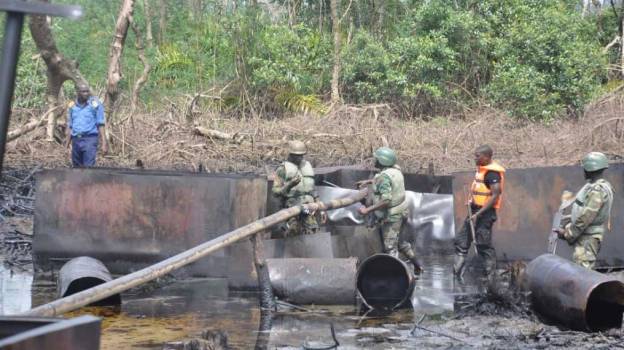
One of the reasons Nigeria’s public finances benefit so little from high oil prices is that production itself has slumped to 1.1m barrels per day, the lowest in decades. Output has been dipping since 2005. Output is falling partly because the Nigerian National Petroleum Corporation (NNPC) is so short of cash…And a lot of the oil it pumps never makes it into official exports because it is stolen. Watchdogs reckon that 5-20% of Nigeria’s oil is stolen…The spate of vandalism at one point prompted the NNPC to shut down its entire network of pipelines, he said.
One way to steal is to understate how much oil has been loaded in legitimate shipments. Another is to break into pipelines and siphon oil off, then cook it up in bush refineries before selling it. Five years ago the Stakeholder Democracy Network, a watchdog in the Niger Delta, carried out a survey that found more than a hundred such refineries in just two of Nigeria’s nine oil-producing states. Lacking other ways to make a good living, hundreds of thousands of young people are involved in illegal refining, says Ledum Mitee, a local leader from Ogoniland, a region in the Delta.
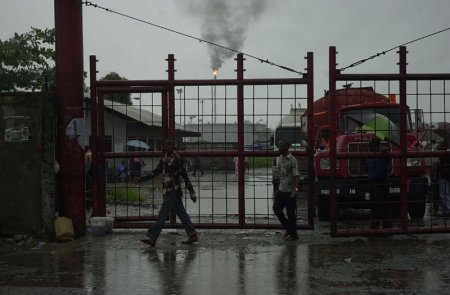
Plenty of stolen crude goes straight into the international market. Small boats glide along the Delta’s canals, filling up from illegally tapped pipelines. They deliver it to offshore tankers or floating oil platforms. Sometimes the stolen crude is mixed with the legal variety, then sold to unknowing buyers. Much of it, however, is bought by traders who pretend not to know it is stolen, or simply do not care if it is or not. “
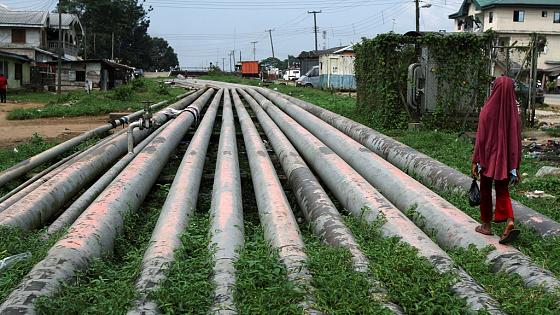
Tapping into the pipes for large volumes, heated to keep the crude flowing, requires real expertise. It also requires complicity from some of the officials running the pipelines and from the security forces supposedly guarding them…The NNPC itself is “the north star in Nigeria’s kleptocratic constellation”, says Matthew Page of Chatham House, a think-tank in London.
Excepts from How oil-rich Nigeria failed to profit from an oil boom, Economist, Sept. 17, 2022
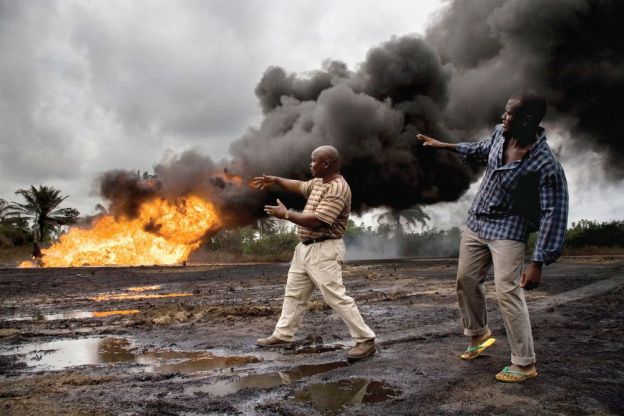
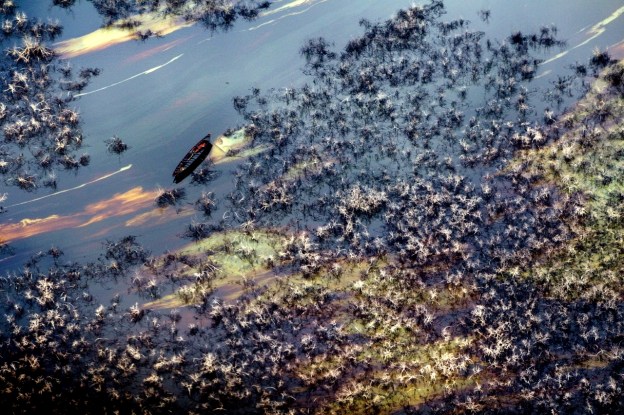
 Nigeria has long ignited interest from oil firms, but it can be a dangerously combustible environment when it comes to the risk of corruption. Two firms caught up in scandals are Royal Dutch Shell and Eni, Italy’s state-backed energy group.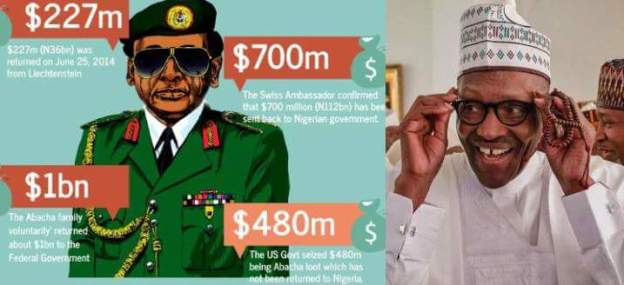
 Nigeria and Switzerland signed a memorandum of understanding on March 26, 2018 to pave the way for the return of illegally acquired assets…Switzerland said in December 2017 that it would return to Nigeria around $321 million in assets seized from the family of former military ruler Sani Abacha via a deal signed with the World Bank…[T]he memorandum of understanding was ratified between Nigeria, Switzerland and the International Development Association, (IDA), the World Bank’s fund for the world’s poorest countries.
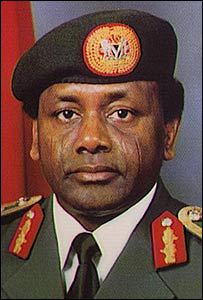
 Authorities in Switzerland are in talks to arrange the return to Nigeria of $300 million confiscated from the family of its former military ruler, Sani Abacha, Nigeria’s foreign minister said. The corruption watchdog Transparency International has accused Abacha of stealing up to $5 billion of public money during his five years running the oil-rich nation, from 1993 until his death in 1998. Foreign Minister Geoffrey Onyeama said $700 million had already been repatriated from Switzerland, adding that he met Swiss representatives last week for further talks. “They have also now recovered, in the same context, another $300 million of which there is ongoing discussion to have that repatriated as well,” he told journalists on Monday.
 Law-In-Action