Tag Archives: crypto-currency

The Trump-China Hidden Romance: the companies behind USD1

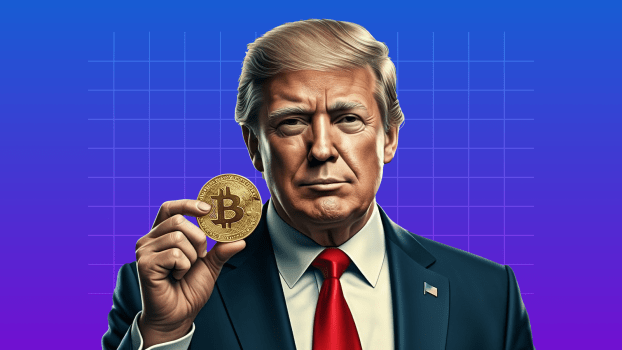
The Trump family’s crypto venture has generated more wealth since the election—some $4.5 billion—than any other part of the president’s business empire.

A major reason for the success is a partnership with an under-the-radar trading platform quietly administered by Binance, the world’s largest crypto exchange, whose founder is seeking a pardon from President Trump…The online trading platform, PancakeSwap, serves as an incubator of sorts, drumming up interest among traders to use coins issued by the Trump family’s main crypto company, World Liberty Financial.  The more World Liberty’s flagship coin, USD1, is used, the greater demand to increase its circulation, and the greater the profit for World Liberty and its owners, including the Trump family. 

Crypto trading platforms, like PancakeSwap, often offer rewards or prizes to drum up interest in new coins, similar to the way brokerages offer free trades or casinos give first-time customers free chips…

Binance’s majority owner and founder, Changpeng Zhao, spent four months in jail in the U.S. last year after Binance agreed to pay a $4.3 billion fine for becoming a global money-laundering hub for criminals, terrorists and sanctions evaders. His company has deepened its relationship with World Liberty at the same time Zhao has ramped up efforts to secure a pardon from Trump…Zhao—considered the richest person in the crypto industry and worth over $70 billion.

USD1 got its first big break when Binance accepted a $2 billion investment from an outside investor paid in the World Liberty coin. The deal caused the amount of the cryptocurrency in circulation to erupt 15-fold and overnight become one of the world’s largest.  USD1 is what is known as a stablecoin, a privately invented digital currency that is backed 1:1 with U.S. dollars. World Liberty invests the money backing the coin in government bonds and money-market funds, without paying interest to users of the coin. With more than $2 billion of USD1 in circulation, it can earn around $80 million a year based on current interest rates. Binance has been holding the $2 billion in USD1 on its platform…By not cashing in the stablecoin, this ensures that World Liberty continues to earn money from investing the dollars that back them.

World Liberty’s relationship with PancakeSwap, whose website was registered in Shanghai, and Binance is one of several in which entities and individuals with strong ties to China have supported the Trump family crypto business. One of World Liberty’s largest investors is Justin Sun, the Hong Kong-based billionaire…This comes even as the White House pushes a trade war against China and seeks to curtail U.S. corporations’ ties to the country over national-security fears…

China is Binance’s largest market by trading volume. It has been a main base for its software developers, with hundreds of coders…Binance has long maintained that it isn’t a Chinese company, saying it left Shanghai shortly after its 2017 launch. Zhao… has said he is no longer a Chinese citizen, and holds Canadian and United Arab Emirates citizenship. The company, which has employees around the world, doesn’t have an official headquarters…

PancakeSwap doesn’t disclose its ownership…According to former Binance employees, Binance staff created PancakeSwap in-house in 2020 because the exchange wanted to establish a foothold in crypto’s so-called decentralized finance craze. The platform has remained under Binance’s supervision…

Excerpt from Angus Berwick et al., The Recipe Behind the Trump Family’s Crypto Riches: PancakeSwap, WSJ, Aug. 12, 2025

North Korea: Hacking Superpower — Crypto Billionaire

At 11:49 a.m. on July 18, 2024, North Korean hackers pounced on a major cryptocurrency exchange handling hundreds of millions of dollars. The hackers slipped into the exchange’s virtual vault, took control and then started pilfering cryptocurrency tokens. Within a little more than an hour, the hackers had disappeared—and with them, more than $200 million for the Kim Jong Un regime. 

The shocking theft at WazirX, India’s largest cryptocurrency exchange, along with several other major recent heists, has made it clear: North Korea is now the world’s most dangerous crypto thief. It has swiped more than $6 billion in cryptocurrency over the past decade—a sum so large that no one else compares. The country’s hackers are both patient and brazen, according to investigators. To get into companies’ computers, they comb through employees’ Facebook and Instagram pages and invent tailor-made stories to trick them into clicking on links with viruses. Some North Korean hackers have even become employees themselves, fooling U.S. companies into hiring them as remote IT workers and gaining access to their networks.

After grabbing their bounty, North Korean hackers are masters at escaping. At WazirX, investigators believe they used algorithms to spread funds through global crypto networks faster than any human could, making it almost impossible for authorities to catch up. Once the crypto is dispersed, North Koreans often lie low until investigators lose interest and move on, waiting months or years to convert their haul into traditional money that can be spent….Pyongyang’s crowning achievement came in February with a $1.5 billion raid of Bybit, one of the world’s biggest cryptocurrency exchanges, in the largest-ever such heist. That followed several hackings in 2024, when North Korea stole more than $6 out of every $10 lost by the cryptocurrency industry, according to Chainalysis, which tracks crypto theft.

North Korea’s success reflects the major resources dedicated to the task. The regime commands more than 8,000 hackers as though they were in a military unit, with the country’s brightest minds. State support means its hackers can wait months or years to exploit a single slip in a company’s digital security. Pyongyang’s desperation for cash, and its lack of concern for diplomatic blowback, have fueled its drive to be better than anyone else. 

Excerpts from How North Korea Cheated Its Way to Crypto Billions, WSJ, Apr. 3, 2025

World Reeling, Trump Mining

The two oldest sons of President Trump are investing in a bitcoin-mining company, adding to the Trump family’s expanding portfolio of cryptocurrency businesses.   Eric Trump and Donald Trump Jr.’s American Data Centers will merge with and take a 20% stake in American Bitcoin, a mining operation majority-owned by Hut. Together, they aim to create the world’s largest miner of the digital currency, with designs on building its own “bitcoin reserve.”

In a matter of months, the Trumps started a decentralized-finance, or DeFi, project called World Liberty Financial, said their social-media company would invest in bitcoin and other digital assets, launched meme coins to capitalize on the popularity of the president and his wife and announced plans to issue a World Liberty dollar-backed stablecoin. And in his return to the White House, President Trump has said he aims to make the U.S. the “crypto capital of the world.” …As part of the deal, Hut 8 will shift nearly 61,000 of its specialized bitcoin-mining machines to American Bitcoin in exchange for an 80% ownership in the new entity. The companies said no cash changed hands in the deal…

The business of mining new bitcoin has grown more challenging as new companies have sprung up to capitalize on rising prices and the number of unmined tokens has dwindled. Bitcoin’s pseudonymous creator, Satoshi Nakamoto, capped the digital currency’s supply at 21 million, and more than 90% of those tokens have already been released. Critics also raised concerns about the environmental impact of bitcoin mining, pointing to the massive amounts of energy required to run mining operations.

Excerpt from The Trump Family Advances Its All-Out Crypto Blitz, This Time With Bitcoin Mining, WSJ, Mar. 31, 2025

The Magic of Tether: Why the United States Tolerates Tether Land?

A giant unregulated currency is undermining America’s fight against arms dealers, sanctions busters and scammers. Almost as much money flowed through its network in 2024 as through Visa cards. And it has recently minted more profit than BlackRock, with a tiny fraction of the workforce. Its name: tether. The cryptocurrency has grown into an important cog in the global financial system, with as much as $190 billion changing hands daily. In essence, tether is a digital U.S. dollar—though one privately controlled in the British Virgin Islands by a secretive crew of owners, with its activities largely hidden from governments.  Known as a stablecoin for its 1:1 peg to the dollar, tether gained early use among crypto aficionados. But it has spread deep into the financial underworld, enabling a parallel economy that operates beyond the reach of U.S. law enforcement. Wherever the U.S. government has restricted access to the dollar financial system—Iran, Venezuela, Russia—tether thrives as a sort of incognito dollar used to move money across borders.

Russian oligarchs and weapons dealers shuttle tether abroad to buy property and pay suppliers for sanctioned goods. Venezuela’s sanctioned state oil firm takes payment in tether for cargoes. Drug cartels, fraud rings and terrorist groups such as Hamas use it to launder income. Yet in dysfunctional economies such as Argentina and Turkey, beset by hyperinflation and a shortage of hard currency, tether is also a lifeline for people who use it for quotidian payments and as a way to protect their savings.

Tether is arguably the first successful real-world product to emerge from the cryptocurrency revolution that began over a decade ago. It has made its owners immensely rich. Tether has $120 billion in assets, mostly risk-free U.S. Treasury bills, along with positions in bitcoin and gold. Last year it generated $6.2 billion in profit, out-earning BlackRock, the world’s largest asset manager, by $700 million.

The company behind tether, Tether Holdings, issues the virtual coins to a select group of direct customers, mostly trading firms, who wire real-world dollars in exchange. Tether uses those dollars to purchase assets, mostly U.S. Treasurys, that back the coin’s value. Once in the wider market, tether can be traded for other tokens or traditional currencies through exchanges and local brokerages. In Iran, for example, a crypto exchange called TetherLand allows Iranians to swap rials into tether. Tether vets the identities of its direct customers, but much of its vast secondary market goes unpoliced. The tokens can be pinged near-instantaneously along chains of digital wallets to obfuscate the source. A United Nations report in January 2024 said tether was “a preferred choice” for Southeast Asian money launderers. 

The company says it can track every transaction on public blockchain ledgers and can seize and destroy tether held in any wallet. But freezing wallets is a game of Whac-A-Mole. Between 2018 and this June, Tether blacklisted 2,713 wallets on its two most popular blockchains that had received a total of about $153 billion, according to crypto data provider ChainArgos. Of that massive sum, Tether could only freeze $1.4 billion because the rest of the funds had already been sent on.

Excerpts from Angus Berwick & Ben Foldy, The Shadow Dollar That’s Fueling the Financial Underworld, WSJ, Sept. 10, 2024

How Binance Hijacked the Central Bank of Nigeria

Tigran Gambaryan, Binance’s head of financial-crime compliance, flew to Nigeria’s capital to solve a problem: The government had blamed the world’s largest crypto exchange for crashing the currency… He hasn’t come back. Nigerian authorities detained Gambaryan and a colleague, Nadeem Anjarwalla, a U.K. and Kenyan national and Binance’s regional manager for Africa, according to the men’s families. The Binance employees, who are being held in a guarded house, haven’t been charged with any crimes. The government, which invited them to Nigeria for meetings, hasn’t publicly discussed the detentions. 

Nigeria, Africa’s largest economy with a population of more than 220 million, has faced many currency crises before. This is the first time that crypto has played a starring role.
Nigerians flocked to cryptocurrencies in recent years to shelter their savings from a soaring inflation rate, which hit nearly 30% in January, and a plunging currency, one of the worst-performing in the world this year. Two-thirds of the population lives in poverty.  The country has the second-highest adoption of crypto in the world, after India, according to an index compiled by Chainalysis, a data provider. Nigerians received about $60 billion worth of crypto transactions in the 12 months through June 2023, according to Chainalysis. 

Because the government rationed who could exchange the local currency for the dollar and at what exchange rate, many sought refuge in digital currencies pegged to the U.S. dollar, known as stablecoins.  The stablecoin trade in essence became a black market, displaying an unofficial exchange rate between the local currency, the naira, and the dollar that was much weaker than the government’s rates. Binance, the most popular exchange, became the go-to place to check that black-market rate, according to currency traders. Bayo Onanuga, a special adviser to the Nigerian president, accused Binance of setting the exchange rate for Nigeria and hijacking the role of the central bank…A persistent gap between what the government thought the currency was worth, and the rate on Binance’s website, proved intolerable.  Onanuga told The Wall Street Journal that Binance was cooperating with authorities and compensation to Nigeria was being discussed.

Binance said it would stop any services involving the naira, dealing a blow to its efforts to rebuild its business in fast-growing emerging markets. The Nigerian Communications Commission ordered telecommunications companies to restrict access to the websites of Binance and other crypto platforms.  Olayemi Cardoso, the head of Nigeria’s central bank, suggested that crypto platforms were being used to manipulate the market. In the case of Binance, he said, $26 billion had passed through its platform in Nigeria in 2023 from sources and users whom the central bank couldn’t adequately identify. He didn’t say where the figure came from…

Founded in 2017 in China, Binance has a history of drawing the ire of governments. It has long operated without a headquarters and under the radar of regulators, offering unlicensed trading through its global website. In November 2023, Binance founder Changpeng Zhao stepped down as chief executive and pleaded guilty to violating U.S. anti-money-laundering requirements. The company agreed to pay $4.3 billion in fines, the largest ever levied on a crypto firm. Zhao is currently awaiting sentencing in the U.S. 

The use of cryptocurrencies tied to the U.S. dollar has ballooned in countries across the developing world. In economies under financial stress where actual dollars are scarce, such as Turkey, Argentina and Russia, locals have turned to crypto exchanges and the dollar-like digital currencies they offer as an alternative.

Excerpts from Patricia Kowsmann et al., Crypto Gets Blamed for a Real-Life Currency Crisis, WSJ, Mar. 12, 2024

Chinese Gangs, Crypto Scams and the Deaths of 100,000 Americans

Chinese crime syndicates are using cryptocurrencies to launder billions of dollars, including money raised from helping supply drugs to the U.S. or scamming American victims…They are using crypto to launder the profits of drug dealing and illegal gambling, and have made huge amounts from investment scams that promise easy returns in the cryptocurrency markets. Crypto addresses linked to a group of suspected chemical traders based in China have received more than $37.8 million worth of assets since 2018 in exchange for shipping a key ingredient of fentanyl, the research firm Chainalysis said in a report in 2023. These shipments are often sent to Central America and Mexico, where drug cartels use them to manufacture the drug, which is then shipped to the U.S.

In October 2024, the U.S.’s Office of Foreign Assets Control sanctioned a network of individuals and companies based in China over the manufacturing and distribution of ingredients used in fentanyl and other drugs. Some of those individuals held cryptocurrency wallets to send and receive funds, the Treasury Department said. Fentanyl use by Americans has become a major public health issue, contributing to more than 100,000 deaths a year, according to the latest figures from the Centers for Disease Control and Prevention.

Scammers in China and Florida shared the same two crypto wallet addresses, implying they are likely parts of the same group, according to a joint investigation published in January 2024 by ChainArgos, a Singapore-based blockchain data platform, and Bitrace, a China-based blockchain research group…Chinese law-enforcement agencies across the country have investigated more than 800 cases, shut down five underground banks used to help process payments, and uncovered about $4 billion worth of funds based on blockchain data…Chinese prosecutors also have charged well-known crypto executives. Zhao Dong, founder of a major over-the-counter crypto platform in China called RenrenBit, was sentenced to seven years in prison in 2022 after providing crypto-exchange services to an illicit business involved in overseas gambling and so-called pig-butchering scams.

Tether, a stablecoin pegged to the U.S. dollar, has been used as a way for these groups to switch between different fiat currencies.

Excerpts from Weilun Soon, Chinese Gangs Use Cryptocurrencies to Launder Billions, WSJ, Mar. 2, 2024

The Coin Curse: Bitcoin, Dogecoin and Carbon

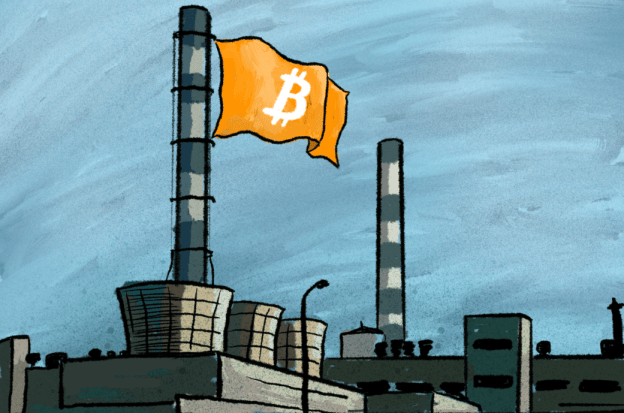
Environmentalists…fret about how much energy bitcoin uses. In a paper in Nature Communications, a group of academics…examine bitcoin’s energy use in China. They conclude that, in the absence of legal curbs, bitcoin could by 2024 become a “non-negligible” barrier to China’s efforts to decarbonize its economy.

Bitcoin’s hunger for energy stems from its design. It forgoes centralised record-keeping in favour of a “blockchain”, a transaction database that is distributed among users. The blockchain is maintained by “miners”, who validate transactions by competing to crack mathematical puzzles with solutions that are hard to find but easy to check. Each successfully mined block of transactions generates a reward, currently 6.25 bitcoins ($357,000).

The system varies the difficulty of the puzzles to ensure that one new block is created, on average, every ten minutes. High bitcoin prices make it worthwhile to spend more computing power—and therefore electricity—chasing mining rewards…

Despite the currency’s democratic ambitions, mining is concentrated among a handful of professional operators. About 70% takes place in China. Scientists have concluded that, without regulation, Chinese bitcoin mining could consume around as much energy as Italy or Saudi Arabia by 2024. Annual carbon emissions, at 130m tonnes, would approach those of Nigeria. Such numbers should be taken with a good deal of salt. Bitcoin’s energy use depends crucially on its price, which swings wildly…

But the general picture—that bitcoin is a dirty business—fits with other research. One oft-cited model, which uses publicly available blockchain data, reckons its global energy consumption is already equal to that of Kazakhstan, and that its carbon footprint matches Hong Kong’s.

Excerpts from The dirty truth: Totting up bitcoin’s environmental costs, Economist, Apr. 10, 2021

Bitcoin and US Military

The global policy counsel of the Bitcoin Foundation flew to Florida to meet with officials from U.S. Special Operations Command for a daylong discussion  on the role of so-called cryptocurrencies—of which bitcoin is the best known—in illicit finance… The military’s interest in virtual currency is part of an overall effort by special operations forces to understand how their enemies finance themselves, and what intelligence special operators can glean by following the illicit money…Defense officials said ISIS is part of a global dark network on the Internet that is involved in the use of virtual currency—although ISIS itself is “principally funded through means other than virtual currency.”

The invitation-only event, called simply the “Virtual Currency Workshop,” was held at an office building in downtown Tampa near MacDill Air Force Base where Special Operations Command is based,…It was organized by a little-known but highly influential group called Business Executives for National Security, which facilitates connections between American business leaders and the U.S. military.The group’s members include a who’s who of America’s corporate and financial elite, according to its website, including Jeff Bezos of Amazon, former AIG CEO Hank Greenberg and David Koch of Koch Industries.,,,

A key question for the officers in the room: Can the U.S. military trace bitcoin? “That’s a difficult question,”…  For the Bitcoin Foundation, which represents a broad array of libertarian technologists who can be skeptical of the U.S. government, meeting face-to-face with the national security establishment carries certain risks.  “This is the first time I’ve talked in an organized way with the U.S. military,” said Jim Harper, global policy counsel of the Bitcoin Foundation. For their part, the special operations officers said it’s their job to dive into and understand new communities. ” … The military officials said they are mindful of the civil liberties concerns involved in monitoring private financial transactions on the Internet. “Anytime we come across information about a U.S. citizen, that information is to be disposed of if it is discovered,” the official said. “Our purpose is never to disrupt legitimate businesses.”

Participants in the event said they agreed to hold it under “Chatham House rules” that barred them from identifying other attendees or revealing what was said.

Excerpts, Eamon Javers , Special Ops grill bitcoin for its terror fight, CNBC, Sept. 27, 2014