Tag Archives: cube-satellites

Whoever Controls Space Controls Everything

The U.S. military wants allies to train and plan together for space operations, in the same way that they already do in ground, air and naval combat, Gen. Chance Saltzman, chief of space operations, said in an interview in July 2023. The move comes amid concerns about China and Russia’s ability to disrupt the West’s satellites and new technology the two countries have developed, including satellites that can grab others

Russia, for instance, has conducted operations to disrupt Ukraine’s space-enabled communications. Saltzman said that Russia has been sending satellites “irresponsibly close” to those of other nations to shadow them. Moscow has “nesting doll” satellites, which can release an object that can be used to attack other objects in space, while China has tested robotic arms that can be used to grab other satellites. Both countries have demonstrated missiles that can destroy orbiting satellites…

“Quantity is a quality in itself,” he said, using an expression often employed in the military. For example, the satellites of a large coalition would be harder to target than those of one nation, he added.

Excerpt from Alistair MacDonald, U.S. Pushes Military Cooperation in Space, WSJ, July 18, 2023
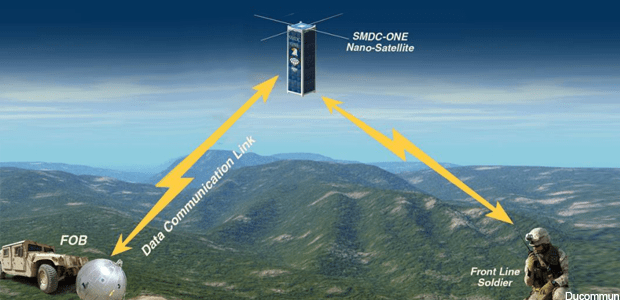
Killing Machines: Tiny Spy Satellites

As long as we’ve been launching spy satellites into space, we’ve been trying to find ways to hide them from the enemy. Now, thanks to the small satellite revolution—and a growing amount of space junk—America has a new way to mask its spying in orbit…

The National Reconnaissance Office, the operator of many of the U.S.’s spy sats, refused to answer any questions about ways to hide small satellites in orbit.  In 2014, Russia launched a trio of communications satellites. Like any other launch, spent stages and space debris were left behind in space. Air Force Space Command dutifully catalogued them, including a nondescript piece of debris called Object 2014-28E.  Nondescript until it started to move around in space, that is. One thing about orbits; they are supposed to be predictable. When something moves in an unexpected way, the debris is not debris but a spacecraft. And this object was flying close to the spent stages, maneuvering to get closer.  This fueled speculation that the object could be a prototype kamikaze-style sat killer. Other less frantic speculation postulated that it could be used to examine other sats in orbit, either Russia’s or those operated by geopolitical foes. Either way, the lesson was learned…

Modern tracking radar is supposed to map space junk better than ever before. But small spy satellites that will hide in the cloud of space debris may go undetected, even by the most sophisticated new radar or Earth-based electronic signals snooping.

Excerpts from Joe Pappalardo, Space Junk Could Provide a Perfect Hiding Spot for Tiny Spy Satellites, Popular Mechanics, Nov. 30, 2018