Tag Archives: CEM Chinese battery maker

Chinese Billionaires Helping U.S. Billionaires

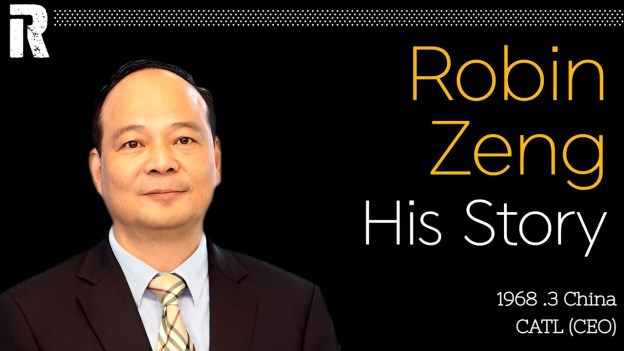
The United States has spent the past few years ghosting Robin Zeng, China’s fourth-richest man. To the U.S. government, Chinese battery maker CATL is a geopolitical threat to be warded off with tariffs and national-security curbs. Yet CATL has grown to become the world’s largest electric-vehicle battery manufacturer thanks to its technology and low costs. It posted record profit of more than $10 billion in 2025, and an estimated one in three EVs sold around the world carries its batteries. Ford recently ditched South Korea’s SK Group as its joint-venture partner for battery projects, focusing instead on its plan to build CATL-designed batteries at a $3 billion factory in Michigan. Ford is paying to license the Chinese company’s intellectual property, a workaround the U.S. allows while it puts up legal and political barriers to prevent CATL from building its own plants. General Motors is set to import China-made batteries from CATL and put them in its new Chevrolet Bolt—also legal, albeit only by swallowing a 60% tariff. And Tesla is using CATL technology for a battery plant in Nevada producing energy-storage systems, a business that is growing strongly while Tesla’s core EV business has stalled.

Critics of China argue that embedding a Chinese battery maker in the U.S. supply chain would make the U.S. even more vulnerable to Beijing’s economic coercion and undercut the chances of American battery companies catching up. CALT was placed in 2025 on a Pentagon list of companies working with China’s military.

Founded just 15 years ago, CATL benefited from a Beijing policy in the second half of the 2010s that gave Chinese EV makers subsidies if they used batteries from approved supplies such as CATL. It also received government money directly—more than $500 million in the first half of 2024 alone, according to CATL filings. Only state-owned petrochemical company Sinopec got more among mainland-China-listed companied. The iron-based battery chemistry, called lithium ferrophosphate, or LFP, costs up to 30% less a kilowatt-hour compared with nickel-manganese-cobalt batteries, the type South Korean and Japanese companies usually produce, industry experts say. In 2025, CATL developed an LFP battery with 500 miles of driving range that can be powered for up to 320 miles in just five minutes.

CATL’s technology is the reason Ford chose it for the Michigan factory tie-up, said Lisa Drake, a Ford executive on the project. “It probably would’ve taken us a decade to catch up and have LFP technology on our own,” Drake said in 2025.  She lamented that LFP batteries were invented in the U.S., but Chinese firms such as CATL figured out how to make them viable in cars. “We just didn’t commercialize that technology,” she said.

Excerpt from Yoko Kubota, The Chinese Billionaire Who Says America’s EV Market Is Doomed Without Him, WSJ, Mar. 23, 2026

Congo, China and Battery Minerals

The demand of cobalt is bound to increase because of the batteries needed to power  electric vehicles (EVs).  Each battery uses about 10kg of cobalt. It is widely known that more than half of the world’s cobalt reserves and production are in one dangerously unstable country, the Democratic Republic of Congo. What is less well known is that four-fifths of the cobalt sulphates and oxides used to make the all-important cathodes for lithium-ion batteries are refined in China. (Much of the other 20% is processed in Finland, but its raw material, too, comes from a mine in Congo, majority-owned by a Chinese firm, China Molybdenum.)

On March 14t, 2018 concerns about China’s grip on Congo’s cobalt production deepened when GEM, a Chinese battery maker, said it would acquire a third of the cobalt shipped by Glencore, the world’s biggest producer of the metal, between 2018 and 2020—equivalent to almost half of the world’s 110,000-tonne production in 2017. This is likely to add momentum to a rally that has pushed the price of cobalt up from an average of $26,500 a tonne in 2016 to above $90,000 a tonne

South Korean and Japanese tech firms and it’s a big concern of theirs that so much of the world’s cobalt sulphate comes from China. Memories are still fresh of a maritime squabble in 2010, during which China restricted exports of rare-earth metals vital to Japanese tech firms. China produces about 85% of the world’s rare earths.

Few analysts expect the cobalt market to soften soon. Production in Congo is likely to increase in the next few years, but some investment may be deterred by a recent five-fold leap in royalties on cobalt. Investment elsewhere is limited because cobalt is almost always mined alongside copper or nickel. Even at current prices, the quantities needed are not enough to justify production for cobalt alone.

But demand could explode if EVs surge in popularity… the use of cobalt for EVs could jump from 9,000 tonnes in 2017 to 107,000 tonnes in 2026.  The resulting higher prices would eventually unlock new sources of supply. But already non-Chinese battery manufacturers are looking for ways to protect themselves from potential shortages. Their best answer to date is nickel.

The materials most commonly used for cathodes in EV batteries are a combination of nickel, manganese and cobalt known as NMC, and one of nickel, cobalt and aluminium known as NCA. As cobalt has become pricier and scarcer, some battery makers have produced cobalt-lite cathodes by raising the nickel content—to as much as eight times the amount of cobalt. This allows the battery to run longer on a single charge, but makes it harder to manufacture and more prone to burst into flames. The trick is to get the balance right.

Strangely, nickel has not had anything like cobalt’s price rise. Nor do the Chinese appear to covet it… Nickel prices plummeted from $29,000 a tonne in 2011 to below $10,000 a tonne 2017…. But by 2025 McKinsey expects EV-related nickel demand to rise 16-fold to 550,000 tonnes.

In theory, the best way to ensure sufficient supplies of both nickel and cobalt would be for prices to rise enough to make mining them together more profitable. But that would mean more expensive batteries, and thus electric vehicles.

Excerpts from The Scramble for Battery Minerals, Economist, Mar. 24, 2018