Tag Archives: Houthis and Iran

How the Houthis Blindsided the U.S. Forces

Even less-sophisticated adversaries can pose a serious threat to U.S. forces. And fatigue among overworked soldiers, sailors, aircrews and Marines can lead to costly mistakes. Trump launched Operation Rough Rider in March 2025 threatening the Houthis would be “annihilated” if they didn’t halt attacks on shipping in the vital Red Sea trade route. He poured forces into the region including two aircraft carriers, half a dozen B-2 bombers, a squadron of advanced F-35 fighters, and destroyers armed with guided missiles.

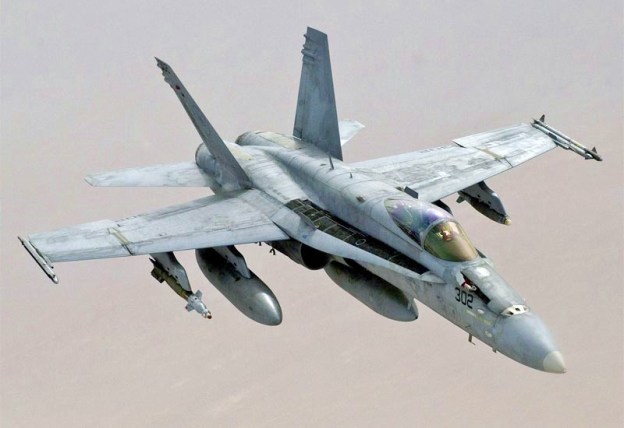
The Houthis proved resilient. In addition to nearly shooting down the two F-16s, they knocked more than a half-dozen Reaper drones out of the sky. A missile attack on the USS Harry S. Truman in April 2025 forced the carrier to make a hard turn that sent an F/A-18 rolling into the Red Sea. Another plane slid off the deck in May 2025 when its landing cable snapped, because sailors exhausted by weeks of combat likely left off a washer that held it in place.

The U.S. force had a huge edge over the Houthis. Part of that was the “Wild Weasels,” the name for F-16 units…charged with suppressing enemy air defenses. They were equipped with HARM missiles that lock on to the signal from enemy radars to knock them out…But the Houthis had developed a network to track American warplanes with observers, optics and infrared sensors whose intricacy U.S. officials didn’t entirely understand. That enabled them to flick on their air-defense radars at the last moment, so U.S. pilots would have little time to react—a tactic pilots came to call a “SAMbush.”…

The Pentagon touted the accomplishments of its 53-day fight against the Houthis. The U.S. had hit more than 1,000 targets…but never decapitated the top Houthi leadership. The US operation didn’t defeat the Houthis or degrade them to the point where they are unable to carry out future attacks in the Red Sea.

Excerpt from Michael Gordon et al., F-16 Pilot’s Narrow Escape in Missile Attack Shows Risks of a New Mideast War, WSJ, Feb. 26, 2026

The Unintentional Making of a Global Power: Iran

In 2024, Iran, under Supreme Leader Ali Khamenei’s leadership, thwarted decades of U.S. pressure and emerged from years of isolation largely by aligning itself with Russia and China…Iran’s economy remains battered by U.S. sanctions, but oil sales to China and weapons deals with Russia have offered financial and diplomatic lifelines…Today, Tehran poses a greater threat to American allies and interests in the Middle East than at any point since the Islamic Republic was founded in 1979. 

Iran’s military footprint reaches wider and deeper than ever. Iranian-backed armed groups have hit Saudi oil facilities with missiles and paralyzed global shipping in the Red Sea. They have dominated politics in Iraq, Lebanon, Yemen and Syria, and launched the most devastating strike on Israel in decades, when Hamas attacked in October. Iran launched its first direct military attack from its soil on Israel in April 2024. It has also orchestrated attacks on opponents in Europe and beyond, Western officials say. 

“In many respects, Iran is stronger, more influential, more dangerous, more threatening than it was 45 years ago,” said Suzanne Maloney, director of the foreign-policy program at the Brookings Institution, who advised Democratic and Republican administrations on Iran policy. 

U.S. policy has at times unintentionally contributed to Iran’s strength. The 2003 toppling of Saddam Hussein removed a sworn enemy from Iran’s borders. Washington’s failure to stabilize postwar Iraq bolstered Tehran’s influence…

Excerpts from Sune Engel Rasmussen and Laurence Norman, How Iran Defied the U.S. to Become an International Power, WSJ, July 2, 2024

Thugs and Lambs: the war in Yemen

A withering United Nations report on Yemen’s civil war provides fresh evidence about the extent to which Saudi Arabia and Iran have intervened in the conflict, pursuing their regional proxy war even as Yemen disintegrated into “warring statelets” that would be difficult to reunite. The U.N. panel said there were “strong indications of the supply of arms-related material manufactured in, or emanating from, the Islamic Republic of Iran,” in violation of a U.N. embargo on Yemen.

The U.N. experts were particularly critical of airstrikes by the Saudi-led coalition. The U.N. previously had said that the majority of the more than 5,000 civilian deaths in the conflict are a result of the airstrikes, which are carried out by a handful of coalition countries including Saudi Arabia and the United Arab Emirates, often using U.S.-supplied munitions.  The report, which has not yet been made public, was obtained by The Washington Post…

Eight million people, or a third of the Yemen’s population, are facing famine. A cholera outbreak that has affected roughly a million people is one of the largest ever recorded. More than 10,000 people have been killed since the war began…

At least four attacks on Saudi Arabia were carried out with missiles capable of a range “beyond that normally expected of the known missiles” in the Houthi arsenal, the panel said. The U.N. panel examined the remnants of two of the missiles – fired July 22 and Nov. 4, 2017 – and found they were consistent with the design of an Iranian missile and “almost certainly produced by the same manufacturer.”  While the report criticized Iran for failing to halt the transfer of weapons, the panel could not say with certainty how they were transported to the Houthis or who the supplier was.

In reviewing the conduct of Saudi-led military activity, the U.N. panel examined 10 airstrikes last year that killed 157 people, including 85 children, and found that “measures taken by the Saudi Arabia-led coalition in its targeting process to minimize child casualties, if any, remain largely ineffective.” And a coalition committee tasked with investigating the airstrikes had in some cases denied that strikes had taken place despite “clear evidence” to the contrary, the report said… The panel had corroborated media reports that the United Arab Emirates – part of the Saudi-led military coalition – had tortured prisoners under its control. The Saudi-led coalition, which enforced a blockade on Yemen, was using the “threat of starvation as a bargaining tool and an instrument of war.”The Houthis had carried out extrajudicial executions and mass detentions, fueling a cycle of revenge that “may last for years.”…“Political decision makers on all sides are not bearing the brunt of the war,” the report added. “Yemeni civilians are.”

Excerpts from KAREEM FAHIM A United Nations probe has detailed the fallout of the proxy war in Yemen between the Saudi coalition and Iran,  Washington Post, Jan 12, 2018