Tag Archives: human right abuses South Sudan

Is Violence Necessary for the Protection of Environment?

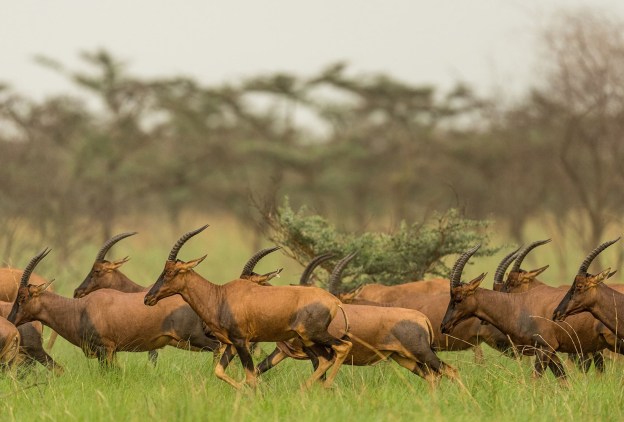
Six million antelope swarm across an area the size of Illinois,in Sough Sudan, a mass movement of mammals…African Parks, the Johannesburg-based conservation group that manages natural areas on behalf of South Sudan’s government, allowed The Wall Street Journal access to the 58,000-square-mile wilderness on the eastern bank of the White Nile….Although scientists and, of course, locals have known about the migration for years, only recently have researchers understood its staggering dimensions. In 2023, African Parks conducted an aerial survey revealing the movement included some 5.1 million white-eared kob, which generally move in a U shape in and around Boma National Park, sometimes crossing into Ethiopia’s Gambella National Park…

The interethnic violence that plagues South Sudan has, to a degree, helped protect the animal migration…South Sudanese rebels fought for decades to break away from Sudan. The South, mostly animist and Christian, finally won independence from the largely Muslim North in 2011, but quickly descended into civil war along ethnic lines. The war ended in 2020, but fighting in 2025 suggests stability remains a distant hope.

Among the region’s ethnic groups, the heavily armed Murle people in and around Boma National Park are known for stealing cattle and children from the Dinka and Anuak. Fighting is a way of life for Murle men, who divide themselves into age sets. Younger men gain status by taking on the men above them, with sticks and AK-47s, sometimes with lethal effect. Their torsos sometimes bear decorative scars resembling assault rifles…The Murle are so intimidating that other ethnic groups keep their distance to the extent possible. That has created a sort of no-man’s-land both in the parks and the places in between. “You’ve got this massive space that has allowed the migration to flourish,” says John Vogel, manager of Badingilo park.

With war, however, have come guns, and the temptation to poach is strong. Increasingly, hunters armed with military-grade weapons have been mowing down entire herds of antelope and just taking what they can carry to market on motorcycles. In a single month this year, African Parks counted 14,000 antelope carcasses passing through the town of Bor, where each animal sells for about $50, a vast amount to a poor rural family…

Excerpt from Michael M. Phillips, Researchers Track World’s Biggest Animal Migration, WSJ, Sept. 6, 2025

Chewing Gum and the Civil War in Sudan

Around 80% of the world’s gum arabic is harvested from Sudan’s acacia trees, which grow in the desert belt that stretches from Sudan’s western border with Chad to its eastern border with Ethiopia, covering an area of roughly 200,000 square miles. Gum arabic is a tasteless and odorless dried sap used as a stabilizer, thickening agent or emulsifier for many foods, drinks, cosmetics and medicines…The sap has become a key source of funding for both sides in the war, according to Sudanese traders. In addition to the RSF (Rapid Support Forces), a paramilitary group, collecting money through its control of most major agricultural routes, the Sudanese military—which runs the country’s de facto government—levies taxes and other tariffs on the gum arabic trade.

The U.S. has accused both sides in the conflict of committing war crimes. In September, 2023 the State Department slapped sanctions on two senior RSF commanders for their alleged involvement in ethnic killings, sexual violence and the looting and burning of communities, among other abuses. . Around 8.5 million Sudanese have been forced from their homes since the start of the war in April 2023. “Proceeds from the gum arabic exports are directly financing this fighting,” says Rabie Abdelaty, a Sudanese academic who has researched the gum arabic industry.

Despite these concerns, few companies have taken steps to make sure they are avoiding Sudanese gum arabic, based on interviews with manufacturers, suppliers and end-users. 

Excerpts from Alexandra Wexler, How Soda, Chocolate and Chewing Gum Are Funding War in Sudan, WSJ, May 23, 2024

Oil Spills of Sudan, Humanity for Africa, and East African Court of Justice

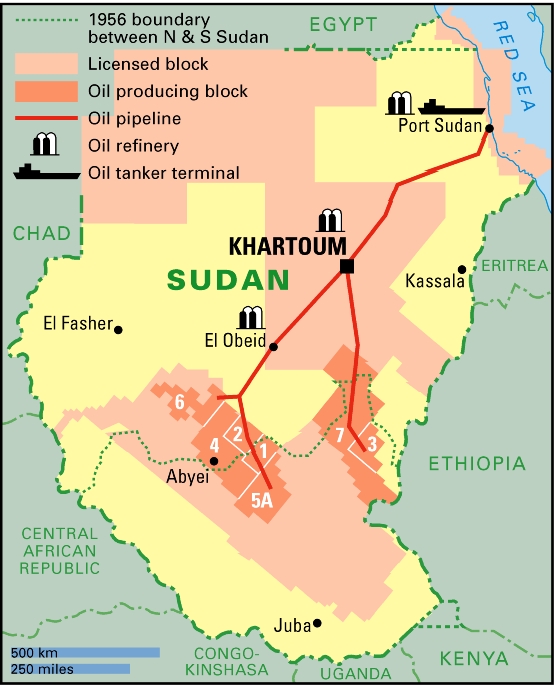
The East African Court of Justice delivered in June 2020 a temporary injunction order to the country’s Minister for Justice, the Greater Pioneer Operating Company (GPOC), and the Dar Petroleum Operating Company. The Court approved the application by Hope for Humanity Africa (H4HA), a non-governmental organization (NGO), which sought to highlight the environmental damage caused by oil spills… The NGO contends that: “Over 47,249 of the local population in Upper Nile State and 60,000 in Unity State are at risk of being exposed to the oil pollution this is because the local population depends on the wild foods for survival, the contaminated swamps, streams and rivers waters for cooking, drinking, washing, bathing and fishing.”…

The H4HA is looking for an injunction to stop multiple companies from exporting oil from the region, including CNPC of China, Petronas of Malaysia, and Oil & Natural Gas Corp. of India (ONGC) 

Excerpts South Sudan Suspended by African Union, Barred From Exporting Oil by East African Court, https://www.youngbhartiya.com, June 24, 2020

When Thugs Become States

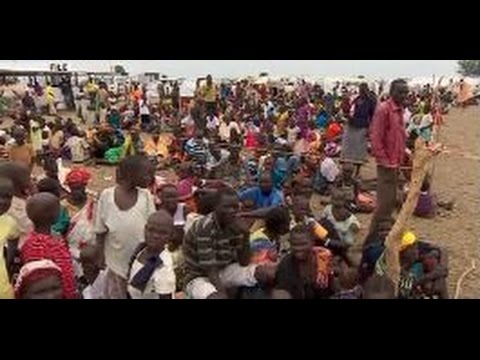
South Sudan President Salva Kiir’s government is using food as a weapon of war to target civilians by blocking life-saving aid in some areas, United Nations sanctions monitors told the Security Council in a confidential report (November 2017).  During 2016 and 2017, the UN monitors said a military campaign by government troops in Wau and surrounding areas in Western Bahr el-Ghazal targeted civilians on ethnic grounds and displaced more than 100,000.

“The government has during much of 2017 deliberately prevented life-saving food assistance from reaching some citizens,” the monitors wrote. “These actions amount to using food as a weapon of war with the intent to inflict suffering on civilians the government views as opponents to its agenda.”

One humanitarian assessment mission told UN monitors 164 young children and elderly died from hunger and disease between January and September 2017.

Excerpts  Food used as weapon of war in South Sudan, Reuters, Nov. 13,  2017

Cannibalism and Rape in South Sudan

The African Union Commission of Inquiry on South Sudan, Excerpt on Human Rights Violations, released October 27,2015

The Commission found cases of sexual and gender based violence committed by both parties against women. It also documented extreme cruelty exercised through mutilation of bodies, burning of bodies, draining human blood from people who had just been killed and forcing others from one ethnic community to drink the blood or eat burnt human flesh. Such claims were registered during interviews of witnesses of crimes committed in Juba.

Elsewhere, witnesses of crimes committed in Bor Town, also provided evidence of brutal killings and cruel mutilations of dead bodies. In Malakal town, reports of abduction and disappearance of women from churches and the hospital where communities had sought refuge during the hostilities that began in December 2013 were rife. In Unity State, Bentiu, the capital has been the focus of much of the fighting, having changed hands several times between government and opposition soldiers during the course of the conflict. Bentiu town is largely destroyed. In Leer county, the Commission heard testimony of civilians, including children and teenagers killed, houses, farms and cattle burned, and of sexual violence.

The Commission found that most of the atrocities were carried out against civilian populations taking no active part in the hostilities. Places of religion and hospitals were attacked, humanitarian assistance was impeded, towns pillaged and destroyed, places of protection were attacked and there was testimony of possible conscription of children under 15 years old….

The Commission also found that civilians were targeted in Malakal, which was under the control of both parties at different times during the conflict. Serious violations were committed in Malakal Teaching Hospital through the killings of civilians and women were raped at the Malakal Catholic Church between 18th and 27th February 2014. In Bentiu the Commission heard testimony of the extremely violent nature of the rape of women and girls – that in some instances involved maiming and dismemberment of limbs. Testimony from women in UNMISS PoC Site in Unity State detailed killings, abductions, disappearances, rapes, beatings, stealing by forces and being forced to eat dead human flesh.