Tag Archives: indigenous peoples Australia

Ousting Indigenous Peoples is a Brutal Way to Protect the Environment

The government of Tanzania claims that the Maasai, the indigenous people of Tanzania,  present a threat to the ecosystem of the Serengeti National Park. The government says the seminomadic cattle farmers are a threat to the savannas and watering holes in an area that sustains the country’s money-spinning safari resorts and hunting reserves and, more recently, a swath of new carbon-credit projects.

To protect these areas, President Samia Suluhu Hassan’s government has outlawed human settlement there and begun evicting some of the more than 110,000 Maasai from the Ngorongoro Conservation Area—the vast zone of grass-, wood- and wetlands adjacent to the Serengeti that the Maasai have used for both herding and tourism for the past 65 years.

The area includes the famous Ngorongoro Crater, the world’s largest, fully-intact caldera and home of one of Africa’s densest populations of zebras, gazelles and other large mammals…The government argues that the number of Maasai living in Ngorongoro has expanded from just 8,000 in 1959, outpacing Tanzania’s overall population growth. The herders, along with their cattle, are overwhelming the area’s fragile ecosystem, it says. Similar warnings have been issued by the United Nations Educational, Scientific and Cultural Organization, or Unesco, which declared the Ngorongoro Conservation Area a World Heritage site in 1979.


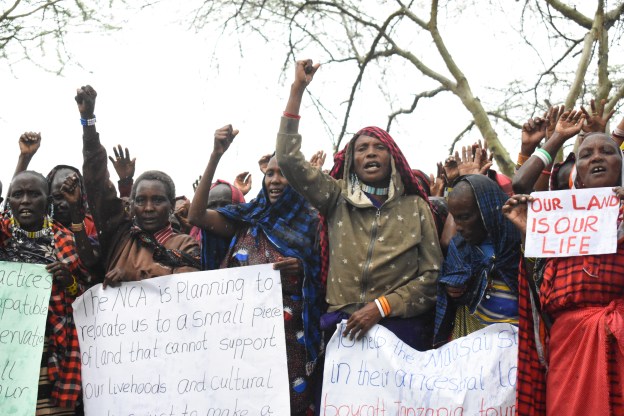
But for the Maasai, the evictions are endangering a centuries-old way of life they say is much closer to nature than the rest of rapidly urbanizing Tanzania. They accuse the government of giving priority to revenue from foreign tourists, investors and conservation groups over the lives and livelihoods of some of its own citizens. ..Experts and activists focused on the rights of indigenous people say the Maasai are the latest group caught in the murky intersection of tourism, biodiversity protection and global climate goals. Similar conservation-related evictions have also targeted indigenous communities in the Brazilian Amazon and the Nouabalé-Ndoki rainforest in the Republic of Congo.

Revenue from tourism jumped 40% to $3.5 billion in 2023, about 17% of Tanzania’s gross domestic product, and according to government projections could reach $6 billion by 2025. The government has already set aside swaths of land around the Ngorongoro Crater previously reserved for the Maasai for the construction of a China-funded geological park, where tourists and researchers can explore fossils, rock paintings and other archaeological artifacts dating as far back as 4 million years ago. To the south of the Ngorongoro Conservation Area, a local company called Carbon Tanzania is selling carbon credits linked to about 273,000 acres of land that the Maasai have also used for grazing and limited cultivation. The project restricts the cutting down of trees but allows cultivation in some zones…

One of the most violent standoffs between the Maasai and Tanzanian authorities took place in mid-2022 in the grassy plains of Loliondo, about 100 miles west of Serengeti. Heavily armed police and rangers stormed Maasai villages, fired tear gas and live rounds, and bulldozed hundreds of houses as they sought to seize some 37,000 acres of land for a new game reserve. One police officer was killed by an arrow shot by the Maasai, authorities said. Many Maasai were wounded in the clashes, and thousands fled into neighboring Kenya to seek medical treatment. Dozens of others were arrested. After the mayhem in Loliondo, authorities appeared to have opted for a more tactical approach in neighboring Ngorongoro, closing down schools, water sources and hospitals to force residents out of homes, Maasai activists say.

Excerpts from Nicholas Bariyo, The Safaris and Carbon-Credit Projects Threatening the Serengeti’s Maasai, WSJ, Dec. 22, 2024

The Power of Listening: when Indigenous People Win

 Indigenous traditional owners on Sept. 21, 2022 won a court challenge that prevents an energy company from drilling for gas off Australia’s north coast. The Federal Court decision against Australian oil and gas company Santos Ltd. was a major win for Indigenous rights in the nation. Dennis Murphy Tipakalippa, who was described in court documents as an elder, senior lawman and traditional owner of the Munupi clan on the Tiwi Islands, had challenged the regulator’s approval of Santos’ $3.6 billion plan to drill the Barossa Field beneath the Timor Sea. Justice Mordy Bromberg quashed the February decision by the regulator, the National Offshore Petroleum Safety and Environmental Management Authority, to allow the drilling.

Tipakalippa had argued that the regulator could not be “reasonably satisfied,” as required by law, that Santos had carried out necessary consultations with indigenous peoples about its drilling plans. Santos had not consulted with his clan, Tipakalippa said, and he feared the project would harm the ocean environment.

See Tipakalippa v National Offshore Petroleum Safety and Environmental Management Authority (No 2) [2022] FCA 1121    

Judge Bromberg went to the Tiwi Islands in August and took evidence about the Munupi people’s connection to the environment. According to indigenous peoples, the court’s willingness  to travel and listen to communities are signs that Australian institutions are increasingly taking  the concerns and heritage of indigenous peoples into account.

ROD McGUIRK, Australian Indigenous traditional owners halt gas drilling, AP, Sept. 21, 2022; Mike Cherney, In Australian Gas-Project Dispute, Sacred Dances Part of Court Hearing, WSJ, Sept. 8, 2022

The Worst Cultural Calamity of 2020: Blowing Up the 46 000-Year-Old Caves at the Juukan Gorge

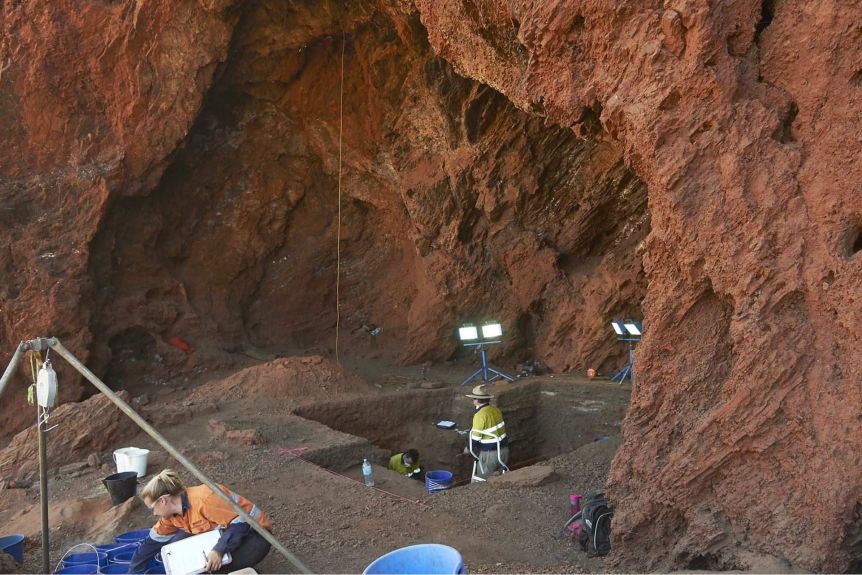
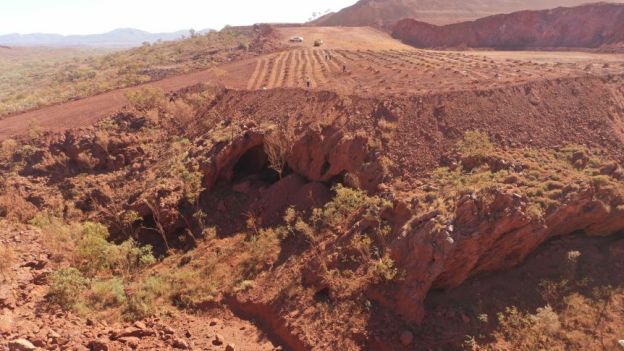
In May 2020, mining giant Rio Tinto blasted through two rock shelters in Juukan Gorge in Western Australia in order to mine iron ore. Evidence of human habitation there dates back tens of millennia.  Rio Tinto obtained permission to mine in the area in 2013, a right which was not affected by the discovery of ancient artefacts such as stone relics, faunal remains and human hair in one of the Juukan caves a year later…

Critics of Rio Tinto say there is abundant evidence that the company was aware of the site’s importance before the blasting. For example, the BBC reported that in the days running up to the caves’ destruction in May 2020, Rio Tinto hired lawyers in case opponents tried to seek injunctions to stop them.

Some 7,000 artefacts were discovered during the excavation of one of the Juukan sites.

Excerpt from MERRIT KENNEDY, A Mining Company Blew Up A 46,000-Year-Old Aboriginal Site. Its CEO Is Resigning, NPR, Sept. 11, 2020

UK Nuclear Tests in Australia: Maralinga

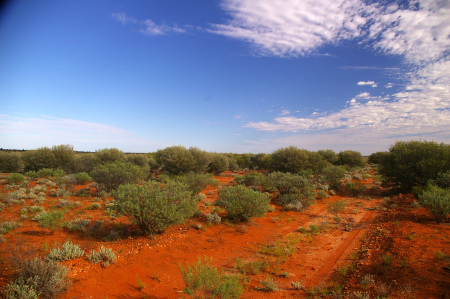
In the mid-1950s, seven bombs were tested at Maralinga in the south-west Australian outback. The combined force of the weapons doubled that of the bomb dropped on the Japanese city of Hiroshima in World War Two.  In archive video footage, British and Australian soldiers can be seen looking on, wearing short sleeves and shorts and doing little to protect themselves other than turning their backs and covering their eyes with their hands.Some reported the flashes of the blasts being so bright that they could see the bones of their fingers, like x-rays as they pressed against their faces.

A cloud hangs over Australia’s Monte Bello Islands after Britain tested its first atomic bomb
Much has been written about the health problems suffered by the servicemen as a result of radiation poisoning. Far less well-documented is the plight of the Aboriginal people who were living close to Maralinga at the time….”A lot of people got sick and died,” said Mima Smart, an aboriginal community leader.”It was like a cancer on them. People were having lung disease, liver problems, and kidney problems. A lot of them died,” she said, adding that communities around Maralinga have been paid little by way of compensation.  It’s a ten hour drive to the nearest big city, Adelaide. But people here say that the Australian government was wrong to let the tests go ahead and that Britain acted irresponsibly…

“They didn’t want to do it in their own back yard because their back yard wasn’t big enough,” said Robin Matthews, caretaker of the Maralinga Nuclear Test Site.”They thought they’d pick a supposedly uninhabited spot out in the Australian desert. Only they got it wrong. There were people here.”During the 1960s and 70s, there were several large clean-up operations to try and decontaminate the site.  All the test buildings and equipment were destroyed and buried. Large areas of the surface around the blast sites was also scraped up and buried.

But Mr Matthews said the clean-up, as well as the tests themselves, were done very much behind closed doors with a high level of secrecy.“You’ve got to remember that this was during the height of the Cold War. The British were terrified that Russian spies might try and access the site,” he said.  The indigenous communities say many locals involved in the clean-up operation also got sick.  Soil at the nuclear site grow so hot from the blast that it melted and turned to silicon has long been declared safe. There are even plans to open up the site to tourism.

But it was only a few months ago that the last of the land was finally handed back to the Aboriginal people. Most, though, say they have no desire to return there….And even almost 60 years on, the land still hasn’t recovered. Huge concrete plinths mark the spots where each of the bombs was detonate

Excerpt from Jon Donnison, Lingering impact of British nuclear tests in the Australian outback, BBC, Dec. 31, 2014