Tag Archives: lawsuits against Shell

Individual Companies Can be Held Liable for Gross Contribution to Heatwaves

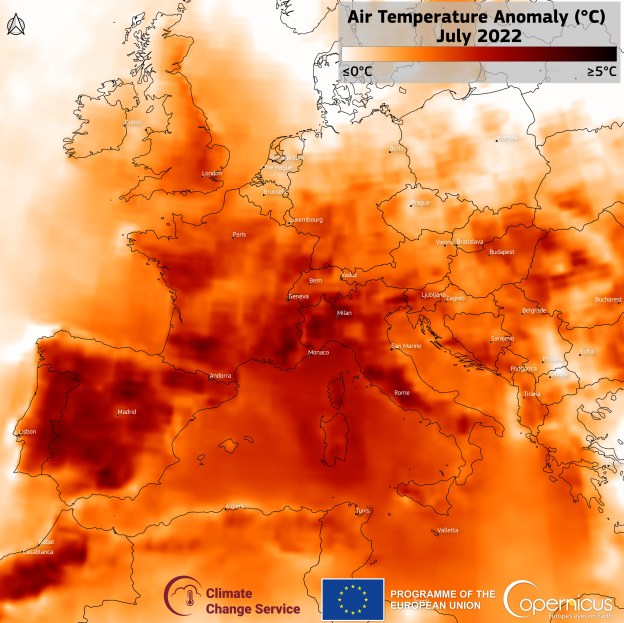
Climate scientists have been attributing storms, droughts and heatwaves to global warming for two decades. Now, they are tracing the chain of responsibility all the way back to the producers of fossil fuels. A study published in Nature in September 2025 shows that around one-quarter of the heatwaves recorded over 2000–23 can be directly linked to greenhouse-gas emissions from individual energy giants…some of whom include (the former Soviet Union, China (coal), Gazprom, Exxon Mobile, Chevron, National Iranian Oil Company, Saudi Aramco, BP, Shell, India (Coal)) The findings could provide fresh evidence to support lawsuits seeking to hold companies accountable for their impacts on the climate.

More than one-quarter of the 213 events recorded would have been “virtually impossible” without human-induced global warming, the study found. The emissions linked to energy companies and other major carbon emitters increased the likelihood of some 53 heatwaves by a factor of more than 10,000.

This is not the first time that climate impacts have been attributed to fossil-fuel producers, but this study go one step further than its predecessors and link individual companies directly to specific heatwaves. Legal experts say it’s a line of evidence that could feed into climate litigation that focuses on specific events, such as the 2021 heatwave that hammered the US Pacific Northwest in 2021. Already, a county government in Oregon has filed a US$52-billion civil lawsuit against fossil-fuel companies for contributing to that event.

Excerpts from Jeff Tollefson, Heatwaves linked to carbon emissions from specific companies, Nature, Sept. 10, 2025
New Climate Lawsuit Against Shell, 2025

Shell is under intensifying legal scrutiny as environmental organization Milieudefensie, the Dutch branch of Friends of the Earth, announces fresh legal action. The NGO, based in Netherlands, claims that by investing in new oil and gas projects despite a previous court decision requiring emissions reductions, the oil and gas company violated its duty of care under Dutch law. This case could escalate tensions between fossil fuel corporations and climate activists pressing for stricter adherence to international climate goals.

The foundation of this new lawsuit lies in a historic 2021 court decision, upheld in part during a 2023 appeal, which found Shell partially liable for climate change. The appeal acknowledged Shell’s obligation to reduce CO2 emissions, citing its substantial role in contributing to the climate crisis. However, it stopped short of specifying a target percentage for reductions. Milieudefensie now argues that Shell’s ongoing fossil fuel investments clearly violate the legal duties affirmed by that judgment. “Companies like Shell have it within their power to combat the climate problem and therefore have a legal obligation to reduce emissions,” stated the Dutch Court of Appeal.

Shell has stated  that it plans to expand fossil fuel operations, particularly in the sectors of liquefied natural gas and oil production through 2040. This strategy directly conflicts with climate science, which indicates that new fossil fuel development must be halted to limit global warming to 1.5°C.  More than 700 new oil and gas fields are presently under development by Shell, per a thorough report by Milieudefensie and Global Witness. Since May 2021, Shell has finalized investment decisions for 32 new projects, potentially resulting in 972 million tons of CO2 emissions, an amount nearly equivalent to the annual emissions of the entire European Union.

Excerpt from Shell Faces Renewed Legal Pressure on Fossil Fuel Expansion, Zacks, May 14, 2025


Assigning Responsibility for Oil Leaks: Shell’s Deep Pockets

Royal Dutch Shell’s  Nigerian subsidiary has been ordered on January 29, 2021 by a Dutch court to pay compensation for oil spills in two villages in Nigeria…The case was first lodged in 2008 by four Nigerian farmers and Friends of the Earth Netherlands. They had accused Shell and its Nigerian subsidiary of polluting fields and fish ponds through pipe leaks in the villages of Oruma and Goi.

The Court of Appeal in the Hague, where Shell has its headquarters, also ordered the company to install equipment to safeguard against future pipeline leaks. The amount of compensation payable related to the leaks, which occurred between 2004 and 2007, is yet to be determined by the court.  The case establishes a duty of care for the parent company to play a role in the pollution abroad, in this case by having the duty to make sure there is a leak-detection system…

Shell argued that the leaks were caused by sabotage…

In recent years there have been several cases in U.K. courts related to whether claimants can take matters to a parent company’s jurisdiction. In 2019, the U.K. Supreme Court ruled that a case concerning pollution brought by a Zambian community against Vedanta, an Indian copper-mining company previously listed in the U.K., could be heard by English courts. “It established that a parent company can be liable for the actions of the subsidiary depending on the facts,” said Martyn Day, partner at law firm Leigh Day, which represented the Zambians.

The January 2021 case isn’t the first legal action Shell has faced related to pollution in Nigeria. In 2014, the company settled a case with over 15,000 Nigerians involved in the fishing industry who said they were affected by two oil spills, after claims were made to the U.K. High Court. Four months before the case was due to go to trial Shell, which has its primary stock-exchange listing in the U.K., agreed to pay 55 million British pounds, equivalent to $76 million…  

The January 2021  verdict tells oil majors that “when things go wrong they will be held to account and very likely held to account where their parent company is based,” said Mr. Day, adding that the ruling could spark more such actions.

Excerpts from Sarah McFarlane, Shell Ordered to Pay Compensation Over Nigerian Oil Spills, WSJ, Jan. 29, 2021

No Clean-Up, No Justice: Ogoniland, Nigeria

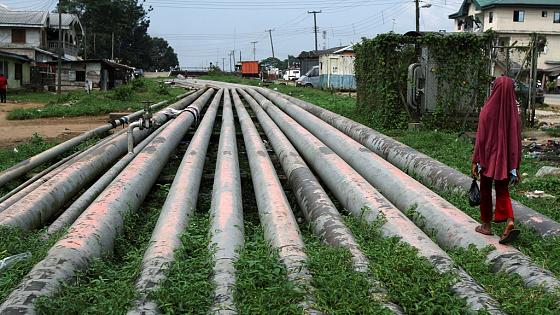
The UN Environment Programme in 2011 proposed the creation of a $1 billion fund to repair the damage done by decades of crude spills in the Ogoniland area in southeastern Nigeria. However, progress has been poor and the little work that has been done is sub-standard, advocacy groups including Amnesty International reported in June 2020.  “Research reveals that there is still no clean-up, no fulfillment of ‘emergency’ measures, no transparency and no accountability for the failed efforts, neither by the oil companies nor by the Nigerian government,” the groups said.

Shell’s Nigerian unit pumped oil in Ogoniland until 1993, when the company withdrew amid increasing protests against its presence. Even though the Hague-based company no longer produces crude in the area, a joint venture operated by Shell Petroleum Development Company, or SPDC, still owns pipelines that crisscross the region.

A government agency responsible for overseeing the clean-up, the Hydrocarbon Pollution Remediation Project, known as Hyprep, was finally set up in 2017 after several false starts, but it’s failing to deliver. …“Hyprep is not designed, nor structured, to implement a project as complex and sizable as the Ogoniland clean-up,” the report cites UNEP as saying in 2019

Excerpt from Clean Up Oil in Nigerial Lacks Progress, Bloomberg, June 18,, 2020

An Unforgettable Type of Pollution

May 2018: The environmental damage around the site of two Royal Dutch Shell oil spills in Nigeria a decade ago has worsened significantly after years of delay to cleanup efforts, according to a report that the oil giant has been accused of trying to shield from public view.  The spills from a ruptured Shell pipeline spewed thousands of barrels of oil over parts of the Bodo fishing community in the crude-rich Niger Delta. Although the company in 2015 reached an out-of-court settlement with the local community, admitting to liability and agreeing to pay £55 million, or around $80 million at the time, in compensation, controversy around the case has remained.
A United Nations body, in a 2011 report, found extensive environmental damage around Bodo. Four years later, an assessment to prepare the cleanup found soil contamination had worsened while cleanup efforts languished and illegal refining and oil theft added to pollution in the area, according to an academic paper published last month. That has left the community facing potentially toxic pollution and “catastrophic” damage to the environment, the paper said.  The 2015 analysis was commissioned by the Bodo Mediation Initiative, a consortium established to oversee the cleanup in the area. Shell is a member of the group along with local stakeholders.

At least one of the authors urged the findings to be widely distributed because they pointed to significant health risks to the local community. Kay Holtzmann, the cleanup project’s former director, said in a letter reviewed by the Journal that Shell had denied him permission to publish the study’s results in a scientific journal.

But the academic paper* said the site survey contained new facts. The average surface soil contamination in Bodo had tripled since the original U.N. probe,the paper said. Out of 32 samples taken from the top two inches of soil in the area around Bodo, only one was within Nigeria’s legally acceptable limit for oil contamination, the paper added.

Excerpts from Pollution Worsens Around Shell Oil Spills in Nigeria, Wall Street Journal, May 26, 2018.

*Sediment Hydrocarbons in Former Mangrove Areas, Southern Ogoniland, Eastern Niger Delta, Nigeria, Apr. 2018

Fishermen + Farmers Against Shell

Tens of thousands of Nigerian fishermen and farmers are suing multinational oil giant Shell in two new lawsuits filed on March 2, 2016 in a British High Court, alleging that decades of uncleaned oil spills have destroyed their lives.  London law firm Leigh Day & Co. is representing them after winning an unprecedented $83.5 million in damages from Shell in a landmark ruling by the same court last year. Shell originally offered villagers $50,000.

In a statement on March 2, 2016 before the trial opened, Shell blamed sabotage and oil theft for the ongoing pollution and noted it had halted oil production in 1993 in Ogoniland, the area where the two communities are located in Nigeria’s oil-rich southern Niger Delta.  Shell said it will challenge the jurisdiction of the British court.

The Ogoni are among the most traumatized of millions of Nigerians suffering oil pollution since the late 1950s….

Excerpts from  MICHELLE FAUL, Nigerians sue Shell in UK court for oil spills contamination, Associated Press, Mar. 2, 2016