Tag Archives: mining lead zambia

Shut Up and Give Up: How to Deal with Environmental Disasters

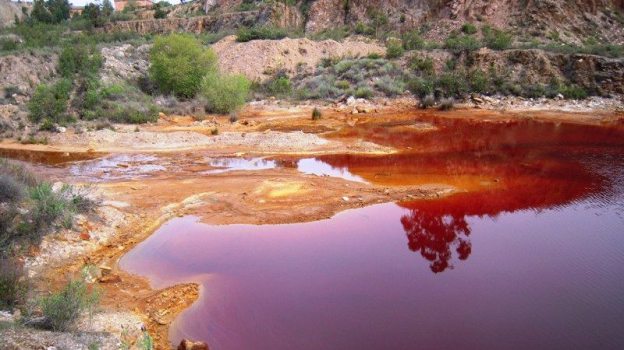
The worst day of Bathsheba Musole’s life was February 18, 2025. It started with a deafening crash when the 30-foot wall around a toxic-waste pool collapsed at the Chinese copper mine above her village. A poisonous river of a stinking yellow liquid rushed downhill, inundating homes and fields, including the one where she grew corn to feed her eight children. The floodwater, laden with cyanide and arsenic, rose chest-high. “I thought I would drown,” said Musole, 48 years old, in a recent interview.

In August 2025, months after the Feb. 18, 2025 disaster, officials from Sino Metals, a unit of the state-owned China Nonferrous Mining Corp., showed up at Musole’s half-acre farm, which the Zambian government says is too toxic to sustain crops for at least three years. They were there to make things right, she recalled them saying. Their offer was $150, but it came with a catch. To get the money, she would have to agree never to talk about the spill, take legal action against Sino Metals or even reveal the contents of the nondisclosure agreement itself…

Zambia’s government and economy.. have grown reliant on China. Zambia collects about $2 billion a year in mining taxes, mostly from Chinese mining companies. Half of the copper mined in Zambia, much of it by Chinese companies, is exported to China. In 2024, the Zambian government announced that Chinese miners would invest $5 billion in the country by 2031…

After months of investigation, Drizit Environmental, a South African firm contracted by Sino Metals, concluded that 1.5 million tons of toxic waste had overflowed into the Kafue valley, 30 times what the company had said. Sino Metals terminated the firm’s contract a day before the final report was due…

Excerpt from Nicholas Bariyo, China Pushes to Silence Victims of African Mining Disaster, WSJ, Oct. 27, 2025
The Perils of Inhaling Lead Dust: Zambia

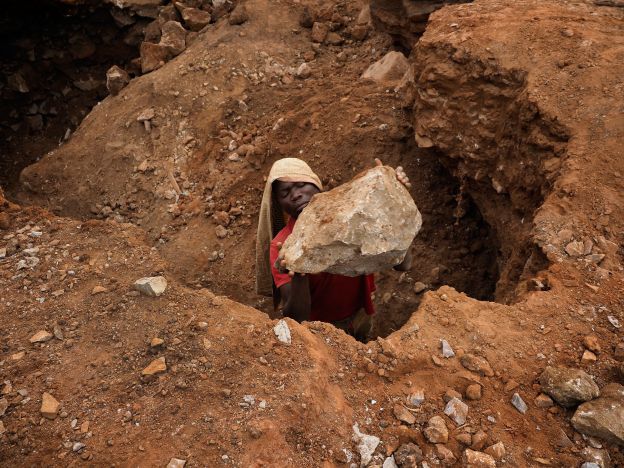
Kabwe,  in Zambia,  sprung up around a mine founded in 1904 by the Rhodesian Broken Hill Development Company, a British colonial firm. For decades miners crushed and burnt ore to extract lead. That metal made Kabwe but it also devastated it. To this day lead particles blow across town, making their way into houses and bloodstreams.

Scientists generally consider soil hazardous if it has more than 400mg of lead per kilogram. In three townships near the old mine the soil contains six, eight and 15 times that amount, according to analysis in 2014 by Pure Earth, an environmental ngo. “Kabwe is the most toxic place I’ve ever been to,” says Richard Fuller, its president…

The pollution in Kabwe is a scandal. Yet responsibility for it has long been contested, and that is set to continue. In October 2020, Mbuyisa Moleele Attorneys, a South African law firm, with help from Leigh Day, a British one, announced a class-action lawsuit against a subsidiary of Anglo American on behalf of potentially more than 100,000 children and women of reproductive age in Kabwe. It is targeting Anglo because it was affiliated to the mine from the 1920s until shortly after Zambia’s mines were nationalised in 1970. The suit claims that most of the pollution stems from the period when the mine was under the de facto control of Anglo, which allegedly did not do enough to stop the harm. Anglo rejects the claims, arguing that its involvement ended five decades ago and that, before then, it was neither the operator nor a majority shareholder in the mine and thus not responsible.

The case may take years. The lawyers for the plaintiffs must first convince a South African court to take it on. Only then may it proceed to a trial. Meanwhile children in Kabwe will keep on playing in the dust.

The World Bank included Kabwe in a broader project it funded to clean up Zambian mines. The scheme, which ran from 2003-2011, had some successes. It dredged a toxic canal and buried some contaminated soil. But it did not treat the main source of the dust—the former mine and dumps—and it left roads unpaved and most houses untreated…Another clean-up funded by the bank was started in December 2016. But it, too, is struggling. Some children have been tested and have received therapy to reduce blood lead levels. But since little has been done about the lead in the environment there is a risk their levels will rise again. 

Excerpt from Mining’s Toxic Legacy: Lead Astray, Economist,  Dec. 12, 2020