 South Korea’s ambitious nuclear energy program is under intensive scrutiny and criticism after the discovery of microscopic cracks in the structure of a nuclear power plant and forgery of quality certificates vouching for thousands of components in at least two reactors. Officials in all three major agencies responsible for monitoring the program said Friday there’s no danger to nuclear safety, but the government ordered the shutdown of the two reactors with the uncertified parts. At the same time, the head of the state company overseeing the program, Korea Electric Power Corp. has resigned for what he said were personal reasons.
A sequence of problems at a nuclear power plant on the southwestern coast fueled rising doubts about a program that’s been a centerpiece of the government’s energy policy since the first reactors went on line more than 30 years ago. Korea counts on nuclear energy for 30 percent of its electrical power, but critics are now demanding the government shut down some of the older plants and pull back from plans to build enough reactors to fulfill half the country’s power needs. “I am worried about safety standards,” says Lee Chang-choon, who served as South Korea’s ambassador to the International Atomic Energy Agency during his long diplomatic career. “I do not have confidence and trust in the care of sensitive machinery operations.”
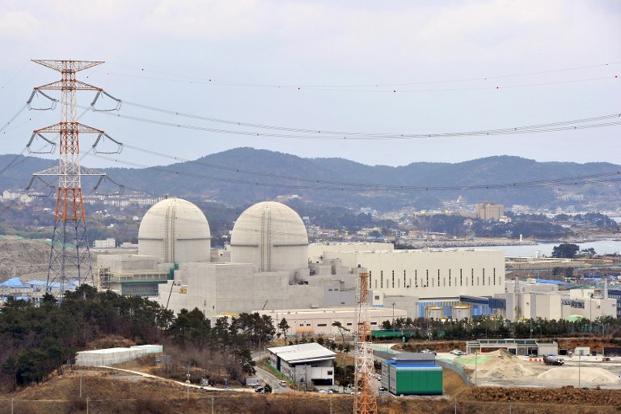
The trouble seemed to begin at the nuclear power plant at Yeonggwang where inspectors this week reported thousands of “noncore components” were installed on the basis of fraudulent quality certificates. The Korea Hydro and Nuclear Power Corporation, which operates Korea’s four nuclear power plants, including 23 reactors, promised to replace all the parts by the end of the year while asking prosecutors to investigate alleged bribery.
Compounding the difficulties at the Yeonggwang plant, the ministry also reported the discovery of microscopic cracks in passages linking control rods to one of the reactors. An official at the Korea Hydro and Nuclear Power Corporation said the cracks affected warning signals on control panels but not operation of the reactors…
The underlying problem, however, is that South Korea has virtually no oil or natural gas deposits and is running out of coal. Nuclear power has long been seen as the only way to meet the demands of a growing industrial economy. Hong Suk-woon, Korea’s knowledge and economy minister, warned of severe power cuts that might affect industry and individual consumers as a result of shutdown of the two Yeonggwang reactors….
Others are still more critical. Yun Sun-jin, a professor who teaches courses on energy policy at Seoul National University, accuses the Korea Hydro Nuclear Power Corporation of placing higher priority on output with reduced emphasis on safety. “They are decreasing the time for periodic overhaul of reactors,” she says. “They think a high operation rate means a more competitive strategy.” She agrees with the view of the nongovernmental Korea Federation for the Environment that the government should shut down older plants and cancel plans to build new ones. “We cannot believe nuclear power plants are safe,” says Yang-yi Won-young, in charge of the organization’s “nuclear phase-out” campaign. “The government says nuclear energy is the cheapest and cleanest, but they don’t take account of the cost of getting rid of nuclear waste.”…An official at the ministry of knowledge and economy listed 60 forged quality certificates since 2003 including more than 7,600 components, 98.4 percent of which, he says, were for the Yeonggwang plant. “These are noncore parts,” he says, including fuses, switches, and resistors that cannot be used for the core safety-related facility” and therefore “posing no threat of radiation leakage.” The government, he adds, “will prepare and implement a comprehensive package of measures as soon as possible starting later this month to cope with the possible power shortages during this winte
Excerpts, By Donald Kirk, Cracks at South Korean nuclear plant raise safety concerns, Reuters, Nov. 9, 2012

 Law-In-Action