Tag Archives: rare earths oxides and radioactive waste

To Own Means Nothing-To Do Means More: Metals and Minerals of the World

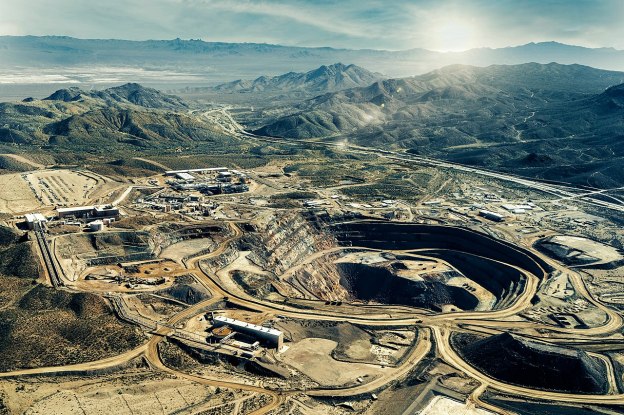
Trump wants to secure the minerals the U.S. needs for everything from smartphones to jet fighters by striking deals in Ukraine, Greenland and even Russia. But even if the Trump administration secures more mines for American companies through agreements like the mineral-rights deal being discussed with Ukraine, it may have to send much of the minerals to China—its main geopolitical rival—to be processed…

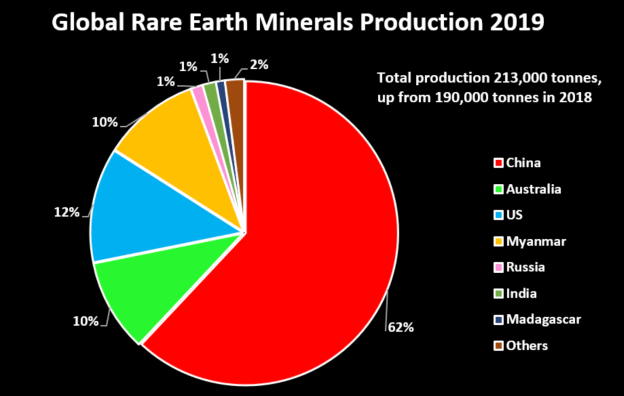
In truth, the U.S. already has abundant supplies of rare earths, but it relies on China to refine them. That is because the U.S. has lost much of its capacity to process minerals, while China has become the world’s dominant refiner of rare earths, cobalt, copper and many other metals.

Until the 1990s, the U.S. was a major refiner of minerals and metals. But then China emerged as the dominant player, powered by its cheap labor force and looser environmental regulations of a sector that can be highly polluting. The voracious need of Chinese manufacturers for raw materials during the country’s years of explosive growth was also a boon for Chinese refiners. Today, the sheer scale of China’s refining industry makes it difficult for others to compete. According to industry estimates, the cost of building a refinery plant in China is a third of the cost in the U.S.

Excerpts from  Jon Emon, How China Beat Out the U.S. to Become the Top Player in Rare-Earths Refining, WSJ, Mar. 25, 2025

The Conquest of Greenland–Not for the Faint Heart

Teeming with underground riches, Greenland might set the scene for a modern gold rush. President Trump, for one, covets Greenland’s deposits of critical minerals, some of the largest in the Western Hemisphere. But as the visiting Australian company, Energy Transition Minerals, has discovered, securing them is a daunting task. 

Kvanefjeld, the site of the billion-year-old solidified magma in the mountains above the town of Narsaq, contains an estimated 1 billion tons of minerals, enough to potentially transform the global market for rare-earth elements, used in such things as electric vehicles, jet fighters, wind turbines and headphones. 

Mining companies in Greenland operate in one of the most challenging environments in the world because of the Danish territory’s sparse infrastructure, hostile weather and a tricky political climate. Mining here is expensive, and few investors are willing to pay for it given the uncertainties.   Despite its extraordinary mineral wealth, Greenland has only two active mines: a gold mine in commissioning phase and a mine producing anorthosite, used in fiberglass, paints and other construction materials…“Investing in Greenland is not for the faint of heart,” said Brian Hanrahan, chief executive officer of Lumina Sustainable Materials, which operates the anorthosite mine on the west coast of Greenland. “The local logistics are incredibly complex.” Building a mine involves high startup costs, and has to be done from scratch in rugged terrain. Greenland is nearly one-fourth the size of the U.S., and about 80% of it is covered by ice, with deep fjords and ice sheets up to a mile thick. There are no roads between settlements, and shipping is treacherous because of floating ice off the coast.

Bureaucracy is a hindrance, too. The process of granting licenses to foreign companies to mine is lengthy and cumbersome. While applying for licenses, companies need to keep employees on payroll with benefits. With a population of 57,000, Greenland’s labor market is tight…Extracting Greenland’s minerals is about more than profit; it is about resource control. Western governments are eager to break China’s dominance of the global market for rare earths and other minerals, which it could wield as a weapon in a trade war…“Greenland is host to some of the largest rare-earth resources known to exist globally, which have potential to supply virtually all the foreseeable needs of North America and Europe for decades to come,” said Ryan Castilloux, managing director of Adamas Intelligence… ‘

But when directors from Energy Transition Minerals visited Narsaq in February 2025, they were met near the icy helipad by protesters in brightly colored vests emblazoned with a logo spelling “Uranium? No, Thank You” in Greenlandic…Many among the Inuit population of Narsaq are concerned about contamination of drinking water, plants and wildlife. “We live off nature as our forefathers have done for generations. We will be forced to move,” said Avaaraq Bendtsen, a 25-year-old archaeology student. “Think about the indigenous people as well. This is our land. It is our mountain.”

Excerpts from Sune Engel Rasmussen, Greenland Has the Makings of a Mining Boom. So Where Is Everyone?, WSJ, Mar. 4, 2025

Mining the Earth to Save it

The rush to secure green-energy metals is bringing new life to one of the world’s oldest mining hubs. Like the United States, Europe is worried that it is too reliant on China for supplies of once-obscure natural resources, such as lithium and rare-earth metals, that are seen as climate-friendly successors to oil and gas…. 

On both sides of the Atlantic, one of the best answers to long-simmering worries about green-energy security is to look north…, for example, to the “Canadian Shield,” a vast band of rock encircling Hudson Bay. The “Baltic Shield” that stretches across Scandinavia to western Russia is similarly mineral-rich. It helps explain why Sweden in particular has such a long mining heritage. In the mid-17th century, the country’s “Great Copper Mountain” near Falun provided two-thirds of the world’s copper. Even today, 80% of iron ore mined in the EU comes from a site near the Arctic town of Kiruna that Swedish state operator LKAB has exploited for well over a century.

The energy transition is an opportunity for Sweden’s mining complex. LKAB said in January 2023 that it had identified Europe’s largest body of rare-earth metals close to its existing Kiruna operation…Digging up the planet to save it is an awkward pitch. The only way for miners to counter accusations that they are adding to the problem they want to solve is by decarbonizing operations. Here Sweden is again helped by the geology of the Baltic Shield, whose river valleys are favorable for green-energy production. Roughly 45% of the country’s electricity comes from hydroelectric power, with much of the remainder provided by nuclear and wind. It is also cheap, particularly in the Arctic, where many mines are located. Against a favorable geopolitical backdrop, the biggest risk for investors is political. Mines, which can bring a lot of noise and relatively few jobs to an area, don’t tend to be popular locally.

There is a reason the West relies on autocracies for a lot of its oil.

Excerpts from Stephen Wilmot, For Mining EV Metals, the Arctic Is Hot, WSJ, Feb. 14, 2023

The Geo-Economics of Rare Earth Minerals

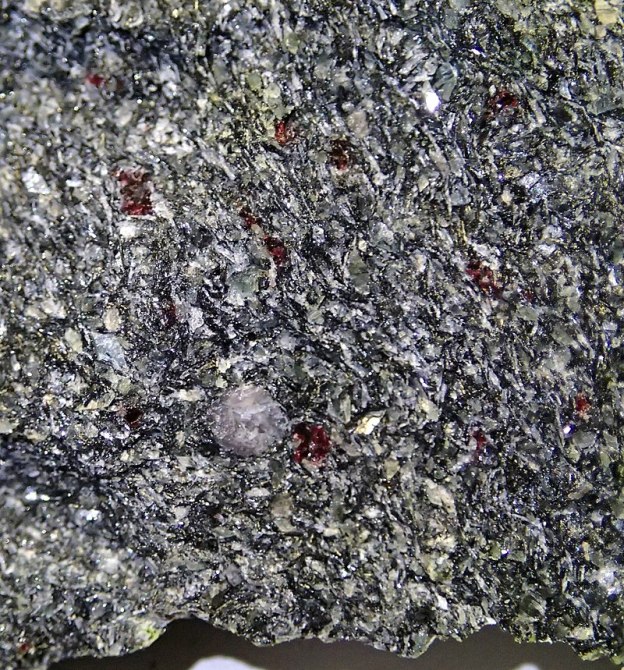
Greenland is rich in rare-earth minerals, and the superpowers want them…These 17 elements are used in  all things electronic. The renewable-energy revolution will also rely on them for power storage and transmission. On the darker side, weapons—including nuclear ones—need them too.

A new open-pit mine at the top of Kuannersuit, a cloud-rimmed mountain near the settlement of Narsaq in the south of Greenland may be rich in rare earth. So believes Greenland Minerals, an Australia-based company, which has been angling for the excavation rights for the past decade.

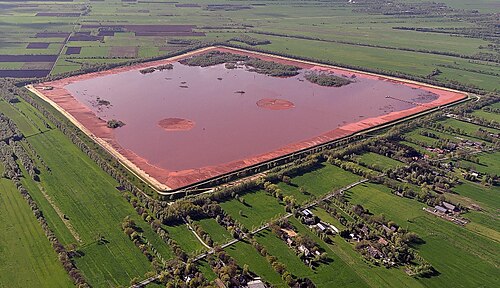
Greenland’s environment ministry has given a tentative go-ahead. A majority of parliamentarians have already declared themselves in favor of digging. In early February 2020, the townsfolk of Narsaq will hear representations from the island’s government. In Greenland, Urani Naamik (“No to Uranium”), a community lobby, has strong support. Nobody wants (mildly) radioactive dust, an inevitable by-product of mining. Many worry about the waste—a sludge of chemicals and discarded rock fragments—that mining would leave on top of the mountain.

The bigger long-term issue is who gets the mine’s spoils. Shenghe, a Chinese conglomerate, is the largest shareholder in Greenland Minerals. The Danish government, in a frenzy of Atlanticism, earlier managed to stop Chinese companies from investing in the expansion of two airports on the island. Will it preserve Greenland’s rare earths for NATO?

Cloud mining: In search of Greenland’s rare earths, Economist, Jan. 16, 2021, at 41