Tag Archives: resource curse South Sudan

Why and How Dubai Conquered Sudan

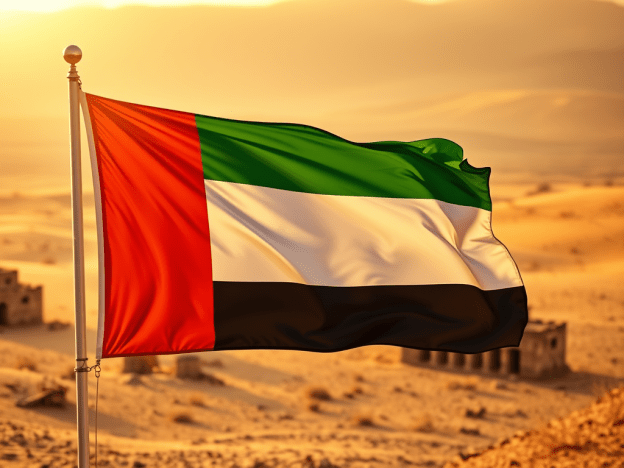
U.S. intelligence agencies say the United Arab Emirates sent increasing supplies of weapons including sophisticated Chinese drones to a major Sudanese militia in 2025 bolstering a group that has been accused of genocide and pouring fuel on a conflict that has created one of the world’s worst humanitarian crises…It is the latest example of how the wealthy Gulf state is quietly projecting power to influence the course of conflicts and assert its interests in a region dominated by much larger power brokers, from Saudi Arabia to Turkey and Iran.

A key U.S. partner, the U.A.E. has shipped arms into Sudan to shore up the Rapid Support Forces (RSF) of Sudan after a string of setbacks that culminated with the militia losing control of the capital, Khartoum, in March 2025. Rearmed, the militia survived that potential turning point in the war and launched a renewed offensive against the government that triggered some of the worst destruction of the two-year war. The RSF’s campaign included an expanded assault on North Darfur state, where the militia tightened an 18-month siege of the regional capital of El Fasher, cutting off tens of thousands of people from adequate food and medicine…“The war would be over if not for the U.A.E.,” said Cameron Hudson, a former chief of staff to successive U.S. presidential special envoys for Sudan. “The only thing that is keeping them in this war is the overwhelming amount of military support that they’re receiving from the U.A.E.,” he said of the RSF…The U.A.E. is betting on the RSF to help protect Emirati interests in Sudan. The country is strategically located on the Red Sea, where the Sudanese government canceled a $6 billion Emirati port deal in 2024, and has vast resources of gold, much of which has historically been exported to Dubai. The U.A.E. has invested billions of dollars in the country.

Excerpt from Jared Malsin at al., How U.A.E. Arms Bolstered a Sudanese Militia Accused of Genocide, WSJ, Oct. 28, 2025
Is Violence Necessary for the Protection of Environment?

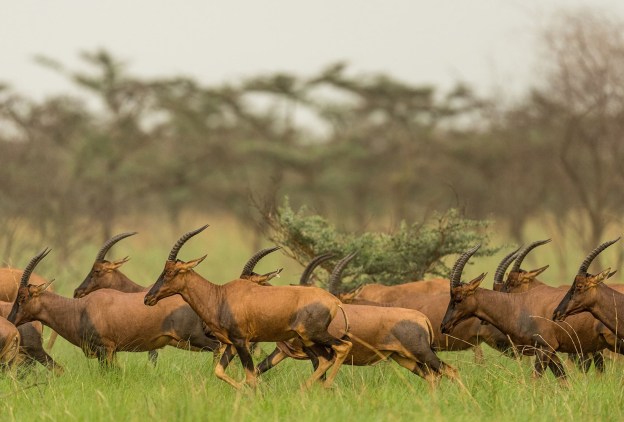
Six million antelope swarm across an area the size of Illinois,in Sough Sudan, a mass movement of mammals…African Parks, the Johannesburg-based conservation group that manages natural areas on behalf of South Sudan’s government, allowed The Wall Street Journal access to the 58,000-square-mile wilderness on the eastern bank of the White Nile….Although scientists and, of course, locals have known about the migration for years, only recently have researchers understood its staggering dimensions. In 2023, African Parks conducted an aerial survey revealing the movement included some 5.1 million white-eared kob, which generally move in a U shape in and around Boma National Park, sometimes crossing into Ethiopia’s Gambella National Park…

The interethnic violence that plagues South Sudan has, to a degree, helped protect the animal migration…South Sudanese rebels fought for decades to break away from Sudan. The South, mostly animist and Christian, finally won independence from the largely Muslim North in 2011, but quickly descended into civil war along ethnic lines. The war ended in 2020, but fighting in 2025 suggests stability remains a distant hope.

Among the region’s ethnic groups, the heavily armed Murle people in and around Boma National Park are known for stealing cattle and children from the Dinka and Anuak. Fighting is a way of life for Murle men, who divide themselves into age sets. Younger men gain status by taking on the men above them, with sticks and AK-47s, sometimes with lethal effect. Their torsos sometimes bear decorative scars resembling assault rifles…The Murle are so intimidating that other ethnic groups keep their distance to the extent possible. That has created a sort of no-man’s-land both in the parks and the places in between. “You’ve got this massive space that has allowed the migration to flourish,” says John Vogel, manager of Badingilo park.

With war, however, have come guns, and the temptation to poach is strong. Increasingly, hunters armed with military-grade weapons have been mowing down entire herds of antelope and just taking what they can carry to market on motorcycles. In a single month this year, African Parks counted 14,000 antelope carcasses passing through the town of Bor, where each animal sells for about $50, a vast amount to a poor rural family…

Excerpt from Michael M. Phillips, Researchers Track World’s Biggest Animal Migration, WSJ, Sept. 6, 2025

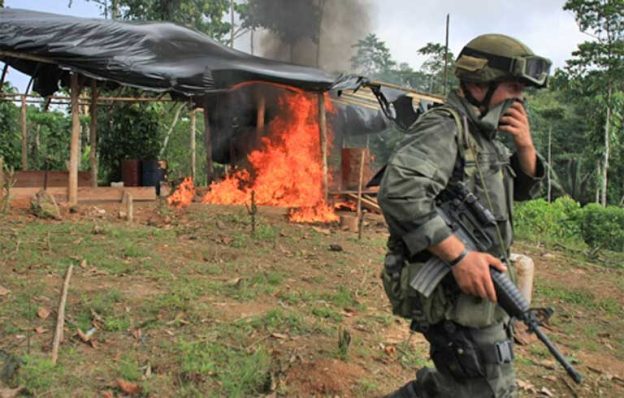
How the Drug War has Fueled Sudan’s Conflict

The war in Sudan between the country’s military and the rebel Rapid Support Forces (RSF) has turned in 2024 into a battleground for more foreign powers, drawing in fighters and weapons from as far as Latin America and Europe. Several regional governments are vying to assert their influence as the fighting escalates, led by the United Arab Emirates on one side and Egypt on the other—with devastating consequences for Sudan’s 48 million people, some of whom are now in the grip of famine. At stake is control of Red Sea shipping lanes, some of Africa’s largest gold reserves and the contested waters of the Nile.

The Colombian fighters seized in November 2024 in Darfur were hired earlier this year by an Abu Dhabi-based company called Global Security Services Group (GSSC)…The company describes itself as the only armed private security provider to the Emirati government and lists as its clients the Gulf state’s ministries of presidential affairs, interior and foreign affairs.  In Uganda, where GSSG has trained local troops in counterterrorism operations and VIP protection, the company presented itself as acting on behalf of the Emirati government, an army spokesman said. 

With its large stock of drug-war veterans trained on American weapons, Colombia has long been a target for recruiters from overseas security and mercenary groups. A decade ago, the U.A.E., through military contractors, sent Colombians to fight in the civil war in Yemen. In September 2024, a Bogotá, Colombia-registered recruitment company called International Services Agency, or A4SI, began posting ads on its website looking for drone operators, cybersecurity specialists and bodyguards to deploy in Africa…

By some estimates, as many as 150,000 people have been killed in Sudan. About 25 million, more than half of the population, are suffering crisis levels of hunger and one in four Sudanese have been forced from their homes. Famine has been declared in a Darfur camp hosting between 500,000 and a million displaced people.

Excerpts from Benoit Faucon and Gabriele Stein, The Global War Machine Supplying Colombian Mercenaries to Fight in Sudan, WSJ, Dec. 11, 2024

Chewing Gum and the Civil War in Sudan

Around 80% of the world’s gum arabic is harvested from Sudan’s acacia trees, which grow in the desert belt that stretches from Sudan’s western border with Chad to its eastern border with Ethiopia, covering an area of roughly 200,000 square miles. Gum arabic is a tasteless and odorless dried sap used as a stabilizer, thickening agent or emulsifier for many foods, drinks, cosmetics and medicines…The sap has become a key source of funding for both sides in the war, according to Sudanese traders. In addition to the RSF (Rapid Support Forces), a paramilitary group, collecting money through its control of most major agricultural routes, the Sudanese military—which runs the country’s de facto government—levies taxes and other tariffs on the gum arabic trade.

The U.S. has accused both sides in the conflict of committing war crimes. In September, 2023 the State Department slapped sanctions on two senior RSF commanders for their alleged involvement in ethnic killings, sexual violence and the looting and burning of communities, among other abuses. . Around 8.5 million Sudanese have been forced from their homes since the start of the war in April 2023. “Proceeds from the gum arabic exports are directly financing this fighting,” says Rabie Abdelaty, a Sudanese academic who has researched the gum arabic industry.

Despite these concerns, few companies have taken steps to make sure they are avoiding Sudanese gum arabic, based on interviews with manufacturers, suppliers and end-users. 

Excerpts from Alexandra Wexler, How Soda, Chocolate and Chewing Gum Are Funding War in Sudan, WSJ, May 23, 2024

How Countries Dissolve: the Conquest of Africa

As Wagner fighters, a Russian mercenary group, play a central role in Russia’s war in Ukraine, the group is quietly expanding its alliances in Africa, penetrating new mineral-rich areas, exploiting the exit of Western powers and creating alliances with local fighters. Wagner fighters and instructors are working with the government of the Central African Republic in a bid to seize areas rich with precious minerals that could be exported through Sudan, say Western security officials. Wagner is also looking to expand its influence in Burkina Faso and Ivory Coast, while consolidating its relationship with the military junta in Mali

With an estimated 5,000 men stationed across Africa, Wagner’s footprint is now almost as large as the U.S.’s 6,000 troops and support personnel on the continent. ..The push aims to create a corridor from Wagner-controlled mines in the Central African Republic through Sudan, where the group works closely with a local strongman, and onto the mineral trading hub of Dubai.

In January 2023,  Mr. Prigozhin, head of Wagner, stressed that sending fighters to Africa was “absolutely necessary.” “There are presidents to whom I gave my word that I would defend them,” he said on his Telegram channel. “If I now withdraw one hundred, two hundred or five hundred fighters from there, then this country will simply cease to exist.”  

Excerpts from Benoit Faucon & Joe Parkinson, Wagner Group Aims to Bolster Putin’s Influence in Africa, WSJ, Feb. 14, 2023

Oil Spills of Sudan, Humanity for Africa, and East African Court of Justice

The East African Court of Justice delivered in June 2020 a temporary injunction order to the country’s Minister for Justice, the Greater Pioneer Operating Company (GPOC), and the Dar Petroleum Operating Company. The Court approved the application by Hope for Humanity Africa (H4HA), a non-governmental organization (NGO), which sought to highlight the environmental damage caused by oil spills… The NGO contends that: “Over 47,249 of the local population in Upper Nile State and 60,000 in Unity State are at risk of being exposed to the oil pollution this is because the local population depends on the wild foods for survival, the contaminated swamps, streams and rivers waters for cooking, drinking, washing, bathing and fishing.”…

The H4HA is looking for an injunction to stop multiple companies from exporting oil from the region, including CNPC of China, Petronas of Malaysia, and Oil & Natural Gas Corp. of India (ONGC) 

Excerpts South Sudan Suspended by African Union, Barred From Exporting Oil by East African Court, https://www.youngbhartiya.com, June 24, 2020

The Oil Curse – South Sudan

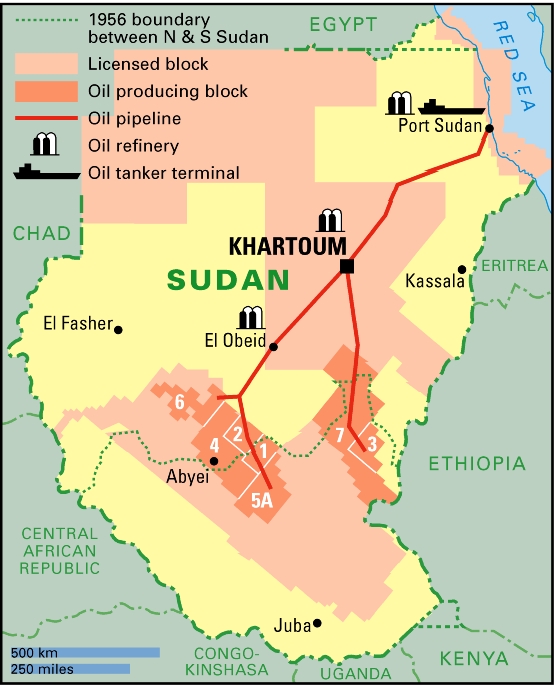
South Sudan’s oil fields have become a battleground in the struggle for power in Africa’s newest nation, encouraging Western nations and regional mediators to consider international monitoring of crude revenues as a way to remove a major bone of contention from such conflicts.  South Sudan sits on Sub-Saharan Africa’s third-biggest crude reserves, and its oil fields were early targets in fighting that erupted in December 2013 and has rumbled on despite two ceasefire deals and U.N. warnings that a man-made famine looms.

It marks an alarming slide into dysfunction by a nation whose creation three years ago the United States hailed as a foreign policy success. Instead of lifting the nation out of grinding poverty, oil is blamed for stoking a war…Diplomats and regional mediators said monitoring revenues was gaining traction as an idea for discussion, though the mechanics of such a system and how the warring sides would be pushed towards a deal have not been determined….

South Sudan’s oil output has tumbled by about a third to 160,000 barrels a day since the fighting began in December 2013, but it remains the main source of cash for President Salva Kiir’s government both by selling crude and by borrowing against future earnings, digging the nation deeper into debt.  As of June 25, 2013 South Sudan owed $256 million to China’s National Petroleum Corp, which has 40 percent of a venture developing South Sudan’s oil fields, and a further $78 million to oil trader Trafigura. [a Dutch multinational commodity trading company] It plans to borrow about $1 billion from oil firms in fiscal year 2014/15, equal to about a quarter of forecast revenues.

Rebel leader Machar, who was fired as deputy president last year, said oil sites would be a “legitimate target” unless funds were put into a neutral escrow account pending any deal.

But President Salva Kiir’s government says such outside intervention would violate its sovereignty and insists it has not bought arms since fighting began.  “We are not the protectorate of anyone,” presidential spokesman Ateny Wek Ateny said. “We have the right to buy arms, but we haven’t bought anything since December,” he said, despite rebel claims of weapon shipments arriving in recent months.  Kiir and Machar come from rival ethnic groups, and the conflict has re-opened deep ethnic divisions in the country.

Monitoring revenues is on the table for talks sponsored by the regional African grouping IGAD, though diplomats acknowledge it can only be part of a broader deal on how to share wealth and power in the divided nation…South Sudan has already lost billions of petrodollars in its young life. Kiir wrote to 75 former and serving officials in 2012 seeking the return of $4 billion that disappeared since 2005. No significant amounts were repaid, diplomats said.  Though the country – the size of France – has almost no roads and only a third of its 11 million people can read, South Sudanese now watch more wealth frittered away on fighting than on building roads or paying for schools….Fighting has killed at least 10,000 people, displaced 1.5 million and left a third of the population facing the prospect of famine as they have not planted crops…

But Western diplomats say pressure for a deal on oil monitoring needs to come from the region, led by heavyweight neighbours such as Kenya and Ethiopia.China, with its oil interests, would need to support the move, though diplomats said it had worked with the West during the crisis. Alongside China, other oil investors are India’s ONGC Videsh and Malaysia’s Petronas.”  If they can get the oil sector right, share the oil revenues in a much more inclusive manner, then that will dictate the country’s future,” said Luke Patey, author of a book on Sudan and South Sudan’s oil industry.

Excerpts from South Sudan conflict drives idea of oil wealth monitoring, Reuters, Aug. 1, 2014]