Tag Archives: rights of indigenous peoples

Ousting Indigenous Peoples is a Brutal Way to Protect the Environment

The government of Tanzania claims that the Maasai, the indigenous people of Tanzania,  present a threat to the ecosystem of the Serengeti National Park. The government says the seminomadic cattle farmers are a threat to the savannas and watering holes in an area that sustains the country’s money-spinning safari resorts and hunting reserves and, more recently, a swath of new carbon-credit projects.

To protect these areas, President Samia Suluhu Hassan’s government has outlawed human settlement there and begun evicting some of the more than 110,000 Maasai from the Ngorongoro Conservation Area—the vast zone of grass-, wood- and wetlands adjacent to the Serengeti that the Maasai have used for both herding and tourism for the past 65 years.

The area includes the famous Ngorongoro Crater, the world’s largest, fully-intact caldera and home of one of Africa’s densest populations of zebras, gazelles and other large mammals…The government argues that the number of Maasai living in Ngorongoro has expanded from just 8,000 in 1959, outpacing Tanzania’s overall population growth. The herders, along with their cattle, are overwhelming the area’s fragile ecosystem, it says. Similar warnings have been issued by the United Nations Educational, Scientific and Cultural Organization, or Unesco, which declared the Ngorongoro Conservation Area a World Heritage site in 1979.


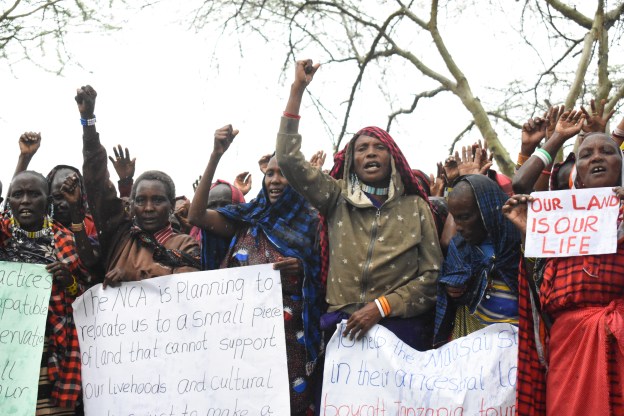
But for the Maasai, the evictions are endangering a centuries-old way of life they say is much closer to nature than the rest of rapidly urbanizing Tanzania. They accuse the government of giving priority to revenue from foreign tourists, investors and conservation groups over the lives and livelihoods of some of its own citizens. ..Experts and activists focused on the rights of indigenous people say the Maasai are the latest group caught in the murky intersection of tourism, biodiversity protection and global climate goals. Similar conservation-related evictions have also targeted indigenous communities in the Brazilian Amazon and the Nouabalé-Ndoki rainforest in the Republic of Congo.

Revenue from tourism jumped 40% to $3.5 billion in 2023, about 17% of Tanzania’s gross domestic product, and according to government projections could reach $6 billion by 2025. The government has already set aside swaths of land around the Ngorongoro Crater previously reserved for the Maasai for the construction of a China-funded geological park, where tourists and researchers can explore fossils, rock paintings and other archaeological artifacts dating as far back as 4 million years ago. To the south of the Ngorongoro Conservation Area, a local company called Carbon Tanzania is selling carbon credits linked to about 273,000 acres of land that the Maasai have also used for grazing and limited cultivation. The project restricts the cutting down of trees but allows cultivation in some zones…

One of the most violent standoffs between the Maasai and Tanzanian authorities took place in mid-2022 in the grassy plains of Loliondo, about 100 miles west of Serengeti. Heavily armed police and rangers stormed Maasai villages, fired tear gas and live rounds, and bulldozed hundreds of houses as they sought to seize some 37,000 acres of land for a new game reserve. One police officer was killed by an arrow shot by the Maasai, authorities said. Many Maasai were wounded in the clashes, and thousands fled into neighboring Kenya to seek medical treatment. Dozens of others were arrested. After the mayhem in Loliondo, authorities appeared to have opted for a more tactical approach in neighboring Ngorongoro, closing down schools, water sources and hospitals to force residents out of homes, Maasai activists say.

Excerpts from Nicholas Bariyo, The Safaris and Carbon-Credit Projects Threatening the Serengeti’s Maasai, WSJ, Dec. 22, 2024

The Power of Listening: when Indigenous People Win

 Indigenous traditional owners on Sept. 21, 2022 won a court challenge that prevents an energy company from drilling for gas off Australia’s north coast. The Federal Court decision against Australian oil and gas company Santos Ltd. was a major win for Indigenous rights in the nation. Dennis Murphy Tipakalippa, who was described in court documents as an elder, senior lawman and traditional owner of the Munupi clan on the Tiwi Islands, had challenged the regulator’s approval of Santos’ $3.6 billion plan to drill the Barossa Field beneath the Timor Sea. Justice Mordy Bromberg quashed the February decision by the regulator, the National Offshore Petroleum Safety and Environmental Management Authority, to allow the drilling.

Tipakalippa had argued that the regulator could not be “reasonably satisfied,” as required by law, that Santos had carried out necessary consultations with indigenous peoples about its drilling plans. Santos had not consulted with his clan, Tipakalippa said, and he feared the project would harm the ocean environment.

See Tipakalippa v National Offshore Petroleum Safety and Environmental Management Authority (No 2) [2022] FCA 1121    

Judge Bromberg went to the Tiwi Islands in August and took evidence about the Munupi people’s connection to the environment. According to indigenous peoples, the court’s willingness  to travel and listen to communities are signs that Australian institutions are increasingly taking  the concerns and heritage of indigenous peoples into account.

ROD McGUIRK, Australian Indigenous traditional owners halt gas drilling, AP, Sept. 21, 2022; Mike Cherney, In Australian Gas-Project Dispute, Sacred Dances Part of Court Hearing, WSJ, Sept. 8, 2022

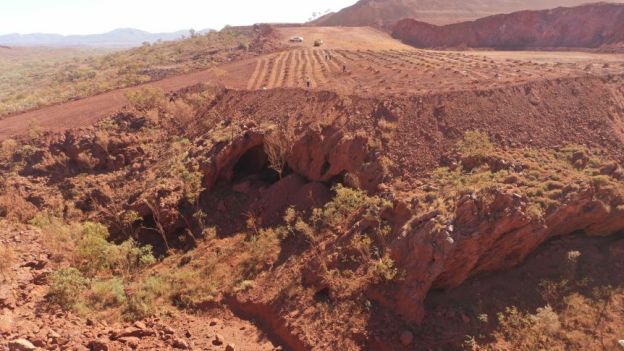
The Worst Cultural Calamity of 2020: Blowing Up the 46 000-Year-Old Caves at the Juukan Gorge

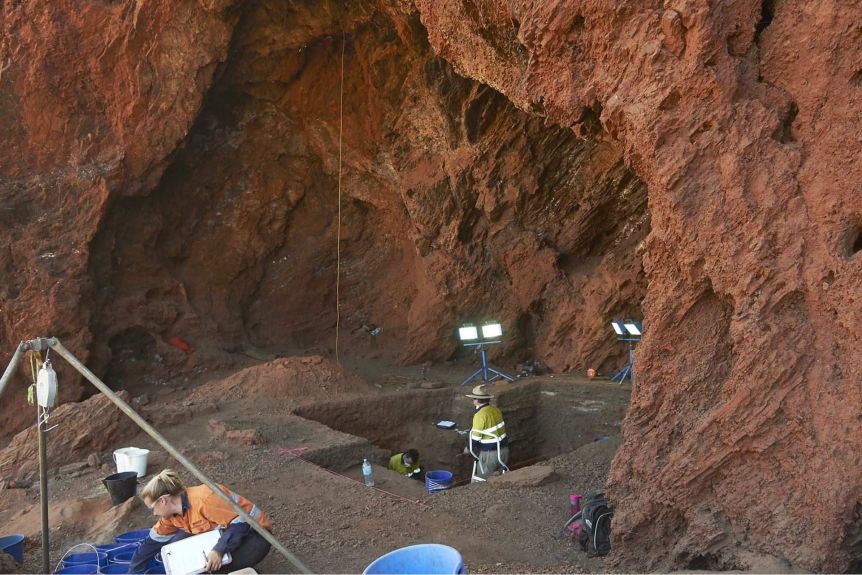
In May 2020, mining giant Rio Tinto blasted through two rock shelters in Juukan Gorge in Western Australia in order to mine iron ore. Evidence of human habitation there dates back tens of millennia.  Rio Tinto obtained permission to mine in the area in 2013, a right which was not affected by the discovery of ancient artefacts such as stone relics, faunal remains and human hair in one of the Juukan caves a year later…

Critics of Rio Tinto say there is abundant evidence that the company was aware of the site’s importance before the blasting. For example, the BBC reported that in the days running up to the caves’ destruction in May 2020, Rio Tinto hired lawyers in case opponents tried to seek injunctions to stop them.

Some 7,000 artefacts were discovered during the excavation of one of the Juukan sites.

Excerpt from MERRIT KENNEDY, A Mining Company Blew Up A 46,000-Year-Old Aboriginal Site. Its CEO Is Resigning, NPR, Sept. 11, 2020

By Hook or By Crook: Harvesting DNA of Indigenous Peoples

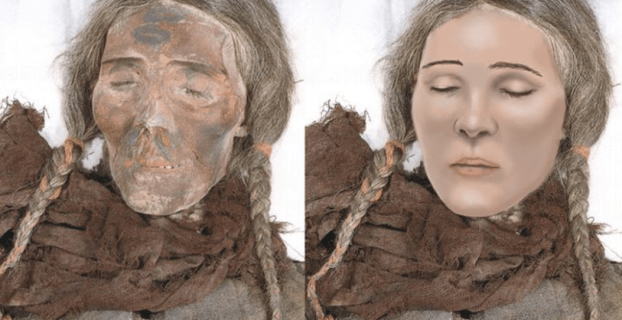
Tensions between Western scientists and Indigenous communities around the world. (“Indigenous” is an internationally inclusive term for the original inhabitants, and their descendants, of regions later colonized by other groups.) Scientists have used Indigenous samples without permission, disregarded their customs around the dead, and resisted returning samples, data, and human remains to those who claim them. Indigenous communities have often responded by severely restricting scientists’ sampling of their bodies and their ancestors, even as genomics has boomed, with increasing relevance for health….

The  Indigenous Peoples in Genomics (SING) aims to train Indigenous scientists in genomics so that they can introduce that field’s tools to their communities as well as bring a sorely needed Indigenous perspective to research. Since Malhi helped found it at UI in 2011, SING has trained more than 100 graduates and has expanded to New Zealand and Canada. The program has created a strong community of Indigenous scientists and non-Indigenous allies who are raising the profile of these ethical issues and developing ways to improve a historically fraught relationship…

Some Indigenous communities, such as the Navajo Nation, decline to participate in genetic research at all. And many tribes don’t permit research on their ancestors’ remains. Such opposition can feel like a hostile stumbling block to Western scientists, some of whom have gone to court to gain or maintain access to Indigenous samples. Not being able to study at least some early samples would “result in a world heritage disaster of unprecedented proportions,” the American Association of Physical Anthropologists said in 2007 in a debate over an amendment to the Native American Graves Protection and Repatriation Act.

To understand why so many Indigenous people distrust Western scientists, consider how intertwined science has been with colonialism, says SING co-founder Kim TallBear, an anthropologist at the University of Alberta in Edmonton, Canada, and a member of the Sisseton Wahpeton Oyate in North and South Dakota. “While the U.S. was moving westward, stealing land, and massacring Indians, you had contract grave robbers coming out onto the battlefields and immediately picking up the dead—Native people—and boiling them down to bone, and sending their bones back east,” she says. Many of those skeletons were displayed and studied in museums by researchers who used them to argue for the biological inferiority of Indigenous people. Some of those skeletons are still there.  “Science was there, always. It’s part of that power structure,”

Many Indigenous communities see echoes of this painful history reverberating in the 21st century. In 2003, the Havasupai Tribe in Arizona discovered that samples taken for a study on diabetes had been used for research projects they had never consented to, including on population genetics and schizophrenia. They sued Arizona State University in Tempe, which eventually returned the samples and paid $700,000 to the tribe (Science, 30 April 2010)…

Researchers working for the Human Genome Diversity Project (HGDP), a major international effort, were collecting samples from around the world to build a public database of global genetic variation. The project publicly emphasized the importance of collecting DNA from genetically isolated Indigenous populations before they “went extinct.”  That rationale “was offensive to Indigenous populations worldwide,” Gachupin says. “Resources for infrastructure and for the wellbeing of the community were not forthcoming, and yet now here were these millions and millions of dollars being invested to ‘save’ their DNA.” The message from the scientific establishment was, she says, “We don’t care about the person. We just want your DNA.” Some activists dubbed the HGDP “the Vampire Project,” believing the only beneficiaries would be Western scientists and people who could afford costly medical treatments.

Excerpts from Lizzie Wade, Bridging the Gap, Science,  Sept. 28, 2018

Peruvian Amazon: Oil Pollution & Human Rights

On September 15, 2018 indigenous federations from the Amazonian Loreto region of northern Peru scored a small victory in the fight for community rights. Representatives from four federations signed an agreement with the Peruvian government and the state-owned enterprise PetroPerú that acknowledges prior consultation as part of the new contracting process for petroleum Block 192. Under the new agreement, Block 192 will undergo a community consultation process before PetroPerú awards a new contract for operating the oil field…

Under the formal resolution with Prime Minister César Villanueva, the Ministry of Energy and Mining, and PetroPerú, the government will complete the community consultation for Block 192 between December 2018 and March 2019.

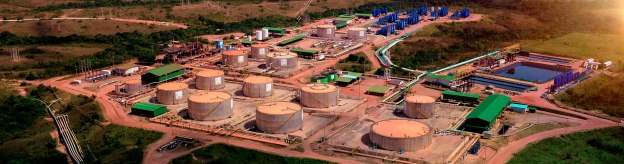
Extending across the Tigre, Corrientes, Pastaza and Marañón river basins in Peru’s remote Loreto province, Block 192 is the largest-yielding oil field in Peru, accounting for 17 percent of the country’s production. The government plans to continue production of oil at the block for another 30 years, adding to the almost 50 years of oil activity in the region. The oil field is currently operated by Canadian-based Frontera Energy, whose contract with PetroPerú is set to expire in September 2019.

American-based Occidental Petroleum discovered oil in the region in 1972 and a succession of companies, including the Dutch-Argentinian conglomerate Pluspetrol, left Block 192 (previously Block 1-AB) heavily polluted. While Peru’s Agency for Environmental Assessment and Enforcement fined Pluspetrol for violations, the Peruvian government remains in a protracted legal fight with the oil giant. A majority of the fines are outstanding and Pluspetrol denies any wrongdoing, despite settling with a local community in 2015.

For over 40 years, the indigenous Kichwa, Quechua, Achuar, and Urarina peoples who live near the oil field have been exposed to salts, heavy metals and hydrocarbons. According to a 2018 toxicology study by Peru’s National Center for Occupational Health and Environmental Protection for Health, over half of the indigenous residents in the region’s four basins have blood lead levels that surpass international recommended limits. A third have levels of arsenic and mercury above the levels recommended by Peru’s Ministry of Health…

The actual cost of cleaning up Block 192, along with neighboring Block 8, would approach $1 billion. To make matters more challenging, the $15 million fund of Peruvian government is almost exhausted..”

Excepts from Andrew Bogrand, Righting the many wrongs at Peru’s polluted oil Block 192, Nov. 2, 2018

Oil Pollution in Amazon Peru

Hundreds of indigenous people deep in the Peruvian Amazon are blocking a major Amazon tributary following what they say is the government’s failure to address a social and environmental crisis stemming from oil operations.   Kichwa men, women and children from numerous communities have been protesting along the River Tigre for almost a month, barring the river with cables and stopping oil company boats from passing.  Oil companies have operated in the region for over 40 years, and have been linked by local people to pollution that has led the government to declare “environmental emergencies” in the Tigre and other river basins….

The oil concession where the protest is taking place, Lot 1-AB, is Peru’s most productive, but the contract, held by Pluspetrol, expires in August 2015. The government has committed to relicensing it and consulting the indigenous communities involved, but leaders say the contamination and other issues must be addressed first.   “What we want is remediation, compensation, and to be consulted, according to international norms, about the relicensing,” says Fachin. “We won’t permit another 30 years of work otherwise.”…The Kichwas are now they are demanding 100 million Peruvian nuevo soles, from Pluspetrol, for “compensation after almost 45 years of contamination.”

“The state declared an environmental emergency, but hasn’t done anything,” says Guillermo Sandi Tuituy, from indigenous federation Feconat. “It must find a solution to this problem if it wants to relicense the concession.”...Pluspetrol took over Lot 1-AB from Occidental in 2000. It did not respond to requests for comment.

Peru’s indigenous people protest against relicensing of oil concession, Guardian,  Feb, 2, 2012