Tag Archives: uranium mining and protection of aquifers

Mining Giants and Little People: Mariana Dam Disaster

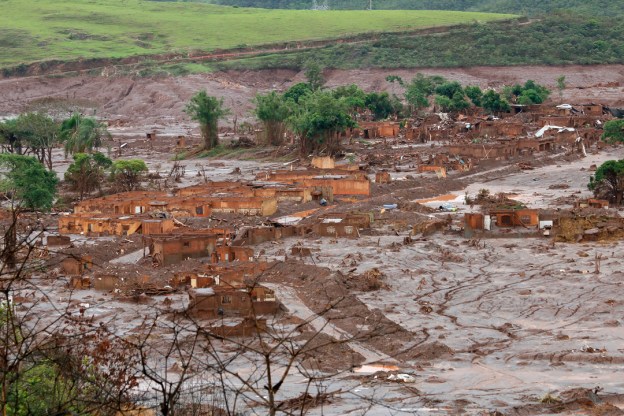
Mining company BHP has been found liable on November 13, 2025 for a 2015 dam collapse in Brazil,….[Note that this disaster was followed by yet another disaster in 2019 the Brumadinho dam disaster] The dam collapse killed 19 people, polluted the river and destroyed hundreds of homes. The civil lawsuit, representing more than 600,000 people including civilians, local governments and businesses, had been valued at up to £36bn ($48bn).

The dam in Mariana, southeastern Brazil, was owned by Samarco, a joint venture between the mining giants Vale and BHP. The claimants’ lawyers argued successfully that the trial should be held in London because BHP headquarters “were in the UK at the time of the dam collapse”. A separate claim against Samarco’s second parent company, Brazilian mining company Vale, was filed in the Netherlands, with more than 70,000 plaintiffs.

The dam was used to store waste from iron ore mining. When it burst, it unleashed tens of millions of cubic metres of toxic waste and mud. The sludge swept through communities, destroying hundreds of people’s homes and poisoning the river. Judge Finola O’Farrell said in her High Court ruling that continuing to raise the height of the dam when it was not safe to do so was the “direct and immediate cause” of the dam’s collapse, meaning BHP was liable under Brazilian law.

Excerpt from Ione Wells, UK court finds mining firm liable for Brazil’s worst environmental disaster, BBC, Nov. 14, 2025

———-

According to the UN Special Rapporteur who visited Brazil in 2019 and met BHP and Vale on numerous occasions, ” BHP and Vale rushed to create the Renova Foundation to provide the communities [affected by the collapse of the dam] an effective remedy. Unfortunately, the true purpose of the Renova Foundation appeared to be limit liability of BHP and Vale, rather than provide any semblance of an effective remedy

Furthermore, inadequate information was available about the toxicity of the waste after the Mariana disaster, the companies insisted that it was non-toxic, and rejected calls for precaution. Only three weeks after concerns were raised was information availed. When health impacts in Barra Longa emerged years later, Renova sought to exert ownership of epidemiological and toxicological studies by Ambios to suppress disclosure. Read the full report of the Special Rapporteur here.
Builiding a Nuclear War Chest: the US Uranium Reserve

The US electricity production from nuclear plants hit at an all-time high in 2019… generating more than 809 billion kilowatt-hours of electricity, which is enough to power more than 66 million homes.  Yet, despite operating the largest fleet of reactors in the world at the highest level in the industry, US ability to produce domestic nuclear fuel is on the verge of a collapse.  

Uranium miners are eager for work, the United States’s only uranium conversion plant is idle due to poor market conditions, and its inability to compete with foreign state-owned enterprises (most notably from China and Russia) is not only threatening US energy security but weakening the ability to influence the peaceful uses of nuclear around the world. Restoring America’s Competitive Nuclear Energy Advantage was recently released by the U.S. Department of Energy (DOE) to preserve and grow the entire U.S. nuclear enterprise…. The first immediate step in this plan calls for DOE to establish a uranium reserve.   Under the Uranium Reserve program, the DOE Office of Nuclear Energy (NE) would buy uranium directly from domestic mines and contract for uranium conversion services. The new stockpile is expected to support the operation of at least two US uranium mines, reestablish active conversion capabilities, and ensure a backup supply of uranium for nuclear power operators in the event of a market disruption [such as that caused the COVID-19 pandemic]. 

NE will initiate a competitive procurement process for establishing the Uranium Reserve program within 2021.  Uranium production in the United States has been on a steady decline since the early 1980s as U.S. nuclear power plant operators replaced domestic uranium production with less expensive imports. State-owned foreign competitors, operating in different economic and regulatory environments, have also undercut prices, making it virtually impossible for U.S. producers to compete on a level-playing field.  As a result, 90% of the uranium fuel used today in U.S. reactors is produced by foreign countries.

Establishing the Uranium Reserve program is exactly what United States needs at this crucial time to de-risk its nuclear fuel supply. It will create jobs that support the U.S. economy and strengthen domestic mining and conversion services….The next 5-7 years will be a whirlwind of nuclear innovation as new fuels and reactors will be deployed across the United States.

Excerpts  from USA plans revival of uranium sector, World Nuclear News, May 12, 2020.  See also Building a Uranium Reserve: The First Step in Preserving the U.S. Nuclear Fuel Cycle, US Office of Nuclear Energy, May 11, 2020.

How Many Uranium Mines Do We Need?

At the height of activity in 1980, U.S. companies produced nearly 44 million pounds of uranium concentrate and provided most of the supplies purchased by nuclear power plants. In 2017, American miners produced 2.4 million pounds and supplied just 7 percent of the uranium bought by domestic plants.  The industry, which once supported nearly 22,000 jobs, now employs just a few hundred people each year…

In July 2018, the U.S. Commerce Department opened an investigation to determine whether the nation’s growing dependence on foreign uranium supplies poses a risk to national security….The two miners that petitioned Commerce to conduct the review, Energy Fuels and UR-Energy, want the United States to take steps to ensure U.S. producers control 25 percent of the market. They say they can’t compete with subsidized supplies from places like Russia, Kazakhstan and Uzbekistan.

To be sure, nearly half of the uranium used in the United States comes from allies like Canada and Australia. From the moment they lost trade protections, U.S. miners had trouble competing with these foreign supplies.
“It’s been government-sponsored, government-subsidized just since the beginning. Trying to sort that out and find where there’s a free market in uranium — I find that very questionable.”-Luke Danielson, Sustainable Development Strategies Group president

The U.S. uranium mining industry is relatively young. It went through a brief golden age between about 1955 and 1980, beginning when the United States offered generous incentives to shore up its stockpiles of the nuclear weapons fuel during the Cold War….By the 1960s, the program had packed U.S. storehouses so full of uranium stockpiles that the government stopped paying the incentives. However, it left in place rules barring the use of foreign uranium until 1975, when it began to allow a growing percentage of overseas supplies into the market.  That opened the door to high-quality, low-cost supplies from Canada and Australia. By 1987, the United States was importing nearly 15 million pounds of uranium, and domestic output fell by about a third to roughly 13 million pounds.

While competition weighed on U.S. uranium production, the excitement around nuclear energy in the 1970s kept mines busy. However, the American love affair with atomic power proved short-lived. The 1979 meltdown of a reactor at Three Mile Island in Pennsylvania sparked fierce backlash against nuclear energy. Seven years later, the Chernobyl nuclear disaster turned a Ukrainian city into a ghost town…

By the early 2000s, U.S. uranium production was at its lowest in a half century.  Around that time, the former Soviet state Kazakhstan was ramping up uranium mining. In just a few short years, it would become the world’s top uranium producer and the second biggest supplier to the United States.
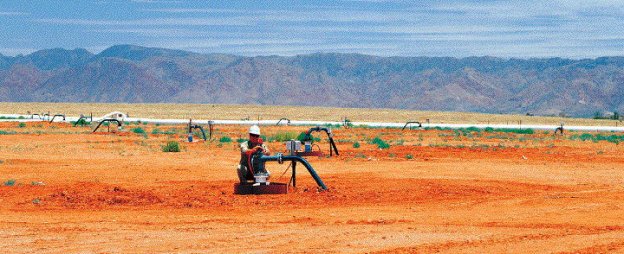
The Central Asian nation accomplished that feat in large part by exploiting a process called “in situ leaching” (ISL) or in situ recovery  (ISR)*** increasingly being used to extract uranium.  Along with countries like Niger, Mali and Mongolia, Kazakhstan has an advantage: lax regulations that allow it to process uranium cheaply from in situ leaching, which involves pumping chemicals into uranium reserves and carries serious risks to the environment if it’s not carried out responsibly…

And then in 2011, the Fukushima nuclear disaster in Japan created a backlash unlike anything seen since Three Mile Island and Chernobyl. In the aftermath, Japan shut down all of its nuclear reactors, and Germany decided to phase out nuclear energy by 2022.  The U.S. nuclear renaissance has also fizzled as flagship projects have turned into costly boondoggles. The venerable Westinghouse Electric Company filed for bankruptcy last year under the weight of billions of dollars in losses tied to its troubled nuclear power plant projects in Georgia and South Carolina. “There’s such a glut of inventory in the market that it’s just not profitable for some of the mines to produce, so the price has just really plummeted as a result of that,” said Sean Davis, a research analyst at IHS Markit who tracks the chemicals used in uranium mining.

Since their peak in 2007, uranium prices have crashed from nearly $140 per pound to $20-$25.

Excerpts from Nuclear wasteland: The explosive boom and long, painful bust of American uranium mining, CNBC, Aug. 4, 2018

***”No remediation of an ISR operation in the United States has successfully returned the aquifer to baseline conditions.”