Monthly Archives: September 2024

The Magic of Tether: Why the United States Tolerates Tether Land?

A giant unregulated currency is undermining America’s fight against arms dealers, sanctions busters and scammers. Almost as much money flowed through its network in 2024 as through Visa cards. And it has recently minted more profit than BlackRock, with a tiny fraction of the workforce. Its name: tether. The cryptocurrency has grown into an important cog in the global financial system, with as much as $190 billion changing hands daily. In essence, tether is a digital U.S. dollar—though one privately controlled in the British Virgin Islands by a secretive crew of owners, with its activities largely hidden from governments.  Known as a stablecoin for its 1:1 peg to the dollar, tether gained early use among crypto aficionados. But it has spread deep into the financial underworld, enabling a parallel economy that operates beyond the reach of U.S. law enforcement. Wherever the U.S. government has restricted access to the dollar financial system—Iran, Venezuela, Russia—tether thrives as a sort of incognito dollar used to move money across borders.

Russian oligarchs and weapons dealers shuttle tether abroad to buy property and pay suppliers for sanctioned goods. Venezuela’s sanctioned state oil firm takes payment in tether for cargoes. Drug cartels, fraud rings and terrorist groups such as Hamas use it to launder income. Yet in dysfunctional economies such as Argentina and Turkey, beset by hyperinflation and a shortage of hard currency, tether is also a lifeline for people who use it for quotidian payments and as a way to protect their savings.

Tether is arguably the first successful real-world product to emerge from the cryptocurrency revolution that began over a decade ago. It has made its owners immensely rich. Tether has $120 billion in assets, mostly risk-free U.S. Treasury bills, along with positions in bitcoin and gold. Last year it generated $6.2 billion in profit, out-earning BlackRock, the world’s largest asset manager, by $700 million.

The company behind tether, Tether Holdings, issues the virtual coins to a select group of direct customers, mostly trading firms, who wire real-world dollars in exchange. Tether uses those dollars to purchase assets, mostly U.S. Treasurys, that back the coin’s value. Once in the wider market, tether can be traded for other tokens or traditional currencies through exchanges and local brokerages. In Iran, for example, a crypto exchange called TetherLand allows Iranians to swap rials into tether. Tether vets the identities of its direct customers, but much of its vast secondary market goes unpoliced. The tokens can be pinged near-instantaneously along chains of digital wallets to obfuscate the source. A United Nations report in January 2024 said tether was “a preferred choice” for Southeast Asian money launderers. 

The company says it can track every transaction on public blockchain ledgers and can seize and destroy tether held in any wallet. But freezing wallets is a game of Whac-A-Mole. Between 2018 and this June, Tether blacklisted 2,713 wallets on its two most popular blockchains that had received a total of about $153 billion, according to crypto data provider ChainArgos. Of that massive sum, Tether could only freeze $1.4 billion because the rest of the funds had already been sent on.

Excerpts from Angus Berwick & Ben Foldy, The Shadow Dollar That’s Fueling the Financial Underworld, WSJ, Sept. 10, 2024
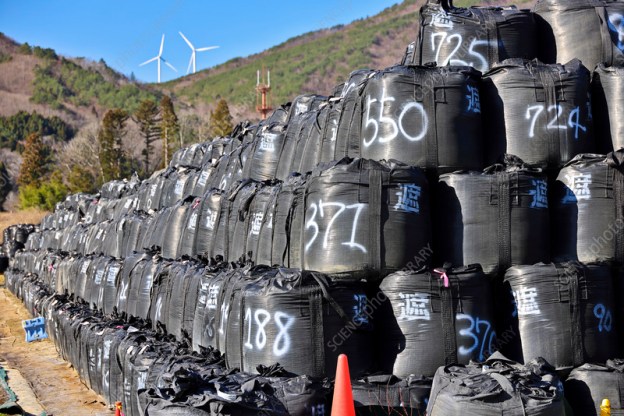

What to Do With 13 Million Cubic Meters of Nuclear Soil?

Japan’s approach for recycling and disposing of soil and radioactive waste from decontamination activities after the 2011 Fukushima Daiichi Nuclear Power Station (FDNPS) accident as currently planned is consistent with IAEA Safety Standards, an International Atomic Energy Agency (IAEA) report released on September 10, 2024.

About 13 million cubic meters of soil and about 300,000 cubic meters of ash from incineration of organic material was removed as part of decontamination activities in Fukushima Prefecture and stored at an Interim Storage Facility (ISF) covering an area of 16 square kilometres, spanning across the Okuma Town and Futaba Town…Japan plans to recycle roughly 75% of the removed soil – the soil which has low levels of radioactivity – by using it, if demonstrated safe, for civil engineering structures including embankments for roads, railways, seawalls, waste treatment sites, coastal protection, agricultural land, and land reclamation. The remaining soil which cannot be recycled will be disposed of permanently and Japan intends to confirm the site selection and disposal process in 2025.

Excerpt from Japan’s Fukushima Soil Recycling and Disposal Plan Meets Safety Standards, IAEA Says, Press Release, Sept. 10, 2024

Can Your Smartphone Kill You? You Bet.

On September 17, 2024, nine people, including a child, have been killed after handheld pagers used by members of the armed group Hezbollah to communicate exploded across Lebanon, the country’s health minister says. Iran’s ambassador to Lebanon was among 2,800 other people who were wounded by the simultaneous blasts in Beirut and several other regions. Hezbollah, which is backed by Iran, said the pagers belonged “to employees of various Hezbollah units and institutions” and confirmed the deaths of eight fighters…Hours before the explosions, Israel’s security cabinet said stopping Hezbollah attacks on the north of the country to allow the safe return of displaced residents was an official war goal.

Hezbollah said an unspecified number of pagers – which the group relies on heavily for communications due to the risk of mobile phones being hacked or tracked – exploded at around 15:30 local time (12:30 GMT) (September 17, 2024) in the capital Beirut and many other areas. One CCTV video showed an explosion in a man’s bag or pocket at a supermarket. He is then seen falling backwards to the ground and crying out in pain as other shoppers run for cover. Hours later, ambulances were still rushing to hospitals overwhelmed with the number of casualties, 200 of whom the health minister said were in a critical condition. Most of the wounds were at the level of the waist, face, eyes and hands, he said, adding: “A lot of casualties have lost fingers, in some cases all of them.”

Overheated lithium-ion batteries can catch fire, but experts said hacking into the pagers and making them overheat would not usually cause such explosions. A former British Army munitions expert, who asked not to be named, told the BBC the pagers would have likely been packed with between 10g and 20g of military-grade high explosive, hidden inside a fake electronic component. Once armed by a signal, called an alphanumeric text message, the next person to use the device would have triggered the explosive, the expert said.

On September 18, 2024, walkie-talkies detonated in Lebanon, killing at least 20 people and wounding 450 in a fresh attack targeting Hezbollah, a day after pager blasts killed at least 12 people, including children, and injured thousands across the country

Excerpt from David Gritten, Hezbollah blames Israel after pager explosions kill nine and injure thousands in Lebanon, BBC, Sept. 18, 2024

What does Silicon Valley and the Israeli Army have In Common

Members of Unit 8200 of the Israeli Army, known for its advanced cybersecurity and cyberwarfare capabilities, have founded dozens of cybersecurity companies in the United States. Others have become influential venture capitalists in their own rights and are mentors to entrepreneurial graduates.  There are at least five tech companies started by Unit 8200 alumni publicly traded in the U.S., together worth around $160 billion. Private companies started by ex-8200 soldiers are worth billions more.  The largest, cloud-security company Wiz, in July 2024 came close to signing a $23 billion deal to be bought by Google. It would have been Google’s biggest acquisition ever. After the talks fell apart, Wiz Chief Executive and 8200 veteran Assaf Rappaport told employees he wants to hit $1 billion in revenue before planning a public-market listing. 

Wiz and the 8200 alumni are targeting a massive business problem—how to keep big companies secure—with skills and an intensity they learned from their time in the military. They and the companies they’ve built have become hot commodities as more industries move huge amounts of business documents to the cloud—which is constantly under attack from opportunistic hackers. While Unit 8200 alumni once talked about their service in hushed tones, they now tout it in press releases to attract clients and investment money for their startups.

Palo Alto Networks, the biggest publicly traded cybersecurity company, and itself a product of the 8200 pipeline, has purchased several companies led by alumni of the unit in recent years. Greylock Partners and Sequoia Capital, two of Silicon Valley’s most storied venture-capital firms, have recently hired Israel-based partners…

Elsewhere, alumni of other Israeli military units founded cybersecurity company NSO Group. It created software called Pegasus, which has been used by governments to access the devices of journalists and embassy workers, according to the U.S. Department of Commerce. The department put NSO Group on an export prohibition list three years ago, a decision its executives are working to reverse. This means exports from the U.S. to the company of both hardware and software will be blocked, unless the Commerce Department grants a license for a transaction.  

Excerpt from Miles Kruppa and Alex Perry, Silicon Valley in Love with Israeli Army, WSJ, Aug. 31, 2024

The Role of Telegram in the Russia-Ukraine War

Russian authorities have reacted with unusual fury to the arrest of Telegram founder Pavel Durov by French authorities on August 2024. Telegram is more than a mere social-media app to Moscow. Russian soldiers and spies depend on it for battlefield communications, including the guidance of artillery, the coordination of movements and intelligence gathering. “Many are joking that the arrest of Pavel Durov is essentially the arrest of the chief signals officer of the Russian armed forces,” said Aleksey Rogozin, a Russian parliament adviser and former senior military industry executive.

“As wild as it sounds, the transmission of intelligence, the targeting of artillery, the broadcasting of drone feeds and many other things are currently very frequently done via Telegram,” Rogozin said on Telegram… 

Both the Russian and the Ukrainian militaries started relying on commercial platforms. While the Ukrainians prefer Western providers such as Signal or Discord, the Russians chose Telegram because it is based in the United Arab Emirates, which maintains good relations with Moscow. They think the app is more impervious to Western signals intelligence.

Russian volunteers who supply drones, night-vision scopes, vehicles and other aid to military units operate almost exclusively through Telegram. The service also has offered a lucrative social-media platform to Russian war propagandists, with millions of subscribers, who work in close cooperation with the Russian Ministry of Defense.

“The detention of Durov, by itself, wouldn’t have necessarily caused such a resonance in Russia, except for one circumstance. De facto, it is the main messenger of this war, an alternative to the classified military network,” Andrey Medvedev, a correspondent for Russian state TV and a deputy chair of the Moscow city council, wrote on Telegram…

The Russian government has reacted to Durov’s detention in France with far more outrage and fury than would be expected given the circumstances of the entrepreneur’s departure from Russia in 2014…The director of Russia’s SVR external intelligence service, Sergey Naryshkin, said recently that he expects Durov not to share with French and other Western governments any information that would harm the Russian state. “I very much count on him not to allow it,” the Russian spymaster said in an interview with TASS news agency.

Excerpt from Yaroslav Trofimov, Telegram Arrest Sows Russian War Worries, WSJ, Aug. 31, 2024

Rockets Create Holes in Earth’s Ionosphere

A rocket launch has ripped a hole in the Earth’s ionosphere as it accelerated into space. The rocket, belonging to Firefly Aerospace, was carrying the Space Force Victus Nox satellite into orbit as it launched on September 14, 2024 from Vandenberg Space Force Base in California…The ionosphere is a layer of the atmosphere around 50 to 400 miles above, filled with charged atoms (ions). These ions reflect and refract radio signals, making the ionosphere essential to radio communications, which is why radio blackouts occur during solar flares, as the ionosphere is disrupted.

Rockets release exhaust as they ascend, mostly containing water and carbon dioxide, which reacts with the ions in the ionosphere. If the chemistry of the upper atmosphere is disturbed, such as when a rocket flies through it, the carbon dioxide and water molecules from the rocket exhaust change the chemical balance in the atmosphere. This temporarily makes it much easier for the ionization to recombine into neutral atoms, weakening the ionosphere and causing the red glow to be seen…This can lead to a 70 percent drop in ionization in the area that the rocket passes through, particularly in the F-layer at the top of the ionosphere. The red glow in particular comes from oxygen ions, which also glow during the northern and southern lights.

Several recent rocket launches have resulted in a similar phenomenon, including two SpaceX rockets in July and August 2024. The consequences of these holes in the ionosphere are disruptions to radio communication and satellite navigation systems.

The ionosphere absorbs ultraviolet and X-rays from the sun, which is what ionizes the gas atoms in the layer. This prevents these harmful rays from reaching the ground. The holes made by rocket launches do not affect the ionosphere’s ability to filter out this radiation. “While the number of rocket launches is increasing dramatically in recent years, this still constitutes a small amount of gas in comparison with the volume of the upper atmosphere. But if the rate at which rocket exhausts transport water to the upper atmosphere exceeds the rate at which it is removed then the cumulative effect will be a weaker ionosphere.”

Excerpts from Jess Thomson, Rocket Carrying Space Force Satellite Punches Hole In Ionosphere, Newsweek, Sept. 22, 2024

Cold War Tactics: Taunting America in its Backyard

In  June 2024, China renewed a multibillion-dollar portion of a currency swap, alleviating concerns that Argentina would need to pay back the funds from its depleted reserves. Argentine President Javier Milei, who often derided China during his presidential campaign, calling its leaders “assassins,” thanked Beijing, saying the extension provided financial relief. His office said mutual respect with China is vital to Argentina’s development and prosperity. Milei, an unshakable opponent of communism, has taken a more pragmatic approach to Beijing, saying Chinese investments and trade are essential to Argentina’s future, while maintaining closer relations with the U.S. China has deepened its ties with Argentina in key economic sectors, from the lithium mining companies in the arid north to the agricultural industry on the farm belt’s vast open plains… 

China is Argentina’s second biggest trade partner, after neighboring Brazil, racking up about $20 billion in commerce in 2023, compared with $14 billion for the U.S. Argentina’s exports to China have increased eightfold over the past two decades, as the Asian country invested in mining, oil and gas, finance and construction. China’s stock of foreign direct investments is up 500% since 2015, to more than $3 billion,

Argentina recently bought U.S.-made jet fighters, forgoing an offer to purchase Chinese ones. A Chinese company, Shaanxi Coal and Chemical Industry Group, reached a deal in 2022 with officials in the province of Tierra del Fuego to build a port in Argentina’s far south, giving Beijing a strategic location for accessing Antarctica and a crucial shipping route through the Strait of Magellan. That project has now been shelved, an adviser to the Milei government said….

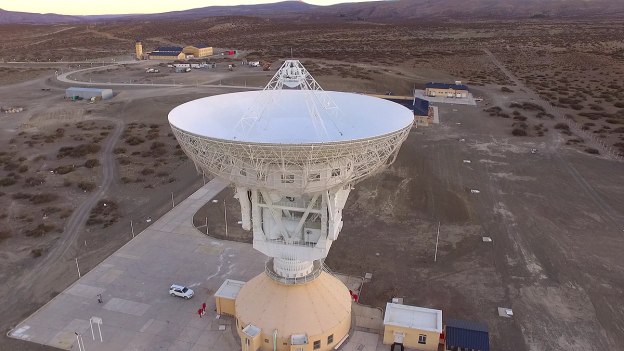
Particularly worrisome to Washington has been a Chinese space station in the windswept plains of Neuquén that has little oversight from the Argentine government. U.S. military officials worry the remote base, which has a 35-meter-wide antenna, could be used for global surveillance by targeting U.S. satellites. 

Excerpt from Ryan Dubé, Argentina’s Milei Finds It Hard to Decouple From China, WSJ, Aug. 18, 2024

US-China Locked in Perpetual Cat and Mouse Game

Chinese artificial-intelligence developers have found a way to use the most advanced American chips without bringing them to China. They are working with brokers to access computing power overseas, sometimes masking their identity using techniques from the cryptocurrency world. The tactic comes in response to U.S. export controls that have prevented Chinese companies from directly importing sought after AI chips developed by U.S.-based Nvidia. While it is still possible for Chinese users to physically bring Nvidia’s chips to China by tapping a network of gray-market sellers, the process is cumbersome and can’t supply all the needs of big users.

One entrepreneur helping Chinese companies overcome the hurdles is Derek Aw, a former bitcoin miner. He persuaded investors in Dubai and the U.S. to fund the purchase of AI servers housing Nvidia’s powerful H100 chips. In June 2024, Aw’s company loaded more than 300 servers with the chips into a data center in Brisbane, Australia. Three weeks later, the servers began processing AI algorithms for a company in Beijing. “There is demand. There is profit. Naturally someone will provide the supply,” Aw said.

Renting far away computing power is nothing new, and many global companies shuffle data around the world using U.S. companies’ services such as Google Cloud, Microsoft Azure and Amazon Web Services. However, those companies, like banks, have “Know Your Customer” policies that may make it difficult for some Chinese customers to obtain the most advanced computing power.

The buyers and sellers of computing power and the middlemen connecting them aren’t breaking any laws, lawyers familiar with U.S. sanctions say. Washington has targeted exports of advanced chips, equipment and technology, but cloud companies say the export rules don’t restrict Chinese companies or their foreign affiliates from accessing U.S. cloud services using Nvidia chips. The Commerce Department in January 2014 proposed a rule that seeks to prevent malicious foreign entities from using U.S. cloud computing services for activities including training large AI models. U.S. cloud companies argue that the rule won’t prevent abuse and could instead undermine customer trust and weaken their competitiveness.

In platforms used by Aw and others, the billing and payment methods are designed to give the participants a high degree of anonymity. Buyers and sellers of computing power use a “smart contract” in which the terms are set in a publicly accessible digital record book. The parties to the contract are identified only by a series of letters and numbers and the buyer pays with cryptocurrency. The process extends the anonymity of cryptocurrency to the contract itself, with both using the digital record-keeping technology known as blockchain. Aw said even he might not know the real identity of the buyer. As a further mask, he and others said Chinese AI companies often make transactions through subsidiaries in Singapore or elsewhere.

The service of selling scattered computing power is called a decentralized GPU model.

Excerpts from Raffaele Huang, China’s AI Engineers Are Secretly Accessing Banned Nvidia Chips, WSJ, Aug. 26, 2024

The Devil’s Scenario: Drone Striking Nuclear Power Plant

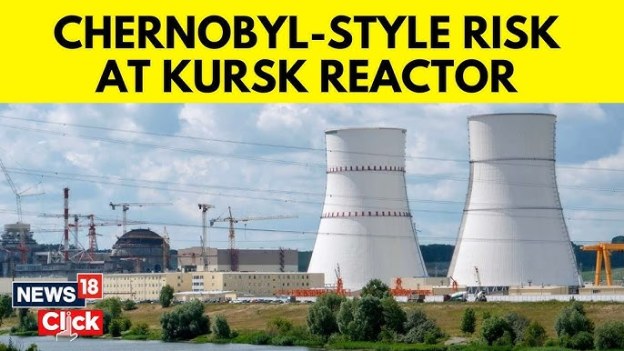
The International Atomic Energy Agency (IAEA) was informed on August 22, 2024 by Russia that the remains of a drone had been found within the Kursk nuclear power plant. Russian President Vladimir Putin on Thursday accused Ukraine of trying to strike the Kursk nuclear power plant in an overnight attack. The nuclear plant is located in western Russia, where fighting is raging between Russian and Ukrainian forces, is especially vulnerable to a serious accident because it lacks a protective dome that could shield it from missiles, drones or artillery, the head of IAEA said on August 27, 2024.

The nuclear plant– the same model as the Chernobyl plant in Ukraine that witnessed the world’s worst civilian nuclear disaster in 1986 – lacks the containment dome and protective structure that is typical of modern nuclear power stations. According to Grossi, director-general of the IAEA: “This means that the core of the reactor containing nuclear material is protected just by a normal roof. This makes it extremely exposed and fragile, for example, to an artillery impact or a drone or a missile,” So this is why we believe that a nuclear power plant of this type, so close to a point of contact or a military front, is an extremely serious fact that we take very seriously.”

Excerpt from UN watchdog says Russian nuclear plant ‘extremely exposed’ if attacked, Reuters, Aug. 27, 2024