Tag Archives: synthetic drugs

Change text to "We The People"

We The Subjects — Plundering Health Data

When geneticist Jingyuan Fu heard that an artificial intelligence (AI) group in China had downloaded a large biomedical dataset her team built in Europe, she felt pride — and a jolt of unease. “We spent millions on that dataset,” says Fu, a professor of systems medicine at the University of Groningen in the Netherlands. “And the Chinese bought the whole thing for around €2,000.” In recent years, Fu’s group, like many others, has also begun using such data as feedstock for artificial intelligence. The AI group in China that downloaded her dataset had the same goal. “The Chinese wanted all our data,” Fu says. “And they also wanted our insights into how to mine it for AI development.”
From her perspective, today’s global scramble for biomedical data looks increasingly lopsided. “China has collected a huge amount of data,” she says. “But their own data sharing and openness is very limited.”… China already holds the largest data repositories, with 1.4 billion people using the WeChat app, many of whom are already connected to hospital databases for data integration, analysis and even healthcare delivery. “China also runs the largest number of clinical trials in the world generating massive drug response and real-world-evidence datasets.”

[A]fter decades of policies pushing ‘open science’, governments are now promoting ‘data sovereignty’ — the idea that sensitive datasets should remain under national control and foreign access should be conditional. [In Europe] the stance is defensive. [Europe] is embarrassed about having allowed Chinese AI developers to plunder European biomedical databases, even while China blocks foreign access to Chinese datasets. They are now belatedly closing international access to biomedical databases, after years of championing cross-border sharing…“According to the European Commission “there are currently no partnerships involving the sharing of such data with China or the United States for AI development”….

As of April 2025, the 2.5 petabytes of omics data in the US Cancer Genome Atlas Program database are now closed to Chinese researchers, and UK Biobank data, containing whole-genome and exome sequences for 500,000 people, is no longer internationally downloadable. UK Biobank data must now be analyzed on the Biobank’s own platform, which provides a cloud-based ‘reading room’ without allowing individual data downloads…In September 2025, the US National Institutes of Health issued new regulations for genomic data repositories and users aimed at “protecting Americans’ sensitive personal health-related data from misuse by foreign adversaries” while enhancing “the privacy and autonomy of research participants”….In December 2025, the US State Department launched its Pax Silica initiative, aimed at forming an international AI alliance that hedges against China. [Furthermore], data that are generated and held by hospitals, insurers, device makers, drug makers and data platform companies. are abundant For example, US-based electronic health records vendor Epic Systems Corporation manages records for over 300 million US patients and says that it has more than 150 AI features in development…

[But]AI models developed using sequestered datasets often ‘overfit’ to the specific demographics or clinical practices of their training environment…. “Without external, international validation, these biases are frequently only discovered after they have caused clinical harm,” …[For example] many high-performing AI tools for melanoma detection show a precipitous drop in accuracy when applied to darker skin tones. “Because major datasets are often skewed toward light-skinned northern European or North American populations, “these tools can misclassify malignant lesions as benign in under-represented groups.”

Excerpt from Paul Webster, Who Owns by Health Data?, Nature Medicine,  April 24, 2026
Sponsors of War: Captagon at $25 Better than Alcohol

In Saudi Arabial party-goers prefer Captagon pills (to alcohol), nowadays the Gulf’s favorite drug, at $25 a pop. Part of the amphetamine family, it can have a similar effect to Viagra—and conquers sleep. “With one pill,” says a raver, “we can dance all weekend.”

For Syria’s president, Bashar al-Assad, the drug has become a boon—at least in the short run. His country has become the world’s prime pusher of Captagon. As the formal economy collapses under the burden of war, sanctions and the predatory rule of the Assads, the drug has become Syria’s main export and source of hard currency. The Centre for Operational Analysis and Research (COAR), a Cyprus-based consultancy, reckons that last year authorities elsewhere seized Syrian drugs with a street value of no less than $3.4bn. That compares with Syria’s largest legal export, olive oil, which is worth some $122m a year. The drug is financing the central government, says Ian Larson, who wrote a recent report on the subject for COAR…

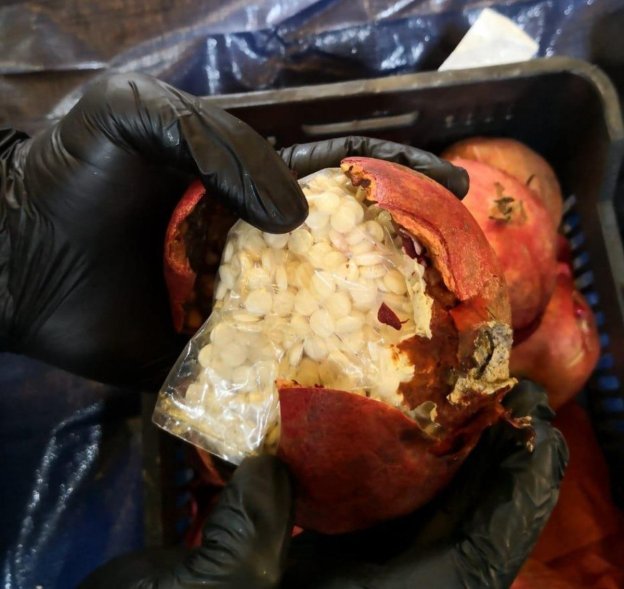
Chemical plants in the cities of Aleppo and Homs have been converted into pill factories. In the Gulf the mark-up for pills can be 50 times their cost in Syria. Smugglers hide them in shipments of paper rolls, parquet flooring and even pomegranates. Saudi princes use private jets to bring the stuff in

For the Syrians left behind, drugs may destroy what remains of society after a decade of civil war. “Young men who haven’t been killed, exiled or jailed are addicts,” says a social worker in Sweida, a city held by the Assads in the south. 

Excerpt from Pop a pill, save a dictator: Syria has become a narco-state, Economist, July 19, 2021

Netherlands, China and Mexico: Lethal Narco-States

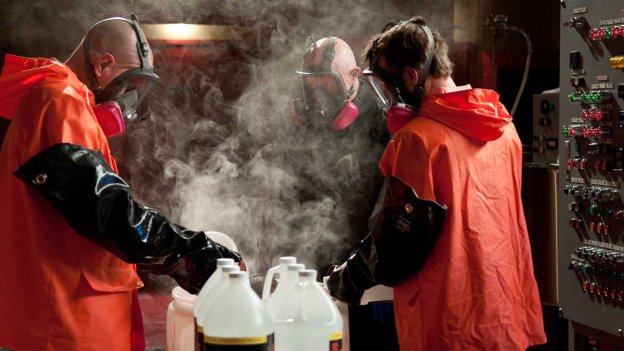
The setup—Mexican cooks using Dutch equipment to process chemicals from China—offered a window into the new global drug economy…Mexican cartels, which dominate drug trafficking in North America, are drawn to the Netherlands because it is a global trade nexus with sea and rail links to Asia that has long been Europe’s top manufacturer of synthetic drugs.

Piggybacking legitimate commercial channels, Mexican cartels are combining sophistication with ruthlessness to expand their reach world-wide. Their multinational drive is enabled by the advent over recent decades of highly potent synthetic drugs that don’t rely on crops or farmers and can be manufactured in compact facilities almost anywhere. Production experts instant-message instructions to overseas workers and hop the globe like factory troubleshooters in any industry.

With the U.S. drug market saturated and methamphetamine labs in Mexico already supersize, cartels that murder for market share see Europe as a new hub. The cartels are “like global corporations,” said DEA Regional Director for Europe Daniel Dodds. “If they can expand and broaden their customer base, they will.”

Mexican cartels first connected with Dutch drug smugglers in the 1990s, bringing cocaine through Rotterdam, Europe’s largest port. Cocaine remains Europe’s top illicit stimulant, but Dutch police say over the past two years surging quantities of Mexican meth have hit the Netherlands, Mexican “cooks” have arrived to teach local chemists, and Dutch technicians are honing production methods.

The Netherlands offers Mexican cartels an ideal production base because of its experienced chemists, unrivaled cargo networks and liberal attitude to drugs. Connections to labs in China supply chemicals that constantly adapt to remain legal. Dutch traffickers cultivated those links over decades as they perfected ecstasy manufacturing for party scenes in London, Berlin and New York…

Dutch officials are awakening to the impact of tolerating drug use for a long time and “allowing for too long a parallel economy to grow and become more influential,” Mr. Struijs said. “We have the characteristics of a narco-state.”

Excerpts from Valentina Pop, Cartels Are Now Cooking Chinese Chemicals in Dutch Meth Labs, WSJ, Dec. 8, 2020