Tag Archives: AI and eugenics

Change text to "We The People"

We The Subjects — Plundering Health Data

When geneticist Jingyuan Fu heard that an artificial intelligence (AI) group in China had downloaded a large biomedical dataset her team built in Europe, she felt pride — and a jolt of unease. “We spent millions on that dataset,” says Fu, a professor of systems medicine at the University of Groningen in the Netherlands. “And the Chinese bought the whole thing for around €2,000.” In recent years, Fu’s group, like many others, has also begun using such data as feedstock for artificial intelligence. The AI group in China that downloaded her dataset had the same goal. “The Chinese wanted all our data,” Fu says. “And they also wanted our insights into how to mine it for AI development.”
From her perspective, today’s global scramble for biomedical data looks increasingly lopsided. “China has collected a huge amount of data,” she says. “But their own data sharing and openness is very limited.”… China already holds the largest data repositories, with 1.4 billion people using the WeChat app, many of whom are already connected to hospital databases for data integration, analysis and even healthcare delivery. “China also runs the largest number of clinical trials in the world generating massive drug response and real-world-evidence datasets.”

[A]fter decades of policies pushing ‘open science’, governments are now promoting ‘data sovereignty’ — the idea that sensitive datasets should remain under national control and foreign access should be conditional. [In Europe] the stance is defensive. [Europe] is embarrassed about having allowed Chinese AI developers to plunder European biomedical databases, even while China blocks foreign access to Chinese datasets. They are now belatedly closing international access to biomedical databases, after years of championing cross-border sharing…“According to the European Commission “there are currently no partnerships involving the sharing of such data with China or the United States for AI development”….

As of April 2025, the 2.5 petabytes of omics data in the US Cancer Genome Atlas Program database are now closed to Chinese researchers, and UK Biobank data, containing whole-genome and exome sequences for 500,000 people, is no longer internationally downloadable. UK Biobank data must now be analyzed on the Biobank’s own platform, which provides a cloud-based ‘reading room’ without allowing individual data downloads…In September 2025, the US National Institutes of Health issued new regulations for genomic data repositories and users aimed at “protecting Americans’ sensitive personal health-related data from misuse by foreign adversaries” while enhancing “the privacy and autonomy of research participants”….In December 2025, the US State Department launched its Pax Silica initiative, aimed at forming an international AI alliance that hedges against China. [Furthermore], data that are generated and held by hospitals, insurers, device makers, drug makers and data platform companies. are abundant For example, US-based electronic health records vendor Epic Systems Corporation manages records for over 300 million US patients and says that it has more than 150 AI features in development…

[But]AI models developed using sequestered datasets often ‘overfit’ to the specific demographics or clinical practices of their training environment…. “Without external, international validation, these biases are frequently only discovered after they have caused clinical harm,” …[For example] many high-performing AI tools for melanoma detection show a precipitous drop in accuracy when applied to darker skin tones. “Because major datasets are often skewed toward light-skinned northern European or North American populations, “these tools can misclassify malignant lesions as benign in under-represented groups.”

Excerpt from Paul Webster, Who Owns by Health Data?, Nature Medicine,  April 24, 2026

AI or Just Bots: the Truth about Artificial Intelligence

Americans are becoming increasingly convinced that artificial intelligence is actually thinking like humans do…This fuels narratives about a future in which AI takes over the economy, leading to heightened insecurity for all of us while providing cover for companies that might be laying off workers for other reasons. It leads us to accept as true answers that are frequently made up or incorrect, even when we are repeatedly told that chatbots can’t stop delivering this kind of misinformation…Our cognitive biases developed to help us survive in complex social environments… We have evolved to view linguistic fluency as a proxy for intelligence, and engagement and helpfulness as indicators of trustworthiness. Builders of AI tools lean in to this deliberately. The humanlike qualities of chatbots are a calculated effort by designers and engineers to make AI more useful, but also more compelling and stickier [i.e. addictive]—just like social media.

Microsoft AI chief Mustafa Suleyman… warned that today’s seemingly conscious AIs [consists of a bunch of] highly accelerated information processors. “These systems are not waking up,” he wrote. “They are retracing and mirroring the contours of human drama and debate, as documented in their vast training data.” He recommends a solution: “Developers must actively engineer the illusion of consciousness out of the products.”…

Humans have a tendency to anthropomorphize animals and even inanimate objects, says Ayanna Howard, dean of Ohio State University’s College of Engineering and a robotics….Humans’ trusting nature makes sense for social creatures who must cooperate with members of their own tribe to survive. With AI and robots, however, this same tendency leads us to trust any system that appears to listen, understand and want to help, a phenomenon Howard calls “over-trust.” Today’s AIs are engineered to actively induce us to over-trust them, she adds. They do this by behaving in ways that are friendly and helpful, mimicking us through memory and personalization.

Excerpt from Christopher Mims, Why Even Smart People Believe AI Is Really Thinking, WSJ, Mar. 20, 2026

Silicon Valley Has Best Genes for Embryos

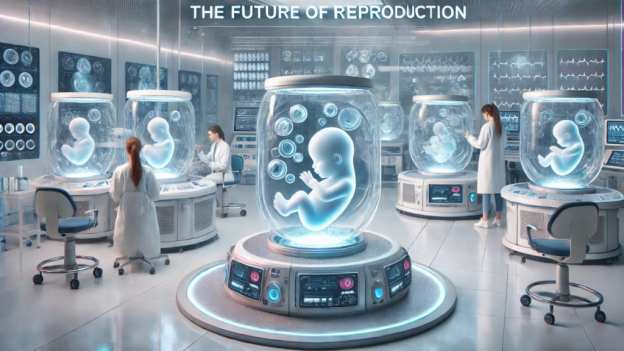
In 2025, parents here are paying up to $50,000 for new genetic-testing services that include promises to screen embryos for IQ. The fascination with what some call “genetic optimization” reflects deeper Silicon Valley beliefs about merit and success. “I think they have a perception that they are smart and they are accomplished, and they deserve to be where they are because they have ‘good genes,’” said Sasha Gusev, a statistical geneticist at Harvard Medical School. “Now they have a tool where they think that they can do the same thing in their kids as well, right?”…

The growing IQ fetish is sparking debate, with bioethicists raising alarms about the new genetic-screening services. “Is it fair? This is something a lot of people worry about,” said Hank Greely, director of the Center for Law and the Biosciences at Stanford University. “It is a great science fiction plot: The rich people create a genetically super caste that takes over and the rest of us are proles.” Yet in Silicon Valley, where top preschools require IQ tests and openness to novelty runs high, parents aren’t burdened by moral quandaries of using technology to select for their children’s intelligence before birth…

The most unusual motive for making smarter babies is emerging from a brainy group of computer scientists in Berkeley. Known as the rationalists, they fear that AI poses an existential risk to humanity. “They think one of the ways that possibly we could make safe AI is if we had smarter humans building them,” said Hsu, the Genomic Prediction co-founder. “Some of these guys are committed to a long-term eugenics program where they create smarter humans, and the smarter humans are the ones that make AI safe.”  

Excerpt from Zusha Elinson, Inside Silicon Valley’s Growing Obsession With Having Smarter Babies