Tag Archives: climate change and oil industry

Emit all the Carbon You Want; But Please! Don’t Greenwash

A French court, October 23, 2025 ruled oil and gas giant TotalEnergies had engaged in “misleading commercial practices” by overstating its climate pledges—the first such ruling worldwide against a major oil company for climate misinformation. The ruling is the first conviction in the world against an oil company, and a great win against greenwashing the act of claiming to be more environmentally responsible than in reality.

Find here a machine-translated pdf of ruling.

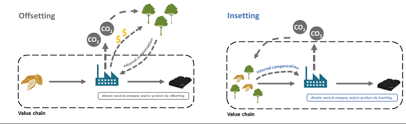
Another Laughingstock: Carbon Offsets

Carbon credits feature prominently in corporate climate strategies and have sparked public debate about their potential to delay companies’ internal decarbonisation. While industry reports claim that credit purchasers decarbonize faster, rigorous evidence is missing. This study (see below) provides an in-depth analysis of 89 multinational companies’ historical emission reductions and climate target ambitions. Based on self-reported environmental data and more than 400 sustainability reports, we find no significant difference between the climate strategies of companies that purchased credits and those that did not. Voluntary offsetting is not a central part of most companies’ climate strategies, and many pass credit costs directly onto their customers. While the companies within our sample retired one-fourth of all carbon credits in 2022, the top five offsetters’ expenditures on voluntary emission offsetting are, on average, only 1 percent relative to their capital expenditures.

Abstract from Niklas Stolz &  Benedict S. Probst, The negligible role of carbon offsetting in corporate climate strategies, Nature Communications,  Sept. 10, 2025

Oil Companies Never Die: the advantage of geothermal energy

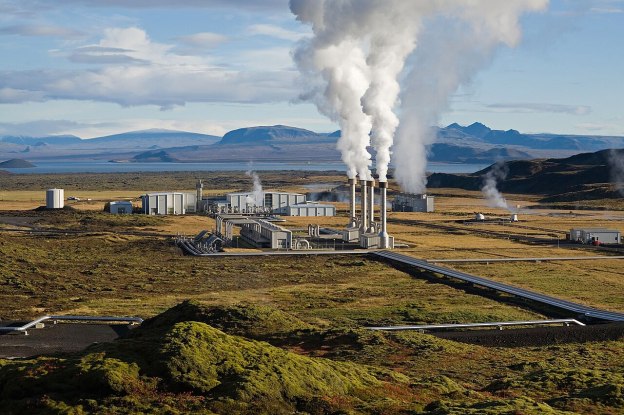
Oil-and-gas companies are accelerating investments in geothermal energy, betting the technologies that fueled the shale revolution can turn the budding industry into a large producer of clean power… Many of these companies are using the same technology employed by frackers, but instead of searching for oil and gas, they are looking for underground heat. The new geothermal industry is the result of a surprising confluence of interests among the oil-and-gas, technology and green power industries. The heat that the drillers find underground can be used to generate a steady, round-the-clock supply of carbon-free electricity, which is coveted by tech companies for their power-hungry data centers. 

Finding pockets of underground heat is relatively easy in places with lots of geothermal activity, including parts of the U.S., Indonesia and New Zealand. When the heat is deeper in the earth, it is more difficult and more expensive to find. Those constraints have kept the sector’s share of U.S. electricity generation at less than 1%. …Oil companies understand subsurface geology, have experience building infrastructure projects and have cash available to deploy. That is why Chevron is joining with other companies and pursuing geothermal pilot projects in Japan, Indonesia and the U.S.

Excerpts from Amrith Ramkumar, Frackers Are Now Drilling for Clean Power, WSJ, Feb. 29, 2024

From Lunatic to Feasible? Getting Rid of Carbon by Storing it into the Earth

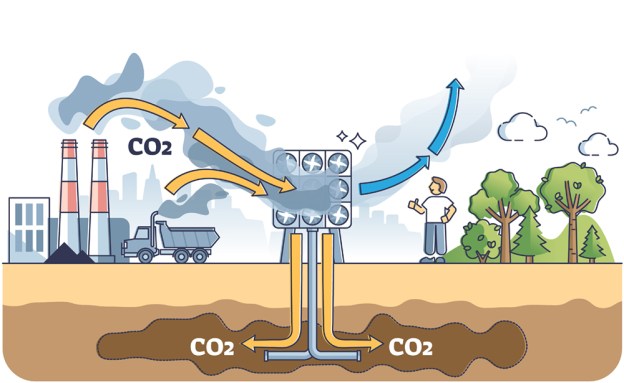
The boom in carbon removal, whether from the air , what is called direct air capture (DAC) or from industrial point sources , what is called carbon capture and storage (CCS), cannot come fast enough. The UN-backed Intergovernmental Panel on Climate Change (IPPC) assumes that if Earth is to have a chance of warming by less than 2°C above pre-industrial levels, renewables, electric vehicles and other emissions reductions are not enough. Carbon Capture and Storage (CCS)and sources of “negative emissions” such as DAC must play a part. The US Department of Energy calculates that America’s climate targets require capturing and storing between 400m and 1.8bn tonsof CO2 annually by 2050, up from 20m tons today. ..

For years DAC and CCS projects were regarded as technically plausible, perhaps, but uneconomical but carbon capture, utilization and storage (CCUS) may attract $150bn in investments globally this decade. A factor behind the recent flurry of carbon-removal activity is government action. One obvious way to promote the industry would be to make carbon polluters pay a high enough fee for every ton of carbon they emit that it would be in their interest to pay carbon removers to mop it all up, either at the source or from the atmosphere….The emerging view among technologists, investors and buyers is that carbon removal will develop like waste management did decades ago—as an initially costly endeavor that needs public support to get off the ground but can in time turn profitable…

Maybe the biggest sign that the carbon-removal business has legs is its embrace by the oil industry. Occidental is keen on DAC. ExxonMobil says it will spend $17bn from 2022 to 2027 on “lower-emissions investments”, with a slug going to CCA…Equinor and Wintershall, a German oil-and-gas firm, have already secured licenses to stash carbon captured from German industry in North Sea sites. Hugo Dijkgraaf, Wintershall’s technology chief, thinks his firm can abate up to 30m tons of CO2 per year by 2040. The idea, he says, is to turn “from an oil-and-gas company into a gas-and-carbon-management company”.

Excerpts from Can Carbon Removal Become a Trillion-Dollar Business?, Economist, May 27, 2023

Green-Shaming ExxonMobil

ExxonMobil’s shareholders concerned about greenery are angered by ExxonMobil’s continued carbon-cuddling. Those who care more about greenbacks are irked by its capital indiscipline. Right now, both are pushing in the same direction.

D.E. Shaw, a big hedge fund, is urging ExxonMobil to spend more wisely… More eye-catchingly, Engine No.1, a newish fund with a stake of just 0.02%, is trying to green-shame Mr Woods with a mantra as straightforward as ExxonMobil’s: if the company continues on its current course, and demand shifts quickly to cleaner energy, it risks terminal decline. The fund has launched a proxy battle by proposing four new directors; the current board, it complains, is long on blue-chip corporate credentials but short on energy expertise. Engine No.1’s agitation for a shake-up has won backing from, among others, Calstrs, which manages $283bn on behalf of California’s public-sector workers.

Most important, the tone from ExxonMobil’s three biggest institutional shareholders—BlackRock, Vanguard and State Street—has also shifted…In a recent letter to clients, Larry Fink, boss of BlackRock, talked of greener stocks enjoying a “sustainability premium” and dirty ones jeopardising portfolios’ long-term returns. He hinted that his firm—the world’s largest asset manager—might divest from firms that failed to appreciate the “tectonic shift” taking place. Vanguard, too, has called out ExxonMobil for flawed governance…

Excerpt from Schumpeter: The Long Squeeze, Economist, Feb. 6, 2021

Hunting Down Polluters from Space

When scanning for emissions from a mud volcano in western Turkmenistan in January 2019, a satellite called Claire came across a large plume of methane drifting across the landscape. … The company operating the satellite, GHGSAT passed details via diplomats to officials in Turkmenistan, and after a few months the leaks stopped. This largely unknown incident illustrates two things: that satellites can play an important role in spotting leaks of greenhouse gases and, rather worryingly, that the extent of such leaks is often greatly underestimated. The data from Claire suggested the leak in Turkmenistan had been a big one…142,000 tonnes of methane. This made the Turkmenistani leak far bigger than the 97,000 tonnes of methane discharged over four months by a notorious blowout at a natural-gas storage facility in Aliso Canyon, California, in 2015, which is reckoned to have been the worst natural-gas leak yet recorded in America. There have been other big leaks, too…

The reason for concern is that although methane, the main constituent of natural gas, does not linger in the atmosphere for anywhere near as long as carbon dioxide does, it is a far more potent heat-trapping agent. About a quarter of man-made global warming is thought to be caused by methane. And between a fifth and a third of the methane involved is contributed by the oil and gas industry. Methane can be detected spectroscopically. Like other gases, it absorbs light at characteristic frequencies. With a spectrometer mounted on a satellite it is possible to analyse light reflected from Earth for signs of the gas. As with the satellites that carry them, spectrometers come in many shapes and sizes. Tropomi can also detect the spectral signs of other polluting gases, such as nitrogen dioxide, sulphur dioxide and carbon monoxide.

Other methane-hunting satellites are coming. These include one due for launch in 2022 by Methanesat, an affiliate of the Environmental Defence Fund, an American non-profit organisation. The 350kg satellite will cost $88m to build and put into orbit. It will scan an area of land 200km wide with a resolution of 1km by 1km. According to Methanesat, it will be the most sensitive to emission levels yet, being able to detect methane concentrations as low as two parts-per-billion. Data collected by the satellite will be publicly available.

Excerpts from The Methane Hunters, Economist, Feb. 1 2020

The Eco-Villain of the 2020s: Moving

[E]ven “green” transport risks becoming a villain… Transport has been the only sector in which greenhouse-gas emissions have consistently risen both in the U.S. and in the European Union… Road, aviation, waterborne and rail transportation put together now account for eight metric gigatons of carbon-dioxide equivalents, which is 24% of global greenhouse-gas emissions, according to the International Energy Agency. In the U.S. this figure rises to 34%….To be consistent with the existing Paris Agreement goals, transport emissions need to peak around 2020 and then fall around 70% relative to 2015 levels, estimates by the International Energy Agency show.

In theory, electric and plug-in hybrid vehicles chart a clear path to lower emissions. Even once the costs of making the batteries and generating the electricity that feeds them is taken into account, most estimates suggest that they emit roughly half as much greenhouse gases as a gasoline car. But recent experience proves that consumer tastes can easily sabotage steps toward sustainability: In the U.S., rising demand for pickup trucks has offset any gain from electric vehicles. And faster economic development in emerging nations will inevitably mean higher emissions, even if each vehicle pollutes less.

In China and India, the number of motorized vehicles per person quintupled and tripled, respectively, between 2007 and 2017, according to U.S. Department of Energy data. Catching up with U.S. levels of motorization—which admittedly are very high—both countries would need two billion extra vehicles. Even if 100% of those were electric, they would add more emissions on their own than the total level allowed by the Paris goals.

Greenhouse gases coming from aviation also keep surging despite the fact that planes are becoming increasingly fuel efficient because air traffic growth has surged. Furthermore, while environmental policies have tended to focus on passenger transport, this misses a big chunk of the picture, because almost half of transportation emissions now come from freight.

Adoption of rail, a cleaner alternative, isn’t picking up. Meanwhile ocean freight, which is by far the most efficient form of transport per ton mile, faces a reckoning from new rules that take effect in January 2020 because it relies on the dirtiest fuel to be so economical.

Excerpts from  Jon Sindreu, In the Green Transition, Transportation Is the Next Big Baddie, WSJ, Dec. 23, 2019

The Unquenchable Thirst for Oil

Demand for oil is rising and the energy industry, in America and globally, is planning multi-trillion-dollar investments to satisfy it. No firm embodies this strategy better than ExxonMobil, the giant that rivals admire and green activists love to hate. As our briefing explains, it plans to pump 25% more oil and gas in 2025 than in 2017. If the rest of the industry pursues even modest growth, the consequence for the climate could be disastrous.

To date politicians, particularly in America, have been reluctant to legislate for bold restrictions on carbon. That is in part thanks to ExxonMobil’s attempts to obstruct efforts to mitigate climate change. …ExxonMobil’s policies on climate change remain marred by inconsistencies. In October the company said it was giving $1m, spread over two years, to a group advocating a carbon tax. ExxonMobil maintains that a carbon tax is a transparent and fair way to limit emissions. But the sum is less than a tenth of its federal lobbying spending in 2018. Moreover, the carbon tax it favours would include protection for oil companies from climate lawsuits.

The firm is also working to reduce leaks of methane, a powerful greenhouse gas, from its wells, pipelines and refineries. However the American Petroleum Institute  (API) has been a main force urging Mr Trump’s administration to ease regulations on methane emissions. The API’s other efforts include lobbying against incentives for electric cars.  ExxonMobil is not alone in trying to sway the climate debate in its direction either. Shell, Total and BP are all members of the API. Marathon Petroleum, a refiner, reportedly campaigned to ease Barack Obama’s fuel-economy standards. BP spent $13m to help block a proposal for a carbon tax in Washington state in November. The Western States Petroleum Association, whose membership includes ExxonMobil and Shell, also lobbied to defeat that tax.

While oil companies plan to grow, trends in cleaner energy are moving in the wrong direction. Investments in renewables fell as a share of the total in 2017 for the first time in three years, as spending on oil and gas climbed. In 2018 carbon emissions in America grew by 3.4% as economic activity picked up, even as coal fell out of favour. Mr Woods maintains that any change to the energy supply will be gradual. “I don’t think people can readily understand just how large the energy system is, and the size of that energy system will take time to evolve,” he argues… Out at sea, ExxonMobil is working to increase production. By next year an underwater web of pipes will connect wells on the seabed to a vast vessel. From there the oil will be transferred to smaller tankers, then to the vast infrastructure that can refine and transport it until it reaches consumers in the form of fertiliser, plastic bottles, polyester or, most likely, petrol. From beneath the ocean floor to your car’s tank, for about the price of a gallon of milk.

Excerpts from  Crude Awakening, Economist,  Feb. 9, 2019; Bigger Oil, Economist,  Feb. 9, 2019