Tag Archives: DARPA and neuroscience

Next Wild West: Monetizing Mental Data

Some  brain–computer interfaces (BCI) are capable not only to record conscious thoughts but also the impulses of the preconscious. Most BCIs are connected the brain’s motor cortex, the part of the brain that initiates and controls voluntary movements by sending signals to the body’s muscles. But some people have volunteered to have an extra interface implanted in their posterior parietal cortex, a brain region associated with reasoning, attention and planning…The ability of these devices to access aspects of a person’s innermost life, including preconscious thought, raises the stakes on concerns about how to keep neural data private. It also poses ethical questions about how neurotechnologies might shape people’s thoughts and actions — especially when paired with artificial intelligence…

Consumer neurotech products capture less-sophisticated data than implanted BCIs do. Unlike implanted BCIs, which rely on the firings of specific collections of neurons, most consumer products rely on electroencephalography (EEG). This measures ripples of electrical activity that arise from the averaged firing of huge neuronal populations and are detectable on the scalp. Rather than being created to capture the best recording possible, consumer devices are designed to be stylish (such as in sleek headbands) or unobtrusive (with electrodes hidden inside headphones or headsets for augmented or virtual reality).

Still, EEG can reveal overall brain states, such as alertness, focus, tiredness and anxiety levels. Companies already offer headsets and software that give customers real-time scores relating to these states, with the intention of helping them to improve their sports performance, meditate more effectively or become more productive, for example. AI has helped to turn noisy signals from suboptimal recording systems into reliable data, explains Ramses Alcaide, chief executive of Neurable, a neurotech company in Boston, Massachusetts, that specializes in EEG signal processing and sells a headphone-based headset for this purpose…

With regard to EEG, “There’s a wild west when it comes to the regulatory standards”… A 2024 analysis of the data policies of 30 consumer neurotech companies by the Neurorights Foundation, a non-profit organization in New York City, showed that nearly all had complete control over the data users provided. That means most firms can use the information as they please, including selling it.

The government of Chile and the legislators of four US states have passed laws that give direct recordings of any form of nerve activity protected status. But ethicists fear that such laws are insufficient because they focus on the raw data and not on the inferences that companies can make by combining neural information with parallel streams of digital data. Inferences about a person’s mental health, say, or their political allegiances could still be sold to third parties and used to discriminate against or manipulate a person.

“The data economy, in my view, is already quite privacy-violating and cognitive- liberty-violating,” Ienca says. Adding neural data, he says, “is like giving steroids to the existing data economy”.

Excerpt from Liam Drew, Mind-reading devices can now predict preconscious thoughts: is it time to worry?, Nature, Nov. 19, 2025


The Right to Mental Privacy: How AI Can Read You Like a Book

A technique called ‘mind captioning’ described in a scientific paper published on November 5, 2025 generates descriptive sentences of what a person is seeing or picturing in their mind using scans of their brain activity. It is based 1) on artificial intelligence models trained on the text captions of thousands of videos,0 and 2) brain scans of people watching them. The technique could help those with language difficulties to communicate better… But it raises concerns of mental privacy…

Excerpt from Max Kozlov, Mind-captioning’ AI decodes brain activity to turn thoughts into text, Nature, Nov. 5, 2025

Password Prevents Spilling out Private Thoughts

A brain–computer interface (BCI) can decipher the imagined sentences of people who have conditions that interfere with speech — and it comes with password protection to avoid revealing private thoughts. The system begins decoding users’ internal speech only after they think of a specific keyword. This internally spoken “keyword” can enable a user to “lock” and “unlock” the BCI to prevent the broadcasting of their private thoughts or spontaneous ‘self-talk’.

Excerpt from Gemma Conroy, A mind-reading brain implant that comes with password protection, Nature, Aug. 14, 2025

Mass-Market Brain Manipulation and Human Rights

Scientific advances are rapidly making science-fiction concepts such as mind-reading a reality — and raising thorny questions for ethicists, who are considering how to regulate brain-reading techniques to protect human rights such as privacy.

On 13 July, 2023 neuroscientists, ethicists and government ministers discussed the topic at a Paris meeting organized by UNESCO, the United Nations scientific and cultural agency. Delegates plotted the next steps in governing such ‘neurotechnologies’ — techniques and devices that directly interact with the brain to monitor or change its activity. The technologies often use electrical or imaging techniques, and run the gamut from medically approved devices, such as brain implants for treating Parkinson’s disease, to commercial products such as wearables used in virtual reality (VR) to gather brain data or to allow users to control software… Neurotechnology is now a US$33 billion industry.
One area in need of regulation is the potential for neurotechnologies to be used for profiling individuals and the Orwellian idea of manipulating people’s thoughts and behaviour. Mass-market brain-monitoring devices would be a powerful addition to a digital world in which corporate and political actors already use personal data for political or commercial gain.

Commercial devices are of more pressing concern to ethicists. Companies from start-ups to tech giants are developing wearable devices for widespread use that include headsets, earbuds and wristbands that record different forms of neural activity — and will give manufacturers access to that information.

The privacy of this data is a key issue. Rafael Yuste, a neuroscientist at Columbia University in New York City, told the meeting that an unpublished analysis by the Neurorights Foundation, which he co-founded, found that 18 companies offering consumer neurotechnologies have terms and conditions that require users to give the company ownership of their brain data. All but one of those firms reserve the right to share that data with third parties. “I would describe this as predatory,” Yuste says. “It reflects the lack of regulation.”…Another theme at the meeting was how the ability to record and manipulate neural activity challenges existing human rights. Some speakers argued that existing human rights — such as the right to privacy — cover this innovation, whereas others think changes are needed.

Yuste and his colleagues propose five main neurorights: the right to mental privacy; protection against personality-changing manipulations; protected free will and decision-making; fair access to mental augmentation; and protection from biases in the algorithms that are central to neurotechnology.

Excerpt from Liam Drew, Mind-reading machines are coming — how can we keep them in check?, Nature, July 24, 2023

The Reckless Gambles that Changed the World: darpa

Using messenger RNA to make vaccines was an unproven idea. But if it worked, the technique would revolutionize medicine, not least by providing protection against infectious diseases and biological weapons. So in 2013 America’s Defense Advanced Research Projects Agency (DARPA) gambled. It awarded a small, new firm called Moderna $25m to develop the idea. Eight years, and more than 175m doses later, Moderna’s covid-19 vaccine sits alongside weather satellites, GPS, drones, stealth technology, voice interfaces, the personal computer and the internet on the list of innovations for which DARPA can claim at least partial credit.

It is the agency that shaped the modern world, and this success has spurred imitators. In America there are ARPAS for homeland security, intelligence and energy, as well as the original defense one…Germany has recently established two such agencies: one civilian (the Federal Agency for Disruptive Innovation, or SPRIN-d) and another military (the Cybersecurity Innovation Agency). Japan’s interpretation is called Moonshot R&D. 

As governments across the rich world begin, after a four-decade lull, to spend more on research and development, the idea of an agency to invent the future (and, in so doing, generate vast industries) is alluring and, the success of DARPA suggests, no mere fantasy. In many countries there is displeasure with the web of bureaucracy that entangles funding systems, and hope that the DARPA model can provide a way of getting around it. But as some have discovered, and others soon will, copying DARPA requires more than just copying the name. It also needs commitment to the principles which made the original agency so successful—principles that are often uncomfortable for politicians.

On paper, the approach is straightforward. Take enormous, reckless gambles on things so beneficial that only a handful need work to make the whole venture a success. As Arun Majumdar, founding director of ARPA-e, America’s energy agency, puts it: “If every project is succeeding, you’re not trying hard enough.” Current (unclassified) DAROA projects include mimicking insects’ nervous systems in order to reduce the computation required for artificial intelligence and working out how to protect soldiers from the enemy’s use of genome-editing technologies.

The result is a mirror image of normal R&D agencies. Whereas most focus on basic research, DARPA builds things. Whereas most use peer review and carefully selected measurements of progress, DARPA strips bureaucracy to the bones (the conversation in 1965 which led the agency to give out $1m for the first cross-country computer network, a forerunner to the internet, took just 15 minutes). All work is contracted out. DARPA has a boss, a small number of office directors and fewer than 100 program managers, hired on fixed short-term contracts, who act in a manner akin to venture capitalists, albeit with the aim of generating specific outcomes rather than private returns.

Excerpt from Inventing the future: A growing number of governments hope to clone America’s DARPA, Economist, June 5, 2021

Planting Electronics in Brains

 An implantable brain device that literally melts away at a pre-determined rate minimizes injury to tissue normally associated with standard electrode implantation, according to research led by a team from the Perelman School of Medicine at the University of Pennsylvania. …Thin, flexible neural electrode arrays with fully bioresorbable construction based on patterned silicon nanomembranes (Si NMs) as the conducting component.

“Dissolvable silicon electronics offer an unprecedented opportunity to implant advanced monitoring systems that eliminate the risks, cost, and discomfort associated with surgery to extract current devices used for post-operative monitoring,” said senior co-author Brian Litt, MD,….“This study tested the usefulness of temporary, dissolvable monitoring systems capable of providing continuous streams of data for guiding medical care over predetermined periods of time — from days to months — before dissolving.”

The device is made of layers of silicon and molybdenum that can measure physiological characteristics and dissolve at a known rate, as determined by its thickness. For example, the team used the device to record brain waves in rats under anesthesia, as well as voltage fluctuations between neurons (EEGs), and induced epileptic spikes in intact live tissue. A separate experiment demonstrated a complex, multiplexed array made from these materials that could map rat-whisker sensing capabilities at high resolution.

These electrophysiological signals were recorded from devices placed at the surface of the brain cortex (the outer layer of tissue) and the inner space between the scalp and skull. Chronic measurements were made over a 30-day period, while acute experiments demonstrated device operations over three to four hours.

The type of neurophysiologic features measured by the new device are commonly used for diagnosing and treating such disorders as epilepsy, Parkinson’s disease, depression, chronic pain, and conditions of the peripheral nervous system. “….

This work was funded by the Defense Advanced Research Projects Agency, the Penn Medicine Neuroscience Center,  and others.

See Next-Gen Electrodes: Proof-of-Concept Animal Study Shows that Flexible, Dissolvable Silicon Electronic Device Holds Promise for Brain Monitoring , Press Release, May 5, 2016

See also Nature Materials

The US Military and the Peripheral Nervous System

Bio-Electrical Brains: Military

DARPA has selected seven teams of researchers to begin work on the Agency’s Electrical Prescriptions (ElectRx) program, which has as its goal the development of a closed-loop system that treats diseases by modulating the activity of peripheral nerves…. Ultimately, the program envisions a complete system that can be tested in human clinical trials aimed at conditions such as chronic pain, inflammatory disease, post-traumatic stress and other illnesses that may not be responsive to traditional treatments.

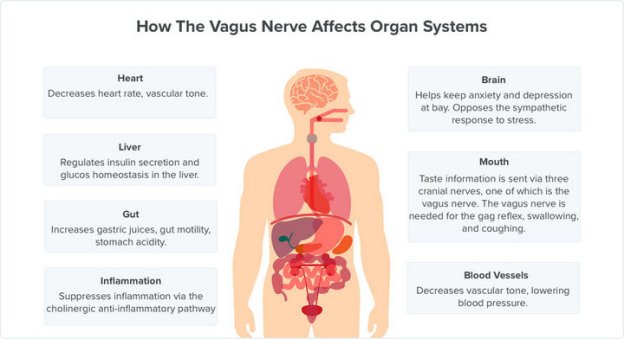
“The peripheral nervous system is the body’s information superhighway, communicating a vast array of sensory and motor signals that monitor our health status and effect changes in brain and organ functions to keep us healthy,“ said Doug Weber, the ElectRx program manager and a biomedical engineer who previously worked as a researcher for the Department of Veterans Affairs. “We envision technology that can detect the onset of disease and react automatically to restore health by stimulating peripheral nerves to modulate functions in the brain, spinal cord and internal organs.”

The oldest and simplest example of this concept is the cardiac pacemaker, which uses brief pulses of electricity to stimulate the heart to beat at a healthy rate. Extending this concept to other organs like the spleen may offer new opportunities for treating inflammatory diseases such as rheumatoid arthritis. Fighting inflammation may also provide new treatments for depression, which growing evidence suggests might be caused in part by excess levels of inflammatory biomolecules. Peripheral nerve stimulation may also be used to regulate production of neurochemicals that regulate learning and memory in the brain, offering new treatments for post-traumatic stress and other mental health disorders.

Circuit Therapeutics (Menlo Park, Calif.), a start-up co-founded by Karl Deisseroth and Scott Delp, is a new DARPA performer. The team plans to further develop its experimental optogenetic methods for treating neuropathic pain, building toward testing in animal models before seeking to move to clinical trials in humans.

A team at Columbia University (New York), led by Elisa Konofagou, will pursue fundamental science to support the use of non-invasive, targeted ultrasound for neuromodulation. The team aims to elucidate the underlying mechanisms that may make ultrasound an option for chronic intervention, including activation and inhibition of nerves.

A team at the Florey Institute of Neuroscience and Mental Health (Parkville, Australia), led by John Furness, is a first-time DARPA performer. Team members will seek to map the nerve pathways that underlie intestinal inflammation, with a focus on determining the correlations between animal models and human neural circuitry. They will also explore the use of neurostimulation technologies based on the cochlear implant —developed by Cochlear, Inc. to treat hearing loss, but adapted to modulate activity of the vagus nerve in response to biofeedback signals—as a possible treatment for inflammatory bowel disease.

A team at the Johns Hopkins University (Baltimore), led by Jiande Chen, aims to explore the root mechanisms of inflammatory bowel disease and the impact of sacral nerve stimulation on its progression. The team will apply a first-of-its-kind approach to visualize intestinal responses to neuromodulation in animal models.

A team at the Massachusetts Institute of Technology (Cambridge, Mass.), led by Polina Anikeeva, will aim to advance its established work in magnetic nanoparticles for localized, precision in vivo neuromodulation through thermal activation of neurons in animal models. The team’s work will target the adrenal gland and the splanchnic nerve circuits that govern its function. To increase specificity and minimize potential side effects of this method of stimulation, the team seeks to develop nanoparticles with the ability to bind to neuronal membranes. Dr. Anikeeva was previously a DARPA Young Faculty Awardee.

A team at Purdue University (West Lafayette, Ind.), led by Pedro Irazoqui, will leverage an existing collaboration with Cyberonics to study inflammation of the gastrointestinal tract and its responsiveness to vagal nerve stimulation through the neck. Validation of the mechanistic insights that emerge from the effort will take place in pre-clinical models in which novel neuromodulation devices will be applied to reduce inflammation in a feedback-controlled manner. Later stages of the effort could advance the design of clinical neuromodulation devices.

A team at the University of Texas, Dallas, led by Robert Rennaker and Michael Kilgard, will examine the use of vagal nerve stimulation to induce neural plasticity for the treatment of post-traumatic stress. As envisioned, stimulation could enhance learned behavioral responses that reduce fear and anxiety when presented with traumatic cues. Dr. Rennaker is a U.S. Marine Corps veteran who served in Liberia, Kuwait and Yugoslavia.

“Using the peripheral nervous system as a medium for delivering therapy is largely new territory and it’s rich with potential to manage many of the conditions that impact the readiness of our military and, more generally, the health of the nation,” Weber said. “It will be an exciting path forward.”

Press Release: Work Begins to Support Self-Healing of Body and Mind
Integrated, international efforts under ElectRx program blend mapping of neural circuits and development of novel bio-electrical interfaces  OUTREACH@DARPA.MIL, Oct. 5, 2015