Tag Archives: data dignity

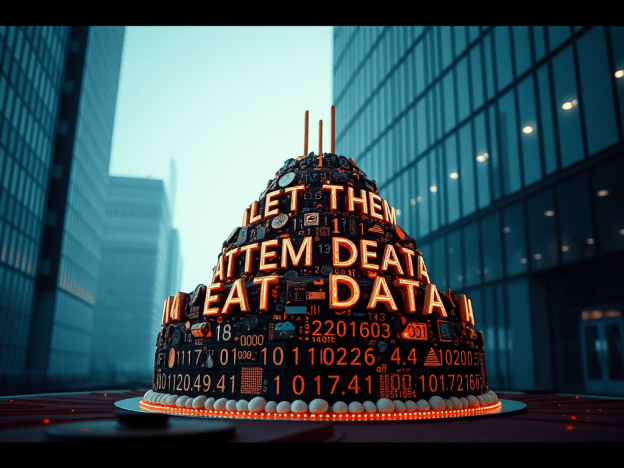
Let them Eat Data! Decolonizing Artificial Intelligence

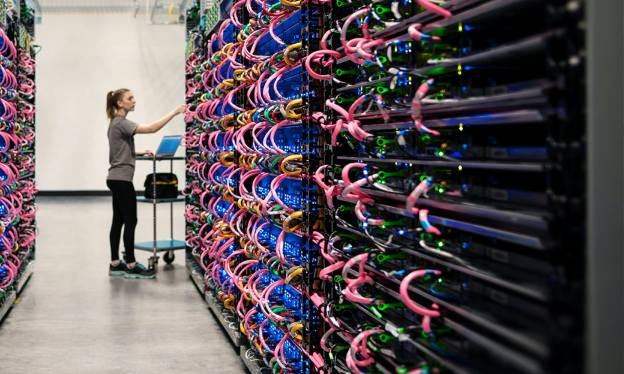
Tap water isn’t drinkable. Power outages are common. The national average annual wage is $2,200. Yet rising on Jakarta’s outskirts are giant, windowless buildings packed inside with Nvidia’s latest artificial-intelligence chips. They mark Indonesia’s surprising rise as an AI hot spot, a market estimated to grow 30% annually over the next five years to $2.4 billion.

The multitrillion-dollar spending spree on AI has spread to the developing world. It is driven in part by a philosophy known in some academic circles as AI decolonization. The idea is simple. Foreign powers once extracted resources such as oil from colonies, offering minimal benefits to the locals. Today, developing nations aim to ensure that the AI boom enriches more than just Silicon Valley.  Regulations effectively require tech companies such as Google and Meta to process local data domestically. That pushes companies to build or rent data facilities onshore instead of relying on global infrastructure. These investments add up to billions of dollars and create jobs that foster national talent, or so developing nations hope.

AI decolonization is a twist on data sovereignty, a concept that gained traction after Edward Snowden revealed that American tech companies cooperated with U.S. government surveillance of foreign leaders. The European Union in 2018 pioneered data-protection laws that other nations have since mimicked.

Regulations vary by country and industry, but the principle is this: If a developing-nation bank wants an American tech giant to store customer data and analyze it with AI, the bank must hire a company with domestically located servers… Nvidia Chief Executive Jensen Huang championed “sovereign AI” during a visit to Jakarta in 2024

“No country can afford to have its natural resource—the data of its people—be extracted, transformed into intelligence and then imported back into the country,” Huang said…

Excerpt from Stu Woo, It’s Not Just Rich Countries. Tech’s Trillion-Dollar Bet on AI Is Everywhere, WSJ, Oct. 26, 2025

The Disempowering Effects of Experimentation on Humans

Whenever we go online, we might find ourselves part of an experiment — without knowing it. Digital platforms track what users do and how they respond to features. Increasingly, these tests are having real-world consequences for its participants.

In a paper published in the Journal Academy of Management, it was reported that platforms that offer paid tasks and jobs to freelancers (H. A. Rahman et al. Acad. Mgmt. J. 66, 1803–1830; 2023) are experimenting  with using different methods for scoring people’s work, as well as changing how their skills would be listed on their profile page and how they could interact with their contractors. These changes affected people’s ratings and the amount of work they received. Twenty years ago, such experimentation was transparent. Gig workers could opt in or out of tests. But today, these experiments are done covertly. Gig workers waive their rights when they create an account.

Being experimented on can be disconcerting and disempowering. Imagine that, every time you enter your office, it has been redesigned. So has how you are evaluated, and how you can speak with your superiors, but without your knowledge or consent. Such continual changes affect how you do and feel about your job.

Gig workers expressed that, after noticing frequent changes on the listing platforms that were made without their consent, they started to see themselves as laboratory rats rather than valued users. Because their messages were blocked by chatbots, they were unable to speak to the platform to complain or opt out of the changes. Frustration flared and apathy set in. Their income and well-being declined.

This is concerning, not only because of how it affects gig workers, but also because academics are increasingly becoming involved in designing digital experiments. Social scientists follow strict Institutional Review Board (IRB) procedures that govern the ethics of experiments involving people — such as informing them and requiring consent — but these rules don’t apply to technology companies. And that’s leading to questionable practices and potentially unreliable results.

Excerpt from Tim Weiss, Why we are all lab rats in the digital world, Nature, Nov. 12, 2024

If the United States is a Surveillance State How Does it Differ from China?

In November 2023, Michael Morell, a former deputy director of the Central Intelligence Agency (CIA), hinted at a big change in how the agency now operates. “The information that is available commercially would kind of knock your socks off…if we collected it using traditional intelligence methods, it would be top secret-sensitive. And you wouldn’t put it in a database, you’d keep it in a safe.”

In recent years, U.S. intelligence agencies, the military and even local police departments have gained access to enormous amounts of data through shadowy arrangements with brokers and aggregators. Everything from basic biographical information to consumer preferences to precise hour-by-hour movements can be obtained by government agencies without a warrant.

Most of this data is first collected by commercial entities as part of doing business. Companies acquire consumer names and addresses to ship goods and sell services. They acquire consumer preference data from loyalty programs, purchase history or online search queries. They get geolocation data when they build mobile apps or install roadside safety systems in cars. But once consumers agree to share information with a corporation, they have no way to monitor what happens to it after it is collected. Many corporations have relationships with data brokers and sell or trade information about their customers. And governments have come to realize that such corporate data not only offers a rich trove of valuable information but is available for sale in bulk.

Earlier generations of data brokers vacuumed up information from public records like driver’s licenses and marriage certificates. But today’s internet-enabled consumer technology makes it possible to acquire previously unimaginable kinds of data. Phone apps scan the signal environment around your phone and report back, hourly, about the cell towers, wireless earbuds, Bluetooth speakers and Wi-Fi routers that it encounters….The National Security Agency recently acknowledged buying internet browsing data from private brokers, and several sources have told me about programs allowing the U.S. to buy access to foreign cell phone networks. Those arrangements are cloaked in secrecy, but the data would allow the U.S. to see who hundreds of millions of people around the world are calling.

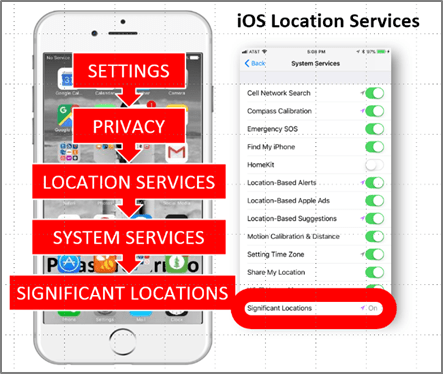
Car companies, roadside assistance services and satellite radio companies also collect geolocation data and sell it to brokers, who then resell it to government entities. Even tires can be a vector for surveillance. That little computer readout on your car that tells you the tire pressure is 42 PSI? It operates through a wireless signal from a tiny sensor, and government agencies and private companies have figured out how to use such signals to track people…

It’s legal for the government to use commercial data in intelligence programs because data brokers have either gotten the consent of consumers to collect their information or have stripped the data of any details that could be traced back to an individual. Much commercially available data doesn’t contain explicit personal information. But the truth is that there are ways to identify people in nearly all anonymized data sets. If you can associate a phone, a computer or a car tire with a daily pattern of behavior or a residential address, it can usually be associated with an individual.

And while consumers have technically consented to the acquisition of their personal data by large corporations, most aren’t aware that their data is also flowing to the government, which disguises its purchases of data by working with contractors. One giant defense contractor, Sierra Nevada, set up a marketing company called nContext which is acquiring huge amounts of advertising data from commercial providers. Big data brokers that have reams of consumer information, like LexisNexis and  Thomson Reuters, market products to government entities, as do smaller niche players. Companies like Babel Street, Shadowdragon, Flashpoint and Cobwebs have sprung up to sell insights into what happens on social media or other web forums. Location data brokers like Venntel and Safegraph have provided data on the movement of mobile phones…

A group of U.S. lawmakers is trying to stop the government from buying commercial data without court authorization by inserting a provision to that effect in a spy law, FISA Section 702, that Congress needs to reauthorize by April 19. The proposal would ban U.S. government agencies from buying data on Americans but would allow law-enforcement agencies and the intelligence community to continue buying data on foreigners…But many in the national security establishment think that it makes no sense to ban the government from acquiring data that everyone from the Chinese government to Home Depot can buy on the open market. The data is valuable—in some cases, so valuable that the government won’t even discuss what it’s buying. “Picture getting a suspect’s phone, then in the extraction [of data] being able to see everyplace they’d been in the last 18 months plotted on a map you filter by date ranges,” wrote one Maryland state trooper in an email obtained under public records laws. “The success lies in the secrecy.”

For spies and police officers alike, it is better for people to remain in the dark about what happens to the data generated by their daily activities—because if it were widely known how much data is collected and who buys it, it wouldn’t be such a powerful tool. Criminals might change their behavior. Foreign officials might realize they’re being surveilled. Consumers might be more reluctant to uncritically click “I accept” on the terms of service when downloading free apps. And the American public might finally demand that, after decades of inaction, their lawmakers finally do something about unrestrained data collection.

Excerpts from Byron Tau, US Spy Agencies Know Your Secrets. They Bought Them, WSJ, Mar. 8, 2024

See also Means of Control: How the Hidden Alliance of Tech and Government Is Creating a New American Surveillance State by Byron Tau (published 2024).

How Much Are Your Eyes Worth? Altman has an answer

Worldcoin is appealing a decision from Spain that temporarily banned it from scanning people’s eyes in exchange for cryptocurrency tokens…The Spanish Data Protection Agency, or AEPD, ordered a precautionary measure prohibiting Worldcoin’s activities in the country for up to three months after it received several complaints on the collection of data from minors, and what it said were other infringements.

Worldcoin operates as an open-source protocol, according to its website. Users download a wallet app that supports a digital identity known as World ID. To get their identity verified, users stand in front of a physical imaging device known as the orb that relies on sensors to scan their eyes “to verify humanness and uniqueness.” More than 4 million users across 120 countries signed up for World ID, with orb verifications taking place in 36 countries, according to Worldcoin’s website.

The AEPD said its precautionary measure effectively called on Tools for Humanity—the company of which OpenAI Chief Executive Sam Altman is a co-founder—to cease the collection and processing of personal data through its Worldcoin project and to stop using the data it had gathered so far in Spain.

Excerpts from  Mauro Orru, Sam Altman’s Eye-Scanning Worldcoin Venture Appeals, WSJ, Mar. 7, 2024

What Do You Do When You Are Up for Sale?

Under an executive order issued on February 28, 2024, specific classes of Americans’ sensitive data, including genomic, biometric, personal health, geolocation, financial and certain types of personal identifiers, will generally be barred from being sold or transferred in vast tranches to “countries of concern” or vendors known to supply data to them. The countries of concern are China, Russia, North Korea, Iran, Cuba and Venezuela, and have a record of misusing data on Americans, an official said.

In 2023, the U.S. intelligence community issued a groundbreaking report acknowledging that the vast amount of Americans’ personal data available for sale, which are often bought and repackaged by data brokers and then resold through a labyrinthine ecosystem of vendors and resellers, has provided a valuable stream of intelligence for the U.S. government and adversaries alike. The report, commissioned by Director of National Intelligence Avril Haines, admitted that such streams created significant threats to privacy, and had rapidly grown in scale such that they had begun to replicate the results of intrusive surveillance techniques, such as hacking, that are typically more targeted.

The executive order is notably silent on the purchasing of commercially available data sets by the U.S. government.

Excerpts from Dustin Volz, U.S. Limits Sales of Americans’ Personal Data to China, Other Adversaries, WSJ, Feb. 129, 2024

Who Cares? Clicking Away Privacy Rights

The latest developments in a high-profile criminal probe by  US special counsel John Durham show the extent to which the world’s internet traffic is being monitored by a coterie of network researchers and security experts inside and outside the US government. The monitoring is made possible by little-scrutinized partnerships, both informal and formal, among cybersecurity companies, telecommunications providers and government agencies.

The U.S. government is obtaining bulk data about network usage, according to federal contracting documents and people familiar with the matter, and has fought disclosure about such activities. Academic and independent researchers are sometimes tapped to look at data and share any findings with the government without warrants or judicial authorization…

Unlike the disclosures by former intelligence contractor Edward Snowden from nearly a decade ago, which revealed U.S. intelligence programs that relied on covert access to private data streams, the sharing of internet records highlighted by Mr. Durham’s probe concerns commercial information that is often being shared with or sold to the government in bulk. Such data sets can possess enormous intelligence value, according to current and former government officials and cybersecurity experts, especially as the power of computers to derive insights from massive data sets has grown in recent years.

Such network data can help governments and companies detect and counter cyberattacks. But that capability also has privacy implications, despite assurances from researchers that most of the data can’t be traced back to individuals or organizations.

At issue are several kinds of internet logs showing the connections between computers, typically collected on networking devices such as switches or routers. They are the rough internet equivalent of logs of phone calls—showing which computers are connecting and when, but not necessarily revealing anything about the content of the transmissions. Modern smartphones and computers generate thousands of such logs a day just by browsing the web or using consumer apps…

“A question worth asking is: Who has access to large pools of telecommunications metadata, such as DNS records, and under what circumstances can those be shared with the government?…Surveillance takes the path of least resistance…,” according to Julian Sanchez, a senior fellow at the Cato Institute.

Excerpts from Byron Tau et al., Probe Reveals Unregulated Access to Data Streams, WSJ, Feb.. 28, 2022

Another Wave of Colonization? Africa

Most of Africa’s data are currently stored elsewhere, zipping down undersea cables that often make landfall in the French city of Marseille….An upheaval is overdue. Africa has more internet users than America, but only as much data-center space as Switzerland.  The boom is partly driven by regulation. Two dozen African countries have passed data-protection laws, or are planning to do so. They often require certain data, such as personal information, to be kept in the country. Another boost comes from competition, says Jan Hnizdo of Teraco, a leading data center in South Africa, where liberalization of the telecoms industry created space for such firms to flourish.

Capital is pouring in. Teraco is building Africa’s largest stand-alone data center in Johannesburg, with backing from foreign funds. Actis, a private-equity firm, is putting $250m into the industry, starting with a majority stake in a Nigerian company, Rack Centre. American investors founded Raxio with an eye on less fashionable markets, from Uganda to Mozambique.

Data centers need power, and lots of it. Keeping their equipment cool consumes almost as much energy as running it, which is why centers are usually in chilly places such as Scandinavia or America’s Pacific north-west. Most of Africa is hot and has a lot of power cuts…To keep servers running, many centers use polluting and expensive diesel generators. Yet the potential gains from offering better connectivity and faster internet services in Africa outweigh the difficulties. Microsoft and Amazon are bringing their cloud services to the region, and have opened data centres of their own in South Africa. Huawei has helped build one for the government of Senegal. Google and Facebook are both involved in projects to lay new cables around Africa’s coasts

Excerpts from Seeding the cloud: Data centers are Taking root in Africa, Economist, Dec. 4, 2021

Tesla as Catfish: When China Carps-Tech CEOs Fall in Line

Many countries are wrestling with how to regulate digital records. Some economies, including in Europe, emphasize the need for data privacy, while others, such as China and Russia, put greater focus on government control. The U.S. currently doesn’t have a single federal-level law on data protection or security; instead, the Federal Trade Commission is broadly empowered to protect consumers from unfair or deceptive data practices.

Behind China’s moves is a growing sense among leaders that data accumulated by the private sector should in essence be considered a national asset, which can be tapped or restricted according to the state’s needs, according to the people involved in policy-making. Those needs include managing financial risks, tracking virus outbreaks, supporting state economic priorities or conducting surveillance of criminals and political opponents. Officials also worry companies could share data with foreign business partners, undermining national security.


Beijing’s latest economic blueprint for the next five years, released in March 2021, emphasized the need to strengthen government sway over private firms’ data—the first time a five-year plan has done so. A key element of Beijing’s push is a pair of laws, one passed in June 2021, the Data Security Law,  and the other a proposal updated by China’s legislature in Apr0il 2021. Together, they will subject almost all data-related activities to government oversight, including their collection, storage, use and transmission. The legislation builds on the 2017 Cybersecurity Law that started tightening control of data flows.

The law will “clearly implement a more stringent management system for data related to national security, the lifeline of the national economy, people’s livelihood and major public interests,” said a spokesman for the National People’s Congress, the legislature. The proposed Personal Information Protection Law, modeled on the European Union’s data-protection regulation, seeks to limit the types of data that private-sector firms can collect. Unlike the EU rules, the Chinese version lacks restrictions on government entities when it comes to gathering information on people’s call logs, contact lists, location and other data.

In late May 2021, citing concerns over user privacy, the Cyberspace Administration of China singled out 105 apps—including ByteDance’s video-sharing service Douyin and Microsoft Corp.’s Bing search engine and LinkedIn service—for excessively collecting and illegally accessing users’ personal information. The government gave the companies named 15 days to fix the problems or face legal consequences….

Beijing’s pressure on foreign firms to fall in line picked up with the 2017 Cybersecurity Law, which included a provision calling for companies to store their data on Chinese soil. That requirement, at least initially, was largely limited to companies deemed “critical infrastructure providers,” a loosely defined category that has included foreign banks and tech firms….Since 2021, Chinese regulators have formally made the data-localization requirement a prerequisite for foreign financial institutions trying to get a foothold in China. Citigroup Inc. and BlackRock Inc. are among the U.S. firms that have so far agreed to the rule and won licenses to start wholly-owned businesses in China…

Senior officials have publicly likened Tesla to a “catfish” rather than a “shark,” saying the company could uplift the auto sector the way working with Apple and Motorola Mobility LLC helped elevate China’s smartphone and telecommunications industries. To ensure Tesla doesn’t become a security risk, China’s Cyberspace Administration recently issued a draft rule that would forbid electric-car makers from transferring outside China any information collected from users on China’s roads and highways. It also restricted the use of Tesla cars by military personnel and staff of some state-owned companies amid concerns that the vehicles’ cameras could send information about government facilities to the U.S. In late May 2021, Tesla confirmed it had set up a data center in China and would domestically store data from cars it sold in the country. It said it joined other Chinese companies, including Alibaba and Baidu Inc., in the discussion of the draft rules arranged by the CyberSecurity Association of China, which reports to the Cyberspace Administration…

Increasingly, China’s president, Mr. Xi, leaned toward voices advocating greater digital control. He now labels big data as another essential element of China’s economy, on par with land, labor and capital.  “From the point of view of the state, anti-data monopoly must be strengthened,” said Li Lihui, a former president of state-owned Bank of China Ltd. and now a member of China’s legislature. He said he expects China to establish a “centralized and unified public database” to underpin its digital economy.

Excerpts from China’s New Power Play: More Control of Tech Companies’ Troves of Data, WSJ, June 12, 2021

Your Phone Is Listening: smart-phones as sniffers

U. S. government agencies from the military to law enforcement have been buying up mobile-phone data from the private sector to use in gathering intelligence, monitoring adversaries and apprehending criminals. Now, the U.S. Air Force is experimenting with the next step.

The Air Force Research Laboratory is testing a commercial software platform that taps mobile phones as a window onto usage of hundreds of millions of computers, routers, fitness trackers, modern automobiles and other networked devices, known collectively as the “Internet of Things.” SignalFrame, a Washington, D.C.-based wireless technology company, has developed the capability to tap software embedded on as many as five million cellphones to determine the real-world location and identity of more than half a billion peripheral devices. The company has been telling the military its product could contribute to digital intelligence efforts that weave classified and unclassified data using machine learning and artificial intelligence.

The Air Force’s research arm bought the pitch, and has awarded a $50,000 grant to SignalFrame as part of a research and development program to explore whether the data has potential military applications, according to documents reviewed by The Wall Street Journal. Under the program, the Air Force could provide additional funds should the technology prove useful.

SignalFrame has largely operated in the commercial space, but the documents reviewed by the Journal show the company has also been gunning for government business. A major investor is Razor’s Edge, a national-security-focused venture-capital firm. SignalFrame hired a former military officer to drum up business and featured its products at military exhibitions, including a “pitch day” sponsored by a technology incubator affiliated with U.S. Special Operations command in Tampa, Fla.

SignalFrame’s product can turn civilian smartphones into listening devices—also known as sniffers—that detect wireless signals from any device that happens to be nearby. The company, in its marketing materials, claims to be able to distinguish a Fitbit from a Tesla from a home-security device, recording when and where those devices appear in the physical world. Using the SignalFrame technology, “one device can walk into a bar and see all other devices in that place,” said one person who heard a pitch for the SignalFrame product at a marketing industry event…

“The capturing and tracking of unique identifiers related to mobile devices, wearables, connected cars—basically anything that has a Bluetooth radio in it—is one of the most significant emerging privacy issues,” said Alan Butler, the interim executive director and general counsel of the Electronic Privacy Information Center, a group that advocates for stronger privacy protections. “Increasingly these radios are embedded in many, many things we wear, use and buy,” Mr. Butler said, saying that consumers remain unaware that those devices are constantly broadcasting a fixed and unique identifier to any device in range.

Byron Tau,  Military Tests New Way of Tracking, WSJ, Nov. 28, 2020

Addictive Ads and Digital Dignity

Social-media firms make almost all their money from advertising. This pushes them to collect as much user data as possible, the better to target ads. Critics call this “surveillance capitalism”. It also gives them every reason to make their services as addictive as possible, so users watch more ads…

The new owner could turn TikTok from a social-media service to a digital commonwealth, governed by a set of rules akin to a constitution with its own checks and balances. User councils (a legislature, if you will) could have a say in writing guidelines for content moderation. Management (the executive branch) would be obliged to follow due process. And people who felt their posts had been wrongfully taken down could appeal to an independent arbiter (the judiciary). Facebook has toyed with platform constitutionalism now has an “oversight board” to hear user appeals…

Why would any company limit itself this way? For one thing, it is what some firms say they want. Microsoft in particular claims to be a responsible tech giant. In January  2020 its chief executive, Satya Nadella, told fellow plutocrats in Davos about the need for “data dignity”—ie, granting users more control over their data and a bigger share of the value these data create…Governments increasingly concur. In its Digital Services Act, to be unveiled in 2020, the European Union is likely to demand transparency and due process from social-media platforms…In the United States, Andrew Yang, a former Democratic presidential candidate, has launched a campaign to get online firms to pay users a “digital dividend”. Getting ahead of such ideas makes more sense than re-engineering platforms later to comply.

Excerpt from: Reconstituted: Schumpeter, Economist, Sept 5, 2020

See also Utilities for Democracy: WHY AND HOW THE ALGORITHMIC
INFRASTRUCTURE OF FACEBOOK AND GOOGLE MUST BE REGULATED
(2020)