Tag Archives: hazardous waste mismanagement

Malaysia Says No to Plastics from U.S.

Malaysia emerged as a major destination for U.S. waste after China banned American waste imports in 2018. California shipped 864 shipping containers, or more than 10 million pounds of plastic waste, to Malaysia in 2024, according to the Basel Action Network, an advocacy group…

Under Malaysian waste guidelines announced recently, the country is no longer accepting plastic waste and hazardous waste from nations that didn’t ratify the Basel Convention, the international treaty designed to reduce the international movement of hazardous and other waste. The U.S. is one of just a handful of countries, including Fiji and Haiti, that hasn’t signed the pact….The coming ban has already disrupted trash export routes significantly, particularly for the plastics used in grocery bags, trash can liners and food wrap.

According to California’s waste agency, CalRecycle, the state exported 11.3 million tons of recyclable materials overseas to places such as Malaysia, Thailand, Vietnam, China, Taiwan, South Korea, Mexico and Canada — in 2022. That number includes 100 million pounds of scrap plastic…

Excerpt from Susanne Rust, Malaysia no longer takes U.S. plastic waste, creating a dilemma for California, Los Angeles Times, July 3, 2025

Who Gets By and Who Throws and Thrives?

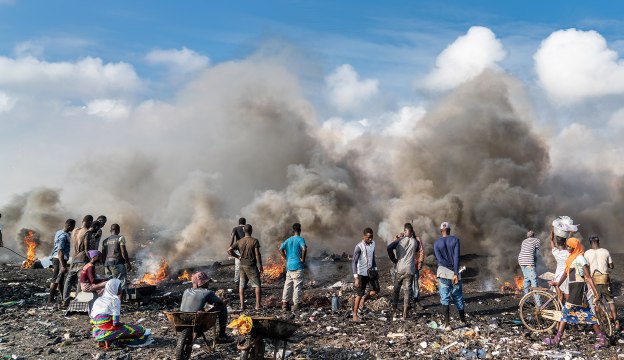
For years, a site called Agbogbloshie in Accra, Ghana was one of the largest e-waste processing sites in Africa, getting 15,000 tons of discarded phones, computers and other used electronics each year. Many Western media outlets depicted the site as a public health and environmental tragedy, rife with toxic chemicals that leach into the water and poison the air. While that’s undoubtedly true, it’s not the full story, according to a new collaborative photojournalism project. The project, called E-Waste in Ghana: Tracing Transboundary Flows, which won this year’s Fondation Carmignac photojournalism award, aims to capture both the positive and negative aspects of e-waste.

“The world cannot throw all its garbage here, it has truly negative consequences on the people,” says Anas Aremeyaw Anas, an investigative journalist in Ghana who co-led the project. “But there are positive aspects of sending us e-waste,” he says, as it’s sparked a dynamic, informal recycling economy in the country that, while often dangerous, can also help lift people out of poverty.

Globally, e-waste is an enormous problem. In 2022, humans discarded about 62 million tons of used electronics, enough to fill a line of trucks that spans the equator. But there’s opportunity too, as those trucks contain over $91 billion of valuable metals, the U.N. estimates….E-waste falls into two broad buckets: functional and non-functional. The line between them can be fuzzy, as what’s still usable or repairable to one person may not be to another, but the distinction is important. International laws prohibit trafficking of non-functional e-waste containing toxic substances, but the United Nations sees trading functional e-waste as beneficial, as it can lengthen the lifespan of a product…The project found that exporters often fail to separate functional from non-functional e-waste. “If you have a container full of TV screens, how on earth are you going to verify each and every one of them to make sure that they are functioning,” says photojournalist Bénédicte Kurzen, a co-author of the project. As a result, both kinds of e-waste get stuffed into container ships that make their way to low- and middle-income countries like Ghana.


Formally, Ghana prohibits the import of many forms of hazardous e-waste material. But the team found that a well-placed bribe can get port officials to look the other way. As a result, informal e-waste sites are growing across Ghana’s coast. There, both functional and non-functional e-waste get dumped into vast piles that are encroaching on residential areas. Thousands of “pickers” come to these sites, picking through the rubbish to separate items that might be repaired from waste that could contain valuable minerals.

It’s fraught, precarious work. To separate valuable minerals, like copper wire or iron, from useless plastic, pickers often burn the trash, producing noxious fumes. Burns, cuts and other injuries are common. E-waste workers — many of whom are children, the team found — are at risk of exposure to over 1,000 harmful chemicals, according to the World Health Organization, including lead, mercury and brominated flame retardants, which are linked to higher rates of diseases like cancer and diabetes.

A burgeoning recycling and repair industry has risen up alongside those harms. The team documented informal marketplaces, where vendors sell scores of busted cell phones to buyers looking to repair circuit boards or extract their precious metals. On Zongo Lane in Accra, the reporters say, hundreds of small, independent shops sell used or repaired equipment, ranging from televisions to computers….The most valuable minerals extracted from Ghana’s e-waste often don’t stay in Ghana. Many of the most valuable items get cherry picked and sent to more advanced smelters in Europe or Asia, the team found. “People are dismantling these items in toxic environments, and then the few piles that contain incredibly valuable minerals are going to be re-exported,” says Kurzen.

Excerpts from Jonathan Lambert, Stunning photos of a vast e-waste dumping ground — and those who make a living off it, NPR, Oct. 5, 2024
The Toxic Shadow of Abandoned Oil Infrastructure

Wearing blue hard hats, white hazmat suits and respirator masks, workers carted away bags of debris on a recent morning from a sprawling and now-defunct oil refinery once operated by Philadelphia Energy Solutions (PES). Other laborers ripped asbestos from the guts of an old boiler house, part of a massive demolition and redevelopment of the plant, which closed in 2019 after a series of explosions at the facility.

Plans call for the nearly 1,400-acre site to be transformed into a new commercial hub with warehousing and offices. All it will take is a decade, hundreds of millions of dollars, and confronting 150 years’ worth of industrial pollution, including buried rail cars and a poisonous stew of waste fuels poured onto the ground. A U.S. refinery cleanup of this size and scope has no known precedent, remediation experts said. It’s a glimpse of what lies ahead if the United States hopes to wean itself off fossil fuels and clean up the toxic legacy of oil, gas and coal.

President Joe Biden wants to bring the United States to net-zero greenhouse gas emissions by 2050 to fight climate change through a shift to clean-energy technologies, while reducing pollution in low-income and minority neighborhoods near industrial facilities. It’s a transition fraught with challenges. Among the biggest is what to do with the detritus left behind. The old PES plant is just one of approximately 135 oil refineries nationwide, to say nothing of the country’s countless gas stations, pipelines, storage hubs, drill pads and other graying energy infrastructure.

In Philadelphia, a private-sector company is taking the lead. Hilco Redevelopment Partners, a real estate firm that specializes in renovating old industrial properties, bought the PES refinery out of bankruptcy for $225.5 million in June…The full extent of the pollution won’t be understood for years. Also uncertain is the ability of the refinery’s previous owners to pay their share of the cleanup. The facility has had multiple owners over its lifetime and responsibility has been divided between them through business agreements and legal settlements.
Oil refining at the Philadelphia site began in 1870, 100 years before the creation of the U.S. Environmental Protection Agency (EPA). Gasoline, once a worthless byproduct of heating oil, was routinely dumped by the refinery into the soil, according to historians and researchers. Leaks and accidents spewed more toxins. The June 2019 blasts alone released 676,000 pounds of hydrocarbons, PES said at the time. The Philadelphia site is not unique. About half of America’s 450,000 polluted former industrial and commercial sites are contaminated with petroleum, according to the EPA.

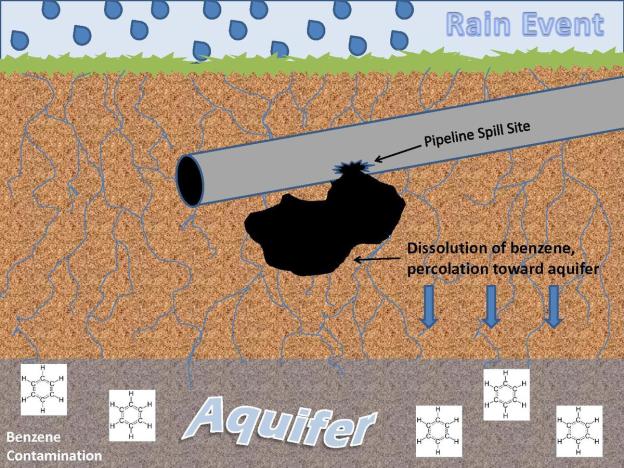
Cleanup in Philadelphia will be painstaking. After asbestos abatement comes the demolition and removal of 3,000 tanks and vessels, along with more than 100 buildings and other infrastructure, the company said. Then comes the ground itself. Hilco’s Perez said dirt quality varies widely on the site and will have to be handled differently depending on contamination levels. Clearing toxins like lead must be done with chemical rinses or other technologies…The site also has polluted groundwater and giant benzene pools lurking underneath, according to environmental reports Sunoco filed over the years with the federal and state governments.

Excerpts from Laila Kearney, 150 years of spills: Philadelphia refinery cleanup highlights toxic legacy of fossil fuels, Reuters, Feb. 16, 2021
 

The Struggle of Managing Dis-Used Nuclear Sources

Two disused radioactive sources, previously employed in cancer treatment, are now in safe and secure storage in the Republic of the Congo, following successful transport and increased security at their temporary storage facility, with the support of the IAEA. The sources no longer emit enough radioactivity to be useful for radiotherapy but are still radioactive and therefore need to be controlled and managed safely and securely. They are expected to be exported outside the country in 2022.

“It took time to understand the risks posed by the disused radiotherapy sources stored for so long in our country…,” said Martin Parfait Aimé Coussoud-Mavoungou, Minister for Scientific Research and Technological Innovation.

Around the world, radioactive material is routinely used to diagnose and treat diseases… This material is typically managed safely and securely while in use; however, when it reaches the end of its useful lifespan, the risk of abandonment, loss or malicious acts grows. 

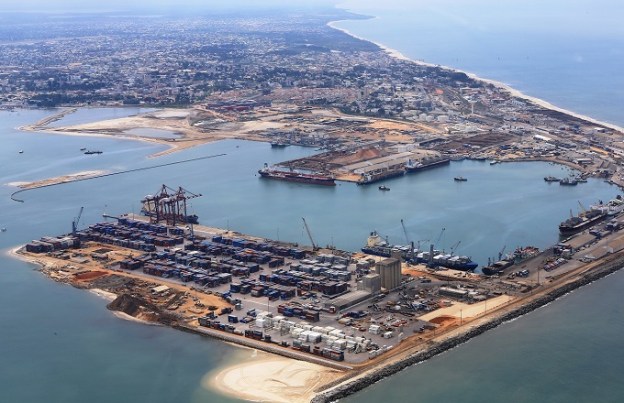
In 2010, the University Hospital of Brazzaville received a new cobalt 60 (Co-60) sealed source for the hospital’s teletherapy machine, replacing its original source, which was no longer able to deliver effective treatment. The disused sealed source was then packaged and shipped by boat to the supplier. However, the delivery of the package was blocked in transit due to problems with the shipping documents and was returned to the Republic of the Congo. Since 2010, the Co-60 source has been stored at the Autonomous Port of Pointe Noire, one of the most important commercial harbors in Central Africa…

“The August 2020 explosion that occurred in Beirut Harbor reminded the Congolese Authorities of the risks to unmanaged or unregulated material, particularly in national ports and harbors,” said Coussoud-Mavoungou. Congolese decision-makers agreed that the disused source had to urgently leave the Autonomous Port of Pointe Noire.

Following a comprehensive planning and preparation phase, a transport security plan was finalized on location in November 2020, with the support of IAEA experts. They designed a security system for the package and conducted a pre-shipment verification and simulation. At the same time, 45 participants were trained from the five government Ministries involved in the transport by road of the source in Pointe Noire.

Excerpts from Security of Radioactive Sources Enhanced by the Republic of the Congo with Assistance from the IAEA, IAEA Press Release, Jan. 18, 2021

Lethal Trash

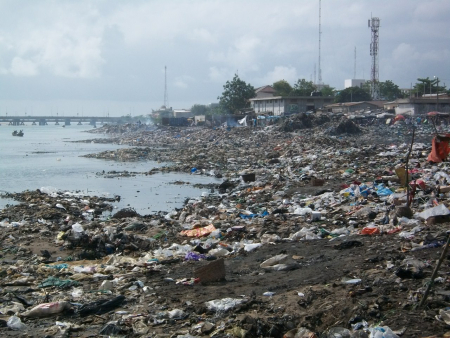
An explosion at a waste dump in Benin killed eight people, local mayor Robert Tolegbon said on on September 11, 2016. The blast occurred late onat a giant trash heap in Tori, a town about 40 km north-west of the capital Cotonou, as locals were sifting for food. Previously, the health ministry said two people had died.  Safety standards for waste management are poor in much of West Africa and debris is rarely filtered to eliminate toxic or flammable materials.

Eight killed in Benin waste blast, Reuters, Sept. 12, 2016