Tag Archives: IAEA

The Malicious Misuse of Nuclear Materials

According to IAEA (International Atomic Energy Agency) report, in 2024, 147 incidents of illegal or unauthorized activities involving nuclear and other radioactive material were reported to the Incident and Trafficking Database (ITDB), a number aligned with the historical average…Out of 147, three incidents reported in 2024 were likely related to trafficking or malicious use, and there was insufficient information to determine the intent of 21 other incidents. Furthermore, 123 incidents were not connected to trafficking or malicious use but most likely resulted from unauthorized disposal, unauthorized shipment or the discovery of radioactive material. The ITDB receives information on incidents involving illegal possession, attempted sale and smuggling of nuclear and other radioactive material, as well as unauthorized disposal and the discovery of lost radioactive sources. A total of 4390 incidents have been reported since 1993. 

Excerpt More than 145 Reports Added to IAEA Incident and Trafficking Database in 2024, IAEA, Feb. 28, 2025

Immobilizing Nuclear Waste

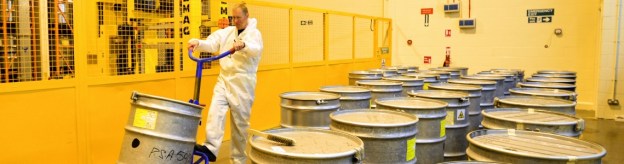
Several options are available to immobilise waste resulting from nuclear fuel reprocessing. One of these is vitrification – a mature technology which has been used for high-level nuclear waste immobilization for over 50 years…Argentina is considering vitrification as a viable option for dealing with its high-level nuclear waste. The Argentine National Programme for Radioactive Waste Management aims to build capacities to implement vitrification processes for radioactive waste….
The vitrified radioactive waste is extremely durable, and ensures a high degree of environmental protection. Although the process of vitrification requires a high initial investment and then operational costs, waste vitrification has important advantages: it significantly reduces the volume of waste, and allows simple and cheap disposal possibilities. The overall cost of vitrified radioactive waste is usually lower than alternative options when transportation and disposal expenses are taken into account. For this reason, the process is very attractive for sates seeking effective and reliable immobilisation solutions for their radioactive waste stocks.

Excerpts from Taking a Closer Look at Vitrification: How the IAEA Helps Countries Utilise Advanced Immobilisation Technologies, IAEA Press Release, Mar. 24, 2017

Stolen Nuclear Materials: Iraq

Iraq is searching for “highly dangerous” radioactive material stolen in 2015, according to an environment ministry document and seven security, environmental and provincial officials who fear it could be used as a weapon if acquired by Islamic State.

The material, stored in a protective case the size of a laptop computer, went missing in November 2015 from a storage facility near the southern city of Basra belonging to U.S. oilfield services company Weatherford WFT.N, the document seen by Reuters showed and officials confirmed…

The material, which uses gamma rays to test flaws in materials used for oil and gas pipelines in a process called industrial gamma radiography, is owned by Istanbul-based SGS Turkey, according to the document and officials.  A U.S. official said separately that Iraq had reported a missing specialized camera containing highly radioactive Iridium-192 to the International Atomic Energy Agency (IAEA), the Vienna-based U.N. nuclear watchdog, in November 2015….The environment ministry document, dated Nov. 30 and addressed to the ministry’s Centre for Prevention of Radiation, describes “the theft of a highly dangerous radioactive source of Ir-192 with highly radioactive activity belonging to SGS from a depot belonging to Weatherford in the Rafidhia area of Basra province”…

A senior environment ministry official based in Basra, who declined to be named as he is not authorised to speak publicly, told Reuters the device contained up to 10 grams (0.35 ounces) of Ir-192 “capsules”, a radioactive isotope of iridium also used to treat cancer.

The material is classed as a Category 2 radioactive source by the IAEA, meaning that if not managed properly it could cause permanent injury to a person in close proximity to it for minutes or hours, and could be fatal to someone exposed for a period of hours to days….

Large quantities of Ir-192 have gone missing before in the United States, Britain and other countries, stoking fears among security officials that it could be used to make a dirty bomb…..“They could simply attach it to explosives to make a dirty bomb,” said the official, who works at the interior ministry…But the official said the initial inquiry suggested the perpetrators had specific knowledge of the material and the facility. “No broken locks, no smashed doors and no evidence of forced entry,” he said….

Besides the risk of a dirty bomb, the radioactive material could cause harm simply by being left exposed in a public place for several days, said David Albright, a physicist and president of the Washington-based Institute for Science and International Security…The senior environmental official said authorities were worried that whoever stole the material would mishandle it, leading to radioactive pollution of “catastrophic proportions”.

Excerpts from Exclusive: Radioactive material stolen in Iraq raises security fears, Reuters, Feb. 17, 2016


Nuclear Accidents of the Future

Three major atomic accidents [Three Mile Island US 1979, Chernobyl USSR 1986, Fukushima Japan 2011] in 35 years are forcing the world’s nuclear industry to stop imagining it can prevent more catastrophes and to focus instead on how to contain them.  As countries such as China and India embrace atomic power even after the Fukushima reactor meltdowns in 2011 caused mass evacuations because of radiation fallout, scientists warn the next nuclear accident is waiting to happen and could be in a country with little experience to deal with it.

“The cold truth is that, no matter what you do on the technological improvements side, accidents will occur — somewhere, someplace,” said Joonhong Ahn, a professor at the Department of Nuclear Engineering of University of California, Berkeley. The consequences of radiation release, contamination and evacuation of people is “clear and obvious,” Ahn said. That means governments and citizens should be prepared, not just nuclear utilities, he said.

While atomic power has fallen from favor in some western European countries since the Fukushima accident — Germany, for example, is shutting all of its nuclear plants — it’s gaining more traction in Asia as an alternative to coal. China has 28 reactors under construction, while Russia, India, and South Korea are building 21 more, according to the World Nuclear Association. Of the 176 reactors planned, 86 are in nations that had no nuclear plants 20 years ago, WNA data show…

The problem is that the causes of the three events followed no pattern, and the inability to immediately contain them escalated the episodes into global disasters with huge economic, environmental and political consequences. Even if no deaths have yet been officially linked to Fukushima radiation, for example, cleanup costs have soared to an estimated $196 billion and could take more than four decades to complete.

If nuclear is to remain a part of the world’s energy supply, the industry must come up with solutions to make sure contamination — and all other consequences — do not spread beyond station grounds, Gregory Jaczko, ex-chairman of the U.S. Nuclear Regulatory Commission, said in an interview in Tokyo….

Since the introduction of nuclear stations in the 1950s, the industry has focused safety efforts on design and planning. Research and innovation has looked at back-up systems, passive technology that would react even if no human operator did, and strengthened materials used in construction of atomic stations….

The official toll from the reactor explosion at Chernobyl was put at 31 deaths. Radiation clean-up work, however, involved about 600,000 people, while 200,000 locals had to be relocated.  The accident contaminated 150,000 kilometers of land and according to the last Soviet leader Mikhail Gorbachev it was a factor in bringing about the collapse of the Soviet Union in 1991.

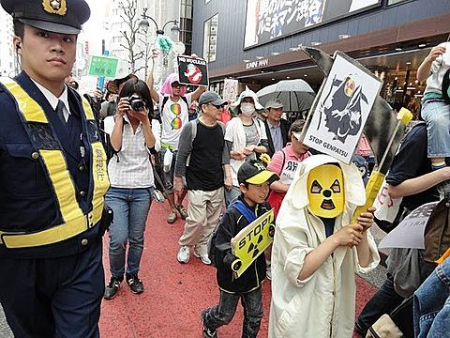
In Japan, the meltdown of three Fukushima reactors helped unseat premier Naoto Kan and forced the evacuation of about 160,000 people, destroying local fishing, farming and tourism industries along the way. It also brought tens of thousands of anti-nuclear protesters out onto the streets in the country’s biggest demonstrations since the 1960s. Tokyo Electric Power Co., the plant operator and once the world’s biggest non-state power producer, would have been bankrupted by the Fukushima accident but for billions of dollars in government aid…

Building a plant that would contain an accident within the facility boils down to cold cash, he said.  The review calls for new reactor designs to make a major release of radioactive fallout outside the station site “practically impossible,” the IAEA said. The standard would be “crucial for public acceptance and for the sustainability of nuclear energy.” Specialists on the review met for the first time in March and no conclusions are yet available, IAEA spokesman Greg Webb said by e-mail.

The problem with an engineering solution, an ever better reactor design or grander safety systems, is that based on the premise that all technology is fallible those defense systems can also fail, Berkley’s Ahn said.  “This is an endless cycle,” Ahn said. “Whatever is your technology, however it is developed, we always have residual risk.”  When the next nuclear accident occurs the world needs to have better knowledge of how to limit the spread of radiation and do the clean-up, including removing radiation from the soil, water and having an efficient evacuation drill for the population in danger zones, Ahn said. We also need more understanding of the impact of low-dose radiation on organisms, he said.  “This is about recovery from an accident, not preventing an accident,” Ahn said. “It’s completely different. And I think this concept is very necessary for the future of nuclear utilization.”

Excerpts from Yuriy Humber, World Needs to Get Ready for the Next Nuclear Plant Accident, Bloomberg, Apr. 4, 2014
Benefits of Threshold Nuclear Power: Japan v. China

China has urged Japan to return over 300 kilograms of weapons grade plutonium to the Unites States and to explain how it intends to resolve its surplus plutonium problem. At a regular press briefing in Beijing on 17 February 2014, and in response to a question on Japan’s plutonium stocks, a Foreign Ministry spokeswoman stated:

“China attaches great importance to nuclear proliferation risks and potential threats posed by nuclear materials to regional security. China has grave concerns over Japan’s possession of weapons-grade nuclear materials… Japan’s failure to hand back its stored weapons-grade nuclear materials to the relevant country has ignited concerns of the international community including China.”

As reported in January 2014, agreement has been reached between the United States and Japan for the return of plutonium used in the Fast Critical Assembly (FCA) in JAERI Tokai Research Establishment, Tokai-mura, Ibaraki Prefecture. The formal agreement is expected to be concluded at the Nuclear Security Summit in the Netherlands in March 2014. In its latest declaration to the International Atomic Energy Agency (IAEA) and in its 2012 plutonium management report Japan stated that the FCA facility has the total of 331 kg of plutonium, of which 293 kg is fissile plutonium. The largest share of this plutonium was supplied by the United Kingdom in addition to that supplied by the United States.

Commenting further, the Chinese Foreign Ministry declared:

“China believes that Japan, as a party to the Treaty on the Non-Proliferation of Nuclear Weapons, should strictly observe its international obligations of nuclear non-proliferation and nuclear security. The IAEA requires all parties to maintain a best possible balance of supply and demand of nuclear materials as contained in the Guidelines for the Management of Plutonium. Japan’s large stockpile of nuclear materials including weapons-grade materials on its territory is an issue concerning nuclear material security, proliferation risks and big supply-demand imbalance.”

In addition to the call for the return of the weapon’s grade plutonium, the Chinese statement also raises a question over Japanese fuel cycle policy and its inability to use its existing plutonium stocks. With all 48 nuclear power reactors shutdown there is currently no demand for its separated plutonium as mixed oxide (MOX) fuel. However, Japanese policy continues to plan the commercial operation of the Rokkasho-mura reprocessing plant as early as October 2014, following a safety assessment by the Nuclear Regulatory Authority (NRA). In its latest declaration to the IAEA, Japan’s Atomic Energy Commission reported that as of 31 December 2012, Japan held 44,241 kg of separated unirradiated plutonium, of which 9,295 kg was stored in Japan and 34,946 kg was stored abroad. Japan’s plutonium program, its challenges and alternatives was recently addressed at a Tokyo symposium and in detailed analysis by IPFM.

As yet, there has been no official response from the Japanese government to the Chinese Foreign Ministry statement, which has been extensively reported through Chinese media outlets

By Shaun Burnie with Mycle Schneider, China calls on Japan to return weapons grade plutonium to the United States, International Panel on Fissile Materials, Feb 18, 2014

Trapping the Dirty Bomb

Nuclear and radiological materials slipped out of regulatory control 2,331 times between 1995 and the start of 2013, according to the Incident and  Trafficking Database compiled by the International Atomic Energy Agency (IAEA). The materials are widely used in industry, agriculture and medicine. They are kept in many poorly guarded X-ray and cancer-treatment clinics. Such places are often not overseen with terrorism in min  d. They have even been bought by crooks as front operations, says Rajiv Nayan, of India’s Institute for Defence Studies and Analyses. Raids on abandoned uranium mines in the Democratic Republic of Congo are more frequent, according to that country’s General Atomic-Energy Commission. The problem is most acute in the former Soviet Union: in Ukraine alone, roughly 2,500 organisations use radiological materials.

In Georgia a counter-trafficking unit set up by the interior ministry seven years ago has arrested two or three teams smuggling radiological material every year save 2009. The lure of profits is so strong that some ex-cons get back into the business, says Archil Pavlenishvili, leader of the unit. Interpol has said such trafficking is growing: an acute “real threat to global security”.  It all sounds scary enough. But the reality has been less so. Moreover, by many accounts the most plausible dangers appear to be declining.

For a start, an “overwhelming” number of buyers turn out to be undercover cops, says Mark Hibbs of the Carnegie Endowment for International Peace, a think-tank. A sizeable network of informers helps Georgia’s interior ministry to keep a close eye on the four or five cells in the country currently trying to obtain or sell radiological material, says Mr Pavlenishvili. ..Beyond this, intelligence agencies are hunting down traffickers with help from special “link analysis” computer programs. Also known as “network analysis” software, this crunches data from numerous sources to identify people whose travel, purchases, web searches, communications, schooling and so forth may spell trouble—perhaps an employee in radiation therapy who begins frequenting an inconveniently located bar whose owner receives phone calls from a drug-runner with growing operations.

Half a dozen Western governments “pay huge amounts of attention” to this, says an executive at a developer of the software. At least one spy agency in America, Australia, Britain, Canada, New Zealand, and an unnamed European country pays more than $1m a month to use it. The counter-trafficking units in both Georgia and Romania note that link-analysis software made by i2, owned by the giant IBM computer company, has helped to nab traffickers. Atsuko Nishigaki, the unit’s boss, says Japan’s economy ministry employs ten analysts to use a competitor’s software to identify traffickers in nuclear or radiological material.

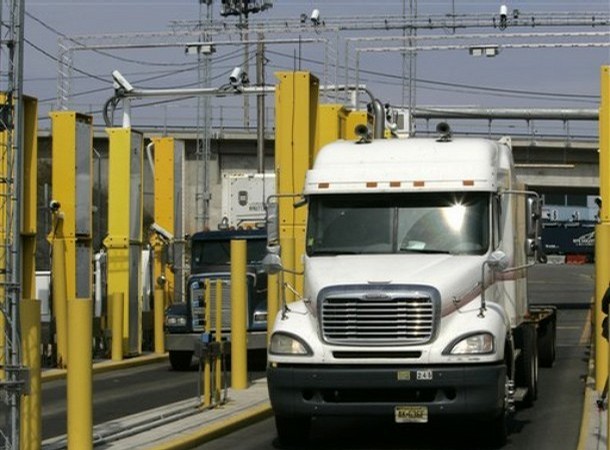
America’s National Nuclear Security Administration has sponsored the installation of radiation-detection kit at ports in 23 countries and counting. The Megaports Initiative, as it is called, aims to have half of the world’s maritime container cargo routinely scanned by 2015. Networked systems are also being developed with detectors small enough to be worn on a police officer’s belt. The idea is to relay data on potentially dangerous radiation through a mobile-phone network to a central computer. Knowing each device’s location and the strength of the radiation it detects, the computer can “triangulate” the source’s approximate location.

Difficult problems remain. False alarms triggered by anything from a pallet of cat litter to radiation-therapy patients and nuclear-power-plant shipments have slowed research and development on one such network at the Lawrence Livermore National Laboratory in California, says Simon Labov, a co-ordinator there. Even so, the lab’s work continues to be financed by America’s defence, energy and homeland-security departments. In October 2013 the latter’s Domestic Nuclear Detection Office asked for proposals for a similar system, dubbed Human Portable Tripwire. Other outfits that have developed technology for such schemes include Smiths Detection in Britain and, in America, Berkeley Nucleonics, General Electric, GENTAG, Passport Systems and Purdue University.

The sheer danger of making a dirty bomb is a factor too. Without the right equipment and expertise, the really nasty stuff can kill the maker of a bomb before it is ready—part of the reason, perhaps, that no spectacular dirty-bomb attack has yet been launched. F

Dirty Bombs: Glowing in the dark, Economist, Dec. 14, 2013, at 67