Tag Archives: Iran nuclear deal

How to Kill Scientists and Get Away with It

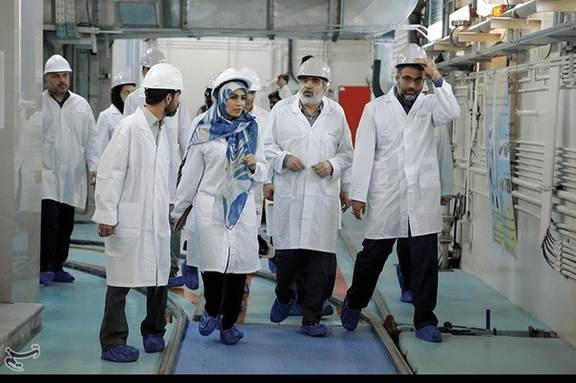
When Israel’s attacks on Iran began before dawn on June 13, 2025 explosions shattered the homes of some of Iran’s top scientists… All nine were killed in near-simultaneous attacks to prevent them from going into hiding…The attack on the scientists was considered so fantastical by even its planners that it was called “Operation Narnia,” after the fictional C.S. Lewis series…A week after the June 13 attacks, Israel used a drone to kill another scientist who was being kept in what was supposed to be a safe house in Tehran. The person hasn’t been named…The deadly airstrikes were the first to target Iran’s nuclear scientists since 2020, when Mohsen Fakhrizadeh was gunned down with a remote-controlled weapon. Israel has never denied or confirmed its role in the deaths of five Iranian scientists between 2010 and 2020.

Among the most important targets was Fereydoon Abbasi-Devani, the former head of the Atomic Agency of Iran and one of the founders of Iran’s nuclear weapons-related work…Another killed scientist was Mohammad Mehdi Teranchi, who led a unit under Fakhrizadeh focusing on high explosives, which are needed to detonate a nuclear weapon…

Iran has used universities like Shahid Beheshti, the Sharif University of Technology and Malek Ashtar University to keep alive its nuclear-weapons expertise over the past two decades….At these universities, Iran often matches up its nuclear scientists on experiments and other studies with younger students. Two of the scientists killed on June 13, Ahmadreza Zolfaghari and Abdulhamid Minouchehr, published an article in the Annals of Nuclear Energy in June 2024 that used advanced computer modeling to show how neutron sources behave in a chain reaction. That information can be used for civilian purposes, like building a nuclear reactor, or to help trigger a chain reaction in a nuclear weapon. 

Excerpt from Laurence Norman, How Israel Killed Iran’s Top Nuclear Scientists, WSJ, June 29, 2025

When a State Collapses, Who Survives: the case of Iran

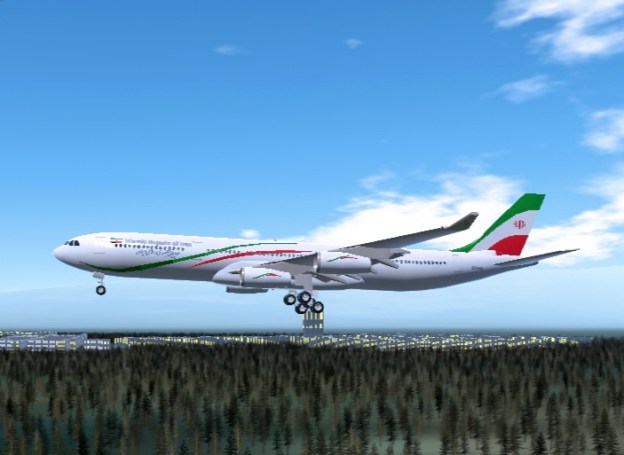
In mid-June 2025, Iran flew at least four civilian aircraft to the Omani capital of Muscat for safekeeping. One of the planes included Iran’s presidential Airbus A340, which landed in Muscat on June 18, 2025 according to flight trackers. 

Arab officials were surprised to learn the planes were empty of passengers. Instead, they said, they carried cash and assets, which Iranians weren’t allowed to offload because of sanctions. The planes themselves were also valuable as emergency exits for top officials. The precautions show the level of pressure on Iran’s rulers during the war (Israel-Iran war of 2025). They had to find a way forward with no control of their own airspace and no help from their militias

Excerpt from S. Raghavan et al., Life in Iran After the Strikes: Executions, Arrests and Paranoia, WSJ, June 28, 2025

The Unintentional Making of a Global Power: Iran

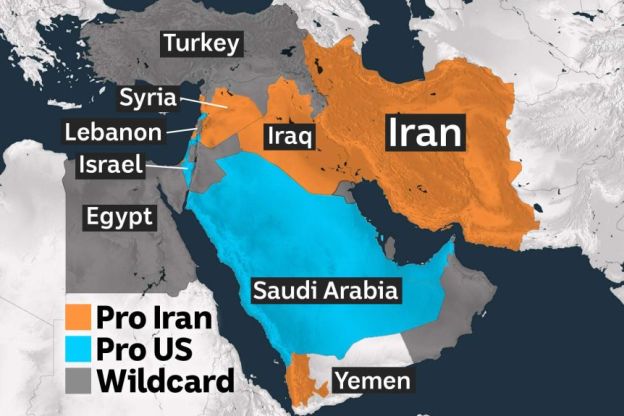
In 2024, Iran, under Supreme Leader Ali Khamenei’s leadership, thwarted decades of U.S. pressure and emerged from years of isolation largely by aligning itself with Russia and China…Iran’s economy remains battered by U.S. sanctions, but oil sales to China and weapons deals with Russia have offered financial and diplomatic lifelines…Today, Tehran poses a greater threat to American allies and interests in the Middle East than at any point since the Islamic Republic was founded in 1979. 

Iran’s military footprint reaches wider and deeper than ever. Iranian-backed armed groups have hit Saudi oil facilities with missiles and paralyzed global shipping in the Red Sea. They have dominated politics in Iraq, Lebanon, Yemen and Syria, and launched the most devastating strike on Israel in decades, when Hamas attacked in October. Iran launched its first direct military attack from its soil on Israel in April 2024. It has also orchestrated attacks on opponents in Europe and beyond, Western officials say. 

“In many respects, Iran is stronger, more influential, more dangerous, more threatening than it was 45 years ago,” said Suzanne Maloney, director of the foreign-policy program at the Brookings Institution, who advised Democratic and Republican administrations on Iran policy. 

U.S. policy has at times unintentionally contributed to Iran’s strength. The 2003 toppling of Saddam Hussein removed a sworn enemy from Iran’s borders. Washington’s failure to stabilize postwar Iraq bolstered Tehran’s influence…

Excerpts from Sune Engel Rasmussen and Laurence Norman, How Iran Defied the U.S. to Become an International Power, WSJ, July 2, 2024

A War Like No Other: the Covert Invasion of Iran

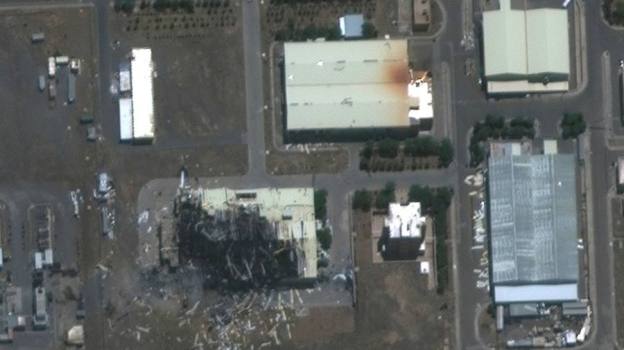
Within hours of Iran proudly announcing the launch of its latest centrifuges, on April 10, 2021, a power blackout damaged some of the precious machines at its site in Natanz…One thing reports seem to agree on is that an “incident” affected the power distribution network at Natanz.

Natanz is critical to Iran’s nuclear program. The heavily secured site is protected by anti-aircraft guns and has two large centrifuge halls buried more than 50 feet underground to protect them from airstrikes. Despite the conflicting reports, it appears the facility’s main power distribution equipment — Natanz has its own grid — was taken out with explosives. Backup emergency electricity also was taken down, and power cut out across the multibuilding compound, Behrouz Kamalvandi, spokesperson for Iran’s Atomic Energy Organization, told Iran’s state-run TV.

A blackout may not sound that serious, but it can be at an enrichment plant. Centrifuges are slender machines linked up in what are called cascades which enrich uranium gas by spinning it at incredibly high speeds using rotors. The stress on the advanced materials involved is intense and the process is technically immensely challenging. A small problem can send a centrifuge spinning out of control, with parts smashing into each other and damaging a whole cascade.

The question is: what caused the blackout – a cyber-attack or a physical act of sabotage, like a bomb?

Israel has a long history of sabotaging nuclear facilities in Iraq, Syria, and Iran, both through cyber means — including the sophisticated Stuxnet attack against Iran, which Israel conducted with U.S. and Dutch intelligence agencies — and with conventional bombs and explosives. Israel is also reportedly behind a number of assassinations of Iranian nuclear scientists and officials over the last decade. The Stuxnet attack was particularly significant because it launched the era of cyberwarfare, as it was the first cyberattack known to use a digital weapon that could leap into the physical realm to cause actual destruction of equipment. The highly skilled covert operation was conducted in lieu of a kinetic attack to avoid attribution and an escalation in hostilities with Iran; it remained undetected for three years..

Excerpts from Gordon Corera, Iran nuclear attack: Mystery surrounds nuclear sabotage at Natanz, BBC, Apr. 12, 2021, Kim Zetter, Israel may have Destroyed Iran Centrifuges Simply by Cutting Power, Intercept, Apr. 13, 2021

By Hook or By Crook (or Both): How Iran Beats US Sanctions

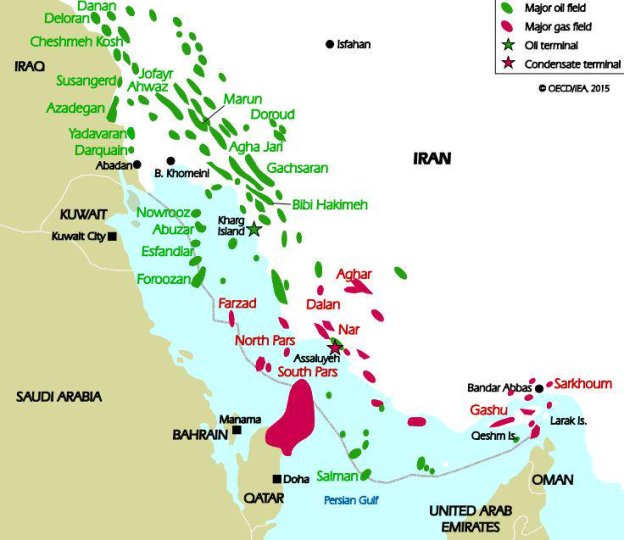
Persian Gulf waters off Iraq have become a new, important waypoint for Iranian oil smugglers looking to avoid U.S. sanctions…Iranian tankers now regularly transfer crude to other ships just miles offshore the major Iraqi port of Al Faw, according to the officials. The oil is then mixed with cargoes from other places to disguise its origin, and it eventually ends up on sale in world markets, they say.


In one example from March 2020,  according to a shipping manifest reviewed by The Wall Street Journal, 230,000 barrels of oil from the state-run National Iranian Oil Co. were transferred to a vessel moored in Iraqi waters. The cargo was blended with Iraqi oil and passed to other ships, according to people familiar with the operation. The ultimate destination of the oil wasn’t clear.

The people familiar with the transfer said the operation was part of an increasingly common and lucrative business that involves transferring and mixing cargoes with other vessels multiple times and then selling the oil with documents that declare it is as Iraqi. Iraqi oil can be sold at a significant premium to oil of Iranian origin.

Iran has increasingly tried to find ways to get its crude to market despite the U.S. sanctions. Iran’s daily crude and condensates exports averaged 827,000 barrels a day in the first six months of this year, according to U.S. shipping-information company TankerTrackers.com. That is up 28% from the previous six months, but far below the level of 2.7 million barrels a day in May 2018 before the sanctions.

“We While some of Iran’s oil exports go to countries not aligned with the U.S., such as Syria and China, they often pass through allies such as the United Arab Emirates or Iraq, where their origin is being concealed, according to U.S. officials.

Excerpt from Sarah McFarlane and Benoit Faucon, Iraq Emerges as Hurdle to Enforcing Iran Oil Sanctions, WSJ, Oct. 24, 2020

How Iranian Oil Escapes US Sanctions

 At least two tankers have ferried Iranian fuel oil to Asia in February 2019 despite U.S. sanctions against such shipments, according to a Reuters analysis of ship-tracking data and port information, as well as interviews with brokers and traders.  The shipments were loaded onto tankers with documents showing the fuel oil was Iraqi. But three Iraqi oil industry sources and Prakash Vakkayil, a manager at United Arab Emirates (UAE) shipping services firm Yacht International Co, said the papers were forged.  The people said they did not know who forged the documents, nor when.

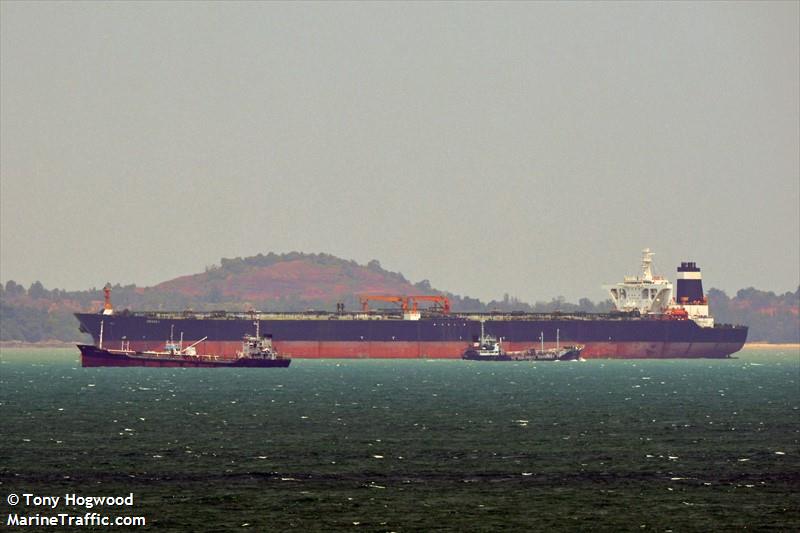
“Some buyers…will want Iranian oil regardless of U.S. strategic objectives to deny Tehran oil revenue, and Iran will find a way to keep some volumes flowing,” said Peter Kiernan, lead energy analyst at the Economist Intelligence Unit.  While the United States has granted eight countries temporary waivers allowing limited purchases of Iranian crude oil, these exemptions do not cover products refined from crude, including fuel oil, mainly used to power the engines of large ships. Documents forwarded to Reuters by ship owners say a 300,000 tonne-supertanker, the Grace 1, took on fuel oil at Basra, Iraq, between Dec. 10 and 12, 2018. But Basra port loading schedules reviewed by Reuters do not list the Grace 1 as being in port during those dates.  One Iraqi industry source with knowledge of the port’s operations confirmed there were no records of the Grace 1 at Basra during this period. 

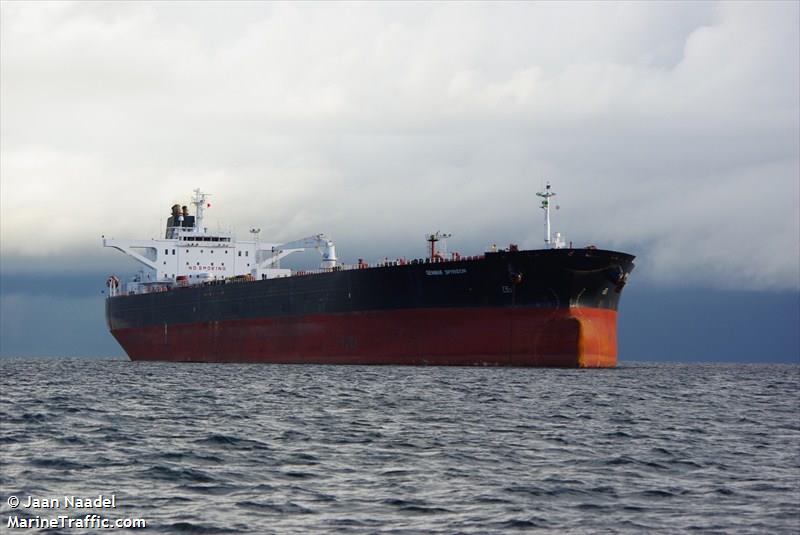
Grace 1 oil tanker

Reuters examined data from four ship-tracking information providers – Refinitiv, Kpler, IHS Markit and Vessel Finder – to locate the Grace 1 during that time. All four showed that the Grace 1 had its Automatic Identification System (AIS), or transponder, switched off between Nov. 30 and Dec. 14, 2018, meaning its location could not be tracked.  The Grace 1 then re-appeared in waters near Iran’s port of Bandar Assaluyeh, fully loaded, data showed. The cargo was transferred onto two smaller ships in UAE waters in January, from where one ship delivered fuel oil to Singapore in February 2019.  Shipping documents showed about 284,000 tonnes of fuel oil were transferred in the cargoes tracked by Reuters, worth about $120 million at current prices…

One of those vessels, the 130,000 tonne-capacity Kriti Island, offloaded fuel oil into a storage terminal in Singapore around Feb. 5 to 7. Reuters was unable to determine who purchased the fuel oil for storage in Singapore.  The Kriti Island is managed by Greece’s Avin International SA… Avin International’s Chief Executive Officer George Mylonas told Reuters. Mylonas confirmed the Kriti Island took on fuel oil from the Grace 1.There is no indication that Avin International knowingly shipped Iranian fuel oil. Mylonas said his firm had conducted all necessary due diligence to ensure the cargo’s legitimate origin….

Kriti Island oil tanker

Excerpts from Roslan Khasawneh et al, Exclusive: How Iran fuel oil exports beat U.S. sanctions in tanker odyssey to Asia, Reuters, Mar. 20, 2019

Unleashing Nuclear Power – Iran

China was expected to build two nuclear power plants for Iran as part of the country’s new nuclear direction under the controversial nuclear deal that was signed July 15, 2015. The plants were set to be located on the Makran coast, near the neighboring Gulf of Oman, Iran’s Atomic Energy Organization head Ali Akbar Salehi announced on July 22, 2015.

Uninhibited by sanctions, Iran announced plans for four new nuclear power plants. Chinese contractors will be building two of the four planned. “We will simultaneously launch construction of four new nuclear power plants in the country in the next two to three years,” Salehi said, according to Indo-Asian News Service. “We plan to engage more than 20,000 workers and engineers in this large-scale construction.”

When it comes to United Nations sanctions, China had always been an advocate for Iran, along with Russia, generally opposing Washington’s proposed restrictions. On July 20, 2015, the United Nations adopted the nuclear deal between Tehran and Washington, after the “P5+1” countries — the U.S., Britain, France, Russia, China and Germany — unanimously approved it, also voting to lift a series of economic sanctions that were previously imposed on Iran.

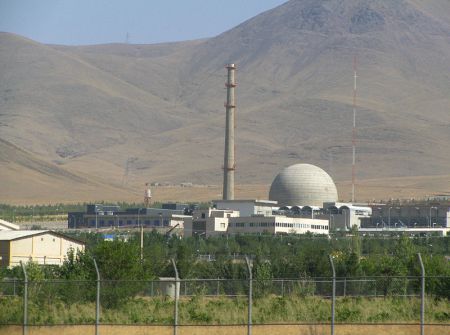
China has played a unique, hands-on role in the nuclear deal involving Iran’s Arak reactor, which has been described previously as a “pathway” to nuclear weapons for Iran.

“China has put forward the idea of the modification of the Arak heavy water reactor. … This is the unique role China has played in resolving the Iranian nuclear issue,” Chinese Foreign Minister Wang Yisaid in a statement…..  [The nuclear deal]  has also opened up a door to increased business opportunity in Iran, particularly for China.  Following the announcement of the landmark deal, Wang said that China played a pivotal role in negotiations, and he expressed hope that Iran would take part in China’s “one belt, one road” ambition to revive the Silk Road route.

Excerpts from Michelle FlorCruz, Iran Nuclear Deal: China To Build 2 Nuclear Power Plants For Islamic Republic Following Landmark Agreement, International Business Times, July 22, 2015

Full text of Iran Nuclear Deal Signed July 15, 2015
Joint Comprehensive Plan of Action
Annex I: Nuclear-related commitments
Annex II: Sanctions-related commitments
Attachments to Annex II
Annex III: Civil nuclear cooperation
Annex IV: Joint Commission
Annex V: Implementation Plan

Nuclear Capability of Iran – Natanz, Fordow, Parchin

One [of the problems] is the ambiguity about what rights the Iranians will have to continue nuclear research and development. They are working on centrifuges up to 20 times faster than today’s, which they want to start deploying when the agreement’s [the currently negotiated agreement between Iran and United States/Europe]  first ten years are up. The worry is that better centrifuges reduce the size of the clandestine enrichment facilities that Iran would need to build if it were intent on escaping the agreement’s strictures.

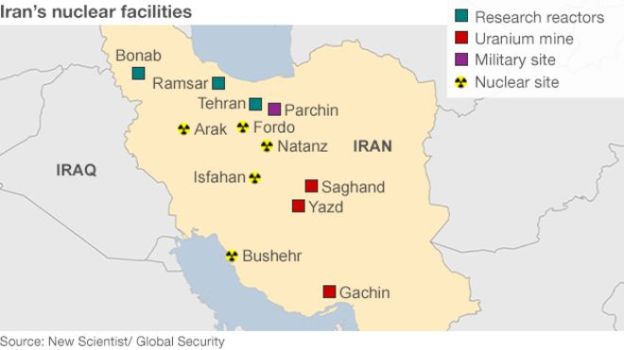
That leads to the issue on which everything else will eventually hinge. Iran has a long history of lying about its nuclear programme. It only declared its two enrichment facilities, Natanz and Fordow, after Western intelligence agencies found out about them. A highly intrusive inspection and verification regime is thus essential, and it would have to continue long after other elements of an agreement expire. Inspectors from the IAEA would have to be able to inspect any facility, declared or otherwise, civil or military, on demand…

For a deal to be done in June 2015, Iran will have to consent to an [intrusive] inspection regime. It will also have to answer about a dozen questions already posed by the IAEA about the “possible military dimensions” of its nuclear programme. Yet on March 23, 2015Yukiya Amano, the agency’s director, said that Iran had replied to only one of those questions. Parchin, a military base which the IAEA believes may have been used for testing the high-explosive fuses that are needed to implode, and thus set off, the uranium or plutonium at the core of a bomb, remains out of bounds. Nor has the IAEA been given access to Mohsen Fakhrizadeh, the physicist and Revolutionary Guard officer alleged to be at the heart of the weapons development research. The IAEA’s February 19, 2015 report on Iran stated that it “remains concerned about the possible existence…of undisclosed nuclear-related activities…including activities related to the development of a nuclear payload for a missile.”

Excerpts from, The Iran Nuclear Talks: Not Yet the Real Deal, Economist, Apr. 4, 2015, at 43