Tag Archives: manganese nodules

Mining the Seabed: By hook or by crook

The Trump administration is reportedly considering an executive order that would accelerate deep-sea mining in international waters by allowing companies to bypass a United Nations-backed review process. The order would affirm the United States’ right to extract critical minerals from the ocean floor, enabling companies to seek permits directly from the National Oceanic and Atmospheric Administration (NOAA).

The International Seabed Authority (ISA), established in 1982 under the UN Convention on the Law of the Sea (UNCLOS)—which the U.S. has not ratified—has spent years developing regulations for deep-sea mining.  In 2021, the island nation of Nauru sponsored Canada’s The Metals Company (TMC) to begin deep-sea mining, forcing the ISA to draft rules before any company could start extracting minerals in international waters. The 36-member ISA council has since met repeatedly to finalize regulations. In March 2025, officials gathered in Jamaica to review hundreds of proposed amendments to a 256-page draft mining code, but the session ended without a resolution.

Frustrated by the ISA’s slow progress, TMC in March 2025 formally urged the Trump administration to issue deep-sea mining permits, arguing that “commercial industry is not welcome at the ISA.” “The Authority is being influenced by a faction of States allied with environmental NGOs who see the deep-sea mining industry as their ‘last green trophy,’” TMC chairman and chief executive, Gerard Barron. “They have worked tirelessly to continuously delay the adoption of the Exploitation Regulations with the explicit intent of killing commercial industry.”

Governments interested in developing deep-sea mining within their territorial waters — typically 200 nautical miles from shore — include the Cook Islands, Norway and Japan.

Proponents of seabed mining contend that its environmental impact is lower than land-based extraction. Critics warn that the long-term consequences remain uncertain and advocate for further research before large-scale operations begin.

Excerpt from Cecilia Jamasmie, Trump eyes executive order to fast-track deep-sea mining, Mining.com, Apr. 1, 2025
The Communist Chinese Party and the Protection of the Ocean Seabed

A disagreement between deep-sea miner The Metals Company (TMC) and researchers over a new scientific study is threatening efforts to mine the ocean bed for metals critical to supporting the green-energy transition. A study in the journal Nature Geoscience suggested that deep-sea nodules, which contain metals such as nickel critical for electric-vehicle batteries, produce oxygen despite the absence of light at the bottom of the ocean. The researchers making the claim called for further studies into how oxygen is produced on the ocean floor while environmental groups called for a halt to disrupting the seafloor and mining of nodules. TMC and some scientists are questioning the claim and accusing the lead authors of the study of plagiarism… The study comes at a time of troubled waters for the deep-sea mining industry, with political uncertainty and TMC struggling for new sources of investment.

In the U.S., the outlook for the industry has improved recently. On the corporate side, both Tesla and General Motors shareholders have said they wouldn’t back a moratorium on deep-sea mining. Ocean-floor minerals are seen as key to making electric-vehicle batteries because of the presence of cobalt, nickel and manganese in nodules. In Washington in September 2024, a House hearing was held on the subject of deep-sea and critical minerals, as many see the metals found on the ocean floor as important for defense purposes. In a meeting co-chaired by Democrat Kathy Castor of Florida and Republican Robert Wittman of Virginia as part of the Select Committee on the Chinese Communist Party, Barron made the case for deep-sea nodules to become part of the U.S.’s critical mineral supply chain.

Meanwhile, industry leaders have gathered in the Cook Islands in September 2024 where a conference on deep-sea mining is taking place. The Pacific nation is home to thousands of tons of nodules, which are also rich in copper.

Excerpts from Yusuf Khan, Deep-Sea Mining Hits Crunch Point Amid Academic Battle Over Ocean-Floor Resources, WSJ, Sept 24, 2024

Saving the Climate by Fouling the Oceans

The Norwegian government in June 2023 opened the door for deep-sea mining in its waters, despite opposition from environmental groups and a growing list of nation states arguing to ban the practice.  The government said it was proposing parts of the Norwegian continental shelf be opened for deep sea mining and other commercial seabed mineral activities…Companies and countries are scouring the planet to find and secure additional sources of metals and minerals critical for the energy transition, including cobalt, manganese and nickel.  To date deep-sea mining has focused on the extraction of seabed nodules—tennis-ball sized pieces of rock which contain manganese, cobalt and nickel, all of which are used in electric-vehicle batteries

So far much of the attention has centered on the Clarion Clipperton Zone in the Pacific Ocean: An area of water between Mexico and Hawaii that contains millions of tons of nodules.  In Norway however, the focus will be on seabed crusts on the country’s continental shelf. The target crusts contain copper, zinc and cobalt, as well as some rare-earth elements, according to the Norwegian Petroleum Directorate…

Countries including France and Germany have called for moratoriums on deep-sea mining, while in May 2023 a report found that when researching the pacific seabed, 90% of the more than 5,000 marine creatures found living in the Clarion Clipperton Zone were new species. Companies including Maersk and Lockheed Martin have also been divesting their deep-sea mining investments. 

Excerpts from Yusuf Khan, Norway Opens Door for Deep-Sea Mining of Copper and Other Critical Materials, WSJ, June 20, 2023

The Pitfalls of Green Energy Revolution

Video footage from a deep-sea mining test, showing sediment discharging into the ocean, has raised fresh questions about the largely untested nature of the industry, and the possible harms it could do to ecosystems as companies push to begin full-scale exploration of the ocean floor as early as this year. The Metals Company (TMC), a Canadian mining firm that is one of the leading industry players, spent September to November of 2022 testing its underwater extraction vehicle in the Clarion Clipperton Fracture Zone, a section of the Pacific Ocean between Mexico and Hawaii.

But a group of scientists hired by the company to monitor its operations, concerned by what they saw, posted a video of what they said was a flawed process that accidentally released sediment into the ocean. The scientists also said the company fell short in its environmental monitoring strategy, according to documents viewed by the Guardian newspaper.

As the push for deep-sea mining intensifies, experts are increasingly concerned that companies will kick up clouds of sediment, which could be laden with toxic heavy metals that may harm marine life. At least 700 scientists – along with France, Germany and Chile – are calling for a moratorium on deep-sea mining.

In a post to its website, TMC acknowledged the incident, but framed the discharge from its cyclone separator as a “minor event” in which “a small amount” of sediment and nodule fragments spilled into the ocean. The company said it fixed the issue in its equipment to prevent further overflows and concluded that the incident “did not have the potential to cause serious harm”.

Experts and critics caution that the incident highlights the relative uncertainties surrounding deep-sea mining. Companies are scrambling to scavenge the ocean floor for valuable metals, used in electric vehicle batteries and a host of other technologies such as green energy production, amid a global fight for stable supply.

Excerpts from Leaked video footage of ocean pollution shines light on deep-sea mining, Guardian, Feb. 6, 2022

When Others Do our Dirty Work: the Costs of Overdependence

China is tightening its grip on the global supply of processed manganese, rattling a range of companies world-wide that depend on the versatile metal—including the planet’s biggest electric-vehicle makers.

China produces more than 90% of the world’s manganese products, ranging from steel-strengthening additives to battery-grade compounds. Since October 2020, dozens of Chinese manganese processors accounting for most of global capacity have joined a state-backed campaign to establish a “manganese innovation alliance,” led by Ningxia Tianyuan Manganese Industry Group, setting out in planning documents goals and moves that others in the industry say are akin to a production cartel. They include centralizing control over supply of key products, coordinating prices, stockpiling and networks for mutual financial assistance.

The squeeze sent prices soaring in metal markets world-wide, snagging steelmakers and sharpening concern among car makers. China’s metal industries already dominate the global processing of most raw materials for rechargeable batteries, including cobalt and nickel. Three-quarters of the world’s lithium-ion batteries and half of its electric vehicles are made in China.  High-purity forms of manganese have increasingly become crucial for battery-powered automobiles, touted by Volkswagen AG and Tesla Inc. in recent months as a viable replacement for other, more-expensive battery ingredients….

While manganese ore is relatively abundant around the world, it is almost solely refined in China. Battery-grade manganese is traded mostly privately, and pricing can be opaque. Miners say a metric ton of the purified metal could cost up to $4,000—barely a 10th of the cost of cobalt, a widely used battery metal. By replacing cobalt, manganese could help auto makers produce 30% more cars with the same amount of nickel, analysts say.

Rival manganese projects outside China view the cartel-like activities as an opportunity to gain momentum for their own battery-grade developments…Still, analysts say such projects outside China might take years to start and heavy cost investments to develop. Viable bases of manganese ore are often located in remote regions, which require expensive infrastructure to ferry and process extracted ores.

Excerpt from Chuin-Wei Yap, China Hones Control Over Manganese, a Rising Star in Battery Metals, WSH, May 21, 2021

Mining the Ocean: the Fate of Sea Pangolin

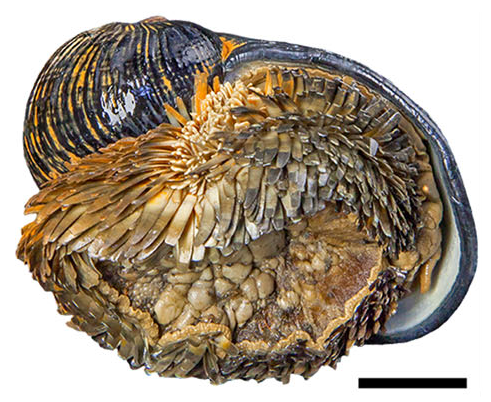
A snail that lives near hydrothermal vents on the ocean floor east of Madagascar has become the first deep-sea animal to be declared endangered because of the threat of mining.  The International Union for Conservation of Nature (IUCN) added the scaly-foot snail (Chrysomallon squamiferum) to its Red List of endangered species on 18 July, 2019 — amid a rush of companies applying for exploratory mining licenses…. The scaly-foot snail is found at only three hydrothermal vents in the Indian Ocean.  Two of those three vents are currently under mining exploration licences,…Even one exploratory mining foray into this habitat could destroy a population of these snails by damaging the vents or smothering the animals under clouds of sediment..

Full-scale mining of the deep seabed can’t begin in international waters until the International Seabed Authority (ISA) — a United Nations agency tasked with regulating sea-bed mining — finalizes a code of conduct, which it hopes to do by 2020….The biggest challenge to determining whether the scaly-foot snail warranted inclusion on the Red List was figuring out how to assess the extinction risk for animals that live in one of the weirdest habitats on Earth…

When the IUCN considers whether to include an organism on the Red List, researchers examine several factors that could contribute to its extinction. They include the size of a species’ range and how fragmented its habitat is…The IUCN settled on two criteria to assess the extinction risk for deep-sea species: the number of vents where they’re found, and the threat of mining.   In addition to the scaly-foot snail, the researchers are assessing at least 14 more hydrothermal vent species for possible inclusion on the Red List.

Excerpts from Ocean Snail is First Animal to be Officially Endangered by Deep-Sea Mining, Nature, July 22, 2019

On Sea Pangolins see YouTube video

Gummy Squirrels v. Cobalt: Mining the Seabed for Real


Sometimes the sailors’ myths aren’t far off: The deep ocean really is filled with treasure and creatures most strange. For decades, one treasure—potato-size nodules rich in valuable metals that sit on the dark abyssal floor—has lured big-thinking entrepreneurs, while defying their engineers. But that could change April 2019 with the first deep-sea test of a bus-size machine designed to vacuum up these nodules.

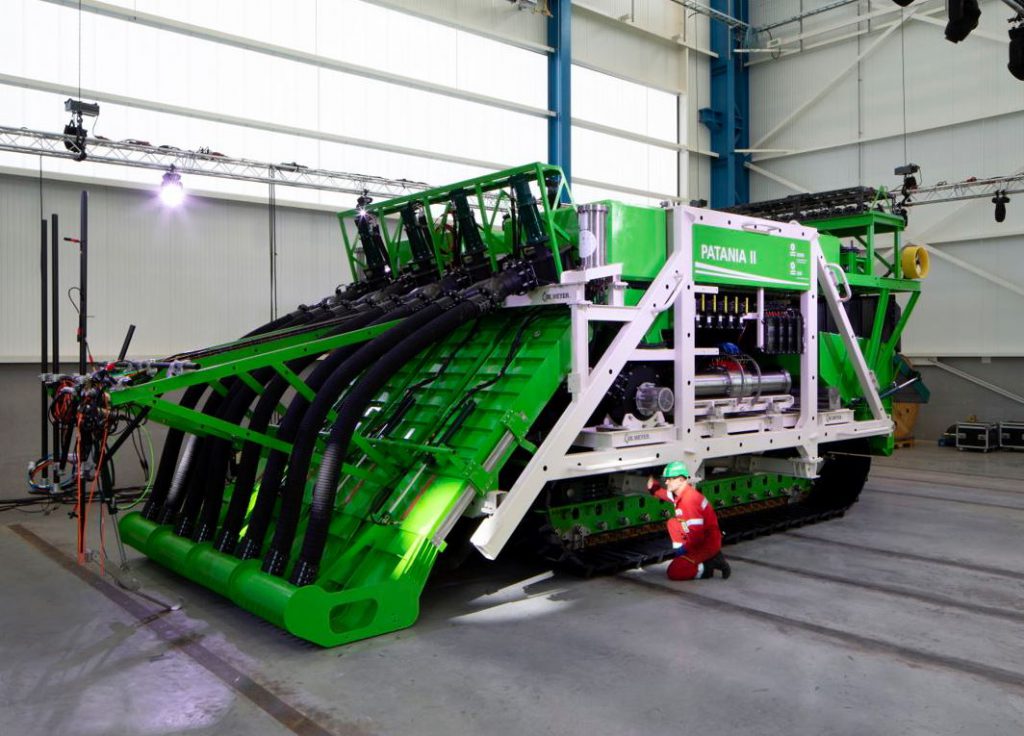
The trial, run by Global Sea Mineral Resources (GSR), a subsidiary of the Belgian dredging giant DEME Group, will take place in the international waters of the Clarion-Clipperton Zone (CCZ), a nodule-rich area the width of the continental United States between Mexico and Hawaii. The Patania II collector, tethered to a ship more than 4 kilometers overhead, will attempt to suck up these nodules through four vacuums as it mows back and forth along a 400-meter-long strip.

Patantia Vessel for Deep Sea Mining by DEME

Ecologists worried about the effect of the treasure hunt on the fragile deep-sea organisms living among and beyond the nodules should get some answers, too. An independent group of scientists on the German R/V Sonne will accompany GSR’s vessel to monitor the effect of the Patania II’s traverses. The European-funded effort, called MiningImpact2, will inform regulations under development for seafloor mining,…

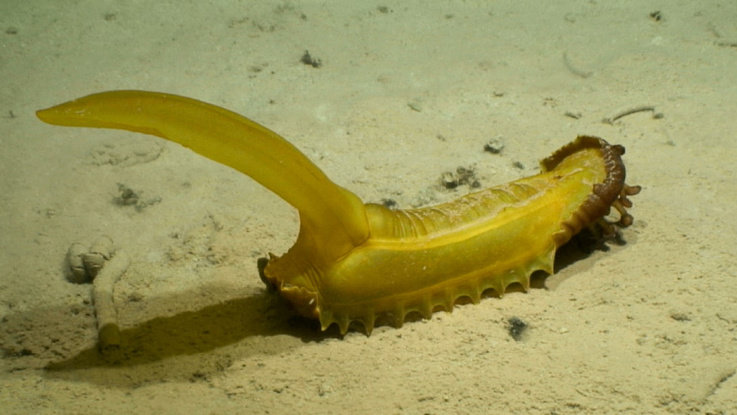
The nodules are abundant, and they are rich in cobalt, a costly metal important for many electronics that is now mined in the forests of the Democratic Republic of the Congo, a conflict zone…Ideal for nodule formation, the CCZ is estimated to contain some 27 billion metric tons of the ore. But its abyssal plain is also a garden of exotic life forms. Craig Smith, a benthic ecologist at the University of Hawaii in Honolulu, has helped lead biological surveys in the CCZ that, in one case, revealed 330 species living in just 30 square kilometers, more than two-thirds of them new to science. The CCZ’s inhabitants include a giant squid worm,  green-yellow sea cucumbers that researchers called “gummy squirrels,” and a greater variety of bristle worms than ever reported before.

gummy squirrel on seabed

Mining could leave a lasting imprint on these ecosystems. In 2015, MiningImpact scientists visited the site of a 1980s experiment off Peru in which a small sledge was pulled along the bottom to simulate nodule harvesting. Three decades later, “It looked like the disturbance had taken place yesterday,” says Andrea Koschinsky… Many of the species in the deep seabed, such as corals and sponges, live right on the nodules. “They will be sucked up and are gone. You can’t go back.”Such concerns make many environmentalists wary of opening any of the deep sea to mining…

For one thing, the legal framework for mining in international waters is uncertain. Although the United Nations’s International Seabed Authority has granted contracts for exploration, it is still drafting rules that will govern commercial operations and set limits for environmental damage. The rules are unlikely to be final before 2021…

These sensors will focus on the plume of sediment the collector kicks up. The waters of the CCZ are some of the clearest in the world, and scientists have long feared that mining could spread a vast blanket of silt, hurting life far outside the mining area. Recent experiments, however, suggest most of the silt particles will clump together and fall out within a kilometer or two, Koschinsky says. But a film of finer nanoparticles might spread farther.

Excerpts from Scheme to Mine the Abyss Gets Sea Tria, Science,  Mar. 15, 2019

Mining the Seabed

In the 1960s and 1970s, amid worries about dwindling natural resources, several big companies looked into the idea of mining the ocean floor. They proved the principle by collecting hundreds of tonnes of manganese nodules…rich in cobalt, copper and nickel. As a commercial proposition, though, the idea never caught on. Working underwater proved too expensive and prospectors discovered new mines on dry land.

The International Seabed Authority, which looks after those parts of the ocean floor beyond coastal countries’ 200 nautical-mile exclusive economic zones, has issued guidelines for the exploitation of submarine minerals.

One of the most advanced projects is that of Nautilus Minerals, a Canadian firm. In January 2016 Nautilus took delivery of three giant mining machines (two rock-cutters and an ore-collector) that move around the seabed on tracks, like tanks. It plans to start testing these this year. If all goes well the machines could then start operating commercially in Nautilus’s concession off the coast of Papua New Guinea, which prospecting shows contains ore with a copper concentration of 7%. (The average for terrestrially mined ore is 0.6%.) This ore also contains other valuable metals, including gold.

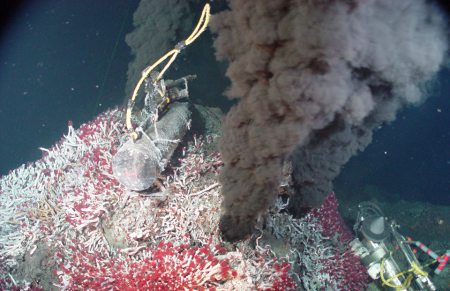
This approach (which is also that taken by firms such as Neptune Minerals, of Florida, and a Japanese consortium led by Mitsubishi Heavy Industries) is different from earlier efforts. It involves mining not manganese nodules, but rather a type of geological formation unknown at the time people were looking into those nodules—submarine hydrothermal vents. These rocky towers, the first of which was discovered in 1977, form in places where jets of superheated, mineral-rich water shoot out from beneath the sea floor. They are found near undersea volcanoes and along the ocean ridges that mark the boundaries between Earth’s tectonic plates. They generally lie in shallower waters than manganese nodules, and often contain more valuable substances, gold among them.

They are not, though, as abundant as manganese nodules, so if and when the technology for underwater mining is proved, it is to nodules that people are likely to turn eventually. These really are there in enormous numbers. According to Dr Hannington, the Clarion-Clipperton fracture zone, a nodule field that stretches from the west coast of Mexico almost to Hawaii, contains by itself enough nickel and copper to meet global demand for several decades, and enough cobalt to last a century.

Mining, whether on land or underwater, does come at an environmental cost, though… [T]he sediments the nodules are found in play host to microscopic critters that would be most upset by the process of trawling that is needed to bring the nodules to the surface. They might take decades to recover from it.

Excerpts from, Oceanography: Fruits de mer, Economist, Feb. 25, 2017