Tag Archives: minerals

The Environmental Harm Caused by the Energy Transition

In the electric-vehicle business, the quandary is known as the nickel pickle. To make batteries for EVs, companies need to mine and refine large amounts of nickel. The process of getting the mineral out of the ground and turning it into battery-ready substances, though, is particularly environmentally unfriendly. Reaching the nickel means cutting down swaths of rainforest. Refining it is a carbon-intensive process that involves extreme heat and high pressure, producing waste slurry that’s hard to dispose of. The nickel issue reflects a larger contradiction within the EV industry: Though electric vehicles are designed to be less damaging to the environment in the long term than conventional cars, the process of building them carries substantial environmental harm.

The challenge is playing out across Indonesia’s mineral-rich islands, by far the world’s largest source of nickel. These deposits aren’t deep underground but lie close to the surface, under stretches of overlapping forests. Getting to the nickel is easy and inexpensive, but only after the forests are cleared.  One Indonesian mine, known as Hengjaya, obtained permits five years ago to expand its operations into a forested area nearly three times the size of New York City’s Central Park. The mine’s Australian owner, Nickel Industries, said that rainforest clearing in 2021 caused greenhouse gas emissions equivalent to 56,000 tons of carbon-dioxide. That’s roughly equal to driving 12,000 conventional cars for a year, according to calculations by The Wall Street Journal based on U.S. Environmental Protection Agency data. “Unfortunately, land clearing is required for all open-cast mining processes, including our operations,” said the firm’s sustainability manager…. The negative impact is offset, he said, by nickel’s use in environmentally friendly batteries…Auto executives worried about having enough nickel to meet rapidly growing demand for EVs. They had moved away from cobalt, another battery component, after human-rights groups and journalists reported on widespread child labor in cobalt operations and dangerous conditions faced by miners in the Democratic Republic of Congo. Automakers tweaked their batteries to reduce cobalt by adding more nickel…

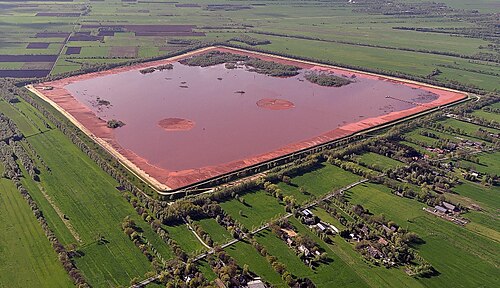
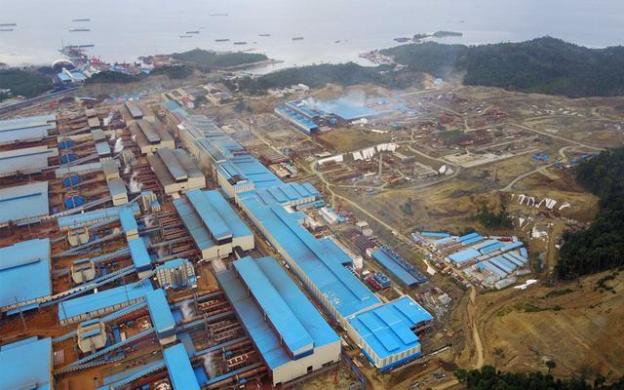
The nickel rush has created pressing new environmental concerns. The HPAL process used to process nickel pioneered by Chinese companies involves dousing nickel ore in sulfuric acid and heating it to more than 400 degrees Fahrenheit at enormous pressures. Producing nickel this way is nearly twice as carbon-intensive as mining and processing sulfide nickel found in Canada and Russia. Another way of processing laterite ore that often uses coal-powered furnaces is six times as carbon-intensive, according to the International Energy Agency. Companies also face questions about how to get rid of the processing waste. It is difficult to safely sequester in tropical countries because frequent earthquakes and heavy rains destabilize soil, which can cause waste dams to collapse. A 2018 Indonesian law allowed companies to obtain permits to discard mineral processing waste into the ocean….

China’s domination of Indonesian nickel processing poses risks for Western electric-vehicle companies at a time of fraying relations between Washington and Beijing. Last year, the U.S. government declared nickel a critical mineral whose supply is vulnerable to disruption, with very limited nickel production operations in the U.S.

Excerpts from Jon Emont, EV Makers Confront the ‘Nickel Pickle’, WSJ, June 5, 2023

The Sacrificial Lambs of Green Energy

Lithium Americas, a Canadian company, has plans to build a mine and processing plant at Thacker Pass, near the southern tip of the caldera in Nevada. It would be America’s biggest lithium mine. Ranchers and farmers in nearby Orovada, a town of about 120 people, worry that the mine will threaten their water supply and air quality. Native American tribes in the region say they were not properly consulted before the Bureau of Land Management (BLM), a federal agency that manages America’s vast public lands, decided to permit the project. Tribes also allege that a massacre of their ancestors took place at Thacker Pass in 1865…

The fight over Thacker Pass is not surprising. President Joe Biden wants half of all cars sold in 2030 to be electric, and to reach net-zero emissions by 2050. These ambitious climate targets mean that battles over where and how to mine are coming to mineral-rich communities around the country. America is in need of cobalt, copper and lithium, among other things, which are used in batteries and other clean-energy technologies. As with past commodity booms, large deposits of many of these materials are found in America’s western states . America, of course, is not the only country racing to secure access to such materials. As countries pledge to go carbon-free, global demand for critical minerals is set to soar. The International Energy Agency, a forecaster, estimates that by 2040 demand for lithium could increase by more than 40 times relative to 2020. Demand for cobalt and nickel could grow by about 20 times in the same period.

Beyond its green goals, America is also intent on diversifying mineral supplies away from China and Russia (big producer of nickel), which—by virtue of its natural bounty and muscular industrial policy—has become a raw-materials juggernaut… The green transition has also turned the pursuit of critical minerals into a great-power competition not unlike the search for gold or oil in eras past. Mining for lithium, the Department of Energy (DOE) says, is not only a means of fighting climate change but also a matter of national security.

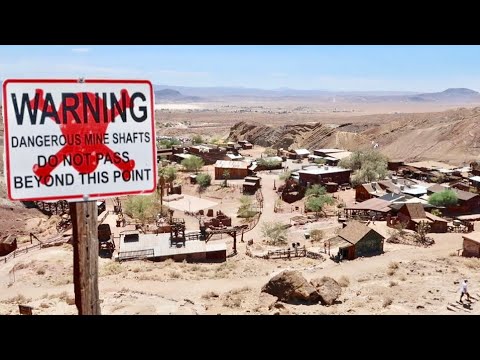
Westerners have seen all this before, and are wary of new mines…The economic history of the American West is a story of boom and bust. When a commodity bubble burst, boomtowns were abandoned. The legacy of those busts still plagues the region. In 2020 the Government Accountability Office estimated that there could be at least 530,000 abandoned hardrock-mine features, such as tunnels or waste piles, on federal lands. At least 89,000 of those could pose a safety or environmental hazard. Most of America’s abandoned hardrock mines are in 13 states west of the Mississippi River…

Is it possible to secure critical minerals while avoiding the mistakes of previous booms? America’s debates over how to use its public lands, and to whom those lands belong, are notoriously unruly. Conservationists, energy companies, ranchers and tribal nations all feel some sense of ownership. Total harmony is unlikely. But there are ways to lessen the animosity.

Start with environmental concerns. Mining is a dirty business, but development and conservation can coexist. In 2020 Stanford University helped broker a national agreement between the hydropower industry and conservation groups to increase safety and efficiency at existing dams while removing dams that are harming the environment….Many worry that permitting new development on land sacred to tribes will be yet another example of America’s exploitation of indigenous peoples in pursuit of land and natural resources. msci, a consultancy, reckons that 97% of America’s nickel reserves, 89% of copper, 79% of lithium and 68% of cobalt are found within 35 miles of Native American reservations.

TThe BLM is supposed to consult tribes about policies that may affect the tribes but the  consultation process is broken. Often it consists of sending tribes a letter notifying them of a mining or drilling proposal.

Lithium Americas has offered to build the town a new school, one that will be farther away from a road that the firm will use to transport sulphur. Sitting in her truck outside a petrol station that doubles as Orovada’s local watering hole, Ms Amato recalled one group member’s response to the offer: “If all I’m going to get is a kick in the ass, because we’re getting the mine regardless, then I may as well get a kick in the ass and a brand new school.”

Excerpt from America’s Next Mining Boom: Between a Rock and a Hard Place, Economist, Feb. 19, 2022
It Can Cost Your Life: Shipping Minerals

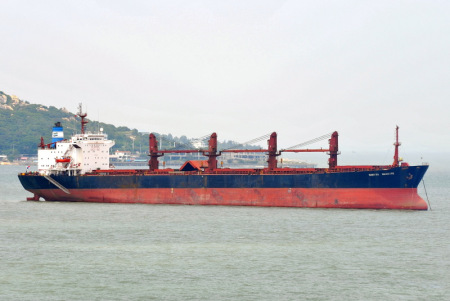
A dark underbelly exists in Indonesia’s thriving trade with China. Since late 2010 five ships loaded with Indonesian minerals have sunk when bound for China, with huge loss of life. Little has been done to break the deadly trend. Indeed, plenty of interests have an incentive to hush it up. The latest ship to founder is the Harita Bauxite, a bulk carrier which sank on February 17th near the Philippines. Of its 24 crew, who were all or mainly from Myanmar, ten were rescued, one of whom later died. Fourteen were still missing when the search was called off two weeks later.

The vessel is thought to have been carrying nickel ore, a potentially deadly cargo, loaded on Obi island in the remote Indonesian province of Muluku and destined for China’s steel mills. In terms of the global bulk trade, shipments of nickel ore from Indonesia to China are tiny: just 2m-3m tonnes out of more than 4 billion tonnes of bulk goods carried each year on over 9,000 vessels. Yet this backwater trade accounted for four of the 20 bulk freighters lost worldwide during 2010-11, and for 66 of 82 deaths, according to Intercargo, an association of ship owners.

ll four ships were found to have sunk because the cargo had liquefied. Nickel ore is dangerous because if it gets too wet, the fine, claylike particles that are often present in the ore turn the cargo to a liquid gloop that sloshes about the holds with such momentum that even a giant ship can capsize. The four ships had loaded during Indonesia’s rainy season. The ore is typically stockpiled in the open. Quite how the Harita Bauxite foundered is not yet clear, but if liquefaction was a factor, as many in the shipping industry suspect, it will have been another entirely avoidable tragedy.

Preventing liquefaction should be fairly simple. It involves checking the moisture content of susceptible commodities. If they are too wet, a surveyor will deem the cargo unsafe and not to be loaded. Time and again in Indonesia, checks have been inadequate. With the bulk-shipping business in the doldrums, the profitable nickel trade is a siren call for ship owners and charterers. Indonesia’s ministers and mandarins in Jakarta, the capital, refuse to comment on the tragedies and have done little to tighten policing at faraway ports in Sulawesi, Muluku and Papua.

Ship captains report intimidation by miners and agents if they refuse to accept cargo. A leading marine insurer says the ports’ remoteness makes it hard to sample cargoes reliably. Local officials turn a blind eye to unsafe practices. Peter Lundahl Rasmussen at Bimco, a maritime association, says surveyors trying to do their job have been assaulted or arrested.

With insurance claims mounting, shipping bodies and insurers have issued plenty of instructions about how to load nickel ore safely, especially in Indonesia. The International Maritime Organisation (IMO), the UN agency responsible for shipping safety, is also taking steps to tighten the regulations for commodities that can suffer liquefaction.

But the IMO’s process is a glacial one, and the new rules will not clear its various committees and be promulgated until at least 2015. Even then, the organisation relies on its members to enforce regulations. In Indonesia, in other words, the impact of tighter rules may be minimal. Moreover, existing and planned legislation covers ore depots and the ports, but not the transit between the two, where rain may do its dangerous work. Steve Cameron at RTI, a risk consultancy, argues that it would be more effective if mining companies faced charges of corporate manslaughter for not ensuring that their ore reaches ships in good condition.

Shipping: Deadly Trade, Economist, Mar. 23, 2013, at 46.