Tag Archives: nuclear waste disposal and fracking

The Dirty Job of Cracking Rocks for Oil-Toxic Water

Producers in the Permian Basin of West Texas and New Mexico extract roughly half of the U.S.’s crude oil. They also produce copious amounts of toxic, salty water, which they pump back into the ground. Now, some of the reservoirs that collect the fluids are overflowing—and the producers keep injecting more. A buildup in pressure across the region is propelling wastewater up ancient wellbores, birthing geysers that can cost millions of dollars to clean up. …Swaths of the Permian appear to be on the verge of geological malfunction.

When pressure of the injected into the ground wastewater exceeds 0.5 pound per square inch per foot, the liquid…can flow to the surface and pose a risk to underground sources of drinking water.

The fracas above ground is raising questions about how the Permian can sustain red-hot production without causing widespread environmental damage that could leave taxpayers on the hook—and complicate the region’s economic plans. The basin is trying to lure data centers with cheap land and energy and has plans to become a hub for burying carbon dioxide captured at industrial plants and sucked out of the air.

“You need to have a stable, locked-down geology that’s going to behave as it’s supposed to,” said Adam Peltz, a director at the Environmental Defense Fund, a nonprofit advocacy group. “Otherwise, you’re going to cause a huge, expensive mess that Texans will pay for for generations.” The industry is working to clean up its act, but solutions to treat and ditch meaningful volumes of water far from the oil fields remain years away.

In the Delaware portion of the Permian, its most prolific region, drillers crank out between 5 and 6 barrels of water, on average, for every barrel of oil. For years, they pumped the toxic water deep into the ground—and triggered hundreds of earthquakes, some with a magnitude of over 5. They caused little damage in the sparsely populated Permian, but they were felt as far as Dallas, El Paso and San Antonio, where a historic building was damaged.

In 2021, the Railroad Commission of Texas, the agency that oversees the oil-and-gas industry in the state, began cracking down on deep disposal. Companies pivoted to shallow reservoirs, which now absorb roughly three-quarters of the billions of barrels of water that they inject in the Permian every year. The shift largely cured the tremors but has created unintended consequences. 

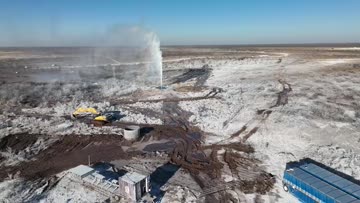
As more and more of toxic water is injected in shallow underground reservoirs pressure is built and the toxic water migrates up some of the decaying wells that litter the Permian erupting back on the surface. In 2022, a 100-foot column of toxic water erupted from an abandoned well in Texas’ Crane County near the unincorporated community of Tubbs Corner. Chevron, which owned the well, plugged it. But nearly two years later, water started to ooze from a different well in the same area, a sign that bottling up the geyser likely repressurized the subsurface and triggered the new outburst, scientists said. It took the Railroad Commission about 53 days and roughly $2.5 million to plug that leak. Eventually, the agency quietly shut in the injection wells that it said were likely causing the increase in pressure.

Researchers at the Bureau of Economic Geology painted a critical picture of the frenzied injection in the Permian basin. Operators were injecting wastewater with little concern over how it might travel underground or its impact on reservoir pressure, they said.

Excerpt from Benoît Morenne et al., America’s Biggest Oil Field Is Turning Into a Pressure Cooker, WSJ, Dec. 25, 2025

Leave No Oil Under-Ground: OPEC against US Frackers

In 2014-16, the OPEC waged a failed price war to wipe out American frackers. Since then the cartel and its partners, led by Russia, have propped up oil prices enough to sustain shale, but not enough to support many members’ domestic budgets. In March 2020 Saudi Arabia urged Russia to slash output; Russia refused, loth to let Americans free-ride on OPEC-supported prices. The ensuing price war was spectacularly ill-timed, as it coincided with the biggest drop in oil demand on record.  The desire to chasten American frackers remains, though. OPEC controls about 70% of the world’s oil reserves, more than its 40% market share would suggest… If the world’s appetite for oil shrinks due to changing habits, cleaner technology or greener regulations, countries with vast reserves risk having to leave oil below ground. 

Excerpts from Crude Oil: After the Fall, Economist, June, 13, 2020

Does Fracking Cause Cancer? The Right to Know and the Duty to Protect

An increase in the number of teens and young adults diagnosed with a rare cancer in the southwest corner of Pennsylvania has caused the state to look for a link between fracking and the disease.The investigation was sparked by a spate of Ewing’s sarcoma cases in and around Washington County, which has more Marcellus Shale gas wells than any other county in the state. In April 2019 state Department of Health found that the cases didn’t constitute a statistically significant cancer cluster. But affected families and other residents lobbied the governor for an investigation.

 The region is home to coal mining, oil drilling, chemical plants and a former uranium-processing facility.  Each year, about 250 children in the U.S. are diagnosed with Ewing’s sarcoma, a rare cancer of the bone or surrounding soft tissue, according to the National Institutes of Health.  In four counties in southwest Pennsylvania, 31 people were diagnosed with Ewing’s sarcoma from 2006 through 2017, according to state cancer data. That is a roughly 40% increase from the period from 1995 through 2005, when 22 people in the same area were diagnosed, according to state data. Residents point to two additional cases in 2018. Most troubling to many local residents is that the six cases in Washington County since 2008 occurred in one school district.

Other communities are studying potential health risks of fracking. In October 2019, Colorado regulators said they would tighten regulation of drilling after a state-funded study found that people living within 2,000 feet of oil-and-gas wells could have, in worst-case scenarios, an elevated risk for infrequent, short-term health effects such as nosebleeds and headaches from emissions.

Evelyn Talbott, a professor of epidemiology at the University of Pittsburgh, said Pennsylvania investigators should look at residents’ potential exposures to chemicals and to radiation from natural-gas sites. She said they also should look at the sealed waste site of the defunct uranium-processing plant…Since Pennsylvania’s first Marcellus Shale well was drilled in Washington County in 2003, more than 1,800 wells have been fracked there. Compressor stations, processing plants and pipelines have followed. Some residents worry that pollutants such as benzene from air emissions or radium from wastewater could affect people’s health.

Kris Maher, Cancer Cases Raise Fracking Fears, WSJ, Dec. 21, 2019

See also Shale gas development and cancer incidence in southwest Pennsylvania

A Gasfield and the Cows Next to it

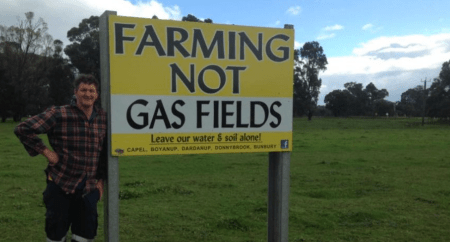
High levels of a radioactive material and other contaminants have been found in water from a West Australian fracking site* but operators say it could be diluted and fed to beef cattle.  The revelations illustrate the potential risks associated with the contentious gas extraction process known as fracking, or hydraulic fracturing, as the Turnbull government pressures states to ease restrictions on the industry and develop their gas reserves.

The findings were contained in a report by oil and gas company Buru Energy that has not been made public. It shows the company also plans to reinject wastewater underground – a practice that has brought on seismic events when used in the United States.

Buru Energy has been exploring the potentially vast “tight gas” resources of the Kimberly region’s Canning Basin. The work was suspended when the WA government last year introduced a fracking moratorium, subject to the findings of a scientific inquiry.

In a submission to the inquiry obtained by the Lock the Gate Alliance, Buru Energy said a “relatively high concentration” of Radium-228…The samples exceeded drinking water guidelines for radionuclides. However Buru Energy said samples collected from retention ponds were below guideline levels and the water posed “no risk to humans or animals”.  Water monitoring also detected elevated levels of the chemical elements barium, boron and chloride….Buru Energy said while the water was not suitable for human consumption, the “reuse of flowback water for beef cattle may also be considered”.  The water did not meet stockwater guidelines but this could be addressed “through dilution with bore water”.

The company’s development in the Yulleroo area of the basin could lead to 80 wells operating over 20 years….The company insists its fracking fluids are non-toxic and to illustrate its safety, executive chairman Eric Streitberg drank the fluid at the company’s 2016 annual general meeting.

Excerpt from  Nicole Hasham Radioactive water reignites concerns over fracking for gas, Sydney Morning Herald, June 24, 2018

*Fracking, which involves injecting water mixed with chemicals and sand deep underground in order to fracture rock and release oil and gas, generates large amounts of wastewater. … In some cases, improper handling of this waste water has resulted in the release of radioactive fracking waste that has contaminated streams and rivers, Science Magazine, Apr 9, 2015

For Voices against Fracking in WA, Dont Frack WA

Hot Nuclear Waste Deep in the Earth

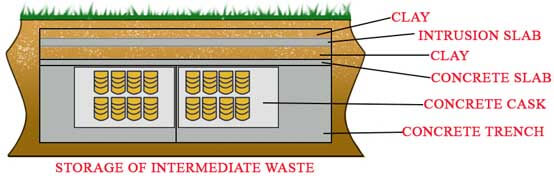
The federal government plans to spend $80 million ( assessing whether its hottest nuclear waste can be stored in 3-mile-deep holes, a project that could provide an alternative strategy to a Nevada repository plan that was halted in 2010.  The five-year borehole project was tentatively slated to start later this year on state-owned land in rural North Dakota, but it has already been met with opposition from state and local leaders who want more time to review whether the plan poses any public danger…The Department of Energy wants to conduct its work just south of the Canadian border on 20 acres near Rugby, North Dakota — in part because it’s in a rural area not prone to earthquakes — but is prepared to look elsewhere if a deal can’t be reached. Some sites in West Texas and New Mexico have expressed interest in becoming interim sites for above-ground nuclear waste storage, but it’s not clear if they would be considered for borehole technology.

Project leaders say the research will require months of drilling deep into the earth but will not involve any nuclear waste. Instead, dummy canisters without radioactive material would be used in the project’s third and final phase.  The research team will look at deep rock to check its water permeability, stability, geothermal characteristics and seismic activity — a central concern with burying the hot radioactive waste deep underground….

If the technology proves successful and the government moves forward with deep borehole disposal, there must be no fracking-related injection wells in the vicinity…which some research has linked to seismic activity.

Currently, high-level radioactive waste — both from government sources and utilities’ nuclear power plants — is without a final burial site. The waste at power plants is stored on site in pools of water or in heavily fortified casks, while the government’s waste remains at its research labs.

But the 16,000-foot-deep boreholes could be used for high-level radioactive waste from the department’s decades of nuclear work originally slated to go to Yucca, including nearly 2,000 canisters of cesium and strontium now being stored in water at the department’s Hanford Site in Washington state.

Excerpts from , Feds seek borehole test for potential hot nuke waste burial, Associated Press, Feb. 14, 2016