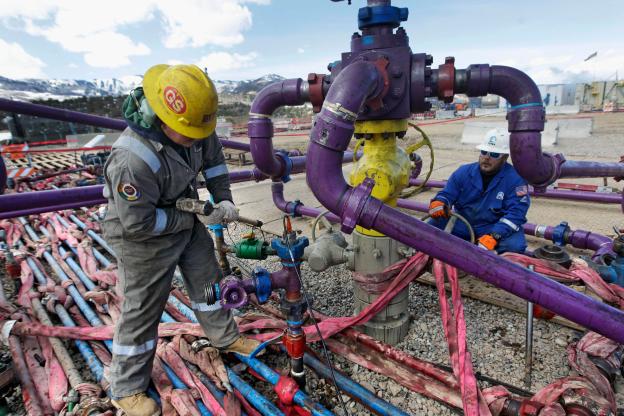
A salty substance called “brine,” is a naturally occurring waste product that gushes out of America’s oil-and-gas wells to the tune of nearly 1 trillion gallons a year, enough to flood Manhattan, almost shin-high, every single day. At most wells, far more brine is produced than oil or gas, as much as 10 times more. Brine collects in tanks, and workers pick it up and haul it off to treatment plants or injection wells, where it’s disposed of by being shot back into the earth…
The Earth’s crust is in fact peppered with radioactive elements that concentrate deep underground in oil-and-gas-bearing layers. This radioactivity is often pulled to the surface when oil and gas is extracted — carried largely in the brine…
Radium, typically the most abundant radionuclide in brine, is often measured in picocuries per liter of substance and is so dangerous it’s subject to tight restrictions even at hazardous-waste sites. The most common isotopes are radium-226 and radium-228, and the Nuclear Regulatory Commission requires industrial discharges to remain below 60 for each. Some brine samples registered combined radium levels above 3,500, and one was more than 8,500. “It’s ridiculous that those who haul brine are not being told what’s in their trucks,” says John Stolz, Duquesne’s environmental-center director. “And this stuff is on every corner — it is in neighborhoods. Truckers don’t know they’re being exposed to radioactive waste, nor are they being provided with protective clothing.
“Breathing in this stuff and ingesting it are the worst types of exposure,” Stolz continues. “You are irradiating your tissues from the inside out.” The radioactive particles fired off by radium can be blocked by the skin, but radium readily attaches to dust, making it easy to accidentally inhale or ingest. Once inside the body, its insidious effects accumulate with each exposure. It is known as a “bone seeker” because it can be incorporated into the skeleton and cause bone cancers called sarcomas. It also decays into a series of other radioactive elements, called “daughters.” The first one for radium-226 is radon, a radioactive gas and the second-leading cause of lung cancer in the U.S. Radon has also been linked to chronic lymphocytic leukemia.
Oil fields across the country — from the Bakken in North Dakota to the Permian in Texas — have been found to produce brine that is highly radioactive. “All oil-field workers,” says Fairlie, “are radiation workers.” But they don’t necessarily know it.
The advent of the fracking boom in the early 2000s expanded the danger, saddling the industry with an even larger tidal wave of waste to dispose of, and creating new exposure risks as drilling moved into people’s backyards. “In the old days, wells weren’t really close to population centers. Now, there is no separation,” says City University of New York public-health expert Elizabeth Geltman. In the eastern U.S. “we are seeing astronomically more wells going up,” she says, “and we can drill closer to populations because regulations allow it.” As of 2016, fracking accounted for more than two-thirds of all new U.S. wells, according to the Energy Information Administration. There are about 1 million active oil-and-gas wells, across 33 states, with some of the biggest growth happening in the most radioactive formation — the Marcellus. …
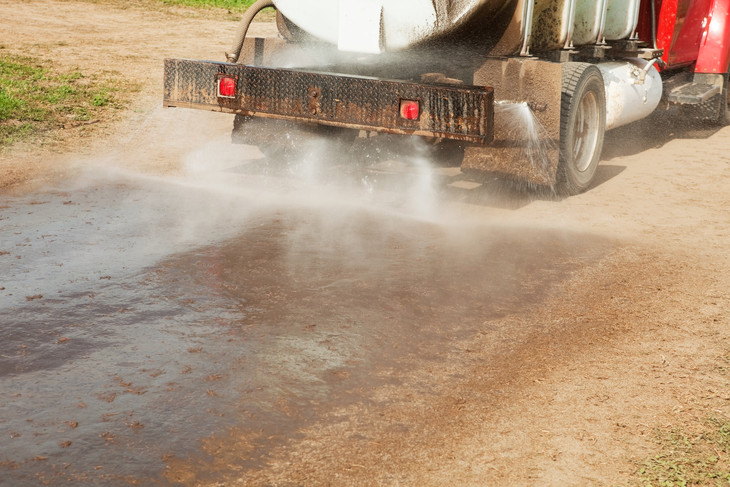
There is little public awareness of this enormous waste stream, the disposal of which could present dangers at every step — from being transported along America’s highways in unmarked trucks; handled by workers who are often misinformed and underprotected; leaked into waterways; and stored in dumps that are not equipped to contain the toxicity. Brine has even been used in commercial products sold at hardware stores and is spread on local roads as a de-icer…
But a set of recent legal cases argues a direct connection to occupational exposure can be made… Pipe cleaners, welders, roughnecks, roustabouts, derrickmen, and truck drivers hauling dirty pipes and sludge all were exposed to radioactivity without their knowledge and suffered a litany of lethal cancers. An analysis program developed by the Centers for Disease Control and Prevention determined with up to 99 percent certainty that the cancers came from exposure to radioactivity on the job, including inhaling dust and radioactivity accumulated on the workplace floor, known as “groundshine.”
“Almost all materials of interest and use to the petroleum industry contain measurable quantities of radionuclides,” states a never-publicly released 1982 report by the American Petroleum Institute, the industry’s principal trade group, passed to Rolling Stone by a former state regulator. Rolling Stone discovered a handful of other industry reports and articles that raised concerns about liability for workers’ health. A 1950 document from Shell Oil warned of a potential connection between radioactive substances and cancer of the “bone and bone marrow.” In a 1991 paper, scientists with Chevron said, “Issues such as risk to workers or the general public…must be addressed.”
“There is no one federal agency that specifically regulates the radioactivity brought to the surface by oil-and-gas development,” an EPA representative says. In fact, thanks to a single exemption the industry received from the EPA in 1980, the streams of waste generated at oil-and-gas wells — all of which could be radioactive and hazardous to humans — are not required to be handled as hazardous waste. In 1988, the EPA assessed the exemption — called the Bentsen and Bevill amendments, part of the Resource Conservation and Recovery Act — and claimed that “potential risk to human health and the environment were small,” even though the agency found concerning levels of lead, arsenic, barium, and uranium, and admitted that it did not assess many of the major potential risks. Instead, the report focused on the financial and regulatory burdens, determining that formally labeling the “billions of barrels of waste” as hazardous would “cause a severe economic impact on the industry.”…
There is a perception that because the radioactivity is naturally occurring it’s less harmful (the industry and regulators almost exclusively call oil-and-gas waste NORM — naturally occurring radioactive material, or TENORM for the “technologically enhanced” concentrations of radioactivity that accumulate in equipment like pipes and trucks.”…
In Pennsylvania, regulators revealed in 2012 that for at least six years one hauling company had been dumping brine into abandoned mine shafts. In 2014, Benedict Lupo, owner of a Youngstown, Ohio, company that hauled fracking waste, was sentenced to 28 months in prison for directing his employees to dump tens of thousands of gallons of brine into a storm drain that emptied into a creek that feeds into the Mahoning River. While large bodies of water like lakes and rivers can dilute radium, Penn State researchers have shown that in streams and creeks, radium can build up in sediment to levels that are hundreds of times more radioactive than the limit for topsoil at Superfund sites. Texas-based researcher Zac Hildenbrand has shown that brine also contains volatile organics such as the carcinogen benzene, heavy metals, and toxic levels of salt, while fracked brine contains a host of additional hazardous chemicals. “It is one of the most complex mixtures on the planet,” he says…
“There is nothing to remediate it with,” says Avner Vengosh, a Duke University geochemist. “The high radioactivity in the soil at some of these sites will stay forever.” Radium-226 has a half-life of 1,600 years. The level of uptake into agricultural crops grown in contaminated soil is unknown because it hasn’t been adequately studied.
“Not much research has been done on this,” says Bill Burgos, an environmental engineer at Penn State who co-authored a bombshell 2018 paper in Environmental Science & Technology that examined the health effects of applying oil-field brine to roads. Regulators defend the practice by pointing out that only brine from conventional wells is spread on roads, as opposed to fracked wells. But conventional-well brine can be every bit as radioactive, and Burgos’ paper found it contained not just radium, but cadmium, benzene, and arsenic, all known human carcinogens, along with lead, which can cause kidney and brain damage.
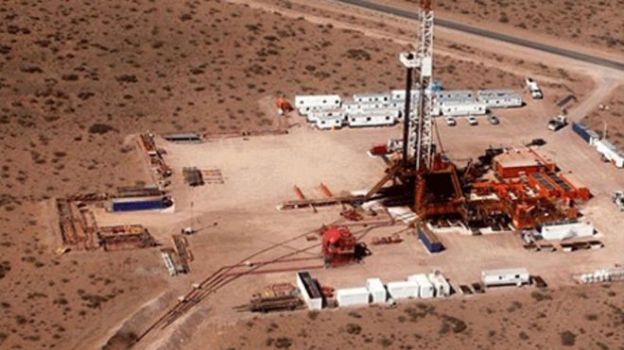
Ohio, because of its geology, favorable regulations, and nearness to drilling hot spots in the Marcellus, has become a preferred location for injection wells. Pennsylvania has about a dozen wells; West Virginia has just over 50. Ohio has 225. About 95 percent of brine was disposed of through injection as of 2014. Government scientists have increasingly linked the practice to earthquakes, and the public has become more and more suspicious of the sites. Still, the relentless waste stream means new permits are issued all the time, and the industry is also hauling brine to treatment plants that attempt to remove the toxic and radioactive elements so the liquid can be used to frack new wells.
Excerpts from America’s Radioactive Secret, Rolling Stone Magazine, Jan. 21, 2020
 Law-In-Action