Tag Archives: sanctions Iran

When a State Collapses, Who Survives: the case of Iran

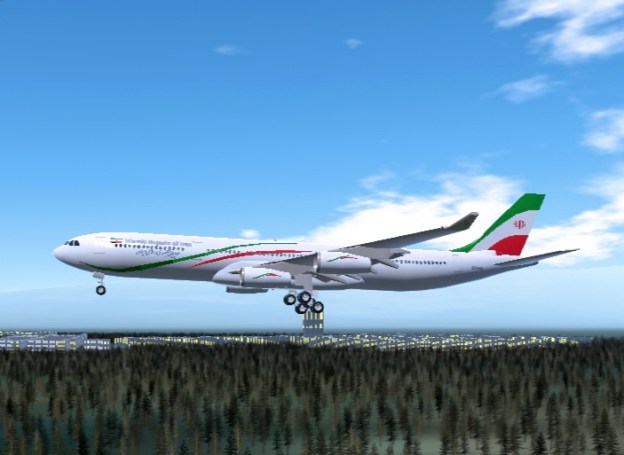
In mid-June 2025, Iran flew at least four civilian aircraft to the Omani capital of Muscat for safekeeping. One of the planes included Iran’s presidential Airbus A340, which landed in Muscat on June 18, 2025 according to flight trackers. 

Arab officials were surprised to learn the planes were empty of passengers. Instead, they said, they carried cash and assets, which Iranians weren’t allowed to offload because of sanctions. The planes themselves were also valuable as emergency exits for top officials. The precautions show the level of pressure on Iran’s rulers during the war (Israel-Iran war of 2025). They had to find a way forward with no control of their own airspace and no help from their militias

Excerpt from S. Raghavan et al., Life in Iran After the Strikes: Executions, Arrests and Paranoia, WSJ, June 28, 2025

The Unintentional Making of a Global Power: Iran

In 2024, Iran, under Supreme Leader Ali Khamenei’s leadership, thwarted decades of U.S. pressure and emerged from years of isolation largely by aligning itself with Russia and China…Iran’s economy remains battered by U.S. sanctions, but oil sales to China and weapons deals with Russia have offered financial and diplomatic lifelines…Today, Tehran poses a greater threat to American allies and interests in the Middle East than at any point since the Islamic Republic was founded in 1979. 

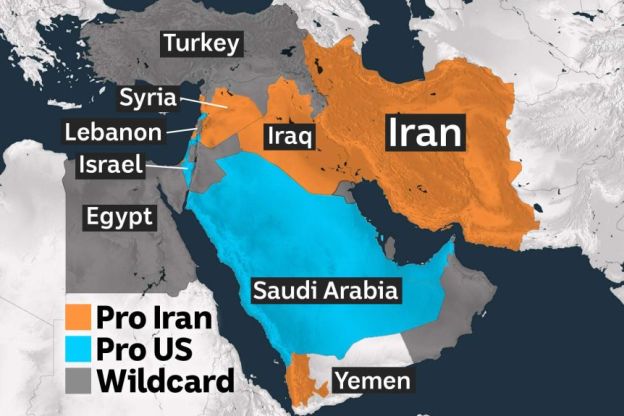
Iran’s military footprint reaches wider and deeper than ever. Iranian-backed armed groups have hit Saudi oil facilities with missiles and paralyzed global shipping in the Red Sea. They have dominated politics in Iraq, Lebanon, Yemen and Syria, and launched the most devastating strike on Israel in decades, when Hamas attacked in October. Iran launched its first direct military attack from its soil on Israel in April 2024. It has also orchestrated attacks on opponents in Europe and beyond, Western officials say. 

“In many respects, Iran is stronger, more influential, more dangerous, more threatening than it was 45 years ago,” said Suzanne Maloney, director of the foreign-policy program at the Brookings Institution, who advised Democratic and Republican administrations on Iran policy. 

U.S. policy has at times unintentionally contributed to Iran’s strength. The 2003 toppling of Saddam Hussein removed a sworn enemy from Iran’s borders. Washington’s failure to stabilize postwar Iraq bolstered Tehran’s influence…

Excerpts from Sune Engel Rasmussen and Laurence Norman, How Iran Defied the U.S. to Become an International Power, WSJ, July 2, 2024

Who Terrifies an American President?

Though tensions between Iran and the U.S. have ratcheted up since the Oct. 7, 2024 attacks on Israel by Tehran-backed Hamas, exports from Iran surpassed 1.5 million barrels a day in 2024 starting in February, substantially more than at the start of the Biden presidency. Most of that oil is bought by small Chinese refineries at discounted prices. The U.S. and its allies have been “very, very careful not to go too far and damage the ability of Western economies to function,” when it comes to sanctions, said John Smith, partner at Morrison Foerster and former head of the U.S. Treasury Department’s Office of Foreign Assets Control.

U.S. diplomats and energy officials have for decades worked around the globe to keep oil flowing, often involving uncomfortable alliances and accommodations. When the Treasury department hit Moscow with a wave of sanctions on June 12, 2024 over the Ukraine war, it targeted banks but left the country’s oil industry largely untouched. There is frustration among some staffers in the U.S. Treasury Department over the lack of action against oil-trading networks that ferry Russian and Iranian oil, including one that officials are currently investigating, according to U.S. diplomats and some of the energy-industry players briefed by current officials. The network is operated by a little-known trader from Azerbaijan who emerged as the premier middleman for Russia’s Rosneft Oil, The Wall Street Journal reported.

When the Treasury imposed sanctions on Russia’s state tanker owner, Sovcomflot, it also issued licenses exempting all but 14 of the company’s fleet, which data provider Kpler estimates totals 91 ships. Industry players said the exemption licenses were a green light to oil traders to do business with those ships, minimizing the risk that they would be targeted by future sanctions. The National Economic Council, led by Lael Brainard, and others within the administration worried that broader measures would lead to logistical problems in the oil market and boost inflation, said people familiar with the matter. Rising oil output from sanctioned countries is one reason crude prices have fallen from their highs earlier this year, analysts said…

In another example of the collision of foreign and energy policies, earlier this year, Washington asked Ukraine to stop attacking some Russian refineries with drones after the damage rattled global diesel and gasoline markets….

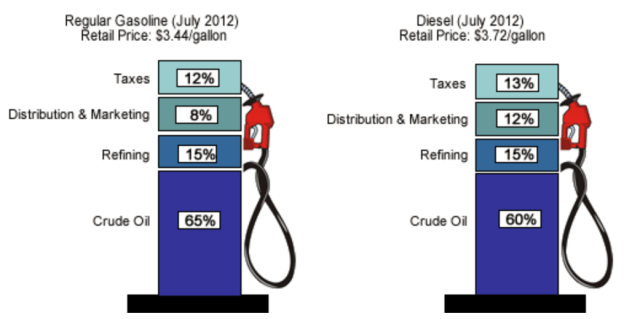
“Nothing terrifies an American president more than a gasoline-pump price spike,” said Bob McNally, president of consulting firm Rapidan Energy Group and former White House policy official under George W. Bush. “They will go to great lengths to prevent this, especially in an election year.”

Excerpts from Anna Hirtenstein et al., Biden Wants to Be Tough With Russia and Iran—but Wants Low Gas Prices Too, WSJ, June 26, 2024


By Hook or By Crook (or Both): How Iran Beats US Sanctions

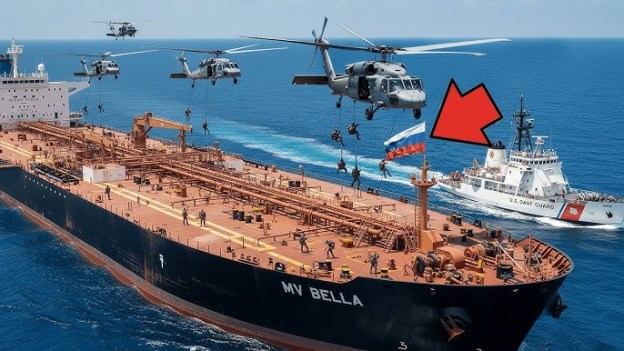
Persian Gulf waters off Iraq have become a new, important waypoint for Iranian oil smugglers looking to avoid U.S. sanctions…Iranian tankers now regularly transfer crude to other ships just miles offshore the major Iraqi port of Al Faw, according to the officials. The oil is then mixed with cargoes from other places to disguise its origin, and it eventually ends up on sale in world markets, they say.


In one example from March 2020,  according to a shipping manifest reviewed by The Wall Street Journal, 230,000 barrels of oil from the state-run National Iranian Oil Co. were transferred to a vessel moored in Iraqi waters. The cargo was blended with Iraqi oil and passed to other ships, according to people familiar with the operation. The ultimate destination of the oil wasn’t clear.

The people familiar with the transfer said the operation was part of an increasingly common and lucrative business that involves transferring and mixing cargoes with other vessels multiple times and then selling the oil with documents that declare it is as Iraqi. Iraqi oil can be sold at a significant premium to oil of Iranian origin.

Iran has increasingly tried to find ways to get its crude to market despite the U.S. sanctions. Iran’s daily crude and condensates exports averaged 827,000 barrels a day in the first six months of this year, according to U.S. shipping-information company TankerTrackers.com. That is up 28% from the previous six months, but far below the level of 2.7 million barrels a day in May 2018 before the sanctions.

“We While some of Iran’s oil exports go to countries not aligned with the U.S., such as Syria and China, they often pass through allies such as the United Arab Emirates or Iraq, where their origin is being concealed, according to U.S. officials.

Excerpt from Sarah McFarlane and Benoit Faucon, Iraq Emerges as Hurdle to Enforcing Iran Oil Sanctions, WSJ, Oct. 24, 2020

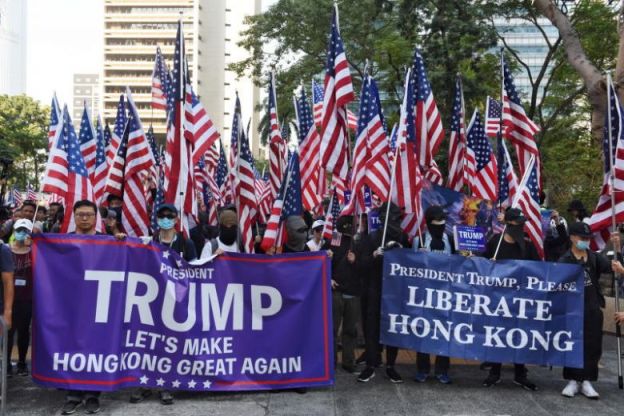
Strangling China with Hong Kong: the Politics of Fear

The U.S. determination  that Hong Kong is no longer autonomous from mainland China, under the Hong Kong Policy Act of 1992, will have significant implications for the city’s exporters and businesses.  Sensitive U.S. technologies could no longer be imported into Hong Kong, and the city’s exports might be hit with the same tariffs levied on Chinese trade.

But the act doesn’t cover the far more extensive role Hong Kong plays as China’s main point of access to global finance.  As of 2019, mainland Chinese banks held 8,816 trillion Hong Kong dollars ($1.137 trillion) in assets in the semiautonomous city, an amount that has risen 373% in the last decade…. China’s banks do much of their international business, mostly conducted in U.S. dollars, from Hong Kong. With Shanghai inside China’s walled garden of capital controls, there is no obvious replacement.

While the U.S. doesn’t directly control Hong Kong’s status as a financial center, Washington has demonstrated its extensive reach over the dollar system, with penalties against Korean, French and Lebanese financiers for dealing with sanctioned parties. The U.S. recently threatened Iraq’s access to the New York Federal Reserve, demonstrating a growing willingness to use financial infrastructure as a tool of foreign policy.  Even though the U.S. can’t legislate Hong Kong’s ability to support Chinese banks out of existence, the role of an international funding hub is greatly reduced if your counterparties are too fearful to do business with you.

Putting the ability of Chinese banks to conduct dollar-denominated activities at risk would be deleterious to China’s ability to operate financially overseas, posing a challenge for the largely dollar-denominated Belt and Road global infrastructure initiative. It would also put the more financially fragile parts of the country, like its debt-laden property developers, under strain.  China’s hope to develop yuan into an influential currency also centers on Hong Kong’s remaining a viable global financial center—more than 70% of international trade in the yuan is done in the city.

Excerpts from Mike Bird, How the US Could Really Hurt China, WSJ, May 290, 2020

Who is Afraid of the United States?

In 2018 America imposed sanctions on about 1,500 people, firms, vessels and other entities, nearly triple the number in 2016. The past six months of 2019 have been particularly eventful. America began imposing sanctions on Iran in November, and in January on Venezuela, another big oil exporter. On May 9th 2019, for the first time, it seized a ship accused of transporting banned North Korean coal.

Second, blackballed countries and unscrupulous middlemen are getting better at evasion. In March 2019advisers to the un, relying in part on Windward data, and American Treasury officials published separate reports that described common ways of doing it. Boats turn off their transmissions systems to avoid detection. Oil is transferred from one ship to another in the middle of the ocean—ships trading on behalf of North Korea find each other in the East China Sea using WeChat, a popular Chinese messaging service. Captains disguise a ship’s identity by manipulating transponder data to transmit false locations and identity numbers of different vessels.

Such methods have helped Iran and Russia transport oil to Syria, American officials say. In 2018 North Korea managed to import refined petroleum far in excess of the level allowed by multilateral sanctions. The situation in Venezuela is different—technically, America’s sanctions still allow foreigners to do business with the country. But fear that sanctions will expand mean that traditional trading partners are scarce. Nicolás Maduro’s regime this month found a shipowner to transport crude to India, according to a shipbroker familiar with the deal, but Venezuela had to pay twice the going rate.

Businesses keen to understand such shenanigans can be roughly divided into two categories. The first includes those who can profit from grasping sanctions’ impact on energy markets, such as hedge funds, analysts and traders. A squadron of firms is ready to assist them, combing through ship transmission data, commercial satellite imagery and other public and semi-public information. They do not specialise in sanctions, but sanctions are boosting demand for their tracking and data-crunching expertise.

A main determinant of Venezuela’s output, for instance, is access to the diluent it needs to blend with its heavy crude. A firm called Clipper Data has noted Russian ships delivering diluent to vessels near Malta, which then transport it to Venezuela. Kpler, a French rival, uses satellite images of shadows on lids of storage tanks to help estimate the volume of oil inside. Using transmissions data, images, port records and more, Kpler produces estimates of Iran’s exports for customers such as the International Energy Agency and Bernstein, a research firm—including a recent uptick in Iranian exports without a specific destination (see chart).

The second category of companies are wary of violating sanctions themselves. They need assistance of a different sort. Latham & Watkins, a firm that advised the chairman of EN+, which controls a Russian aluminium giant, as he successfully removed the company from America’s sanctions list this year, has seen a surge in sanctions-related business. Refinitiv, a data company, offers software which permits clients to screen partners and customers against lists of embargoed entities. Windward uses machine learning to pore over data such as ships’ travel patterns, transmissions gaps (some of which may be legitimate) and name changes to help firms identify suspicious activity. Kharon, founded last year by former United States Treasury officials, offers detailed analysis of anyone or anything on sanctions lists.

HIde and Seek: Sanctions Inc, Economist, May 18, 2019

Unleashing Nuclear Power – Iran

China was expected to build two nuclear power plants for Iran as part of the country’s new nuclear direction under the controversial nuclear deal that was signed July 15, 2015. The plants were set to be located on the Makran coast, near the neighboring Gulf of Oman, Iran’s Atomic Energy Organization head Ali Akbar Salehi announced on July 22, 2015.

Uninhibited by sanctions, Iran announced plans for four new nuclear power plants. Chinese contractors will be building two of the four planned. “We will simultaneously launch construction of four new nuclear power plants in the country in the next two to three years,” Salehi said, according to Indo-Asian News Service. “We plan to engage more than 20,000 workers and engineers in this large-scale construction.”

When it comes to United Nations sanctions, China had always been an advocate for Iran, along with Russia, generally opposing Washington’s proposed restrictions. On July 20, 2015, the United Nations adopted the nuclear deal between Tehran and Washington, after the “P5+1” countries — the U.S., Britain, France, Russia, China and Germany — unanimously approved it, also voting to lift a series of economic sanctions that were previously imposed on Iran.

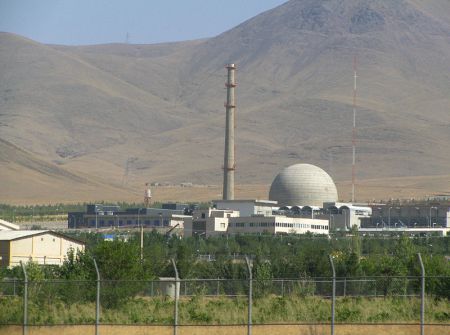
China has played a unique, hands-on role in the nuclear deal involving Iran’s Arak reactor, which has been described previously as a “pathway” to nuclear weapons for Iran.

“China has put forward the idea of the modification of the Arak heavy water reactor. … This is the unique role China has played in resolving the Iranian nuclear issue,” Chinese Foreign Minister Wang Yisaid in a statement…..  [The nuclear deal]  has also opened up a door to increased business opportunity in Iran, particularly for China.  Following the announcement of the landmark deal, Wang said that China played a pivotal role in negotiations, and he expressed hope that Iran would take part in China’s “one belt, one road” ambition to revive the Silk Road route.

Excerpts from Michelle FlorCruz, Iran Nuclear Deal: China To Build 2 Nuclear Power Plants For Islamic Republic Following Landmark Agreement, International Business Times, July 22, 2015

Full text of Iran Nuclear Deal Signed July 15, 2015
Joint Comprehensive Plan of Action
Annex I: Nuclear-related commitments
Annex II: Sanctions-related commitments
Attachments to Annex II
Annex III: Civil nuclear cooperation
Annex IV: Joint Commission
Annex V: Implementation Plan