Tag Archives: Space X rockets holes ionosphere

Musk’s Own Town–Starbase Texas

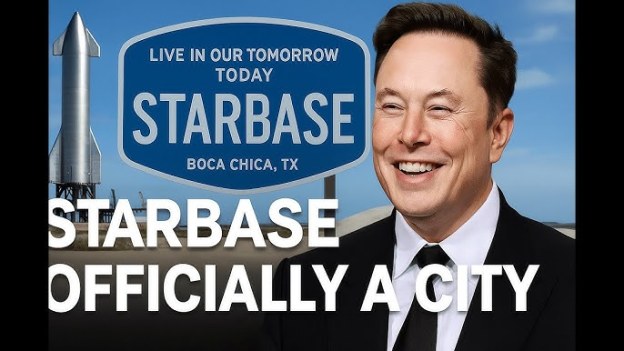
On May 3, 2025, Elon Musk’s SpaceX prevailed in an election over the weekend to turn Starbase, his launch site in Texas, into a city. Starbase was victorious in becoming a type C city, which in Texas applies to a previously unincorporated city, town or village of between 201 and 4,999 inhabitants. The city includes the SpaceX launch facility and company-owned land covering a 1.6 square-mile area.

What is a Company Town from Wikipedia

The mayor is 36-year-old Bobby Peden, who has spent more than 12 years working for SpaceX and is currently vice president for Texas test and launch operations. Starbase has two commissioners, both from the SpaceX employee ranks….Musk, who has assumed a central role in President Donald Trump’s administration responsible for slashing the size of the federal government, began acquiring land for SpaceX in Boca Chica, Texas, about a decade ago. The first integrated Starship vehicle launched from the site, known as Starbase, in April 2023, and exploded in mid-flight. The U.S. Fish and Wildlife Service soon disclosed details about the aftermath of the explosion, including that a “3.5-acre fire started south of the pad site on Boca Chica State Park land,” following the test flight.

State and federal regulators have fined SpaceX for violations of the Clean Water Act, and said the company had repeatedly polluted waters in the Boca Chica area. Environmental advocates and indigenous groups have also sued both the Federal Aviation Administration and SpaceX over the company’s flight tests and launch activity in the area.

Those groups said in legal filings that SpaceX caused harm to local habitat and endangered species due to vehicle traffic, noise, heat, explosions and fragmentation caused by the company’s construction, rocket testing and launch practices.

Excerpts from Lora Kolodny, Here are the SpaceX employees who were elected to run Musk’s new company town of Starbase, CNBC, May 5, 2025
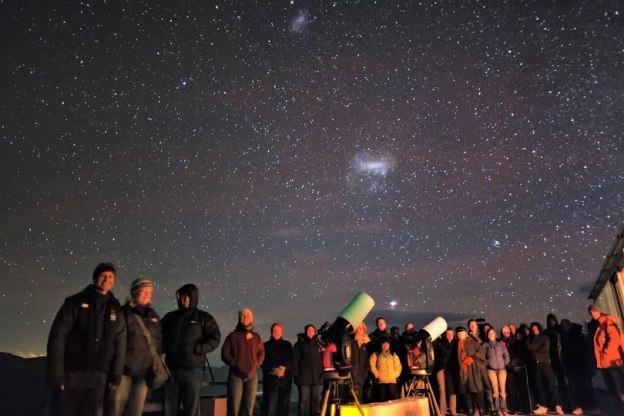
Mourning the Loss of Dark and Quiet Sky

The number of working satellites has soared in the past five years to around 11,000, mostly because of constellations of orbiters that provide Internet connectivity around the globe. Just one company, SpaceX in Hawthorne, California, has more than 7,000 operational Starlink satellites, all launched since 2019; OneWeb, a space communications company in London, has more than 630 satellites in its constellation. On paper, tens to hundreds of thousands more are planned from a variety of companies and nations, although probably not all of these will be launched.

Satellites interfere with ground-based astronomical observations, by creating bright streaks on images and electromagnetic interference with radio telescopes. The satellite boom also poses other threats, including adding pollution to the atmosphere…

Before the launch of Starlinks, astronomers had no centralized reference for tracking satellites. Now, the International Astronomical Union (IAU) has a virtual Centre for the Protection of the Dark and Quiet Sky from Satellite Constellation Interference (CPS), which serves as an information hub…One of the centre’s tools, called SatChecker, draws on a public database of satellite orbits, fed by information from observers and companies that track objects in space. Astronomers can use SatChecker to confirm what satellite is passing overhead during their observations…Tools such as SatChecker help telescope operators avoid problems by allowing them to target a different part of the sky when a satellite passes overhead or by simply pausing observations as it flies by. It would aid astronomers if SatChecker had even more accurate information about satellite positions, but there are constraints on improving the system. SatChecker data come from the US Space Force, which draws on a global network of sensors that tracks objects in orbit and issues updates on satellite locations as often as several times a day. The frequency of these updates is limited by factors such as how often a sensor can observe an object and whether the sensor can distinguish what it’s looking at.

Excerpts from   Alexandra Witze, Swarms of satellites are harming astronomy. Here’s how researchers are fighting back, Nature, Mar. 18, 2025


The Dirty Environmental Tricks of Elon Musk

Elon Musk made big promises to Wall Street about Tesla’s Model Y SUV in 2022, and the company was ramping up its production in Austin, Texas, when environmental problems threatened to derail his plans. The door to the plant’s giant casting furnace, which melts metal to be molded into the Model Y’s parts, wouldn’t shut, spewing toxins into the air and raising temperatures for workers on the floor to as high as 100 degrees. Hazardous wastewater from production—containing paint, oil and other chemicals—was also flowing untreated into the city’s sewer, in violation of state guidelines. Tesla left the costly problems largely unaddressed during the critical ramp-up. As a result, the company’s 10 million-plus square foot plant—among the largest car factories in the world—dumped toxic pollutants into the environment near Austin for months.

This account of the Austin plant’s environmental problems, which haven’t been reported previously, comes from emails between Texas regulators and the company obtained by The Wall Street Journal in response to public-records requests, as well as interviews with former employees and other documents, including a memo sent by a whistleblower to the Environmental Protection Agency….Former employees said they feared they might lose their job if they drew attention internally to potential environmental hazards, because senior managers didn’t consider such issues to be mission critical. As head of the company, Musk set the tone, these people said, pushing employees to move fast and complaining frequently in public statements that unnecessary regulations are strangling the U.S.

Musk is considered a champion of the environment for his role in pioneering the electric car industry. He has said the mission of Tesla, which is the largest maker of electric cars in the U.S., is to “protect life on Earth.” Yet across his business empire, Musk’s companies show a pattern of breaking environmental rules again and again, federal and state government filings and documents show.

Tesla’s Fremont, Calif., facility has accumulated more warnings for violations of air pollution rules over the past five years than almost any other company’s plant in California, according to a Journal analysis of informal enforcement actions in the EPA’s compliance database. It is second only to a refinery owned by oil-and-gas behemoth Chevron, which is in nearby Richmond.

In 2024, California regulators said Tesla violated air-pollution permits at its Fremont factory 112 times over the past five years and alleged it repeatedly failed to fix equipment designed to reduce emissions, releasing thousands of pounds of toxic chemicals in excess of permissible limits into the surrounding communities.

Musk’s rocket company, SpaceX, has also had run-ins with regulators in Texas and community pushback in Florida, including over the impact of its launches on local plants and animals. Federal regulators recently fined the company for dumping about 262,000 gallons of wastewater from launches into wetlands in Texas without a permit. SpaceX has denied the allegations. 

Excerpt from Susan Pulliam and Emily Glazer,  Musk Says He Wants to Save the Planet. Tesla’s Factories Are Making It Dirtier, WSJ, Nov. 25, 2024

Rockets Create Holes in Earth’s Ionosphere

A rocket launch has ripped a hole in the Earth’s ionosphere as it accelerated into space. The rocket, belonging to Firefly Aerospace, was carrying the Space Force Victus Nox satellite into orbit as it launched on September 14, 2024 from Vandenberg Space Force Base in California…The ionosphere is a layer of the atmosphere around 50 to 400 miles above, filled with charged atoms (ions). These ions reflect and refract radio signals, making the ionosphere essential to radio communications, which is why radio blackouts occur during solar flares, as the ionosphere is disrupted.

Rockets release exhaust as they ascend, mostly containing water and carbon dioxide, which reacts with the ions in the ionosphere. If the chemistry of the upper atmosphere is disturbed, such as when a rocket flies through it, the carbon dioxide and water molecules from the rocket exhaust change the chemical balance in the atmosphere. This temporarily makes it much easier for the ionization to recombine into neutral atoms, weakening the ionosphere and causing the red glow to be seen…This can lead to a 70 percent drop in ionization in the area that the rocket passes through, particularly in the F-layer at the top of the ionosphere. The red glow in particular comes from oxygen ions, which also glow during the northern and southern lights.

Several recent rocket launches have resulted in a similar phenomenon, including two SpaceX rockets in July and August 2024. The consequences of these holes in the ionosphere are disruptions to radio communication and satellite navigation systems.

The ionosphere absorbs ultraviolet and X-rays from the sun, which is what ionizes the gas atoms in the layer. This prevents these harmful rays from reaching the ground. The holes made by rocket launches do not affect the ionosphere’s ability to filter out this radiation. “While the number of rocket launches is increasing dramatically in recent years, this still constitutes a small amount of gas in comparison with the volume of the upper atmosphere. But if the rate at which rocket exhausts transport water to the upper atmosphere exceeds the rate at which it is removed then the cumulative effect will be a weaker ionosphere.”

Excerpts from Jess Thomson, Rocket Carrying Space Force Satellite Punches Hole In Ionosphere, Newsweek, Sept. 22, 2024