Tag Archives: strategic rare metals

De-Chinafication of Rare Earths: an Uphill Battle

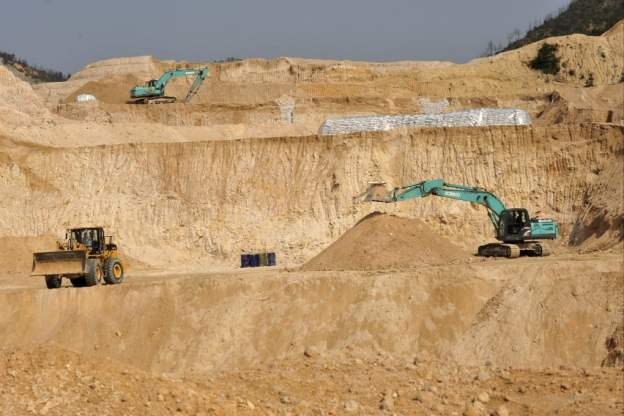
China mines some 70% of the world’s rare earths, the 17 metallic elements primarily used in magnets needed for civilian and military technologies. But its 90% share of processing for rare earths mined around the world is what really concerns officials from other countries working to secure their supply.

“China is a formidable competitor,” said Ramón Barúa, chief executive of Canada’s Aclara Resources, which is opening a rare-earths mine in Brazil to supply a processing plant it plans to build in the U.S. Aclara said it plans by August to decide where in the U.S. to build its plant for separating rare-earths deposits into individual elements. Aclara signed an agreement in 2024 to supply rare earths to VAC, a German company that is building a factory in South Carolina with $94 million in Pentagon funding to make magnets for clients including General Motors…

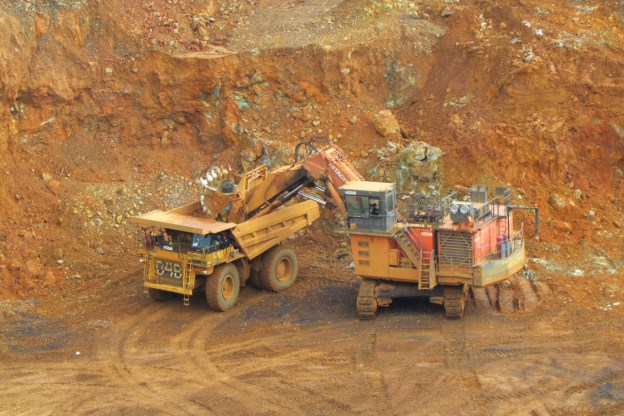
Brazil has the world’s second-largest rare-earth reserves after China, some 21 million tons, according to the U.S. Geological Survey. That represents more than a fifth of known global reserves—and more than 10 times those in the U.S…Despite its huge reserves, Brazil has been a small player in rare earths because of its complex mining regulations and the difficulty of attracting financing from companies willing to confront entrenched Chinese competitors. Costs to mine and process Brazilian rare earths are estimated to be around three times China’s, meaning Western buyers would likely pay a substantial premium for Brazilian minerals. Only a few companies outside China have mastered rare-earth processing, and the learning curve is steep

Brazil’s first big rare-earths mine opened in 2024 by a US private equity company some 90 miles west of the town of Nova Roma…but the mine is contracted to ship most of its production to China !…Aclara plans to invest some $600 million to complete work on a larger plant next to the mine in Nova Roma to start full production in 2028.

Excerpt from Samantha Pearson, Rare-Earths Plants Are Popping Up Outside China, WSJ, May 18, 2025
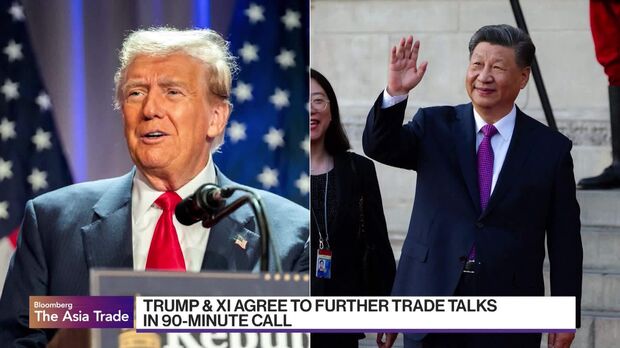
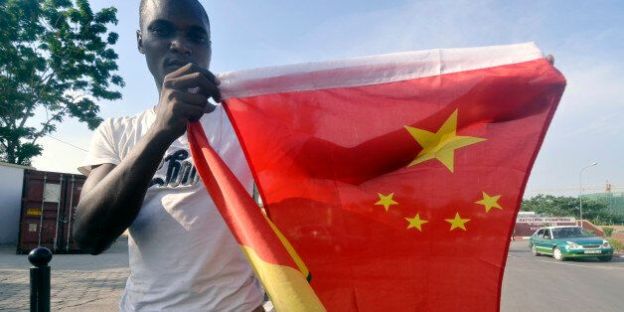
The New Trump Doctrine: Kiss the Hand you Cannot Bite

Four US major automakers are racing to find workarounds to China’s stranglehold on rare-earth magnets, which they fear could force them to shut down some car production within weeks. Several traditional and electric-vehicle makers—and their suppliers—are considering shifting some auto-parts manufacturing to China to avoid looming factory shutdowns, people familiar with the situation said.

Ideas under review include producing electric motors in Chinese factories or shipping made-in-America motors to China to have magnets installed. Moving production to China as a way to get around the export controls on rare-earth magnets could work because the restrictions only cover magnets, not finished parts, the people said.

If automakers end up shifting some production to China, it would amount to a remarkable outcome from a trade war initiated by President Trump with the intention of bringing manufacturing back to the U.S.  “If you want to export a magnet [from China] they won’t let you do that. If you can demonstrate that the magnet is in a motor in China, you can do that,” said a supply-chain manager at one of the carmakers.

China in April 2025 began requiring companies to apply for permission to export magnets made with rare-earth metals, including dysprosium and terbium. The country controls roughly 90% of the world’s supply of these elements, which help magnets to operate at high temperatures. Much of the world’s modern technology, from smartphones to F-35 jet fighters, rely on these magnets….In May 2025, industry groups representing most major automakers and parts suppliers told the Trump administration that vehicle production could be reduced or shut down imminently without more rare-earth components from China.

Excerpt from Sean McLain et al., Automakers Race to Find Workaround to China’s Stranglehold on Rare-Earth Magnets, WSJ, June 4, 2025

Two days after the publication of this WSJ article, Trump announced, on June 6, 2024, that Xi agreed to let rare earth minerals flow to US (in exchange of? not revoking Chinese student visas? what else?)

Economic Consequences of Falling Asleep on Wheel: the Geopolitics of Energy Transition

American officials see Africa as helping to solve two problems. The first is a global shortfall in the minerals that will be needed if the world is to meet its climate goals.The second problem, at least for the West, is China’s outsized influence on supply chains. China refines 68% of the world’s nickel, 40% of copper, 59% of lithium and 73% of cobalt, according to a report in July by the Brookings Institution, an American think-tank. “China has had free rein for 15 years while the rest of the world was sleeping,” says Brian Menell, chief executive of TechMet, a minerals firm.

America views cobalt, which is used in batteries, as a cautionary tale. In Congo, the source of about 70% of global production, Chinese entities owned or had stakes in 15 of 19 cobalt-producing mines as of 2020. America’s decision to allow a US firm to sell one of Congo’s largest copper-cobalt mines to a Chinese one in 2020 is seen in Washington as an enormous act of stupidity. It is little comfort that battery-makers are trying to use less cobalt, in part because of concerns about operating in Congo. “We cannot allow China to become an OPEC of one in critical minerals,” says an American official, referring to the oil cartel.

It is possible to identify three strands in America’s approach. The first is a multilateral effort involving Western allies. In June, Jose Fernandez, America’s under-secretary of state for economic growth, energy, and the environment, launched the Minerals Security Partnership, whose 13 members include all the G-7 countries and the EU. Many of these countries are also looking to secure more scarce rocks. Britain launched a “critical minerals strategy” in July 2022 and later this month the European Commission will propose a Critical Raw Materials Act.

A second strand in America’s approach involves its development agencies “de-risking” projects as they have done in, say, agriculture or the power sector. As well as the us Export-Import Bank, which offers trade-financing, there is the International Development Finance Corporation (DFC)... Another potential success is a memorandum of understanding signed by America, Congo and Zambia in January. America says it will help Africa’s two largest copper exporters do more than just sell the metal in its elemental state. Under it, America agreed to help the two African countries build supply chains to process their raw minerals into battery precursors for electric vehicles.

Excerpts from How America plans to break China’s grip on African minerals, Economist,  Mar. 4, 2023

Mining the Earth to Save it

The rush to secure green-energy metals is bringing new life to one of the world’s oldest mining hubs. Like the United States, Europe is worried that it is too reliant on China for supplies of once-obscure natural resources, such as lithium and rare-earth metals, that are seen as climate-friendly successors to oil and gas…. 

On both sides of the Atlantic, one of the best answers to long-simmering worries about green-energy security is to look north…, for example, to the “Canadian Shield,” a vast band of rock encircling Hudson Bay. The “Baltic Shield” that stretches across Scandinavia to western Russia is similarly mineral-rich. It helps explain why Sweden in particular has such a long mining heritage. In the mid-17th century, the country’s “Great Copper Mountain” near Falun provided two-thirds of the world’s copper. Even today, 80% of iron ore mined in the EU comes from a site near the Arctic town of Kiruna that Swedish state operator LKAB has exploited for well over a century.

The energy transition is an opportunity for Sweden’s mining complex. LKAB said in January 2023 that it had identified Europe’s largest body of rare-earth metals close to its existing Kiruna operation…Digging up the planet to save it is an awkward pitch. The only way for miners to counter accusations that they are adding to the problem they want to solve is by decarbonizing operations. Here Sweden is again helped by the geology of the Baltic Shield, whose river valleys are favorable for green-energy production. Roughly 45% of the country’s electricity comes from hydroelectric power, with much of the remainder provided by nuclear and wind. It is also cheap, particularly in the Arctic, where many mines are located. Against a favorable geopolitical backdrop, the biggest risk for investors is political. Mines, which can bring a lot of noise and relatively few jobs to an area, don’t tend to be popular locally.

There is a reason the West relies on autocracies for a lot of its oil.

Excerpts from Stephen Wilmot, For Mining EV Metals, the Arctic Is Hot, WSJ, Feb. 14, 2023

After the Oil Shock, the Metals Shock: fueling the green economy

Indonesia banned exports of nickel ore in 2020 in a bid to capture more of the metal’s value. As a result, exports of Indonesian nickel products were worth $30bn in 2022, more than ten times what they were in 2013. Nickel smelters have sprouted around the country, and makers of batteries, in which the metal is a key component, are building factories. On January 17, 2023 a cabinet official said the government was close to sealing deals with the world’s two largest makers of electric vehicles (EVS), Tesla and BYD, to build cars in Indonesia. Flushed with progress, the government is now thinking beyond nickel.

“This success will be continued for other commodities,” said Joko Widodo, Indonesia’s president, in December 2022. He confirmed that an export ban on bauxite, the ore used to make aluminum, was coming in June 2023. The bauxite industry is scrambling to prepare itself for the shock….The government has suggested that a ban on copper exports could be implemented next, with bans on tin and gold exports to follow.

The country’s pulling power in the global nickel market will be hard to replicate, though. Indonesia produces 37% of the world’s nickel. But its bauxite, gold and copper production is less than 5% of the global total…Bauxite smelters are also expensive and harder to build than nickel smelters. Local firms are struggling to raise the capital needed for them, often around 18trn rupiah ($1.2bn)…All the eight bauxite smelters are under construction are Chinese investments. . 

Indonesia’s resource nationalism also risks falling foul of global trade rules but Jokowi, Indonesia’s president  remains  undeterred. “This is what we want to do: be independent, independent, independent,” he said.

Excerpts from Indonesia’s Industrial Policy: Full Metal Jacket, Economist,  Jan. 28, 2023

When Others Do our Dirty Work: the Costs of Overdependence

China is tightening its grip on the global supply of processed manganese, rattling a range of companies world-wide that depend on the versatile metal—including the planet’s biggest electric-vehicle makers.

China produces more than 90% of the world’s manganese products, ranging from steel-strengthening additives to battery-grade compounds. Since October 2020, dozens of Chinese manganese processors accounting for most of global capacity have joined a state-backed campaign to establish a “manganese innovation alliance,” led by Ningxia Tianyuan Manganese Industry Group, setting out in planning documents goals and moves that others in the industry say are akin to a production cartel. They include centralizing control over supply of key products, coordinating prices, stockpiling and networks for mutual financial assistance.

The squeeze sent prices soaring in metal markets world-wide, snagging steelmakers and sharpening concern among car makers. China’s metal industries already dominate the global processing of most raw materials for rechargeable batteries, including cobalt and nickel. Three-quarters of the world’s lithium-ion batteries and half of its electric vehicles are made in China.  High-purity forms of manganese have increasingly become crucial for battery-powered automobiles, touted by Volkswagen AG and Tesla Inc. in recent months as a viable replacement for other, more-expensive battery ingredients….

While manganese ore is relatively abundant around the world, it is almost solely refined in China. Battery-grade manganese is traded mostly privately, and pricing can be opaque. Miners say a metric ton of the purified metal could cost up to $4,000—barely a 10th of the cost of cobalt, a widely used battery metal. By replacing cobalt, manganese could help auto makers produce 30% more cars with the same amount of nickel, analysts say.

Rival manganese projects outside China view the cartel-like activities as an opportunity to gain momentum for their own battery-grade developments…Still, analysts say such projects outside China might take years to start and heavy cost investments to develop. Viable bases of manganese ore are often located in remote regions, which require expensive infrastructure to ferry and process extracted ores.

Excerpt from Chuin-Wei Yap, China Hones Control Over Manganese, a Rising Star in Battery Metals, WSH, May 21, 2021

The Hunger for Rare Metals

Indium, part of an iPhone’s screen, is an “invisible link…between the phone and your finger”. Just a pinch of niobium, a soft, granite-grey metal mined mostly in Brazil, greatly strengthens a tonne of steel used in bridges and pipelines. Lithium is so light that it has become essential for rechargeable car-batteries. Dysprosium, as well as making an electric toothbrush whirr, helps power wind turbines. Military technology depends on numerous rare metals. Tungsten, for instance, is crucial for armour-piercing bullets. America’s forthcoming F-35 fighter planes are “flying periodic tables”, Mr Abraham writes….[T]he “long tailpipe” of pollution left in the wake of mining and refining, rare metals..

Supplies are also a worry. In 2010 a Chinese trawler rammed Japanese coastguard vessels in waters near islands called the Senkakus in Japanese and the Diaoyu in Chinese (their ownership is disputed by both countries). After the Chinese captain was detained, supplies of rare metals from the mainland to Japan suspiciously dried up. Though China never acknowledged an export ban, the incident caused rare-metal prices to spike, and unsettled manufacturers around the world. …

[The business of rare metals] generates $4 billion of revenues a year and also plays a critical role in systems worth about $4 trillion. China, which develops more rare metals than any other country, understands the calculus. The West, his book suggests, does not.

Excerpts from Rare metals: Unobtainiums, Economist, Jan. 16,  2016 (Book Review of ‘The Elements of Power by  D. Abraham]