Monthly Archives: April 2023

Dirty Air: the Lack of Cross-Border Cooperation

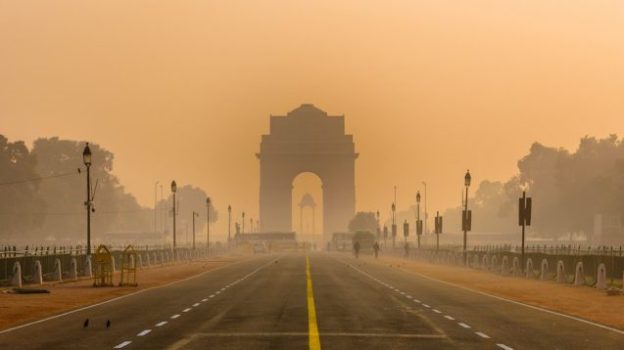
An airshed is a geographical area where local topography and meteorology limit the dispersion of pollutants away from the area. Research and practice has shown that regulating pollution by taking into account airsheds, rather the arbitrary boundaries of cities and towns, can be a cost-effective way of fighting pollution.

Managing air pollution by taking into account the airsheds has done successfully in Europe and China, whose capital was once as synonymous with smog as New Delhi, India, is today. Beijing’s air is now cleaner chiefly thanks to the creation in 2013 of a powerful airshed-wide authority responsible for the capital, the city of Tianjin and 26 adjacent prefectures. In 2017 pm2.5 levels in Beijing were half those of the previous year.

India is trying to follow this example in and around Delhi. In 2021 it launched a pollution-control agency, called the Commission for Air Quality Management, with responsibility for a 55,000-square-km area, encompassing the capital and parts of Haryana, Rajasthan and Uttar Pradesh… Yet a decisive way to deal with air pollution in India will require a major expansion of this approach, according to the World  Bank.

The World Bank has identified six regional airsheds of South Asia. They are vast areas, covering multiple urban, provincial and national jurisdictions. Significantly, four of the six cross national borders. One stretches from eastern Iran into western Afghanistan and southern Pakistan; another covers much of northern India and western Bangladesh. According to the World Bank’s modelling, the more coordinated the pollution controls adopted in these airsheds, the more cost-effective and beneficial they would be.

The ideal scenario, it suggests, would be for authorities within a given airshed to co-operate, across national borders, on data-sharing and policy formulation, while each working towards a locally determined target. This would allow them to prioritize relatively easy or low-cost forms of pollution control—such as regulating brick kilns—over more difficult or expensive sorts, such as closing coal-fired power stations. The World Bank reckons that in this scenario South Asian life expectancies would rise, infant mortality would drop and health-care expenditure would fall. For a cost of $5.7bn, it estimates the approach could bring economic benefits worth $52.5bn by 2030.

The idea of Bangladesh, India and Pakistan—let alone Afghanistan and Iran—working together to such an extent… might almost seem absurd. South Asia is one of the most unneighborly, least-integrated regions in the world. It is haunted by a history of war and mutual suspicion. Its cross-border linkages are meagre. Trade within the region is just 5% of its members’ total trade…

Excerpts from, South Asia’s Filthy Air: Choked and Gasping, Economist, Feb. 18, 2023.
The Shameful Mismanagement of the Murray-Darling River: Australia

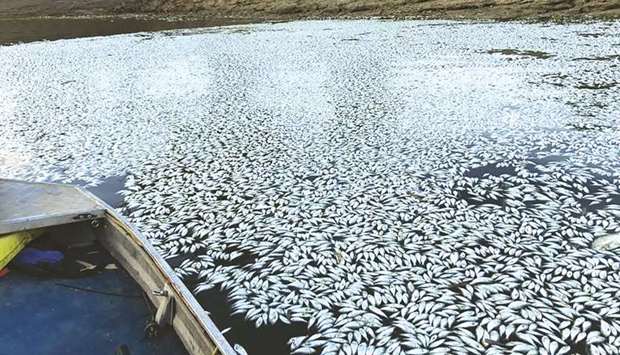
Millions of fish have died in the Darling River near his town, Menindee, in outback New South Wales, Australia in March 2023. After days under the sun, their bodies had started to “break up…transforming the river that locals rely on for drinking and showering into an ecological wasteland. Authorities have said the mass death was caused by a lack of oxygen in the water, called hypoxia, a result of recent floods and a heat wave. But furious locals say the true root of the problem is the overuse of Australia’s biggest and most vital river system.

The disaster is the latest episode in a long-running battle over the Murray Darling Basin, a vast network of lakes and rivers stretching across four states in eastern Australia, which sustains much of the country’s agriculture and dozens of communities along its banks. In an arid country where social, economic and environmental interests clash whenever water runs scarce, the issue has pitted states against each other, and riverside communities against farms upstream.

The 2019 fish deaths happened during a drought and the 2023 fish deaths happened after a flood, said Richard Kingsford, the director of the Center for Ecosystem Science at the University of New South Wales. But, he said, the long-term causes were the same both times: “There’s not enough water in the river, and the whole system is engineered so that escape routes are closed.” Over-extraction means parts of the river run dry more often, he said, and the small and medium-sized floods that used to periodically clear away organic debris have all but disappeared. That means when a big flood hits, that debris is all swept into the river, where it breaks down and deoxygenates the water. That, combined with the construction of weirs that have prevented the fish from swimming to better-oxygenated water, has made this disaster worse, he said….

The New South Wales fisheries and water management bodies, by contrast, both attribute the disaster to weather-related causes…

After many of the fish had already sunk to the bottom of the river, the cleanup started with workers in small boats removing floating carcasses with hand-held nets. Authorities said this will be followed by machinery that will drag nets through the river to scoop up sunken fish….

Excerpts from Yan Zhuang, A River Choking on Fish Corpses, and a Community Full of Anger, NYT, Mar. 24, 2023

Economic Consequences of Falling Asleep on Wheel: the Geopolitics of Energy Transition

American officials see Africa as helping to solve two problems. The first is a global shortfall in the minerals that will be needed if the world is to meet its climate goals.The second problem, at least for the West, is China’s outsized influence on supply chains. China refines 68% of the world’s nickel, 40% of copper, 59% of lithium and 73% of cobalt, according to a report in July by the Brookings Institution, an American think-tank. “China has had free rein for 15 years while the rest of the world was sleeping,” says Brian Menell, chief executive of TechMet, a minerals firm.

America views cobalt, which is used in batteries, as a cautionary tale. In Congo, the source of about 70% of global production, Chinese entities owned or had stakes in 15 of 19 cobalt-producing mines as of 2020. America’s decision to allow a US firm to sell one of Congo’s largest copper-cobalt mines to a Chinese one in 2020 is seen in Washington as an enormous act of stupidity. It is little comfort that battery-makers are trying to use less cobalt, in part because of concerns about operating in Congo. “We cannot allow China to become an OPEC of one in critical minerals,” says an American official, referring to the oil cartel.

It is possible to identify three strands in America’s approach. The first is a multilateral effort involving Western allies. In June, Jose Fernandez, America’s under-secretary of state for economic growth, energy, and the environment, launched the Minerals Security Partnership, whose 13 members include all the G-7 countries and the EU. Many of these countries are also looking to secure more scarce rocks. Britain launched a “critical minerals strategy” in July 2022 and later this month the European Commission will propose a Critical Raw Materials Act.

A second strand in America’s approach involves its development agencies “de-risking” projects as they have done in, say, agriculture or the power sector. As well as the us Export-Import Bank, which offers trade-financing, there is the International Development Finance Corporation (DFC)... Another potential success is a memorandum of understanding signed by America, Congo and Zambia in January. America says it will help Africa’s two largest copper exporters do more than just sell the metal in its elemental state. Under it, America agreed to help the two African countries build supply chains to process their raw minerals into battery precursors for electric vehicles.

Excerpts from How America plans to break China’s grip on African minerals, Economist,  Mar. 4, 2023

Late Paranoia Better than None: US v. Chinese Cranes

In recent years, U.S. national-security officials have pointed to a range of equipment manufactured in China that could facilitate either surveillance or disruptions in the U.S., including baggage-screening systems and electrical transformers, as well as broader concerns about China’s growing control of ports around the world through strategic investments. China makes almost all of the world’s new shipping containers and controls a shipping-data service. In that context, the giant ship-to-shore cranes have drawn new attention. The $850 billion defense policy bill lawmakers passed in December requires the Transportation Department’s maritime administrator, in consultation with the defense secretary and others, to produce an unclassified study by the end of this year on whether foreign-manufactured cranes pose cybersecurity or national-security threats at American ports.

ZPMC cranes entered the U.S. market around two decades ago, offering what industry executives described as good-quality cranes that were significantly cheaper than Western suppliers. In recent years, ZPMC has grown into a major player in the global automated-ports industry, working with Microsoft Corp. and others to connect equipment and analyze data in real time…Today, ZPMC says it controls around 70% of the global market for cranes and has sold its equipment in more than 100 countries. A U.S. official said the company makes nearly 80% of the ship-to-shore cranes in use at U.S. ports…

The huge cranes are generally delivered to U.S. ports fully assembled on ships and are operated through Chinese-made software. In some cases, U.S. officials said, they are supported by Chinese nationals working on two-year U.S. visas, factors they described as potential avenues through which intelligence could be collected…Early in the Trump administration, officials in the National Security Council’s strategic planning office came to consider cranes as a unique point of interest, said Sean Plankey, a former cybersecurity official who was involved in those discussions. “Where would someone attack first and how would they do it?” he asked, characterizing the discussion. He said the officials determined that if Beijing’s military could access the cranes, they could potentially shut down U.S. ports without drawing on their navy.

A National Maritime Cybersecurity Plan, released in December 2020, found that no single U.S. agency had responsibility for maritime network security, leaving port directors without enforceable standards on cybersecurity and generally free to buy equipment from any vendor.

Excerpts from Aruna Viswanatha, Pentagon Sees Giant Cargo Cranes as Possible Chinese Spying Tools, WSJ, Mar. 6, 2023.

From Miracles to Pariahs: Forever Chemicals

The US Environmental Protection Agency (EPA) in March 2023 proposed the first federal limits on so-called forever chemicals in public drinking water…The EPA is proposing maximum allowable levels for two compounds in a class of chemicals known as perfluoroalkyl and polyfluoroalkyl substances, or PFAS. Known as forever chemicals because they take a long time to break down, they were used for decades in carpeting, clothing, food packaging, firefighting foam and other consumer and industrial products…Once prized as innovative substances that could resist stains, water, grease and heat, PFAS are increasingly viewed as a threat because they persist in the environment and have been found in roughly 99% of the U.S. population…

The move represents a seismic shift in the regulation of the nation’s drinking water, and will require sweeping changes for thousands of water systems that will have to test for and treat a group of chemicals that have been the subject of growing concern among public health officials and people worried about the safety of water coming from their taps.  In its new proposed rule, EPA set a limit for two types of PFAS of 4 parts per trillion each in public drinking-water systems. The EPA also said it would regulate four other PFAS chemicals by requiring treatment if the combined level reaches a certain concentration….The rule, if enacted, is likely to fuel fights over who will bear most of the cost for treatment systems in hundreds of communities. Water companies, states and communities have already filed thousands of lawsuits against companies that manufactured or used PFAS, seeking to recover costs for cleanups and filtration.

The two individual chemicals that the EPA is proposing limiting are known as PFOA and PFOS. Companies phased out their production over the past two decades, but the long-term use of firefighting foam containing them at military facilities and airports is a frequent source of drinking-water contamination, according to the EPA. The chemicals and other PFAS have also tainted water after escaping from landfills, wastewater-treatment plants and textile and other manufacturers.

Scientific understanding about the health risks from PFAS is still evolving, but a number of studies have shown links to a variety of cancers, thyroid disease, high cholesterol and other issues. There are thousands of PFAS chemicals, including roughly 700 that have been used in commerce in the U.S. in recent years, according to the EPA…

Excerpt from Kris Maher, EPA Proposes Limits for ‘Forever Chemicals’ in Drinking Water, WSJ, Mar. 15, 2023