Monthly Archives: July 2023

Planning for the Invasion: Taiwan

If China were to invade Taiwan, it might start by severing the 14 undersea internet cables that keep the island connected to the world. Taiwan is adding cables and planning how to defend their landing points. But it is also testing antennae in 700 locations, including some outside Taiwan. These would be able to send and receive signals by means of satellites in low orbit, like the ones Starlink uses. The goal is to make the antennae “as mobile as possible” to survive an attack…China has the capability to shoot down satellites. But Starlink developed by SpaceX (Elon Musk) is made up of over 4,000 of them and aims eventually to have tens of thousands…Unsurprisingly, Taiwan is looking to reduce its dependence on others including Starlink. Its space agency is developing its own low-orbit communication satellites. The first is expected to be launched in 2025.

China’s low-orbit ambitions are much larger. In 2020 the government filed papers with the International Telecommunication Union, a UN body, for a 12,992-satellite constellation. A year later the government established China Satellite Networks Group Limited and tasked it with developing satellite internet. At least seven state-owned and private Chinese companies are building satellite factories, with the expectation that they will soon be able to produce several hundred small communications satellites per year.

Officials in Beijing have developed a space-race mentality. Specific orbits and radio frequencies are “rare strategic resources” that Starlink wants to “monopolize”, warned the Liberation Army Daily in 2022….The Liberation Army Daily complains that there is only room for 50,000 satellites in low-Earth orbit and that Starlink may eventually take up more than 80% of that space. But the calculation is not that straightforward, says Juliana Suess of the Royal United Services Institute, a think-tank in Britain. Imagine low orbit as a highway, she says. What needs to be calculated is how many moving cars that highway can safely accommodate. Much will depend on the size of satellites and their trajectories.” But at this moment, there is lack of norms surrounding traffic in low orbit.

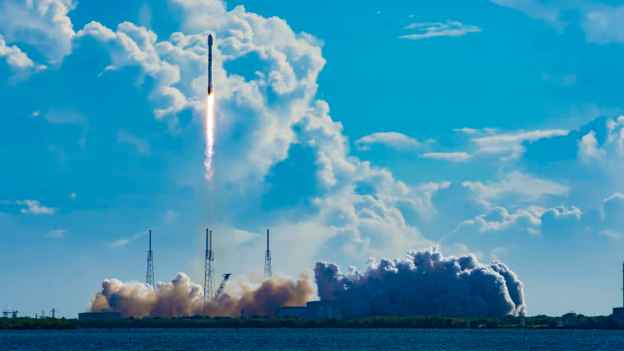
Spacex has an important advantage. Satellites in low orbit don’t last very long, so the company replaces them on a regular basis. That entails a large number of rocket launches. Spacex has the world’s best system for that, the partially reusable Falcon 9 rocket. Now it is working on a much larger, fully reusable spacecraft called Starship which could launch hundreds of satellites at a time. Some Chinese companies appear to be trying to build knock-offs.

Excerpts from China in Space: A New Mandate in the Heavens, Economist, May 20, 2023


Who is Ready for the Future Global War?

The Economist magazine estimates that the new defense commitments of all countries …will generate over $200bn-$700bn in extra defense spending globally each year…
China’s defense budget has grown by about 75% in real terms in the past ten years. It wants to “basically complete modernization” of its forces by 2035, and become a “world class” military power by 2049. America thinks China wants the capability to invade Taiwan as early as 2027… Overall America’s advantage over its rivals has eroded in the past century…During the first, second and cold wars America’s adversaries had much smaller economies than America did. No longer. Today China’s GDP alone is nearly 80% of America’s.

In the decades after the cold war, the thinking was that to spend less on armies meant to spend more on infrastructure and public services and to lower debt or taxes. Since the 1960s the world has “released” about $4trn a year of spending at current prices in this way, equivalent to the global government budget for education. Now the peace dividend is turning into a “war tax”. How heavy will it be?…

America, by far the world’s largest defense spender, is devoting growing sums to research and development of future weapons. This includes hypersonic missiles, to catch up with China and Russia; “directed energy” such as powerful lasers to shoot down drones and missiles; and artificial intelligence and robotics. It is also buying as many munitions as its factories can produce—from 155mm artillery shells to anti-ship missiles. The war in Ukraine has exposed the extraordinary quantities of munitions needed in a conflict, as well as the inability of peacetime production lines to meet such demand.

America, Russia and China are investing in their nuclear arsenals, too. America is upgrading all legs of its “triad” of ground-, air- and submarine-launched nukes. Russia is working on esoteric weapons, such as the long-distance, nuclear-powered Poseidon torpedo designed to set off an underwater nuclear explosion that, propagandists boast, can cause destructive tidal waves. China is quickly expanding its arsenal, from several hundred warheads to 1,500 by 2035, according to the Pentagon…

Cyber-security, drones and satellite technology straddle both the civilian and military worlds. SpaceX, founded by Elon Musk, has launched American military satellites. Ukrainian warriors make extensive use of his Starlink constellation of satellites. It all amounts to a change of cultural mindset from tech firms that once shunned defense as morally tainted. A defense-tech ecosystem has sprung up in America…

One way or another, a new era of rearmament beckons. As General Mark Milley, chairman of America’s joint chiefs of staff, told the Senate recently: “Preventing great-power war through readiness and deterrence is very expensive, but not as expensive as fighting a war.” And the only thing more costly than that, as he explained, is losing one.

Excerpts from Farewell peace dividend: The Cost of the Global Arms Race, Economist, May 27, 2023 

From Lunatic to Feasible? Getting Rid of Carbon by Storing it into the Earth

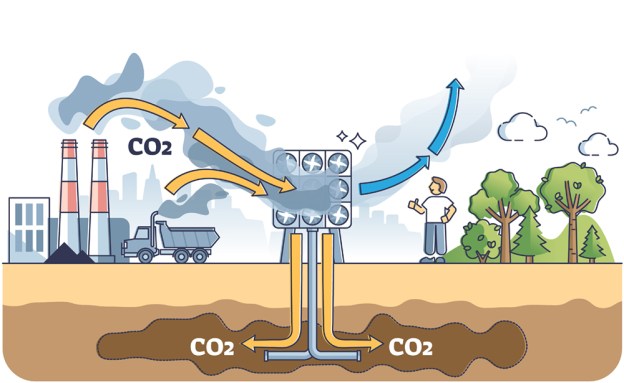
The boom in carbon removal, whether from the air , what is called direct air capture (DAC) or from industrial point sources , what is called carbon capture and storage (CCS), cannot come fast enough. The UN-backed Intergovernmental Panel on Climate Change (IPPC) assumes that if Earth is to have a chance of warming by less than 2°C above pre-industrial levels, renewables, electric vehicles and other emissions reductions are not enough. Carbon Capture and Storage (CCS)and sources of “negative emissions” such as DAC must play a part. The US Department of Energy calculates that America’s climate targets require capturing and storing between 400m and 1.8bn tonsof CO2 annually by 2050, up from 20m tons today. ..

For years DAC and CCS projects were regarded as technically plausible, perhaps, but uneconomical but carbon capture, utilization and storage (CCUS) may attract $150bn in investments globally this decade. A factor behind the recent flurry of carbon-removal activity is government action. One obvious way to promote the industry would be to make carbon polluters pay a high enough fee for every ton of carbon they emit that it would be in their interest to pay carbon removers to mop it all up, either at the source or from the atmosphere….The emerging view among technologists, investors and buyers is that carbon removal will develop like waste management did decades ago—as an initially costly endeavor that needs public support to get off the ground but can in time turn profitable…

Maybe the biggest sign that the carbon-removal business has legs is its embrace by the oil industry. Occidental is keen on DAC. ExxonMobil says it will spend $17bn from 2022 to 2027 on “lower-emissions investments”, with a slug going to CCA…Equinor and Wintershall, a German oil-and-gas firm, have already secured licenses to stash carbon captured from German industry in North Sea sites. Hugo Dijkgraaf, Wintershall’s technology chief, thinks his firm can abate up to 30m tons of CO2 per year by 2040. The idea, he says, is to turn “from an oil-and-gas company into a gas-and-carbon-management company”.

Excerpts from Can Carbon Removal Become a Trillion-Dollar Business?, Economist, May 27, 2023

Squeezing the U.S.–China’s Foothold in Latin America

China has gone from from hardly trading with Latin America at the turn of the century to overtaking the United States to become the top trading partner for South America, and the second almost everywhere else in Latin America. Annual goods trade between China and Latin America rose to $445bn in 2021, up from $12bn in 2000…. Latin America is increasingly useful to China in geopolitical terms, too.

On June 8th, 2023 the Wall Street Journal reported that the Communist government of Cuba had secretly agreed to allow China to set up an electronic-spying facility in the country. At first American and Cuban officials denied the story. Two days later the White House admitted that a base has existed for some time…China has long been thought to have a small military presence in Cuba and access to listening stations. It has several satellite ground-stations in Latin America, which are believed to also have spying purposes. A space observatory in Argentina is run by the Chinese army and its activities are opaque.

Deepening geopolitical ties follow closer economic ones. China is a big source of cash for the region. Between 2005 and 2021 Chinese state-owned banks loaned $139bn to Latin American governments. It has invested billions of dollars in the region, mainly in energy and mining. Some 21 countries in Latin America and the Caribbean have signed up to China’s Belt and Road Initiative, a massive global infrastructure-building spree.

Latin American countries are also turning to the yuan for trade and to include in their central-bank reserves. On June 2nd, 2023 Argentina doubled its currency-swap line with China, meaning that around a third of its central-bank reserves, which stand at $32bn, will effectively be in yuan. Last year, the yuan surpassed the euro to become the second-most important foreign currency in Brazil’s central-bank vaults… In April 2023 a Chinese state-owned power company reached an agreement to purchase two power suppliers in Peru that would give China a near-monopoly over the country’s energy grid. Some fret over Chinese construction of ports in the region, such as the Chancay megaport near Lima in Peru, fearing that they could be repurposed to military ends….China…has trained police forces from countries including Argentina and Brazil, donated cars and investigative equipment to Nicaragua and Costa Rica, and sold surveillance equipment to Ecuador….

Excerpts from China and Latin America: Comrades Across Continents, Economist, June 15, 2023

Squeezing China: the Asian NATO

In defense terms, America’s “pivot to Asia” is not a single move, but a weaving of initiatives—with overlapping bi-, tri-, quadri- and multilateral deals—to create an ever-thickening lattice on China’s periphery. Some deals are modest; many are uncertain if tested in war. But they amount to the “fortification of America’s forward defense perimeter in the western Pacific.”…Despite its pacifism, Japan is greatly boosting defense spending. American marines in Okinawa are practicing how to scatter and defend the islands and sea passages. The next link, Taiwan, is under intense strain, given China’s aim to retake the self-governing island by force if necessary. America may soon announce the first “drawdown” of weapons from its own arsenal, pre-emptively strengthening Taiwan much as it has armed Ukraine. The Philippines, the next link, is weaker but has agreed to give America access to nine bases in the country; in return America is helping to beef up its forces….

America is devising ways to disperse its jets in wartime and hardening the defense of Guam. It wants to project more power from Australia, where it rotates air force and marine units. It is working with Britain to supply nuclear-powered submarines to Australia under the aukus deal; the three are also working on new weapons, including hypersonic missiles. Farther afield, the Quad—America, Australia and Japan working with India—is not a formal security grouping, but their navies exercise together. Across the region, American-led war-games are becoming bigger and more sophisticated. Sometimes America’s security arrangements are limited, for instance its new defense deal with Papua New Guinea; or its efforts to help littoral states improve “maritime domain awareness” to, say, curb illegal fishing by Chinese fleets. This, too, helps enmesh America in the region…

China accuses America of building an “Asian NATO”. But the reality is a looser system. America’s friends and allies in the “Indo-Pacific” have no mutual-defense commitments akin to NATO’s Article 5, under which an attack on one is an attack on all, nor integrated multinational commands.

Excerpts from America and China: The Chain, Economist, June 15, 2023

Invisible CyberAttack: Volt Typhoon

Cybersecurity agencies in the U.S., the U.K., Canada, Australia and New Zealand—an intelligence-sharing group of countries known as the Five Eyes—said a Chinese state-sponsored actor is employing a tactic known as “living off the land,” which involves using built-in network administration tools to gain access to systems. The activity blends in with normal Windows system activities, allowing the actor to evade detection. The campaign is impacting communications, manufacturing, transportation, maritime and other sectors in parts of the U.S. and Guam, the American territory that hosts major military installations in the Pacific, according to a blog post from Microsoft, publisher of the Windows operating system. The tech giant said the Chinese actor, known as Volt Typhoon, is pursuing capabilities that could disrupt communication infrastructure between the U.S. and Asia in a future crisis.

China has consistently denied carrying out cyberattacks and has accused the U.S. of being the biggest culprit of such efforts…By gaining access to a system through the “living off the land” approach—and maintaining that access while remaining undetected—hackers can glean intelligence about how the system operates. It could also give them the ability to disrupt the system later with no warning—though the intent could just be information gathering…

Excerpts from Mike Cherney and Austin Ramzy, Hack Hurts Bid for Beijing Reset, WSJ, May 26, 2023

The Environmental Harm Caused by the Energy Transition

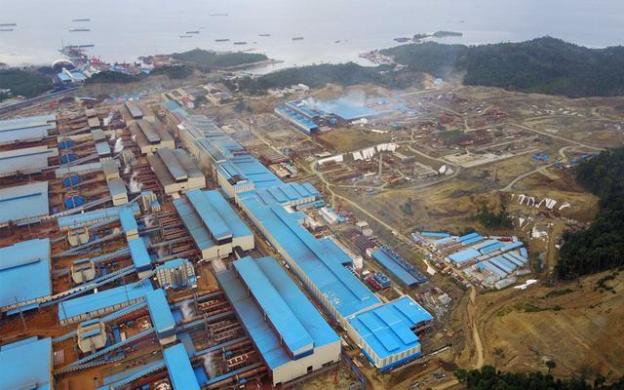
In the electric-vehicle business, the quandary is known as the nickel pickle. To make batteries for EVs, companies need to mine and refine large amounts of nickel. The process of getting the mineral out of the ground and turning it into battery-ready substances, though, is particularly environmentally unfriendly. Reaching the nickel means cutting down swaths of rainforest. Refining it is a carbon-intensive process that involves extreme heat and high pressure, producing waste slurry that’s hard to dispose of. The nickel issue reflects a larger contradiction within the EV industry: Though electric vehicles are designed to be less damaging to the environment in the long term than conventional cars, the process of building them carries substantial environmental harm.

The challenge is playing out across Indonesia’s mineral-rich islands, by far the world’s largest source of nickel. These deposits aren’t deep underground but lie close to the surface, under stretches of overlapping forests. Getting to the nickel is easy and inexpensive, but only after the forests are cleared.  One Indonesian mine, known as Hengjaya, obtained permits five years ago to expand its operations into a forested area nearly three times the size of New York City’s Central Park. The mine’s Australian owner, Nickel Industries, said that rainforest clearing in 2021 caused greenhouse gas emissions equivalent to 56,000 tons of carbon-dioxide. That’s roughly equal to driving 12,000 conventional cars for a year, according to calculations by The Wall Street Journal based on U.S. Environmental Protection Agency data. “Unfortunately, land clearing is required for all open-cast mining processes, including our operations,” said the firm’s sustainability manager…. The negative impact is offset, he said, by nickel’s use in environmentally friendly batteries…Auto executives worried about having enough nickel to meet rapidly growing demand for EVs. They had moved away from cobalt, another battery component, after human-rights groups and journalists reported on widespread child labor in cobalt operations and dangerous conditions faced by miners in the Democratic Republic of Congo. Automakers tweaked their batteries to reduce cobalt by adding more nickel…

The nickel rush has created pressing new environmental concerns. The HPAL process used to process nickel pioneered by Chinese companies involves dousing nickel ore in sulfuric acid and heating it to more than 400 degrees Fahrenheit at enormous pressures. Producing nickel this way is nearly twice as carbon-intensive as mining and processing sulfide nickel found in Canada and Russia. Another way of processing laterite ore that often uses coal-powered furnaces is six times as carbon-intensive, according to the International Energy Agency. Companies also face questions about how to get rid of the processing waste. It is difficult to safely sequester in tropical countries because frequent earthquakes and heavy rains destabilize soil, which can cause waste dams to collapse. A 2018 Indonesian law allowed companies to obtain permits to discard mineral processing waste into the ocean….

China’s domination of Indonesian nickel processing poses risks for Western electric-vehicle companies at a time of fraying relations between Washington and Beijing. Last year, the U.S. government declared nickel a critical mineral whose supply is vulnerable to disruption, with very limited nickel production operations in the U.S.

Excerpts from Jon Emont, EV Makers Confront the ‘Nickel Pickle’, WSJ, June 5, 2023

Bickering is Easier than Acting: Saving Biodiversity

At the COP15 biodiversity summit in Canada in December 2022, more than 190 countries agreed to the Kunming-Montreal Global Biodiversity Framework, a deal including targets such as nations protecting and restoring 30% of the world’s land and seas by 2030. To ensure that all countries — particularly low- and middle-income nations (LMICs) — can meet these targets, those that signed the deal agreed to establish a trust fund by the end of this year and that, by 2030, wealthy nations should collectively be contributing US$30 billion per year. Disputes have re-emerged, however, on whether the trust fund should be independent or should be established under the auspices of the Global Environment Facility. Because LMICs don’t have an adequate say in how the GEF funds are spent, LMICs want the trust fund to be established as an independent fund.

These tensions could delay the trust fund’s adoption, which was planned for a GEF assembly in August 2023, delaying biodiversity action even more … Meanwhile, the clock is ticking: researchers have estimated that one million species are under threat of habitat loss because of factors such as climate change and agriculture.

Excerpts from Battles over Funding Could Threaten Historic Effort to Save Species, Nature, June 20, 2023