Tag Archives: biotechnology

How to Become Biosecure

A bill approved by the House of Representatives in September 2024 would make it difficult for U.S. drug companies to contract with five major Chinese biotechnology companies. Academic researchers say they, too, would be hampered. The new rules could threaten projects that rely on sequencing in China or involve Chinese scientists who use services or machines from the companies. It would also cut off one source of genome sequencers used in U.S. labs. The Senate is considering a similar measure, raising the odds the rule could become law. “It could have a chilling effect on science,” says Gene Robinson, director of the Carl R. Woese Institute for Genomic Biology at the University of Illinois Urbana-Champaign.

Known as the Biosecure Act, the legislation would prevent federal funds from going to biotech companies linked to five “foreign adversaries”: China, Russia, Iran, North Korea, and Cuba. It bans purchases from five specific Chinese companies—BGI, MGI, WuXi Biologics, Wu Xi AppTec, and Complete Genomics—beginning in 2032. It would also prevent federal funds from going to other organizations that use services and equipment from the companies. The White House Office of Management and Budget would update the list of companies of concern at least once a year.

The act’s proponents argue that the named biotech companies are stealing intellectual property from U.S. biotech equipment makers or are directing health and genetic data to centers affiliated with the Chinese Communist Party (CCP) and other adversaries. “This bill is a necessary step towards protecting Americans’ sensitive health care data from the CCP before these companies become more embedded in the U.S. economy, university systems, and federal contracting base,” said Representative James Comer (R–KY) on the House floor before the bill passed 306 to 81 with broad bipartisan support.

The biggest impact, says Aaron Cummings, a lobbyist with Crowell & Moring, is likely to be felt by U.S. biotech and pharmaceutical companies. Beyond genome sequencing, Chinese firms such as WuXi AppTec provide services that support clinical research, such as manufacturing pharmaceutical ingredients and cell therapies, as well as providing research cell lines. According to a survey released in May by BIO, a biotech industry trade group, 79% of 124 biopharma companies surveyed have at least one Chinese biotech contractor. Academic scientists, for their part, worry they will be forced to sever valuable research collaborations with Chinese scientists at the companies of concern or with academic groups that use their equipment or services.

Excerpts Robert F. Service from Bill Targeting Chinese Firms Worries US Researchers, Science, Sept. 13, 2024


Insect Biogeneering as a Biological Weapon: DARPA

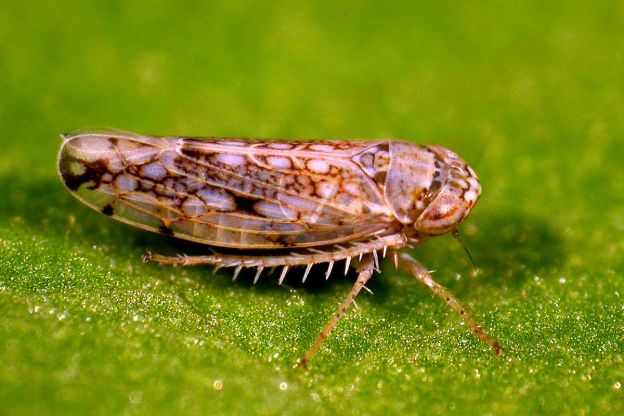
According to Science Magazine, Agricultural genetic technologies typically achieve their agronomic aims by introducing laboratory-generated modifications into target species’ chromosomes. However, the speed and flexibility of this approach are limited, because modified chromosomes must be vertically inherited from one generation to the next. In an effort to remove this limitation, an ongoing research program funded by the U.S. Defense Advanced Research Projects Agency (DARPA) aims to disperse infectious genetically modified viruses that have been engineered to edit crop chromosomes directly in fields [through insects]. This is genetic engineering through horizontal transfer, as opposed to vertical inheritance. The regulatory, biological, economic, and societal implications of dispersing such horizontal environmental genetic alteration agents (HEGAAs)[eg leafhoppers, whiteflies and aphids) into ecosystems are profound. Further, this program stipulates that the means of delivery of these viral HEGAAs into the environment should be insect-based dispersion (Insect Allies Program). In the context of the stated aims of the DARPA program, it is our opinion that the knowledge to be gained from this program appears very limited in its capacity to enhance U.S. agriculture or respond to national emergencies (in either the short or long term). Furthermore, there has been an absence of adequate discussion regarding the major practical and regulatory impediments toward realizing the projected agricultural benefits. As a result, the program may be widely perceived as an effort to develop biological agents for hostile purposes and their means of delivery, which—if true—would constitute a breach of the Biological Weapons Convention (BWC).

Who Owns the Genes in the Seas?

It’s an eye-catching statistic: A single company, the multinational chemical giant BASF, owns nearly half of the patents issued on 13,000 DNA sequences from marine organisms. That number is now helping fuel high-stakes global negotiations on a contentious question: how to fairly regulate the growing exploitation of genes collected in the open ocean, beyond any nation’s jurisdiction.

The negotiations that took place at the UN in September 2018 aim, inter alia, to replace today’s free-for-all scramble for marine genetic resources with a more orderly and perhaps more just regime.  Many developed nations and industry groups are adamant that any new rules should not complicate efforts to discover and patent marine genes that may help create better chemicals, cosmetics, and crops. But many developing nations want rules that will ensure they, too, share in any benefits. Scientists are also watching. A regulatory regime that is too burdensome could have “a negative impact” on scientists engaged in “noncommercial ocean research,” warns Robert Blasiak, a marine policy specialist at the Stockholm Resilience Centre.  It is not the first time nations have wrangled over how to share genetic resources. Under another U.N. pact, the 2010 Nagoya Protocol, 105 countries have agreed to rules to prevent so-called biopiracy: the removal of biological resources—such as plant or animal DNA—from a nation’s habitats without proper permission or compensation.

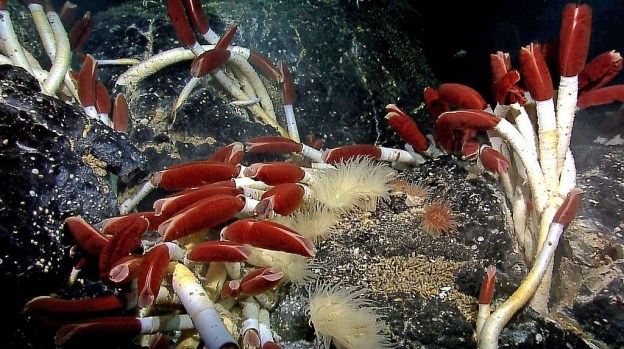
Those rules don’t apply in international waters, which begin 200 nautical miles from shore and are attracting growing interest from researchers and companies searching for valuable genes. The first patent on DNA from a marine organism was granted in 1988 for a sequence from the European eel, which spends part of its life in freshwater. Since then, more than 300 companies, universities, and others have laid claim to sequences from 862 marine species, a team led by Blasiak reported in June in Science Advances. Extremophiles have been especially prized. Genes from worms found in deep-sea hydrothermal vents, for example, encode polymers used in cosmetics. And BASF has patented other worm DNA that the company believes could help improve crop yields. The conglomerate, based in Ludwigshafen, Germany, says it found most of its 5700 sequences in public databases…

It may take years for nations to agree on a marine biodiversity treaty; [A]n “ideological divide” between developing and developed countries has, so far, “led to stalemate” on how to handle marine genetic resources, says Harriet Harden-Davies, a policy expert at the University of Wollongong in Australia.

Most developing nations want to expand the “common heritage” philosophy embedded in the 1982 United Nations Convention on the Law of the Sea, which declares that resources found on or under the seabed, such as minerals, are the “common heritage of mankind.” Applying that principle to genetic resources would promote “solidarity in the preservation and conservation of a good we all share,” South Africa’s negotiating team said in a recent statement. Under such an approach, those who profit from marine genes could, for example, pay into a global fund that would be used to compensate other nations for the use of shared resources, possibly supporting scientific training or conservation.

But developed nations including the United States, Russia, and Japan oppose extending the “common heritage” language, fearing burdensome and unworkable regulations. They argue access to high seas genes should be guaranteed to all nations under the principle of the “freedom of the high seas,” also enshrined in the Law of the Sea. That approach essentially amounts to finders keepers, although countries traditionally have balanced unfettered access with other principles, such as the value of conservation, in developing rules for shipping, fishing, and research in international waters.

The European Union and other parties want to sidestep the debate and seek a middle ground. One influential proposal would allow nations to prospect for high seas genes, but require that they publish the sequences they uncover. Companies could also choose to keep sequences private temporarily, in order to be able to patent them, if they contribute to an international fund that would support marine research by poorer nations. “Researchers all around the world should be put all on a level playing field,” says Arianna Broggiato, a Brussels-based legal adviser for the consultancy eCoast, who co-authored a paper on the concept this year in The International Journal of Marine and Coastal Law.

Exceprts from Eli Kintisch U.N. tackles gene prospecting on the high seas, Science, Sept. 7, 2018

Fixing the Earth: De-Extinction

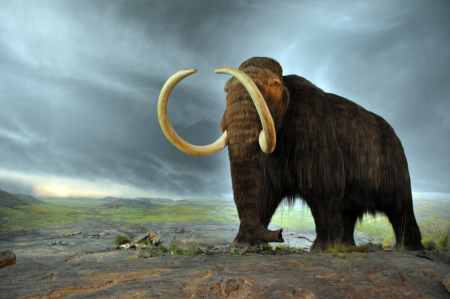
Is extinction forever? Efforts are under way to use gene editing and other tools of biotechnology to “recreate” extinct species such as the woolly mammoth and the passenger pigeon. Could such “de-extinction” initiatives aid conservation by reviving species lost to habitat destruction and climate change?…. These are some of the questions addressed in Recreating the Wild: De-extinction, Technology, and the Ethics of Conservation, a new special report of the Hastings Center Report.

Advances in biology have revealed the ways the environment influences species’ genomes. Even if scientists could produce creatures with DNA identical to that of extinct species, different environmental pressures would alter their genomes in novel ways, raising the possibility that those creatures would differ from the extinct species…

Many scientists believe that although the maintenance of biodiversity benefits ecosystems, changes to the environment could make the reintroduction of extinct species difficult—possibly even ecologically disruptive. …Several commentators in the report raise the concern that the notion that extinct species might be “brought back” could weaken efforts to prevent extinctions. “By proposing that we can revive species through modern technology, we give the impression that species are ‘throwaway’ items,” write Robert DeSalle, a curator at the American Museum of Natural History’s Sackler Institute for Comparative Genomics, and George Amato, director of the conservation genomics program at the institute.

Excerpt from Recreating the wild: De-extinction, technology, and the ethics of conservation, https://phys.org/news/, Aug. 2017

Unsafe Genes: DARPA

DARPA created the Safe Genes program to gain a fundamental understanding of how gene editing technologies function; devise means to safely, responsibly, and predictably harness them for beneficial ends; and address potential health and security concerns related to their accidental or intentional misuse. Today, DARPA announced awards to seven teams that will pursue that mission, led by: The Broad Institute of MIT and Harvard; Harvard Medical School; Massachusetts General Hospital; Massachusetts Institute of Technology; North Carolina State University; University of California, Berkeley; and University of California, Riverside. DARPA plans to invest $65 million in Safe Genes over the next four years as these teams work to collect empirical data and develop a suite of versatile tools that can be applied independently or in combination to support bio-innovation and combat bio-threats.

Gene editing technologies …[can] selectively disable cancerous cells in the body, control populations of disease-spreading mosquitos, and defend native flora and fauna against invasive species, among other uses. The potential national security applications and implications of these technologies are equally profound, including protection of troops against infectious disease, mitigation of threats posed by irresponsible or nefarious use of biological technologies, and enhanced development of new resources derived from synthetic biology, such as novel chemicals, materials, and coatings with useful, unique properties.

Achieving such ambitious goals, however, will require more complete knowledge about how gene editors, and derivative technologies including gene drives, function at various physical and temporal scales under different environmental conditions, across multiple generations of an organism. In parallel, demonstrating the ability to precisely control gene edits, turning them on and off under certain conditions or even reversing their effects entirely, will be paramount to translation of these tools to practical applications…

Each of the seven teams will pursue one or more of three technical objectives: develop genetic constructs—biomolecular “instructions”—that provide spatial, temporal, and reversible control of genome editors in living systems; devise new drug-based countermeasures that provide prophylactic and treatment options to limit genome editing in organisms and protect genome integrity in populations of organisms; and create a capability to eliminate unwanted engineered genes from systems and restore them to genetic baseline states. Safe Genes research will not involve any releases of organisms into the environment; however, the research—performed in contained facilities—could inform potential future applications, including safe, predictable, and reversible gene drives….

A Harvard Medical School team led by Dr. George Church seeks to develop systems to safeguard genomes by detecting, preventing, and ultimately reversing mutations that may arise from exposure to radiation. This work will involve creation of novel computational and molecular tools to enable the development of precise editors that can distinguish between highly similar genetic sequences. The team also plans to screen the effectiveness of natural and synthetic drugs to inhibit gene editing activity.

A North Carolina State University (NCSU) team led by Dr. John Godwin aims to develop and test a mammalian gene drive system in rodents. The team’s genetic technique targets population-specific genetic variants found only in particular invasive communities of animals. If successful, the work will expand the tools available to manage invasive species that threaten biodiversity and human food security, and that serve as potential reservoirs of infectious diseases affecting native animal and human populations….

A University of California, Berkeley team led by Dr. Jennifer Doudna will investigate the development of novel, safe gene editing tools for use as antiviral agents in animal models, targeting the Zika and Ebola viruses. The team will also aim to identify anti-CRISPR proteins capable of inhibiting unwanted genome-editing activity, while developing novel strategies for delivery of genome editors and inhibitors….

A University of California, Riverside team led by Dr. Omar Akbari seeks to develop robust and reversible gene drive systems for control of Aedes aegypti mosquito populations.

Excerpts from Building the Safe Genes Toolkit, DARPA Press Release, July 19, 2017

US Government Lobbying for Biotechnology Industry

American diplomats lobbied aggressively overseas to promote genetically modified (GM) food crops such as soy beans, an analysis of official cable traffic revealed on Tuesday.  The review of more than 900 diplomatic cables by the campaign group Food and Water Watch showed a carefully crafted campaign to break down resistance to GM products in Europe and other countries, and so help promote the bottom line of big American agricultural businesses.

The cables, which first surfaced with the Wikileaks disclosures two years ago, described a series of separate public relations strategies, unrolled at dozens of press junkets and biotech conferences, aimed at convincing scientists, media, industry, farmers, elected officials and others of the safety and benefits of GM producs…The public relations effort unrolled by the State Department also ventured into legal terrain, accotrding to the report. US officials stationed overseas opposed GM food labelling laws as well as rules blocking the import of GM foods. The report notes that some of the lobbying effort had direct benefits. About 7% of the cables mentioned specific companies, and 6% mentioned Monsanto. “This corporate diplomacy was nearly twice as common as diplomatic efforts on food aid,” the report said….

In some instances, there was little pretence at hiding that resort to pressure – at least within US government circles. In a 2007 cable, released during the earlier Wikileaks disclosures, Craig Stapleton, a friend and former business partner of George Bush, advised Washington to draw up a target list in Europe in response to a move by France to ban a variety of GM Monsanto corn.  “Country team Paris recommends that we calibrate a target retaliation list that causes some pain across the EU since this is a collective responsibility, but that also focuses in part on the worst culprits,” Stapleton wrote at the time.”The list should be measured rather than vicious and must be sustainable over the long term, since we should not expect an early victory. Moving to retaliation will make clear that the current path has real costs to EU interests and could help strengthen European pro-biotech voices,” he wrote.

Excerpts, Suzanne Goldenberg,Diplomatic cables reveal aggressive GM lobbying by US officials, Guardian, May 15, 2013