
Tag Archives: Claude Anthropic AI and mass surveillance

In Your Bedroom and In Your Bathroom: META’s Glasses

The META glasses—with chunky frames embedded with cameras and microphones—are the way Zuckerberg imagines AI will be democratized for personal users. Eventually, he wants to offer something akin to god-like superintelligence on demand. The promise of AI is that it will become more and more useful because such devices allow it to see and hear your daily life, gobbling up that information, processing it and using it to inform you about your life. But at what cost to privacy?

In March 2026, Meta was named in a lawsuit that seeks class-action status over concerns that data is being gathered from those glasses in ways that violate users’ privacy. The lawsuit, citing whistleblower complaints, alleges video captured on Meta’s devices are being routed to contractors in Africa to manually view and label the data to train Meta’s AI models. Among the videos in question? “People changing clothes, using the bathroom, engaging in sexual activity, handing financial information, and conducting other private activities inside their homes that no reasonable consumer would ever expect a stranger to watch,” the lawsuit said. 

Excerpt from Tim Higgins, The Backlash Against AI Devices That Are Always Watching, WSJ, Mar. 14, 2026
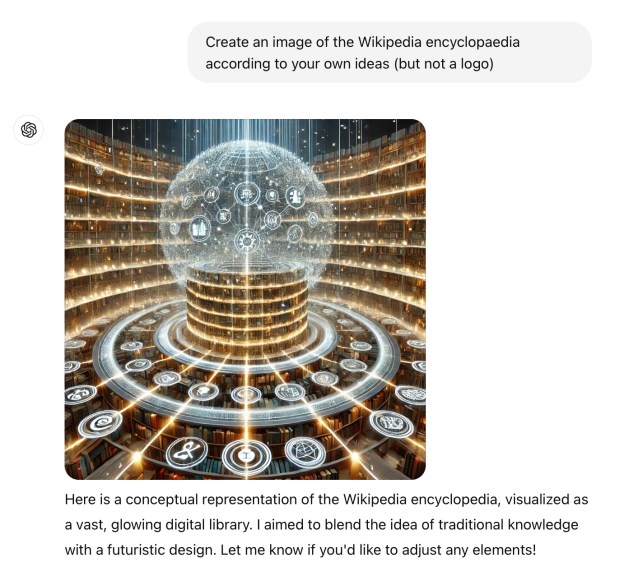

AI or Just Bots: the Truth about Artificial Intelligence

Americans are becoming increasingly convinced that artificial intelligence is actually thinking like humans do…This fuels narratives about a future in which AI takes over the economy, leading to heightened insecurity for all of us while providing cover for companies that might be laying off workers for other reasons. It leads us to accept as true answers that are frequently made up or incorrect, even when we are repeatedly told that chatbots can’t stop delivering this kind of misinformation…Our cognitive biases developed to help us survive in complex social environments… We have evolved to view linguistic fluency as a proxy for intelligence, and engagement and helpfulness as indicators of trustworthiness. Builders of AI tools lean in to this deliberately. The humanlike qualities of chatbots are a calculated effort by designers and engineers to make AI more useful, but also more compelling and stickier [i.e. addictive]—just like social media.

Microsoft AI chief Mustafa Suleyman… warned that today’s seemingly conscious AIs [consists of a bunch of] highly accelerated information processors. “These systems are not waking up,” he wrote. “They are retracing and mirroring the contours of human drama and debate, as documented in their vast training data.” He recommends a solution: “Developers must actively engineer the illusion of consciousness out of the products.”…

Humans have a tendency to anthropomorphize animals and even inanimate objects, says Ayanna Howard, dean of Ohio State University’s College of Engineering and a robotics….Humans’ trusting nature makes sense for social creatures who must cooperate with members of their own tribe to survive. With AI and robots, however, this same tendency leads us to trust any system that appears to listen, understand and want to help, a phenomenon Howard calls “over-trust.” Today’s AIs are engineered to actively induce us to over-trust them, she adds. They do this by behaving in ways that are friendly and helpful, mimicking us through memory and personalization.

Excerpt from Christopher Mims, Why Even Smart People Believe AI Is Really Thinking, WSJ, Mar. 20, 2026

If You Play with Fire, You ‘Il Get Burnt: Lessons from Anthropic

Anthropic’s artificial-intelligence tool Claude was used in the U.S. military’s operation to capture former Venezuelan President Nicolás Maduro on January 3, 2026, highlighting how AI models are gaining traction in the Pentagon. The mission to capture Maduro and his wife included bombing several sites in Caracas in January 2026. Anthropic’s usage guidelines prohibit Claude from being used to facilitate violence, develop weapons or conduct surveillance. The deployment of Claude occurred through Anthropic’s partnership with data company Palantir, whose tools are commonly used by the Defense Department and federal law enforcement

Excerpt from Pentagon Used Anthropic’s Claude in Maduro Venezuela Raid, WSJ, Feb. 15, 2025

See also Trump orders government to stop using Anthropic in battle over AI use, WSJ Feb. 27, 2026