Tag Archives: fossil fuels clean up

Environmental Victories of 2024

End of Fossil Fuels? The year 2024 r saw some extraordinary breakthroughs for climate and nature. The UK closed its last coal-fired power plant in 2024….As countries aim to rapidly decarbonise their economies, many former fossil fuel power plants are proving to be promising sites for industrial-scale batteries.…Renewable energy sources are growing rapidly around the world. In the US, wind energy generation hit a record in April 2024, exceeding coal-fired generation….By the end of this decade, renewable energy sources are set to meet almost half of all electricity.  The lion’s share of this growth comes from just one country:

The rivers, mountains, waves and whales given legal personhood
Back in 2021, the Ecuadorian government issued a landmark ruling stating that mining in its Los Cedros cloud forest violated the rights of nature. Another ruling in Ecuador stated that pollution had violated the rights of the Machángara River that runs through the capital, Quito. Beyond Ecuador, a growing number of natural features and spaces were granted legal personhood in 2024. In New Zealand, the peaks of Egmont National Park – renamed Te Papakura o Taranaki – were recognised as ancestral mountains and jointly became a legal person, known as Te Kāhui Tupua.] In Brazil, part of the ocean was given legal personhood – with the coastal city of Linhares recognising its waves as living beings, granting them the right to existence, regeneration and restoration. Meanwhile, a new treaty formed by Pacific Indigenous leaders saw whales and dolphins officially recognised as “legal persons”.

New ocean protections for the Azores
The North Atlantic saw a new marine protected area (MPA) announced by the Azores. When established, it will be the largest in the region, spanning 30% of the sea around the Portuguese archipelago. Half of the 111,000 sq miles (287,000 sq km) protected area will be “fully protected”, with no fishing or other natural resource extraction, according to the initiative behind the MPA. The other half will be “highly protected”.
The area contains nine hydrothermal vents, 28 species of marine mammals and 560 species of fish, among many others. 

Deforestation in the Brazilian Amazon
dropped to a nine-year low in 2024, falling by more than 30% in the 12 months to July, 2024 according to data released by Brazil’s national space research institute, INPE. nt

The Altyn Dala Conservation Initiative saved the critically endangered in the Golden Steppe grassland from extinction. The project used careful, science-based monitoring, tagging and habitat protection and restoration to ensure the best recovery for the Saiga Antelope, which numbered just 20,000 in 2003. Today, 2.86 million of the antelope roam the Golden Steppe, and it has been moved from “critically endangered” to “near threatened” status on the International Union for Conservation of Nature’s Red List.

After a 100-year hiatus, salmon were spotted in Oregon’s Klamath River basin, following an historic dam removal further downstream in the California stretch of the Klamath. In August 2024, the final of four dams were removed – in what was America’s biggest dam removal project – following pressure from environmentalists and tribes.

Excerpts from Isabelle Gerretsen et al., Seven quiet breakthroughs for climate and nature in 2024 you might have missed, BBC, Dec. 16, 2024

Loving Oil in Any Way, Shape or Form — Damn Climate Change!

Many oil assets are ending up in the hands of private-equity (PE) firms. In the past two years alone these bought $60bn-worth of oil, gas and coal assets, through 500 transactions… Some have been multibillion-dollar deals, with giants such as Blackstone, Carlyle and KKR carving out huge oilfields, coal-fired power plants or gas grids from energy groups, miners and utilities. Many other deals, sealed by smaller rivals, get little publicity. This sits uncomfortably with the credo of many pension funds, universities and other investors in private funds, 1,485 of which, representing $39trn in assets, have pledged to divest fossil fuels. But few seem ready to leave juicy returns on the table.

As demand for oil and gas persists while dwindling investment in production limits supply, prices are rising again, boosting producers’ profits….And discounts imposed on “brown” assets by the stock market, linked to sustainability factors rather than financial… create even more pockets of opportunity…The Economist has looked at 8 PE firms that have closed fossil-fuel deals in 2020-2021 The investors in some of their latest energy-flavored vehicles include 53 pension funds, 23 universities and 32 foundations. Many are from America, such as Teacher Retirement System of Texas, the University of San Francisco and the Pritzker Traubert Foundation, but that is partly because more institutions based there disclose pe commitments. The list also features Britain’s West Yorkshire Pension Fund and China Life. Over time, some investors may decide to opt out of funding their portion of fossil-fuel deals.

But a third, yet more opaque class stands ready to step in: state-owned firms and sovereign funds operating in the shadows. Last month Saudi Aramco, the Kingdom’s national oil company, acquired a 30% stake in a refinery in Poland, and Somoil, an Angolan group, bought offshore oil assets from France’s Total. In 2020 Singapore’s GIC was part of the group that paid $10bn for a stake in an Emirati pipeline.

Excerpts from Who buys the dirty energy assets public companies no longer want?, Economist, Feb. 12, 2022

The Curious Case of Larry Fink, BlackRock: He Stays, They Go

Few private citizens wield more power in America today than Larry Fink, the chief executive of BlackRock in pushing companies to embrace climate-friendly policies, that has made him a lightning rod. The firm he runs manages some $10 trillion for pension funds, endowments, governments, companies and individuals, equal to more than 10% of the world’s gross domestic product in 2020. As steward for millions of investors, BlackRock wields vast shareholder voting power, which it uses either to back managements or to prod them in new directions.

Today, Mr. Fink is telling CEOs that companies must prepare for a scale back of fossil fuels, and that the private sector should work with governments to do so. He warns of the disruption climate change could cause both the economy and financial markets, but sees historic investment opportunity in the energy shift. It’s a point he has made to conferences in Davos, Venice, Riyadh and Glasgow over the past year. Mr. Fink’s power, combined with his advocacy on a hot-button issue, has made him a flashpoint for activists, politicians and unions, both those who think BlackRock isn’t doing enough and others who say it’s doing too much…

U.S. government officials have called on Mr. Fink to help them cope with crises—the pandemic-rattled financial markets in March 2020, and, during the 2008 financial meltdown. “Treasury Secretaries and finance ministers come and go,” said David Rubenstein, the co-founder of the private-equity firm Carlyle Group Inc. “They work for someone else who can fire them tomorrow and have to build what others want them to. When you are the CEO of the biggest asset manager, you don’t have to do that.”

Excerpts from Dawn Lim Follow, Larry Fink Wants to Save the World (and Make Money Doing It), Jan. 6, 2022

The Toxic Shadow of Abandoned Oil Infrastructure

Wearing blue hard hats, white hazmat suits and respirator masks, workers carted away bags of debris on a recent morning from a sprawling and now-defunct oil refinery once operated by Philadelphia Energy Solutions (PES). Other laborers ripped asbestos from the guts of an old boiler house, part of a massive demolition and redevelopment of the plant, which closed in 2019 after a series of explosions at the facility.

Plans call for the nearly 1,400-acre site to be transformed into a new commercial hub with warehousing and offices. All it will take is a decade, hundreds of millions of dollars, and confronting 150 years’ worth of industrial pollution, including buried rail cars and a poisonous stew of waste fuels poured onto the ground. A U.S. refinery cleanup of this size and scope has no known precedent, remediation experts said. It’s a glimpse of what lies ahead if the United States hopes to wean itself off fossil fuels and clean up the toxic legacy of oil, gas and coal.

President Joe Biden wants to bring the United States to net-zero greenhouse gas emissions by 2050 to fight climate change through a shift to clean-energy technologies, while reducing pollution in low-income and minority neighborhoods near industrial facilities. It’s a transition fraught with challenges. Among the biggest is what to do with the detritus left behind. The old PES plant is just one of approximately 135 oil refineries nationwide, to say nothing of the country’s countless gas stations, pipelines, storage hubs, drill pads and other graying energy infrastructure.

In Philadelphia, a private-sector company is taking the lead. Hilco Redevelopment Partners, a real estate firm that specializes in renovating old industrial properties, bought the PES refinery out of bankruptcy for $225.5 million in June…The full extent of the pollution won’t be understood for years. Also uncertain is the ability of the refinery’s previous owners to pay their share of the cleanup. The facility has had multiple owners over its lifetime and responsibility has been divided between them through business agreements and legal settlements.
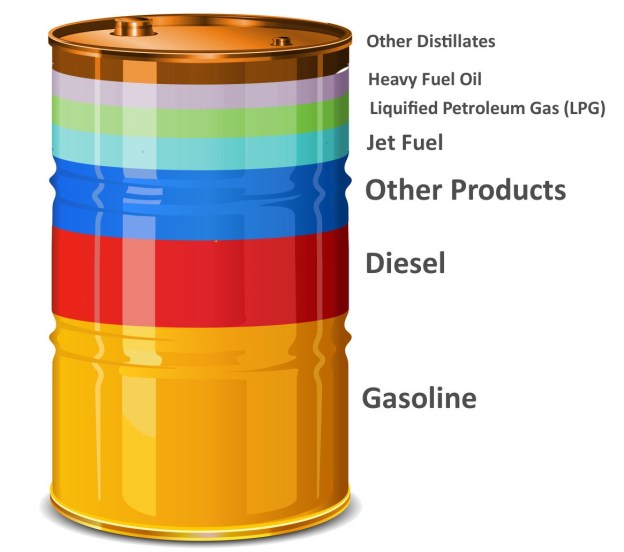
Oil refining at the Philadelphia site began in 1870, 100 years before the creation of the U.S. Environmental Protection Agency (EPA). Gasoline, once a worthless byproduct of heating oil, was routinely dumped by the refinery into the soil, according to historians and researchers. Leaks and accidents spewed more toxins. The June 2019 blasts alone released 676,000 pounds of hydrocarbons, PES said at the time. The Philadelphia site is not unique. About half of America’s 450,000 polluted former industrial and commercial sites are contaminated with petroleum, according to the EPA.

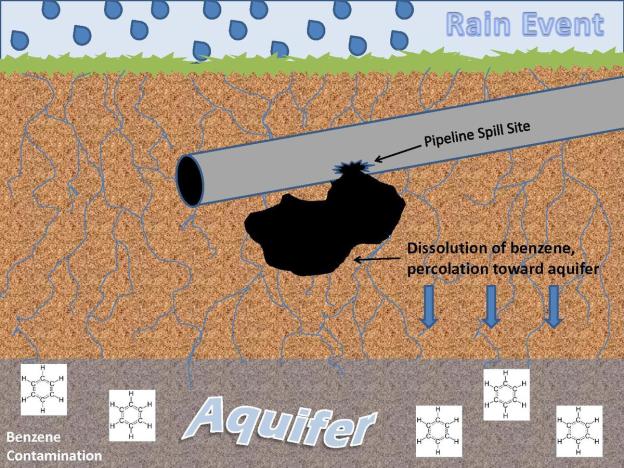
Cleanup in Philadelphia will be painstaking. After asbestos abatement comes the demolition and removal of 3,000 tanks and vessels, along with more than 100 buildings and other infrastructure, the company said. Then comes the ground itself. Hilco’s Perez said dirt quality varies widely on the site and will have to be handled differently depending on contamination levels. Clearing toxins like lead must be done with chemical rinses or other technologies…The site also has polluted groundwater and giant benzene pools lurking underneath, according to environmental reports Sunoco filed over the years with the federal and state governments.

Excerpts from Laila Kearney, 150 years of spills: Philadelphia refinery cleanup highlights toxic legacy of fossil fuels, Reuters, Feb. 16, 2021