Tag Archives: Iranian missiles

How the Houthis Blindsided the U.S. Forces

Even less-sophisticated adversaries can pose a serious threat to U.S. forces. And fatigue among overworked soldiers, sailors, aircrews and Marines can lead to costly mistakes. Trump launched Operation Rough Rider in March 2025 threatening the Houthis would be “annihilated” if they didn’t halt attacks on shipping in the vital Red Sea trade route. He poured forces into the region including two aircraft carriers, half a dozen B-2 bombers, a squadron of advanced F-35 fighters, and destroyers armed with guided missiles.

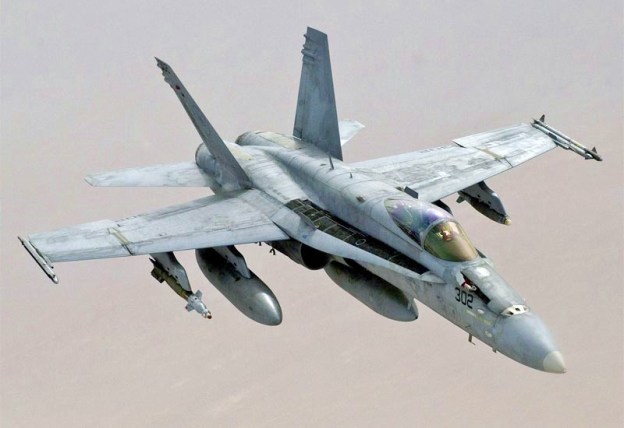
The Houthis proved resilient. In addition to nearly shooting down the two F-16s, they knocked more than a half-dozen Reaper drones out of the sky. A missile attack on the USS Harry S. Truman in April 2025 forced the carrier to make a hard turn that sent an F/A-18 rolling into the Red Sea. Another plane slid off the deck in May 2025 when its landing cable snapped, because sailors exhausted by weeks of combat likely left off a washer that held it in place.

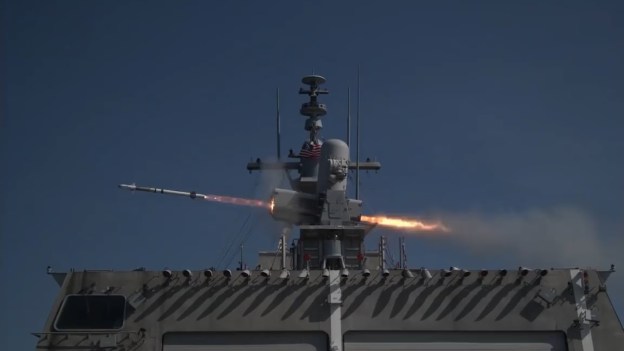
The U.S. force had a huge edge over the Houthis. Part of that was the “Wild Weasels,” the name for F-16 units…charged with suppressing enemy air defenses. They were equipped with HARM missiles that lock on to the signal from enemy radars to knock them out…But the Houthis had developed a network to track American warplanes with observers, optics and infrared sensors whose intricacy U.S. officials didn’t entirely understand. That enabled them to flick on their air-defense radars at the last moment, so U.S. pilots would have little time to react—a tactic pilots came to call a “SAMbush.”…

The Pentagon touted the accomplishments of its 53-day fight against the Houthis. The U.S. had hit more than 1,000 targets…but never decapitated the top Houthi leadership. The US operation didn’t defeat the Houthis or degrade them to the point where they are unable to carry out future attacks in the Red Sea.

Excerpt from Michael Gordon et al., F-16 Pilot’s Narrow Escape in Missile Attack Shows Risks of a New Mideast War, WSJ, Feb. 26, 2026

How to Kill Scientists and Get Away with It

When Israel’s attacks on Iran began before dawn on June 13, 2025 explosions shattered the homes of some of Iran’s top scientists… All nine were killed in near-simultaneous attacks to prevent them from going into hiding…The attack on the scientists was considered so fantastical by even its planners that it was called “Operation Narnia,” after the fictional C.S. Lewis series…A week after the June 13 attacks, Israel used a drone to kill another scientist who was being kept in what was supposed to be a safe house in Tehran. The person hasn’t been named…The deadly airstrikes were the first to target Iran’s nuclear scientists since 2020, when Mohsen Fakhrizadeh was gunned down with a remote-controlled weapon. Israel has never denied or confirmed its role in the deaths of five Iranian scientists between 2010 and 2020.

Among the most important targets was Fereydoon Abbasi-Devani, the former head of the Atomic Agency of Iran and one of the founders of Iran’s nuclear weapons-related work…Another killed scientist was Mohammad Mehdi Teranchi, who led a unit under Fakhrizadeh focusing on high explosives, which are needed to detonate a nuclear weapon…

Iran has used universities like Shahid Beheshti, the Sharif University of Technology and Malek Ashtar University to keep alive its nuclear-weapons expertise over the past two decades….At these universities, Iran often matches up its nuclear scientists on experiments and other studies with younger students. Two of the scientists killed on June 13, Ahmadreza Zolfaghari and Abdulhamid Minouchehr, published an article in the Annals of Nuclear Energy in June 2024 that used advanced computer modeling to show how neutron sources behave in a chain reaction. That information can be used for civilian purposes, like building a nuclear reactor, or to help trigger a chain reaction in a nuclear weapon. 

Excerpt from Laurence Norman, How Israel Killed Iran’s Top Nuclear Scientists, WSJ, June 29, 2025

The Unintentional Making of a Global Power: Iran

In 2024, Iran, under Supreme Leader Ali Khamenei’s leadership, thwarted decades of U.S. pressure and emerged from years of isolation largely by aligning itself with Russia and China…Iran’s economy remains battered by U.S. sanctions, but oil sales to China and weapons deals with Russia have offered financial and diplomatic lifelines…Today, Tehran poses a greater threat to American allies and interests in the Middle East than at any point since the Islamic Republic was founded in 1979. 

Iran’s military footprint reaches wider and deeper than ever. Iranian-backed armed groups have hit Saudi oil facilities with missiles and paralyzed global shipping in the Red Sea. They have dominated politics in Iraq, Lebanon, Yemen and Syria, and launched the most devastating strike on Israel in decades, when Hamas attacked in October. Iran launched its first direct military attack from its soil on Israel in April 2024. It has also orchestrated attacks on opponents in Europe and beyond, Western officials say. 

“In many respects, Iran is stronger, more influential, more dangerous, more threatening than it was 45 years ago,” said Suzanne Maloney, director of the foreign-policy program at the Brookings Institution, who advised Democratic and Republican administrations on Iran policy. 

U.S. policy has at times unintentionally contributed to Iran’s strength. The 2003 toppling of Saddam Hussein removed a sworn enemy from Iran’s borders. Washington’s failure to stabilize postwar Iraq bolstered Tehran’s influence…

Excerpts from Sune Engel Rasmussen and Laurence Norman, How Iran Defied the U.S. to Become an International Power, WSJ, July 2, 2024

Drone Missile Defense

The best time to shoot down a hostile missile is straight after take-off. During this initial “boost phase” it moves more slowly, is easier to spot (because its exhaust plumes are so hot) and presents a bigger target (having not yet ditched its first-stage fuel tanks). A bonus is that the debris may come crashing down on the country that launched it—your enemy—rather than you. But the main advantage of “boost-phase missile defence” is that your military does not have to deal with decoys.   A missile that has breached the atmosphere and begun its midcourse glide can throw off lots of decoys. In the vacuum of space, tinfoil balloons, or clouds of aluminium strips known as chaff, will keep pace with the missile that released them. Not even the American military can distinguish sophisticated decoys from a warhead (though it might manage with crude ones designed by Iran or North Korea, say).

The downside, though, [of a boost-phase missile defense] is that requires speed. Interceptors (anti-missile missiles) fired from sea or land will probably be too late. Ronald Reagan’s proposed solution was “Star Wars”: armed satellites orbiting above hostile nations’ launchpads. It cost a packet, didn’t work and was scrapped in the 1990s. But some experts say the moment has arrived for a sequel: high-altitude drones. North Korea’s arsenal of ballistic missiles could probably be countered if as few as three drones were suitably stationed at all times, says Dale Tietz, a former Star Wars analyst. An American Global Hawk drone, which can fly uninterrupted for 30 hours, held 18km above nearby international waters could probably carry several interceptors fast enough to shoot down missiles heading north towards America, he says. It could be alerted to launches by infrared-sensing satellites already in orbit.

Protecting Israel and Europe from Iranian missiles would be harder. Iran is bigger than North Korea, so interceptors would need to be faster (and therefore larger) to reach deep inside its territory. The Pentagon has started to research drone-missile defence, but should be spending more, says David Trachtenberg, a former deputy assistant defence secretary, because the payoff could be “tremendous”. Such an approach would fail against really big countries like China and Russia (which in any case can launch missiles from undetectable submarines). In one sense this is a plus: what does not work against a country cannot antagonise it. Congress would oppose any system that would spur an arms race, says Kingston Reif of the Centre for Arms Control and Non-Proliferation, a think-tank.

Supporters of drone-missile defence note that America’s existing system, which aims to shoot down hostile intercontinental ballistic missiles with interceptors fired from Alaska and California, has failed every big test since 2008. Sceptics retort that although American drones are stealthy—dozens went undetected over Pakistan during the hunt for Osama bin Laden—better radar and anti-aircraft batteries could render them vulnerable or force them to patrol too far from their intended targets. If North Korea were to develop faster missiles this problem would be compounded, says David Montague, a former head of the missiles division at Lockheed (now Lockheed Martin), a defence firm.

Two years ago a report by the National Research Council advised the Pentagon to give up the attempt to design a boost-phase missile system. The challenge of keeping interceptors close enough to enemy launchpads is “pretty much insurmountable”, says Mr Montague, who was one of the authors. Which camp will prevail is not yet clear. But if the current system fails its next test, probably this summer, the debate will heat up further.

Missile defence: Star Wars 2: attack of the drones, Economist,  May 17, 2014, at 29