Tag Archives: military-industrial complex

Which Tech Companies Work for the Military? All

Companies including Nokia, Dell, and Oracle are eager to apply decades of experience in civilian technology to the rapidly evolving battlefield. Drones, bodycams and digital sensors now stream real-time intelligence in volumes no human can digest. Military headquarters are crunching through that using artificial intelligence and pumping back to troops situational updates, tactical guidance and battle plans, constantly updated on computer screens and hand-held devices.  “We understand that the future weapon is data,” said Giorgi Tskhakaia, an adviser to Ukraine’s minister of digital transformation 

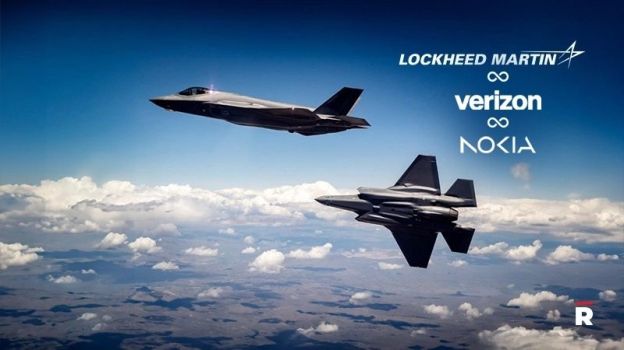
The first step is connectivity….Nokia is packaging 5G technology for ultra-secure use on battlefields and in national-security applications. It has developed backpacks with small 5G nodes and vehicle-based systems that can handle up to 1,000 users for a sort of tactical communications bubble. In 2025, it announced partnerships with military-equipment giants Lockheed Martin and Rheinmetall to integrate 5G communications into their systems.

Ericsson, the West’s only other maker of 5G networks and a producer of military radios going back to World War II, is also pushing into digital defense applications.

NATO is now working to adopt 5G as a military-communications standard across its 32 members. Alliance experts say the volume of military data is so great that 5G is best for transmission because the standard has at least 10 times the data capacity of earlier systems. It is also much more resilient against jamming

The second step is the extraction of data….Ukraine has spent three years developing AI systems to churn through all it collects… The Pentagon in 2017 launched a significant effort to adopt AI, Project Maven, tapping machine learning to digest mountains of data. Google’s role in the work sparked employee protests at the time…

Oracle, like many of its rivals, is no stranger to working with governments and militaries. The company began in 1977 out of a Central Intelligence Agency program—Project Oracle. But for decades it focused on corporate customers. Now, it and other cloud providers including Google, Amazon.com and IBM are applying to government and national-security work many lessons from their fierce commercial competition to move and process data fastest.

The final step in exploiting battlefield data is delivering it to fighters via gear that can handle combat conditions. Screens are proliferating on the battlefield, just as they did in offices and homes several decades ago, but warfare puts demands on equipment unlike any other environment…One Dell laptop is built to Pentagon standards for resistance to shocks, dust, sand, water and “explosive atmosphere,” meaning it won’t ignite flammable vapor. It can handle temperatures between minus 20 degrees and 145 degrees Fahrenheit.

Excerpt from Daniel Michaels, That 1990s Tech Brand? Its New Gig Is in Battlefield Data, WSJ, Sept. 9, 2025
What does Silicon Valley and the Israeli Army have In Common

Members of Unit 8200 of the Israeli Army, known for its advanced cybersecurity and cyberwarfare capabilities, have founded dozens of cybersecurity companies in the United States. Others have become influential venture capitalists in their own rights and are mentors to entrepreneurial graduates.  There are at least five tech companies started by Unit 8200 alumni publicly traded in the U.S., together worth around $160 billion. Private companies started by ex-8200 soldiers are worth billions more.  The largest, cloud-security company Wiz, in July 2024 came close to signing a $23 billion deal to be bought by Google. It would have been Google’s biggest acquisition ever. After the talks fell apart, Wiz Chief Executive and 8200 veteran Assaf Rappaport told employees he wants to hit $1 billion in revenue before planning a public-market listing. 

Wiz and the 8200 alumni are targeting a massive business problem—how to keep big companies secure—with skills and an intensity they learned from their time in the military. They and the companies they’ve built have become hot commodities as more industries move huge amounts of business documents to the cloud—which is constantly under attack from opportunistic hackers. While Unit 8200 alumni once talked about their service in hushed tones, they now tout it in press releases to attract clients and investment money for their startups.

Palo Alto Networks, the biggest publicly traded cybersecurity company, and itself a product of the 8200 pipeline, has purchased several companies led by alumni of the unit in recent years. Greylock Partners and Sequoia Capital, two of Silicon Valley’s most storied venture-capital firms, have recently hired Israel-based partners…

Elsewhere, alumni of other Israeli military units founded cybersecurity company NSO Group. It created software called Pegasus, which has been used by governments to access the devices of journalists and embassy workers, according to the U.S. Department of Commerce. The department put NSO Group on an export prohibition list three years ago, a decision its executives are working to reverse. This means exports from the U.S. to the company of both hardware and software will be blocked, unless the Commerce Department grants a license for a transaction.  

Excerpt from Miles Kruppa and Alex Perry, Silicon Valley in Love with Israeli Army, WSJ, Aug. 31, 2024

Who is Ready for War with China in 2027: Venture Capitalists

Anduril Industries—named after a magical sword from J.R.R. Tolkien’s “Lord of the Rings” novels—is central to Silicon Valley’s quest to take on weapons makers like Lockheed Martin and Northrop Grumman. Since its founding in 2017, Anduril has raised $3.7 billion in venture funding, incl The newcomers’ hope is that the Pentagon will eventually kill off what Luckey, the CEO of Anduril, calls “old legacy zombie programs,” like expensive jet fighters and attack helicopters, and instead buy autonomous weapons, like drones and uncrewed submarines. The U.S. military, Luckey and others say, needs large numbers of cheaper and more intelligent systems that can be effective over long stretches of ocean and against a manufacturing and technological power like China. 

Many teams inside Anduril are building only weapons that can be completed by 2027—the year Chinese President Xi Jinping has said his country should be prepared to invade Taiwan. The fictional sword for which Anduril is named is also called the “Flame of the West.” For decades, the U.S. government funded defense companies, like Lockheed Martin, to develop new weapons, ranging from stealth aircraft to spy satellites. But as the private-sector money available for research and development has outstripped federal-government spending, particularly in areas like AI, a new cohort of defense startups is using private capital to develop technology for the Pentagon. The amount of private capital flowing into the venture-backed defense-tech industry has ballooned, with investors spending at least 70% more on the sector each of the past three years than any prior year. From 2021 through mid-June 2024, venture capitalists invested a total of $130 billion in defense-tech startups, according to data firm PitchBook. The Pentagon spends about $90 billion on R&D annually.

The Pentagon is credited with helping to create Silicon Valley by plowing money into tech companies in the 1950s and ’60s, investing in electronics and buying microchips used in nuclear-missile guidance systems, satellites, and computers. That investment, says Paul Bracken, an emeritus professor of management and political science at Yale University, led the Defense Department to become, in effect, the “mother of all venture-capital firms.

Excerpt from Sharon Weinberger, Tech Bros Are Betting They Can Help Win a War With China, WSJ, Aug. 9, 2024

From Human Bones to Food: Another Soylent Green

A new book “Bones of Contention: The Industrial Exploitation of Human Bones in the Modern Age” argues that in the19th century human bones became a sought-after raw commodity. Scientists had just discovered its usefulness of human bones for agriculture as a source of phosphates for fertilizers and for the sugar industry, the use of bone char for beet sugar processing.

The high demand for these ingredients had one major unexpected consequence: the plundering of cemeteries and battlefields …in Britain, France, Belgium, Germany, Austria, Algeria and the United States. When countries out of bones in Europe, they turned to their colonies. The French plundered cemeteries in Algeria and shipped the bones to sugar factories in Marseilles. The British imported mummies and bones from Egypt on an industrial scale…

On Soylent Green, see Wikipedia

Excerpts from Science, Why Europe’s Battlefield Bones Are Missing?, Science, Apr.5, 2024

Guess Who Benefits from the Russo-Ukrainian War?

In the two years since Russia invaded Ukraine, the U.S. defense industry has experienced a boom in orders for weapons and munitions. Business is coming from European allies trying to build out their military capabilities as well as from the Pentagon, which is both buying new equipment from defense manufacturers and replenishing military stocks depleted by deliveries to Ukraine. Industrial production in the U.S. defense and space sector has increased 17.5% since Russia launched its full-scale invasion of Ukraine two years ago, according to Federal Reserve data.  Biden administration officials say that of the $60.7 billion earmarked for Ukraine in a $95 billion supplemental defense bill, 64% will actually flow back to the U.S. defense industrial base.  Recent spending by European governments on U.S. jet fighters and other military hardware represents “a generational-type investment. The past few years are equal to the prior 20 years,” said Myles Walton, a military industry analyst at Wolfe Research….Poland has placed orders worth about $30 billion for Apache helicopters, High Mobility Artillery Rocket Systems, or Himars, M1A1 Abrams tanks and other hardware, the department said. Germany spent $8.5 billion on Chinook helicopters and related equipment, while the Czech Republic bought $5.6 billion of F-35 jets and munitions.

The boost to the U.S. defense industry is just one way the fragmentation of the world economy along geopolitical lines is tightening U.S.-European relations, often to the benefit of the U.S. The U.S. became the world’s largest LNG exporter in 2023, and its LNG exports are expected to almost double by 2030 on already-approved projects. Around two-thirds of those exports go to Europe….

 The Ukraine war served as a warning for American defense strategists, said Cynthia Cook, a defense industry expert at the Center for Strategic and International Studies, a Washington-based think tank. “What Russia’s war pointed out relatively quickly is the constraints in the U.S. defense industrial base especially in terms of surging production rapidly. The good news is that this lesson has been learned when the U.S. is not directly at war.”

Excerpts from Tom Fairless, How War in Europe Boosts the U.S. Economy, WSJ, Feb. 20, 2024

The Military Internet: DARPA, Amazon and Space X

Satellites are crucial military infrastructure for spying and communications. They are also vulnerable to attack and disruption. In November 2021, three months before it invaded Ukraine, Russia fired a missile into a defunct satellite. Then, in October, a Russian diplomat declared even commercial satellites could be legitimate targets. Satellite systems used by Ukraine have been hacked and jammed. Ground antennae have been attacked.

In light of this sort of thing, America’s military establishment is worried that its satellite network is not up to snuff. But it has a plan. The Space-Based Adaptive Communications Node (Space-BACN, or “Space Bacon”) will, if successful, create a laser-enabled military internet in orbit around Earth by piggybacking on a number of satellites that would have been launched anyway.

Space Bacon is a brainchild of DARPA, the special-projects research arm of the Department of Defense, and is an intriguing orbiting echo of the original, terrestrial ARPNET, which evolved into the internet…The plan is to fit as many newly launched satellites as possibly with laser transceivers that will be able to communicate with counterparts as far away as 5,000km. Satellite owners will pay for these transceivers, but will then receive payments from the American government for their use.

Space Bacon promises many benefits. Unlike radio, the normal mode of communication with and between satellites, transmissions by laser beam are hard to intercept and almost impossible to jam. Indeed, adversaries might not even know when a transmission is taking place, a bonus for operational secrecy.

DARPA wants Space Bacon to cost a maximum of $100,000 a satellite, the better to encourage participation. It bodes well that Amazon, SpaceX and Viasat are all designing command-and-control architectures for Space Bacon.

Excerpts from DARPA, lasers and an internet in orbit, Economist, Feb. 11, 2023

Unbeatable Fusion: Big Tech and US Armed Forces

Big tech equips the armed forces and United States law enforcement with cloud storage, databases, app support, admin tools and logistics. Now it is moving closer to the battlefield. Alphabet, Amazon, Microsoft and Oracle are expected to divvy up the $9bn five-year contract to operate the Pentagon’s Joint Warfighting Cloud Capability (JWCC). In 2021 Microsoft was awarded a $22bn contract to supply its HoloLens augmented-reality headset to simulate battles for army training for up to ten years. It is also helping develop the air force’s battle-management system, which aims to integrate data sources from across the battlefield. In June 2022 Alphabet launched a new unit, Google Public Sector, which will compete for the DOD’s battle-networks contracts. In a departure from Google’s earlier wariness of the Pentagon, its cloud chief, Thomas Kurian, has insisted: “We wouldn’t be working on a programme like JWCC purely to do back-office work.”

Except from  Defense Technology: Can Tech Reshape the Pentagon, Economist, Aug. 13, 2022

A Perpetual State of Competition: US-China-Russia

The US Secretary of Defense stated in September 2020 that America’s air, space and cyber warriors “will be at the forefront of tomorrow’s high-end fight.” That means confronting near-peer competitors China and Russia. That means shifting the focus from defeating violent extremist groups to deterring great power competitors. It means fighting a high-intensity battle that combines all domains of warfare. “In this era of great power competition, we cannot take for granted the United States’ long-held advantages,” Esper said. 

The last time an enemy force dropped a bomb on American troops was in the Korean War. “China and Russia, seek to erode our longstanding dominance in air power through long-range fires, anti-access/area-denial systems and other asymmetric capabilities designed to counter our strengths,” he said. “Meanwhile, in space, Moscow and Beijing have turned a once peaceful arena into a warfighting domain.” China and Russia have placed weapons on satellites and are developing directed energy weapons to exploit U.S. systems “and chip away at our military advantage,” he said.

Russia, China, North Korea, Iran and some violent extremist groups also look to exploit cyberspace to undermine U.S. security without confronting American conventional overmatch. “They do this all in an increasingly ‘gray zone’ of engagement that keeps us in a perpetual state of competition,’ the secretary said…The fiscal 2020 Defense Department research and development budget is the largest in history, he said, and it concentrates on critical technologies such as hypersonic weapons, directed energy and autonomous systems. 

“In the Air Force, specifically, we are modernizing our force for the 21st century with aircraft such as the B-21, the X-37 and the Next Generation Air Dominance platform,” Esper said. “Equally important, we are transforming the way we fight through the implementation of novel concepts such as Dynamic Force Employment, which provides scalable options to employ the joint force while preserving our capabilities for major combat.”

To realize the full potential of new concepts the department must be able to exchange and synchronize information across systems, services and platforms, seamlessly across all domains, he said. “The Department of the Air Force is leading on this front with the advancement of Joint All-Domain Command and Control,” Esper said.  This concept is part of the development of a Joint Warfighting concept that will drive transition to all-domain operations, he said. “

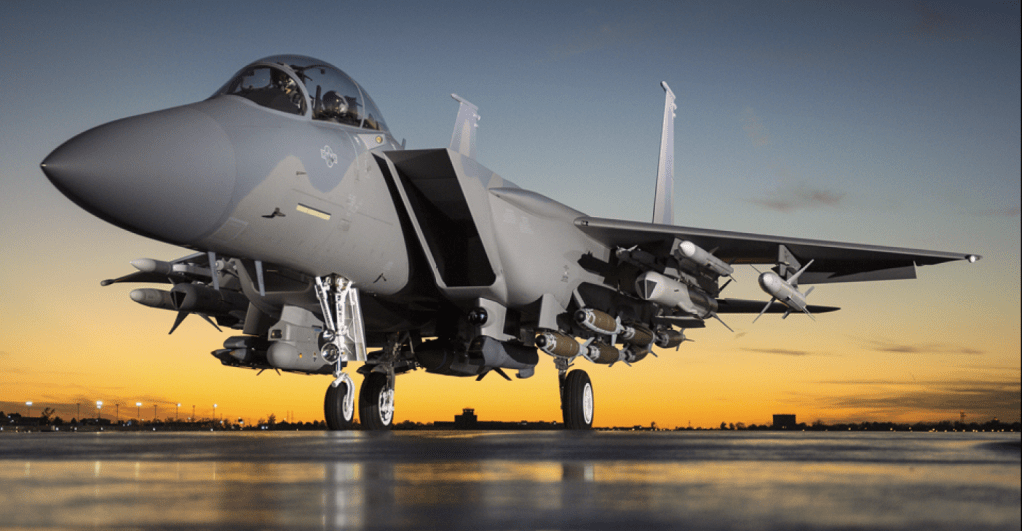
For these breakthroughs to succeed in any future conflict … we must maintain superiority in the ultimate high ground — space,” Esper said…In collaboration with academia and industry, the Air Force’s AI Accelerator program is able to rapidly prototype cutting-edge innovation,” Esper said. One example of this was the AI technology used to speed-up the development of  F-15EX.


F-15EX

Excerpts from Esper: Air Force, Space Force Leading Charge to New Technologies, DOD News, Sept. 16, 2020

Boeing Africanizes its Weapons

Boeing airliners are well known and operated in almost every country of the world, Boeing are more selective as to whom they sell their military products. Up to now, the African activities of Boeing Defence, Space & Security have been restricted to North Africa.This, however, is about to change. Whilst the Middle East and Asia-Pacific are trending, Chris Chadwick, President of Boeing Military Aircraft, has seen an emerging set of needs coming out of Africa, including sub-Sahara countries..“We are looking at ways to Africanise Boeing products,” said Paul Oliver, Vice President, Middle East & Africa. An example would be an AH-6i with certain systems deleted and integrated with local weapons…

Egypt is already a large-scale Boeing military aircraft customer, operating both the CH-47 Chinook and the AH-64 Apache in large numbers. Despite the recent US suspension of some foreign military assistance to Egypt, Boeing is committed to supporting equipment in Egypt.

There are other North African customers that Boeing won’t mention, but Morocco has Boeing weapons integrated onto their F-16s and has ordered additional CH-47s for delivery in 2016….Algeria in particular is interested in acquiring Boeing’s C-17 and evaluated the aircraft earlier this year. The North African country has also expressed interest in transport helicopters and intelligence, surveillance and reconnaissance (ISR) aircraft.

Excerpts, Dean Wingrin, Boeing sows seeds for African growth, DefenceWeb, Nov. 27, 2013