Tag Archives: artificial intelligence and dams Amazon

AI Eats Up Crazy Amounts of Electricity

Global demand for AI is ramping up rapidly. Electricity demand from data centers worldwide is set to more than double by 2030 to about 945 terawatt-hours, which is more than Japan’s total electricity consumption, according to the International Energy Agency. “A single AI-focused data center can use as much electricity as a small city and as much water as a large neighborhood,” according to the Union of Concerned Scientists….A data center that fuels AI can consume as much electricity as 100,000 households, but the largest ones that haven’t been completed yet could consume 20 times as much. It’s a particular problem in the U.S., with data centers making up nearly half of its electricity demand growth over the next five years, according to the IEA.

There’s also been heightened concern recently about the amount of water that is required to cool electrical equipment in data centers. Just a few weeks ago, French company Mistral AI released a report detailing the environmental footprint of training its language model Mistral Large 2, including the amount of water it consumes. The water consumption from generating one page of text is 0.05 liter, enough to grow a small radish, the report says…

Excerpt from Clara Hudson, Google Wants You to Know the Environmental Cost of Quizzing Its AI. WSJ, Aug. 21, 2025

The Quick and Dirty AI Boom

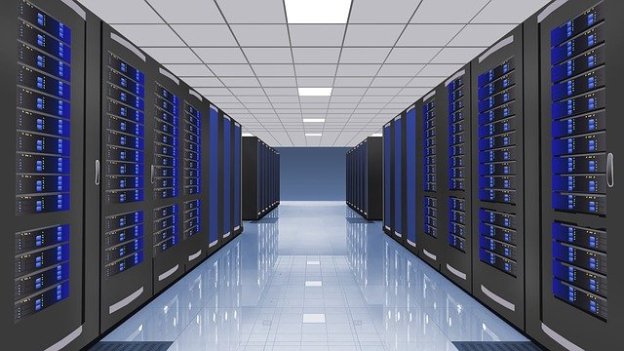
Nowhere else on Earth has been physically reshaped by artificial intelligence as quickly as the Malaysian state of Johor. Three years ago, this region next to Singapore was a tech-industry backwater. Palm-oil plantations dotted the wetlands. Now rising next to those tropical trees 100 miles from the equator are cavernous rectangular buildings that, all together, make up one of the world’s biggest AI construction projects…

TikTok’s Chinese parent company, ByteDance, is spending $350 million on data centers in Johor. Microsoft just bought a 123-acre plot not far away for $95 million. Asset manager Blackstone recently paid $16 billion to buy AirTrunk, a data-center operator with Asia-wide locations including a Johor facility spanning an area the size of 19 football fields. Oracle last week announced a $6.5 billion investment in Malaysia’s data-center sector, though it didn’t specify where. In all, investments in data centers in Johor, which can be used for both AI and more conventional cloud computing, will reach $3.8 billion this year, estimates regional bank Maybank.

To understand how one of the first boomtowns of the AI era sprouted at the southern tip of the Malay Peninsula, consider the infrastructure behind AI. Tech giants want to train chatbots, driverless cars and other AI technology as quickly as possible. They do so in data centers with thousands of computer chips, which require a lot of power, as well as water for cooling…Northern Virginia became the world’s biggest data-center market because of available power, water and land. But supply is running low. Tech companies can’t build data centers fast enough in the U.S. alone. Enter Johor. It has plentiful land and power—largely from coal—and enough water. Malaysia enjoys generally friendly relations with the U.S. and China, reducing political risk for companies from the rival nations. The other important factor: location. Across the border is Singapore, which has one of the world’s densest intersections of undersea internet cables. Those are modern-age highways, enabling tech companies to sling mountains of data around the world.

Excerpt from Stu Woo, One of the Biggest AI Boomtowns Is Rising in a Tech-Industry Backwater, WSJ, Oct.  8, 2024

How Artificial Intelligence Can Help Produce Better Chemical Weapons

An international security conference convened by the Swiss Federal Institute for NBC (nuclear, biological and chemical) Protection —Spiez Laboratory explored how artificial intelligence (AI) technologies for drug discovery could be misused for de novo design of biochemical weapons.  According to the researchers, discussion of societal impacts of AI has principally focused on aspects such as safety, privacy, discrimination and potential criminal misuse, but not on national and international security. When we think of drug discovery, we normally do not consider technology misuse potential. We are not trained to consider it, and it is not even required for machine learning research.

According to the scientists, this should serve as a wake-up call for our colleagues in the ‘AI in drug discovery’ community. Although some expertise in chemistry or toxicology is still required to generate toxic substances or biological agents that can cause significant harm, when these fields intersect with machine learning models, where all you need is the ability to code and to understand the output of the models themselves, they dramatically lower technical thresholds. Open-source machine learning software is the primary route for learning and creating new models like ours, and toxicity datasets that provide a baseline model for predictions for a range of targets related to human health are readily available.

The genie is out of the medicine bottle when it comes to repurposing our machine learning. We must now ask: what are the implications? Our own commercial tools, as well as open-source software tools and many datasets that populate public databases, are available with no oversight. If the threat of harm, or actual harm, occurs with ties back to machine learning, what impact will this have on how this technology is perceived? Will hype in the press on AI-designed drugs suddenly flip to concern about AI-designed toxins, public shaming and decreased investment in these technologies? As a field, we should open a conversation on this topic. The reputational risk is substantial: it only takes one bad apple, such as an adversarial state or other actor looking for a technological edge, to cause actual harm by taking what we have vaguely described to the next logical step. How do we prevent this? Can we lock away all the tools and throw away the key? Do we monitor software downloads or restrict sales to certain groups?

Excerpts from Fabio Urbina et al, Dual use of artificial-intelligence-powered drug discovery, Nature Machine Intelligence (2022)

Robots to the Rescue: Best Dams on Amazon River

Proposed hydropower dams at more than 350 sites throughout the Amazon require strategic evaluation of trade-offs between the production electricity and the protection of biodiversity. 

Researchers are using artificial intelligence (AI) to identify sites that simultaneously minimize impacts on river flow, river connectivity, sediment transport, fish diversity, and greenhouse gas emissions while achieving energy production goals. The researchers found that uncoordinated, dam-by-dam hydropower expansion has resulted in forgone environmental benefits from the river. Minimizing further damage from hydropower development requires considering diverse environmental impacts across the entire basin, as well as cooperation among Amazonian nations. 

Alexander Flecker et al., Reducing adverse impacts of Amazon hydropower expansion, Science, Feb. 17, 2022