Tag Archives: battery minerals

Who is Afraid of China? the United States Army

China plans to ease the flow of rare earths and other restricted materials to the U.S. by designing a system that will exclude companies with ties to the U.S. military while fast-tracking export approvals for other firms…The “validated end-user” system, or VEU, would enable Chinese leader Xi Jinping to follow through on a pledge to President Trump to facilitate the export of such materials while ensuring that they don’t end up with U.S. military suppliers, a core concern for China…  The VEU mechanism that Beijing is considering is modeled on U.S. laws and procedures, as is much of Beijing’s export-control architecture.

Under the American version of the VEU system, which has been active since 2007, certain Chinese companies are cleared to buy sensitive goods under a general authorization—essentially a simplified export-approval mechanism—instead of needing individual licenses for each purchase. This makes it easier to import controlled goods such as chemicals or chip-making equipment, but requires companies to put up with U.S. government inspections of their facilities, among other steps, to verify compliance with the program…

Companies in the U.S. and Europe have complained of reduced access to rare-earth magnets from China. Though China has periodically agreed to relax magnet restrictions, Chinese rare-earth magnet exports to the U.S. declined 29% in September 2025 from the month before

Excerpt from Jon Emont et al, China Hatches Plan to Keep U.S. Military From Getting Its Rare-Earth Magnets, WSJ, Nov. 10, 20215

The Environmental Harm Caused by the Energy Transition

In the electric-vehicle business, the quandary is known as the nickel pickle. To make batteries for EVs, companies need to mine and refine large amounts of nickel. The process of getting the mineral out of the ground and turning it into battery-ready substances, though, is particularly environmentally unfriendly. Reaching the nickel means cutting down swaths of rainforest. Refining it is a carbon-intensive process that involves extreme heat and high pressure, producing waste slurry that’s hard to dispose of. The nickel issue reflects a larger contradiction within the EV industry: Though electric vehicles are designed to be less damaging to the environment in the long term than conventional cars, the process of building them carries substantial environmental harm.

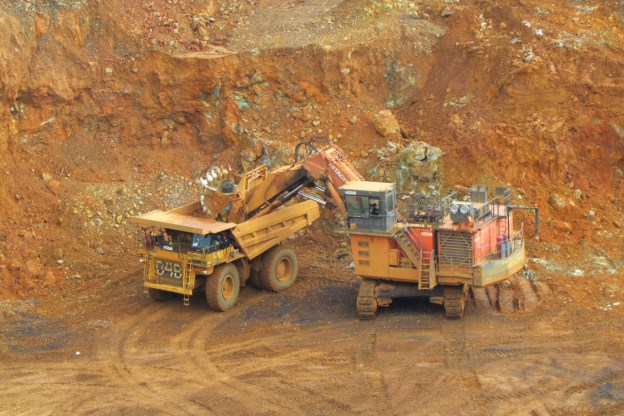
The challenge is playing out across Indonesia’s mineral-rich islands, by far the world’s largest source of nickel. These deposits aren’t deep underground but lie close to the surface, under stretches of overlapping forests. Getting to the nickel is easy and inexpensive, but only after the forests are cleared.  One Indonesian mine, known as Hengjaya, obtained permits five years ago to expand its operations into a forested area nearly three times the size of New York City’s Central Park. The mine’s Australian owner, Nickel Industries, said that rainforest clearing in 2021 caused greenhouse gas emissions equivalent to 56,000 tons of carbon-dioxide. That’s roughly equal to driving 12,000 conventional cars for a year, according to calculations by The Wall Street Journal based on U.S. Environmental Protection Agency data. “Unfortunately, land clearing is required for all open-cast mining processes, including our operations,” said the firm’s sustainability manager…. The negative impact is offset, he said, by nickel’s use in environmentally friendly batteries…Auto executives worried about having enough nickel to meet rapidly growing demand for EVs. They had moved away from cobalt, another battery component, after human-rights groups and journalists reported on widespread child labor in cobalt operations and dangerous conditions faced by miners in the Democratic Republic of Congo. Automakers tweaked their batteries to reduce cobalt by adding more nickel…

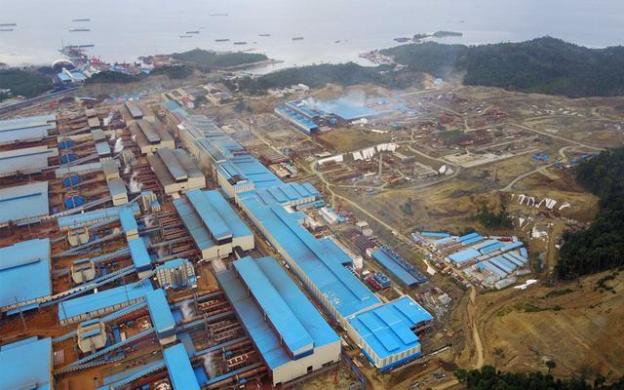
The nickel rush has created pressing new environmental concerns. The HPAL process used to process nickel pioneered by Chinese companies involves dousing nickel ore in sulfuric acid and heating it to more than 400 degrees Fahrenheit at enormous pressures. Producing nickel this way is nearly twice as carbon-intensive as mining and processing sulfide nickel found in Canada and Russia. Another way of processing laterite ore that often uses coal-powered furnaces is six times as carbon-intensive, according to the International Energy Agency. Companies also face questions about how to get rid of the processing waste. It is difficult to safely sequester in tropical countries because frequent earthquakes and heavy rains destabilize soil, which can cause waste dams to collapse. A 2018 Indonesian law allowed companies to obtain permits to discard mineral processing waste into the ocean….

China’s domination of Indonesian nickel processing poses risks for Western electric-vehicle companies at a time of fraying relations between Washington and Beijing. Last year, the U.S. government declared nickel a critical mineral whose supply is vulnerable to disruption, with very limited nickel production operations in the U.S.

Excerpts from Jon Emont, EV Makers Confront the ‘Nickel Pickle’, WSJ, June 5, 2023

Economic Consequences of Falling Asleep on Wheel: the Geopolitics of Energy Transition

American officials see Africa as helping to solve two problems. The first is a global shortfall in the minerals that will be needed if the world is to meet its climate goals.The second problem, at least for the West, is China’s outsized influence on supply chains. China refines 68% of the world’s nickel, 40% of copper, 59% of lithium and 73% of cobalt, according to a report in July by the Brookings Institution, an American think-tank. “China has had free rein for 15 years while the rest of the world was sleeping,” says Brian Menell, chief executive of TechMet, a minerals firm.

America views cobalt, which is used in batteries, as a cautionary tale. In Congo, the source of about 70% of global production, Chinese entities owned or had stakes in 15 of 19 cobalt-producing mines as of 2020. America’s decision to allow a US firm to sell one of Congo’s largest copper-cobalt mines to a Chinese one in 2020 is seen in Washington as an enormous act of stupidity. It is little comfort that battery-makers are trying to use less cobalt, in part because of concerns about operating in Congo. “We cannot allow China to become an OPEC of one in critical minerals,” says an American official, referring to the oil cartel.

It is possible to identify three strands in America’s approach. The first is a multilateral effort involving Western allies. In June, Jose Fernandez, America’s under-secretary of state for economic growth, energy, and the environment, launched the Minerals Security Partnership, whose 13 members include all the G-7 countries and the EU. Many of these countries are also looking to secure more scarce rocks. Britain launched a “critical minerals strategy” in July 2022 and later this month the European Commission will propose a Critical Raw Materials Act.

A second strand in America’s approach involves its development agencies “de-risking” projects as they have done in, say, agriculture or the power sector. As well as the us Export-Import Bank, which offers trade-financing, there is the International Development Finance Corporation (DFC)... Another potential success is a memorandum of understanding signed by America, Congo and Zambia in January. America says it will help Africa’s two largest copper exporters do more than just sell the metal in its elemental state. Under it, America agreed to help the two African countries build supply chains to process their raw minerals into battery precursors for electric vehicles.

Excerpts from How America plans to break China’s grip on African minerals, Economist,  Mar. 4, 2023

After the Oil Shock, the Metals Shock: fueling the green economy

Indonesia banned exports of nickel ore in 2020 in a bid to capture more of the metal’s value. As a result, exports of Indonesian nickel products were worth $30bn in 2022, more than ten times what they were in 2013. Nickel smelters have sprouted around the country, and makers of batteries, in which the metal is a key component, are building factories. On January 17, 2023 a cabinet official said the government was close to sealing deals with the world’s two largest makers of electric vehicles (EVS), Tesla and BYD, to build cars in Indonesia. Flushed with progress, the government is now thinking beyond nickel.

“This success will be continued for other commodities,” said Joko Widodo, Indonesia’s president, in December 2022. He confirmed that an export ban on bauxite, the ore used to make aluminum, was coming in June 2023. The bauxite industry is scrambling to prepare itself for the shock….The government has suggested that a ban on copper exports could be implemented next, with bans on tin and gold exports to follow.

The country’s pulling power in the global nickel market will be hard to replicate, though. Indonesia produces 37% of the world’s nickel. But its bauxite, gold and copper production is less than 5% of the global total…Bauxite smelters are also expensive and harder to build than nickel smelters. Local firms are struggling to raise the capital needed for them, often around 18trn rupiah ($1.2bn)…All the eight bauxite smelters are under construction are Chinese investments. . 

Indonesia’s resource nationalism also risks falling foul of global trade rules but Jokowi, Indonesia’s president  remains  undeterred. “This is what we want to do: be independent, independent, independent,” he said.

Excerpts from Indonesia’s Industrial Policy: Full Metal Jacket, Economist,  Jan. 28, 2023

The Diversity of Submarine Mountains

There are about 30 000 mountains under the sea, the so-called “seamounts.”  One of them the Tropic Seamount started as a volcano, 120 million years ago. It lies at the southern tail of a chain that includes submerged peaks as well as the Canary Islands off the coast of Western Sahara. The seamount rises 3 kilometers from the ocean floor and is topped by a plateau 50 kilometers wide, 1 kilometer below the sea surface. Above ground, it would rank among the world’s 100 tallest mountains…. Much of its surface is encrusted with minerals that precipitated out of the seawater over eons, coating the lava at the excruciatingly slow rate of 1 centimeter or less every 1 million years.

That coating has caught the eye of prospectors. Called ferromanganese crust, it can contain high concentrations of cobalt, tellurium, and rare-earth elements used in electronics such as wind turbines, batteries, and solar panels. By one estimate, seamounts in just one chunk of the North Pacific Ocean could hold 50 million tons of cobalt—seven times the worldwide total that’s economical to dig up on land. Such estimates arrive at a time when the International Energy Agency in Vienna is warning of a possible cobalt supply crunch by 2030, caused in part by the growing production of battery-powered cars.

Companies hoping to extract those metals from the seabed are focusing first on abyssal plains. Those flat expanses of the deep ocean floor can be littered with potatolike nodules rich in nickel, copper, and cobalt. They are also looking at hydrothermal vents that spew mineral-laden water, creating thick crusts and fantastical rock chimneys. Seventeen companies have permits to explore for minerals in one abyssal region, the Clarion-Clipperton Zone in the Pacific Ocean between Hawaii and Mexico. And in 2017, Japan became the first nation to conduct large-scale experimental mining of a dead hydrothermal vent off the coast of Okinawa, inside Japan’s national waters. But the crusts on seamounts have particularly high concentrations of sought-after metals, making them a tempting target…

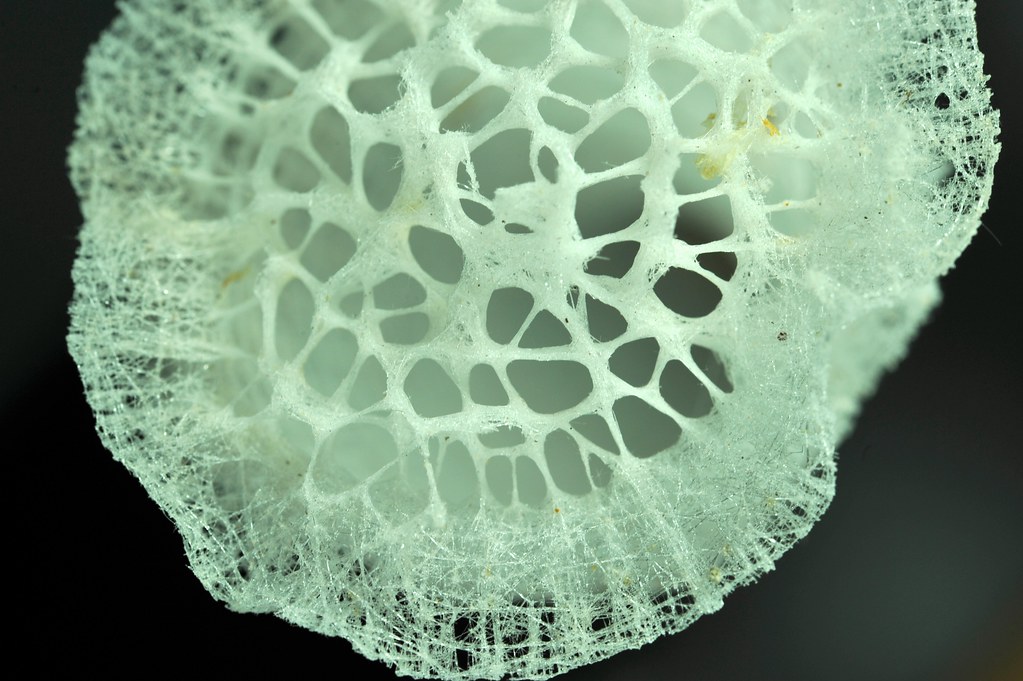
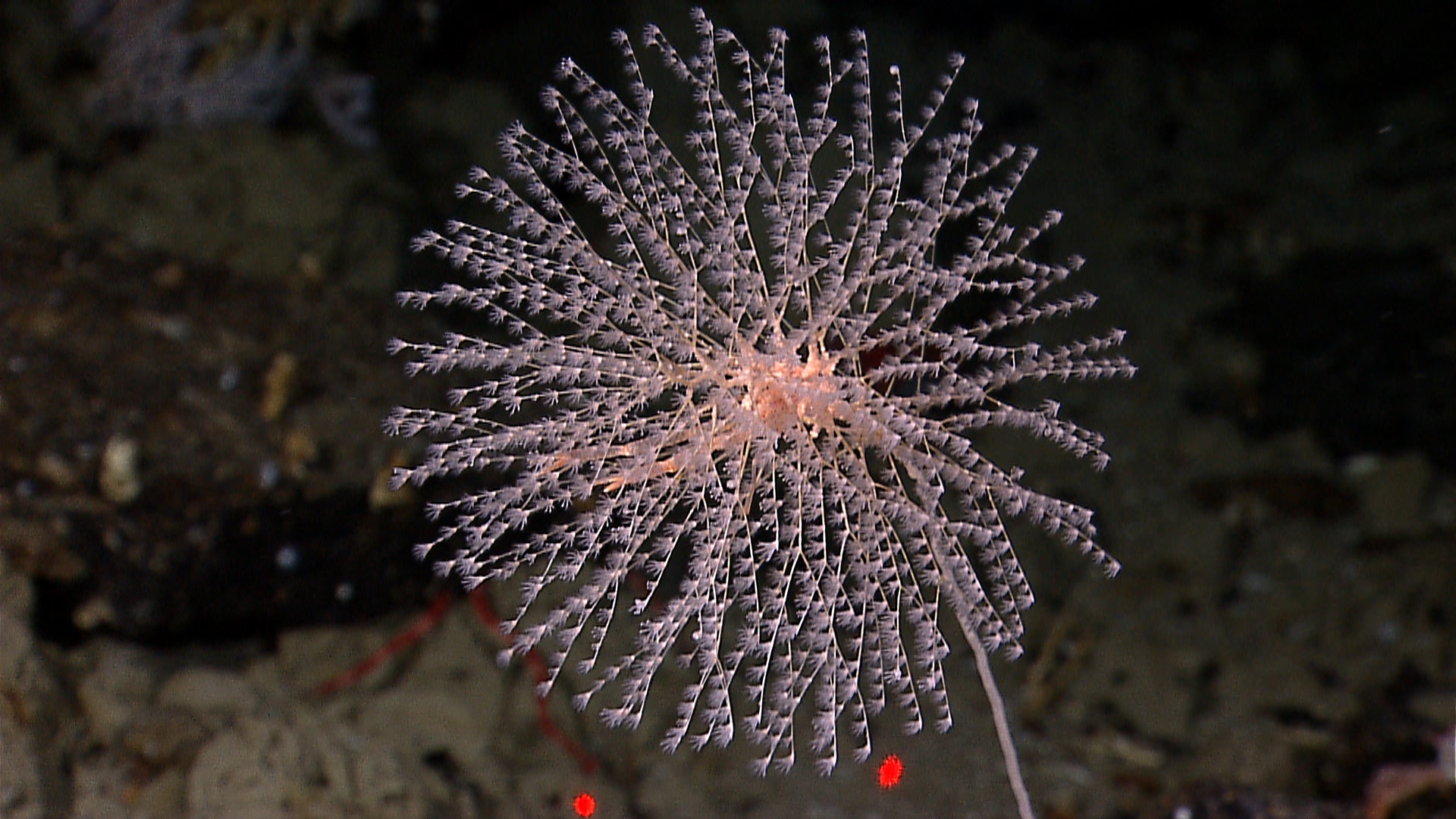
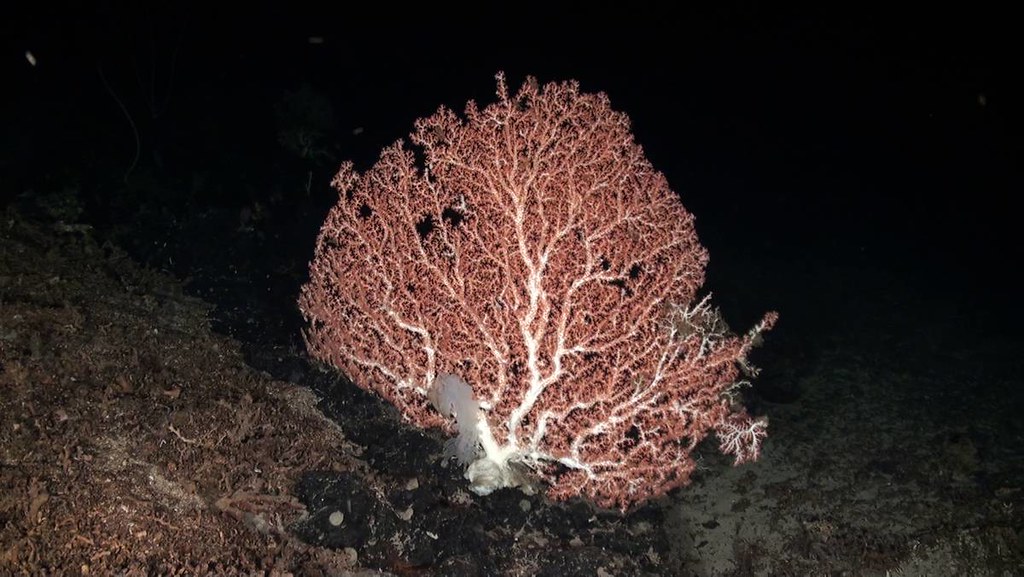
[Scientists are worried] that what they have learned from the the Tropic Seamount puts mining and conservation on a collision course. “The conditions that seem to favor the growth of the crusts,” he says, “also seem to favor the colonization by a lot of corals and sponges.”

Seamounts cover roughtly the same area as Russia and Europe combined, by one estimate, making them one of the planet’s largest habitats. The peaks have long been known as oases for sea life….Schools of fish—brick-red orange roughy, silvery pelagic armorheads, and goggle-eyed black oreos—often congregate at seamounts, as do sharks and tuna. Some migratory humpback whales appear to use them as navigational markers, spawning grounds, and resting spots. Seabirds gather above them, and myriad corals and sponges cling to their rocky surfaces, creating ample cover for other creatures.

Interest in seamounts is particularly high in countries that either host companies interested in deep-sea mining or are considering allowing mining in their national waters. In 2018, the Chinese research ship Kexue (meaning “science”) spent about 1 month surveying the Magellan Seamounts near the Mariana Trench, which several nations see as a potential source of industrial minerals. Brazilian researchers teamed up with Murton’s MarineE-tech project to examine an area in international waters where the country has a preliminary mining claim. Japanese scientists sent robots to survey seamounts that might be ripe for mining. In late July, the International Seabed Authority (ISA) in Kingston, a part of the United Nations that governs deep-sea mining in international waters, released 18 years of environmental data gathered by companies pursuing mining claims, including on seamounts….

The design of seamount mining equipment is closely guarded by competing countries and companies. But it could work much like equipment being tested for hydrothermal vents: enormous, remote-controlled machines that resemble bulldozers, equipped with toothed wheels designed to grind the crust into bits that can be carried to the ocean surface for processing.

Although no seamount has been mined yet, scientists point to the damage from deep-sea fishing to underscore why they worry this heavy machinery would do irreparable damage. In the late 1990s, Australian scientists documented devastation from nets dragged across seamounts near Tasmania to catch orange roughy. Hard corals had been wiped out, and the sheer mass of life on the mountains was half that on nearby ones too deep to be fished. Fifteen years after trawling was halted on some New Zealand seamounts, Clark and other researchers found little evidence of recovery.

Excerpts from Warren Cornwall, Sunken Summits, Science, Sept 13, 2019
Congo, China and Battery Minerals

The demand of cobalt is bound to increase because of the batteries needed to power  electric vehicles (EVs).  Each battery uses about 10kg of cobalt. It is widely known that more than half of the world’s cobalt reserves and production are in one dangerously unstable country, the Democratic Republic of Congo. What is less well known is that four-fifths of the cobalt sulphates and oxides used to make the all-important cathodes for lithium-ion batteries are refined in China. (Much of the other 20% is processed in Finland, but its raw material, too, comes from a mine in Congo, majority-owned by a Chinese firm, China Molybdenum.)

On March 14t, 2018 concerns about China’s grip on Congo’s cobalt production deepened when GEM, a Chinese battery maker, said it would acquire a third of the cobalt shipped by Glencore, the world’s biggest producer of the metal, between 2018 and 2020—equivalent to almost half of the world’s 110,000-tonne production in 2017. This is likely to add momentum to a rally that has pushed the price of cobalt up from an average of $26,500 a tonne in 2016 to above $90,000 a tonne

South Korean and Japanese tech firms and it’s a big concern of theirs that so much of the world’s cobalt sulphate comes from China. Memories are still fresh of a maritime squabble in 2010, during which China restricted exports of rare-earth metals vital to Japanese tech firms. China produces about 85% of the world’s rare earths.

Few analysts expect the cobalt market to soften soon. Production in Congo is likely to increase in the next few years, but some investment may be deterred by a recent five-fold leap in royalties on cobalt. Investment elsewhere is limited because cobalt is almost always mined alongside copper or nickel. Even at current prices, the quantities needed are not enough to justify production for cobalt alone.

But demand could explode if EVs surge in popularity… the use of cobalt for EVs could jump from 9,000 tonnes in 2017 to 107,000 tonnes in 2026.  The resulting higher prices would eventually unlock new sources of supply. But already non-Chinese battery manufacturers are looking for ways to protect themselves from potential shortages. Their best answer to date is nickel.

The materials most commonly used for cathodes in EV batteries are a combination of nickel, manganese and cobalt known as NMC, and one of nickel, cobalt and aluminium known as NCA. As cobalt has become pricier and scarcer, some battery makers have produced cobalt-lite cathodes by raising the nickel content—to as much as eight times the amount of cobalt. This allows the battery to run longer on a single charge, but makes it harder to manufacture and more prone to burst into flames. The trick is to get the balance right.

Strangely, nickel has not had anything like cobalt’s price rise. Nor do the Chinese appear to covet it… Nickel prices plummeted from $29,000 a tonne in 2011 to below $10,000 a tonne 2017…. But by 2025 McKinsey expects EV-related nickel demand to rise 16-fold to 550,000 tonnes.

In theory, the best way to ensure sufficient supplies of both nickel and cobalt would be for prices to rise enough to make mining them together more profitable. But that would mean more expensive batteries, and thus electric vehicles.

Excerpts from The Scramble for Battery Minerals, Economist, Mar. 24, 2018