Second Edition (2025) will be out in October 2025
Check my blog on the Cambridge website
Fifty Years of International Environmental Law: Looking Back and Looking Ahead
Second Edition (2025) will be out in October 2025
Check my blog on the Cambridge website
Fifty Years of International Environmental Law: Looking Back and Looking Ahead
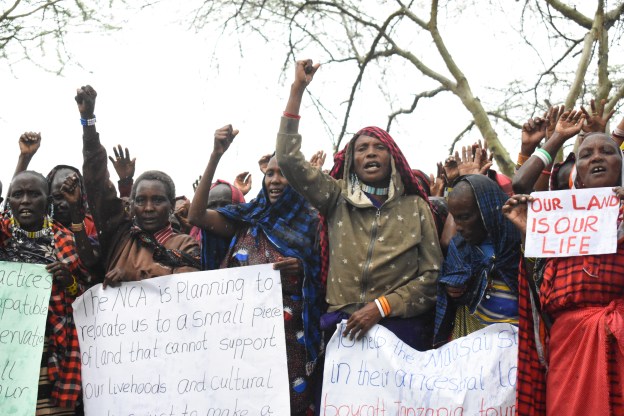
The government of Tanzania claims that the Maasai, the indigenous people of Tanzania, present a threat to the ecosystem of the Serengeti National Park. The government says the seminomadic cattle farmers are a threat to the savannas and watering holes in an area that sustains the country’s money-spinning safari resorts and hunting reserves and, more recently, a swath of new carbon-credit projects.
To protect these areas, President Samia Suluhu Hassan’s government has outlawed human settlement there and begun evicting some of the more than 110,000 Maasai from the Ngorongoro Conservation Area—the vast zone of grass-, wood- and wetlands adjacent to the Serengeti that the Maasai have used for both herding and tourism for the past 65 years.
The area includes the famous Ngorongoro Crater, the world’s largest, fully-intact caldera and home of one of Africa’s densest populations of zebras, gazelles and other large mammals…The government argues that the number of Maasai living in Ngorongoro has expanded from just 8,000 in 1959, outpacing Tanzania’s overall population growth. The herders, along with their cattle, are overwhelming the area’s fragile ecosystem, it says. Similar warnings have been issued by the United Nations Educational, Scientific and Cultural Organization, or Unesco, which declared the Ngorongoro Conservation Area a World Heritage site in 1979.
But for the Maasai, the evictions are endangering a centuries-old way of life they say is much closer to nature than the rest of rapidly urbanizing Tanzania. They accuse the government of giving priority to revenue from foreign tourists, investors and conservation groups over the lives and livelihoods of some of its own citizens. ..Experts and activists focused on the rights of indigenous people say the Maasai are the latest group caught in the murky intersection of tourism, biodiversity protection and global climate goals. Similar conservation-related evictions have also targeted indigenous communities in the Brazilian Amazon and the Nouabalé-Ndoki rainforest in the Republic of Congo.
Revenue from tourism jumped 40% to $3.5 billion in 2023, about 17% of Tanzania’s gross domestic product, and according to government projections could reach $6 billion by 2025. The government has already set aside swaths of land around the Ngorongoro Crater previously reserved for the Maasai for the construction of a China-funded geological park, where tourists and researchers can explore fossils, rock paintings and other archaeological artifacts dating as far back as 4 million years ago. To the south of the Ngorongoro Conservation Area, a local company called Carbon Tanzania is selling carbon credits linked to about 273,000 acres of land that the Maasai have also used for grazing and limited cultivation. The project restricts the cutting down of trees but allows cultivation in some zones…
One of the most violent standoffs between the Maasai and Tanzanian authorities took place in mid-2022 in the grassy plains of Loliondo, about 100 miles west of Serengeti. Heavily armed police and rangers stormed Maasai villages, fired tear gas and live rounds, and bulldozed hundreds of houses as they sought to seize some 37,000 acres of land for a new game reserve. One police officer was killed by an arrow shot by the Maasai, authorities said. Many Maasai were wounded in the clashes, and thousands fled into neighboring Kenya to seek medical treatment. Dozens of others were arrested. After the mayhem in Loliondo, authorities appeared to have opted for a more tactical approach in neighboring Ngorongoro, closing down schools, water sources and hospitals to force residents out of homes, Maasai activists say.
Excerpts from Nicholas Bariyo, The Safaris and Carbon-Credit Projects Threatening the Serengeti’s Maasai, WSJ, Dec. 22, 2024
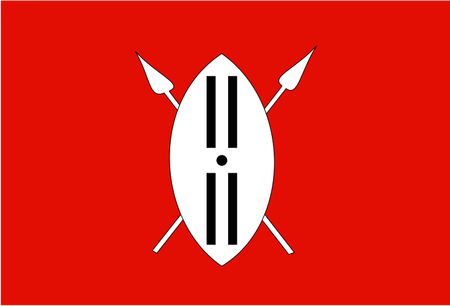
One person was killed and several injured in January 26, 2015 when Kenyan police clashed with Maasais protesting against a local governor they accuse of misappropriating tourism funds from the Maasai Mara game reserve, an official said. Police fired shots and teargas as thousands of people from the Maasai ethnic group, clad in traditional red cloaks, marched to the governor’s office in Narok town, the administrative centre of the sprawling Maasai Mara park, witnesses said.
Narok County Commissioner Kassim Farah, an official appointed by the president, said: “Only one protestor was killed by a bullet. “We regret it but the organisers of the demonstration should be held responsible, not the police.” Kenya Red Cross said seven people injured in the clashes were taken to a nearby hospital.
Demonstrators marched to the gates of Governor Samuel Tunai’s office, shouting: “Tunai must go.” Some hurled rocks. The dispute began when Tunai’s administration contracted a company to collect Maasai Mara park entry fees, a deal the locals say was suspect.
Visitors to the Maasai Mara, one of Africa’s biggest tourist draws, pay $80 per day to roam an area full of wildlife such as lions, rhinos and giraffes. Upmarket lodges and luxury tented camps can charge hundreds of dollars per person per day for the experience, although a spate of militant attacks in Kenya as well as the Ebola epidemic on the other side of Africa have scared off many tourists….
Local government finance has come under increased scrutiny from Kenyans since a newly devolved system was introduced in 2013 under which local governments receive about 43 percent of the national budget directly and are responsible for raising their own additional revenues. Devolution was designed to spread wealth and help local communities benefit from revenue earned in their areas but analysts say corruption and other issues that have blighted national politics have now also spread to local bodies
Corruption protest in Kenya’s Maasai Mara region turns deadly, Reuters, Jan. 27, 2015
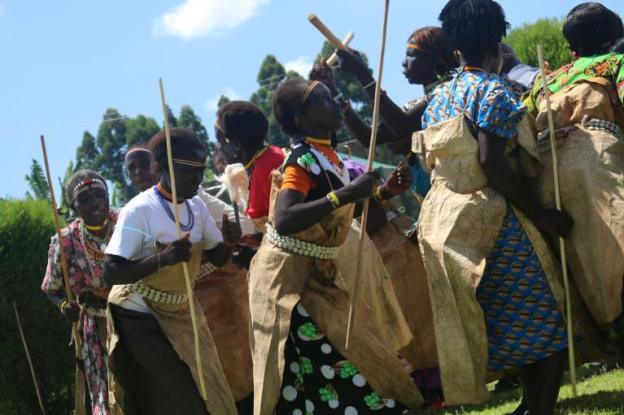
For decades, the Kenyan government has attempted to evict indigenous people from the forests of Embobut and Cherangany, in the western county of Elgeiyo Marakwet. Past tactics have even included torture and setting fire to homes, those affected say…The government – accused in recent weeks of preparing to carry out yet another forced eviction – maintains that communities living in 12 forest glades must leave so it can rehabilitate the degraded forest and the water services it provides to the surrounding regions and beyond.
“This is a government initiative aimed specifically at conserving the country’s second-largest water tower – nothing else,’’ said Inspector Stephen Chessa, who works for the Kenya Forest Service (KFS) and is in charge of the Embobut eviction…
But one forest warder who preferred to remain anonymous told Thomson Reuters Foundation he and his colleagues had been instructed to evict forcefully anyone who resists the move. The U.N. special rapporteur on the rights of indigenous peoples, James Anaya, expressed deep concern about this prospect, urging the Kenyan government “to ensure that the human rights of the Sengwer indigenous people are fully respected, in strict compliance with international standards protecting the rights of indigenous peoples”. Most families are asking for more time to assemble their things and harvest crops before leaving the forest. But Solomon Mibei, head of conservation for the KFS, said families would not be given extra time and the evictions would continue as planned. “They have no reason to continue staying in the forest – they were compensated,’’ he said.
The situation is complex because there are different communities living in Embobut: the Sengwer indigenous people; groups displaced by disasters and political violence; and others who have come to benefit from cultivation opportunities. “Why should the government treat us equally with the victims of post-election violence and landslides?’’ asked Sengwer spokesperson Yator Kiptum. “The forest is our home – our case is different, it’s not fair at all.”…According to Article 63 of the constitution, community land shall be vested in and held by communities identified on the basis of ethnicity, culture or similar community of interest. Community land consists of ancestral lands and lands traditionally occupied by hunter-gatherers.
Justin Kenrick of the Forest Peoples Programme (FPP), a UK-based rights organisation, said the government’s justification for evicting people is forest conservation, but research has long since shown that forests are best preserved not by evicting ancestral communities but by supporting them to regain secure rights to their land. Payments to evictees by the government are “intended to distract the public and the communities themselves from addressing the real issues”, Kenrick said. “According to international treaties to which Kenya is a party, the Sengwer should have been consulted, and accepted or rejected the proposal,’’ he added. Kiptum, however, claims the Sengwer were not consulted, did not sign anything, and have not agreed to hand over their land for the small amount of money that has been paid into some people’s bank accounts. “You cannot create a humanitarian crisis for the sake of conserving biodiversity while there are other ways of doing it better,” said Stephen Cheboi, coordinator of the North Rift Human Rights Network based in nearby Eldoret town. He also called for an audit of the compensation process.
Excerpts from Caleb Kemboi, Indigenous rights clash with forest protection in Kenya, Reuters, Jan. 17,, 2014
See also Biodiversity and Human Rights
 Law-In-Action