Tag Archives: recycling plastics

Why Plastic is the Salvation of Oil Industry

As people switch to electric cars, or at least buy more fuel-efficient versions of traditional vehicles, energy companies will have too much oil on their hands. ..Energy companies hope consumers will soak up the glut through their clothing, food and electronic goods. Exxon Mobil expects demand for products that have fossil fuel-derived components and shells like “cellphones and medical supplies, as well as products necessary to preserve food and improve hygiene” to increase.

Crude oil and natural gas are turned into petrochemical feedstocks such as naphtha or natural gas liquids in a gas-processing plant or at an oil refinery. They are then “cracked” into the building blocks of common plastics. Ethylene is processed into polyethylene, which winds up in plastic bags, shampoo bottles and children’s toys. Polypropylene is used for everything from car bumpers to carpets. ..Today, 15.4% of global oil demand is driven by petrochemicals, according to data from Wood Mackenzie. The share is expected to rise to 19.1% by 2035 as emerging markets become wealthier and swelling middle classes spend more on synthetic clothing and do their grocery shopping at big supermarket chains, where food is more likely to be wrapped in plastic to prolong its shelf life.  Advanced economies like the U.S. use up to 20 times more plastic than developing nations on a per capita basis, according to the IEA. Big Oil’s bet is that shoppers in emerging markets will close at least part of that gap.

Energy companies are pouring billions of dollars into petrochemical facilities, notably in China where ethylene capacity has almost doubled since 2019. Capacity is also rising in the U.S. and Middle East. Saudi Arabia wants to invest $600 billion into petrochemicals by the end of the decade to secure nonfuel uses of its crude oil. 

But the global petrochemical industry is already saturated and capacity is expected to outstrip demand until at least 2030. This points to weak profit margins and less-than-ideal utilization rates at petrochemical facilities.  Plants in high-cost regions are shutting down. Exxon Mobil sold refineries in Italy last year and plans to close an ethylene cracker in Normandy, France…Pumping money into petrochemicals as governments are trying to solve the problem of plastic waste feels risky…. A worldwide ban on single-use plastic would wipe out a third of global plastic demand that comes from things like mini hotel toiletries, fast-food packaging and disposable cutlery, although there would probably be exemptions for categories like medical intravenous bags that are hard to substitute. 

Excerpts from Carol Ryan, Driving an EV? Big Oil Hopes You Don’t Cut Down on Plastic Too, WSJ, Dec. 24, 2024
What is the Difference between Recycling and Fake Recycling?

Chemical companies, oil-and-gas incumbents and startups around the world are touting plans for new recycling facilities, promising to turn old bottles and bags into usable material. But policymakers are questioning whether some of these methods, broadly termed chemical or advanced recycling, should be considered recycling at all.

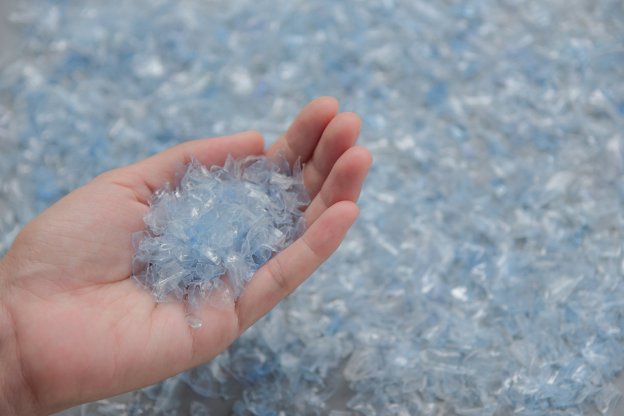
In 2024, Eastman Chemical began processing plastic at a new plant in Kingsport, Tenn., that it calls the largest material-to-material molecular recycling facility in the world. The company uses a chemical procedure called methanolysis to break down hard-to-recycle plastics and turn them into “virgin quality” polyesters. When operating at capacity, the facility will process 110,000 tons of plastic waste a year, the equivalent of 11 billion water bottles a year, said Mark Costa, Eastman’s chief executive. 
In July 2024, Australian company Samsara Eco announced a $65 million funding round that attracted investment from Singapore’s state-investment company Temasek and apparel company Lululemon, among others. Using a process it calls enzymatic recycling, it aims to recycle 1.5 million tons of plastic a year by 2030. 

Yet in June 2024, during last-minute negotiations on a New York state packaging bill that would have forced companies to meet ambitious recycling standards and reduce their packaging waste by 30%, state legislators agreed that technologies like Eastman’s or Samsara Eco’s would not initially be considered “recycling.”   “We had a serious concern about the pseudo solution pushed by the industry called chemical recycling,” said Judith Enck, a former Environmental Protection Agency official and founder of Beyond Plastics, an advocacy group that supported the bill. In a report published last October, Beyond Plastics raised doubts about advanced recycling plants’ yield, emissions, byproducts and energy use. The group has argued that advanced recycling amounts to little more than a marketing tactic deployed to distract decision makers from proven waste-reduction methods, like using less packaging… 

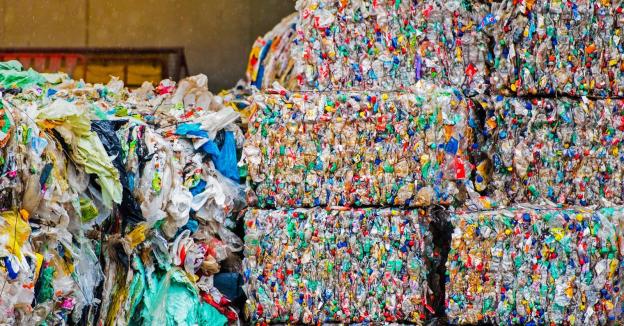
A recent ProPublica investigation found that the dominant advanced recycling technique, pyrolysis, yields 15% to 20% usable plastic materials. The rest turns into fuel and other chemicals. Traditional mechanical recycling yields 55% to 85% new plastic…

Excerpts from Claire Brown, A Fight Over the Future of Recycling Brews as Plastics Legislation Gains Traction, WSJ, July 2, 2024

Global Microbiome Living on Plastics

The number of microbial enzymes with the ability to degrade plastic is growing, in correlation with local levels of plastic pollution. That is the finding of a study from Chalmers University of Technology, Sweden, that measured samples of environmental DNA from around the globe. The results illustrate the impact plastic pollution is having on the environment, and hint at potential new solutions for managing the problem.

The study analyzed samples of environmental DNA from hundreds of locations around the world. The researchers used computer modelling to search for microbial enzymes with plastic-degrading potential, which was then cross-referenced with the official numbers for plastic waste pollution across countries and oceans. “Using our models, we found multiple lines of evidence supporting the fact that the global microbiome’s plastic-degrading potential correlates strongly with measurements of environmental plastic pollution – a significant demonstration of how the environment is responding to the pressures we are placing on it,” says Aleksej Zelezniak, Associate Professor in Systems Biology at Chalmers University of Technology. 

More enzymes in the most polluted areas: In other words, the quantity and diversity of plastic-degrading enzymes is increasing, in direct response to local levels of plastic pollution. In total, over 30,000 enzyme ‘homologues’ were found with the potential to degrade 10 different types of commonly used plastic. Homologues are members of protein sequences sharing similar properties. Some of the locations that contained the highest amounts were notoriously highly polluted areas, for example samples from the Mediterranean Sea and South Pacific Ocean…

The researchers believe that their results could potentially be used to discover and adapt enzymes for novel recycling processes…“The next step would be to test the most promising enzyme candidates in the lab to closely investigate their properties and the rate of plastic degradation they can achieve. From there you could engineer microbial communities with targeted degrading functions for specific polymer types,” explains Aleksej Zelezniak.

Plastic-degrading enzymes increasing in correlation with pollution, Chalmers University of Technology Press Release, Dec. 14, 2021

Junk: the Engine of Green Growth

“Plastic waste is not just a global crisis that threatens economic recovery, climate, and nature. It is also an investment opportunity that can flip it from a scourge into an engine for economic development,” said Rob Kaplan, who founded Circulate Capital in 2017. Initially the firm sought to back companies in India and Southeast Asia, such as recycling or waste-sorting companies, that help reduce the amount of plastic waste that winds up in the ocean.

In 2019 it raised a $106 million debt and project finance fund, Circulate Capital Ocean Fund, backed by a handful of large multinational corporations that include Coca-Cola, Danone,  Procter & Gamble,  and Unilever…Circulate is one of a small but growing number of firms investing in companies that contribute to what they call the circular economy, a business model that seeks to eliminate waste that organizations produce, continuously reuse products and materials and regenerate natural systems.

An estimated 30 private-market funds, including private-equity, venture and debt strategies focused on the circular economy in the first half of 2020, up from just three in 2016….A number of large multinational corporations are funding these firms’ efforts as part of a broader push to reduce both the overall waste their own companies produce and the amount of virgin materials they use.

Unilever, which has backed funds managed by Circulate and New York-based Closed Loop Partners, aims to cut in half the amount of virgin plastic it uses by 2025 and plans to collect and process more plastic packaging than it sells. Coca-Cola, also a backer of Circulate’s Ocean fund, aims to make all of its global packaging recyclable by 2025 and to use at least 50% of recycled packaging material by 2030, among other goals.

Excerpt from Laura Kreutzer, Growth Firms See Plastic Waste as an Investment Opportunity, WSJ, June 23, 2021
 

The Plastics Revolution: A Century Later

Businesses pay a fee to Tontoton,  a company established in 2019,  for every ton of plastic that they generate. Tontoton then uses the money to employ scavengers, who retrieve an equal weight of plastic garbage in Vietnam — the world’s No. 4 source of ocean debris…Tontoton said it has the only such program in Vietnam, while Plastic Bank runs a similar one in Indonesia and the Philippines, and the Plastic Collective covers Malaysia, Thailand, and Cambodia…Tontoton targets the worst ocean-bound rubbish, called orphan plastic because it cannot be recycled. Trash pickers find the single-use plastic along the cyan waters hugging Vietnam’s Phu Quoc and Hon Son islands. Their goal is to collect 5,000 tons a year and send it to INSEE, part of Siam City Cement, to be burned for energy….

These cleanup programs have sprung up globally as doubts emerge about recycling, which used to seem like a win-win idea because consumers could keep consuming and the environment could stay pristine. But instead, for decades, the public believed its plastic was being recycled, only to find that 91% of it was not, according to a study in the peer-reviewed journal Science Advances, assessing all plastic from 1950-2015.

Vietnam is a focus of cleanup campaigns because it’s among the top five countries sending litter to sea, along with China, Indonesia, the Philippines, and Thailand…These Asian countries earned this marker because they import so much waste for processing from the rest of the world.

Tontoton says clients sign a letter committing to multiple strategies beyond offsets, including plastic substitutes and reduction. The company helps them offset or “neutralize” plastic already used, but this isn’t a “getaway car” to escape broader responsibility. “Plastic neutralization cannot solve the problem by itself.”

Excerpt from LIEN HOANG, Vietnam tests waters for plastic credits to fight marine pollution, April 15, 2021

How the Global Trade in Plastics Spills Over the Oceans

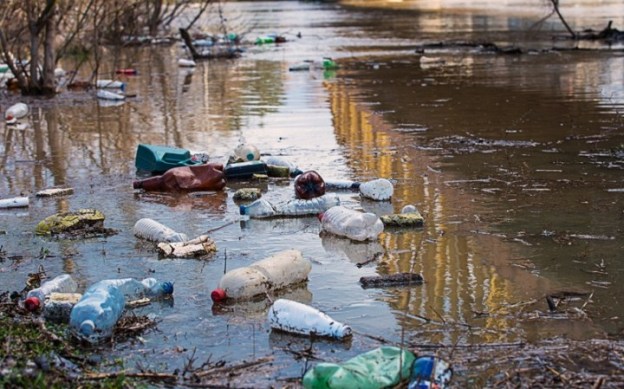
Low-value or “residual” plastics – those left over after more valuable plastic is recovered for recycling – are most likely to end up as pollution. So how does this happen? In Southeast Asia, often only registered recyclers are allowed to import plastic waste. But due to high volumes, registered recyclers typically on-sell plastic bales to informal processors…When plastic types were considered low value, informal processors frequently dumped them at uncontrolled landfills or into waterways.

Plastics stockpiled outdoors can be blown into the environment, including the ocean. Burning the plastic releases toxic smoke, causing harm to human health and the environment. When informal processing facilities wash plastics, small pieces end up in wastewater, which is discharged directly into waterways, and ultimately, the ocean.

The price of many recycled plastics has crashed in recent years due to oversupply, import restrictions and falling oil prices, (amplified by the COVID-19 pandemic). However clean bales of (polyethylene terephthalate) PET and (high-density polyethylene) HDPE are still in demand. In Australia, material recovery facilities currently sort PET and HDPE into separate bales. But small contaminants of other materials (such as caps and plastic labels) remain, making it harder to recycle into high quality new products. Before the price of many recycled plastics dropped, Australia baled and traded all other resin types together as “mixed plastics”. But the price for mixed plastics has fallen to zero and they’re now largely stockpiled or landfilled in Australia.

Excerpts from Monique Retamal et al., Why Your Recycled Plastic May End up in the Ocean, the Maritime Executive, Mar. 8, 2021

Fatalism about Plastics: Intractable Plastics Pollution

The annual inflow of plastic could nearly triple from 2016 to 2040, the study found, and even if companies and governments meet all their commitments to tackle plastic waste, it would reduce the projection for 2040 by only 7%, still a more-than twofold increase in volume.  The study’s authors, the nonprofit Pew Charitable Trust and sustainability consulting firm Systemiq Ltd., set out a range of measures to stem the flow and called on businesses and governments to do more to reduce the use of plastic. 

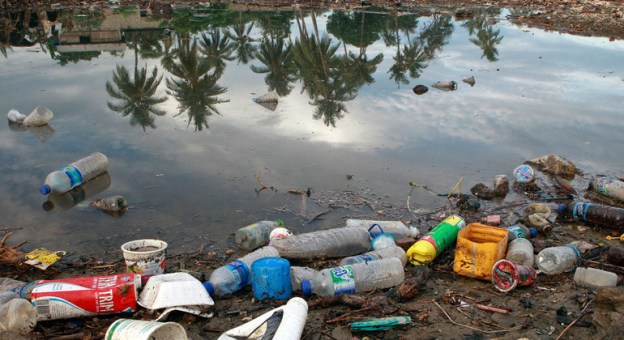
The study attributes the surge to a growing global population using more plastic per person. Other factors include greater use of nonrecyclable plastics and an increasing share of consumption occurring in countries with poor waste management. China and Indonesia are likely the top sources of plastic reaching the oceans, accounting for more than a third of the plastic bottles, bags and other detritus washed out to sea, according to a study published in 2015 by Jenna Jambeck, an environmental engineer at the University of Georgia.

Over the past two years China has been making strides to improve waste management, including banning the import of plastic and other waste from developed countries like the U.S., which for decades have shipped much of their trash overseas. Indonesia has implemented its own restrictions on trash coming in from overseas, while lawmakers in the U.S. are increasingly trying to find ways to improve the country’s domestic recycling rates as export markets vanish.

They found that flexible plastic packaging—particularly items like potato-chip bags and food pouches, which are made of several materials and typically aren’t recycled—accounts for a disproportionate amount of ocean plastic. The As You Sow report said companies should stop selling products in flexible plastic until it is recycled or composted in significant amounts. Companies, in response, have been redesigning flexible packaging to promote recycling. For example, Nestle recently began selling a line of Gerber baby-food pouches made from a single material. But hurdles remain, particularly around collection and sorting of the packaging…

The amount of plastic flowing into the oceans could be reduced by as much as 80% over the next 20 years through a combination of reduced plastic use, increased recycling, alternatives to problematic packaging like plastic pouches and better waste management, the Pew-Systemiq study said…

Excerpts from Saabira Chaudhuri, Ocean Plastic Is Getting Worse and Efforts to Stem the Tide Fall Short, Study Finds, WSJ, July 23, 2020