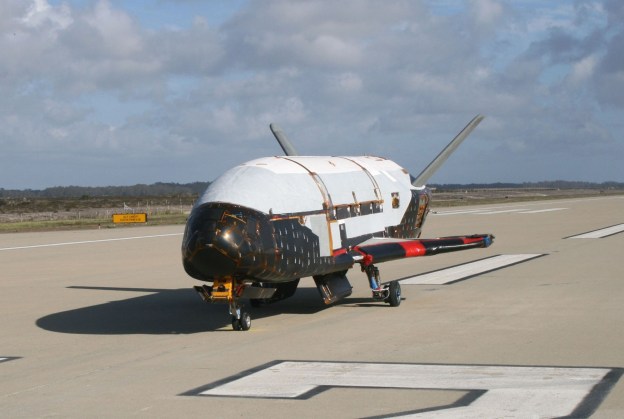
A Pentagon spaceplane called X-37B zoomed into orbit this week for its eighth mission. When it will come back is a secret. The uncrewed vehicle can spend months or years in space before it re-enters the atmosphere.. That combination of flexibility and endurance has made it a favorite tool for military officials looking to quickly deploy new technologies on the final frontier. A SpaceX rocket launched X-37B on August 21, 2025 from Florida’s Kennedy Space Center. Government and commercial engineers have spent years experimenting with lasers that allow satellites to share large amounts of data in space. The Pentagon is also testing tools like the inertial sensor, which could help improve navigation in situations where Global Positioning System signals aren’t available.
The spacecraft has spent the last five months on Earth after a 434-day mission that included tests of orbital maneuvers known as “aerobraking.” The move helps the vehicle use the drag from the planet’s atmosphere to change its orbit without using much fuel. Military officials haven’t disclosed many details about the payloads that X-37B carries, but past missions included testing different materials in orbit and an experiment that transmitted solar energy to the ground. Its fifth flight released three small satellites that government officials didn’t acknowledge until they had fallen back to Earth. There’s a global strategic interest in saying what you’re putting in space,” said Jonathan McDowell, a researcher at the Harvard-Smithsonian Center for Astrophysics. If the U.S. hides its satellites, “then the Chinese are going to start doing it too, and that’s not in our interest.”
China now fields more than 1,000 satellites and has developed a range of radio jammers, antisatellite missiles and other weapons capable of targeting Pentagon assets, according to a U.S. Air Force document released in May 2025. It also operates a competing spaceplane, called Shenlong, that has flown several missions.]
Excerpt from Drew FitzGerald, The Pentagon’s Mysterious X-37B Space Plane Embarks on New Mission, WSJ, Aug. 22, 205
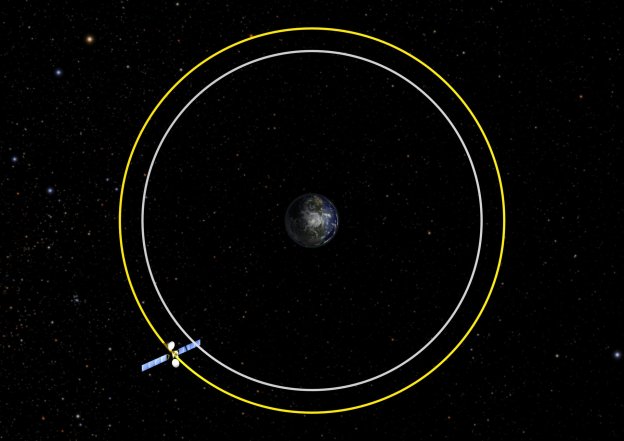
Launched in 1969, just a few months after humans first set foot on the Moon, Skynet-1A was put high above Africa’s east coast to relay communications for British forces. When the spacecraft ceased working a few years later, gravity might have been expected to pull it even further to the east, out over the Indian Ocean. But today, curiously, Skynet-1A is actually half a planet away, in a position 22,369 miles (36,000km) above the Americas. Orbital mechanics mean it’s unlikely the half-tonne military spacecraft simply drifted to its current location. Almost certainly, it was commanded to fire its thrusters in the mid-1970s to take it westwards. The question is who that was and with what authority and purpose?…
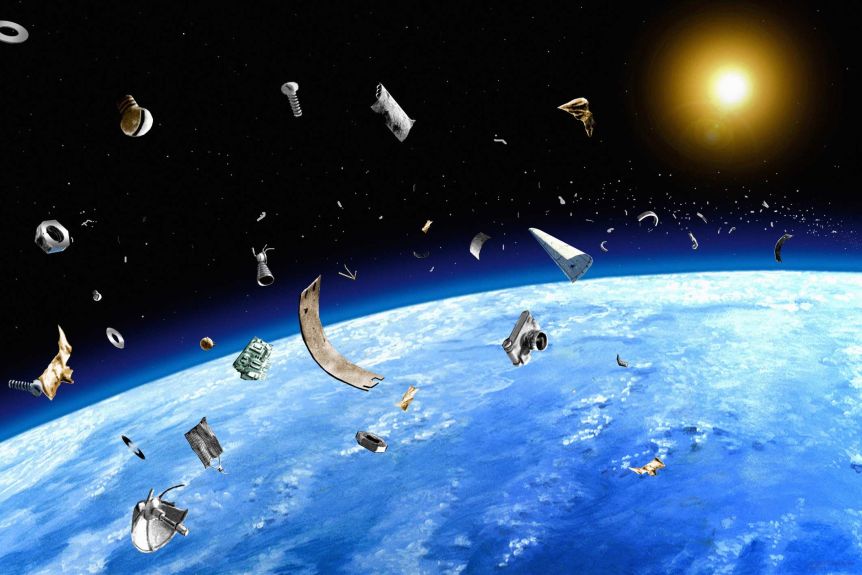
You might also reasonably ask why it still matters. After all, we’re talking about some discarded space junk from 50 years ago…No matter how Skynet-1A got shifted to its present position, it was ultimately allowed to die in an awkward place when really it should have been put in an “orbital graveyard“. This refers to a region even higher in the sky where old space junk runs zero risk of running into active telecommunications satellites. Graveyarding is now standard practice, but back in the 1970s no-one gave much thought to space sustainability.
Attitudes have since changed because the space domain is getting congested and collisions between defunct satellites generate large amounts of space debris or space junk…”We need to avoid…super-spreader events. When these things explode or something collides with them, it generates thousands of pieces of debris that then become a hazard to something else that we care about.”
Excerpt from Jonathan Amos, Somebody moved UK’s oldest satellite, and no-one knows who or why, Science, Nov. 8, 2024
A Chinese spacecraft touched down on grasslands in China’s Inner Mongolia region in June 2024, carrying the first-ever rock samples from the far side of the moon. A scientific breakthrough in itself, the success also advanced China’s plan to put astronauts on the moon by 2030 and build a lunar base by 2035. Such momentum is worrying American space officials and lawmakers, who have their own ambitions to build moon bases.
Unlike the original space race between the Americans and the Soviets, the goal of the U.S. and China isn’t just to make a short trip to the moon. It is to build permanent human outposts on its most strategic location, the lunar south pole. And as both nations gear up to build stations there one day, it is looking likely that tensions in orbit will mirror those on Earth.
Some U.S. officials fear China is planning a land grab. Chinese officials suspect the same of the Americans and are teaming up with Russia and other friendly nations for its south-pole outpost. The successful completion of the Chang’e 6 mission shows that, by one measure, China is ahead for now. Its lunar program has now soft-landed on the moon four times since 2013, the latest mission scooping up rocks near the south pole with robotic arms…
Meanwhile, after a decades-long moon-landing hiatus, two U.S. companies this year launched lunar-surface missions under NASA contracts. One lander tipped on its side after touching down. The other didn’t try to land because of technical problems. At least two more private missions, with funding from NASA, are slated to try to get to the moon later this year….All this is piling pressure upon the world’s most storied space agency. Through its Artemis exploration program, the National Aeronautics and Space Administration plans to conduct multiple landings in the coming years, develop a logistics station in lunar orbit and eventually build permanent camps on the moon’s surface. But Artemis has faced repeated delays and cost overruns while relying on a complex mix of government workers and private contractors…
“Unlike the U.S.-Soviet space race of the 20th century, this new round of competition centers on the water ice at the lunar south pole, with its extraction and use as a common goal,” wrote four scientists affiliated with China’s Academy of Sciences in a paper published in May. “The ability to collect and utilize lunar resources is a mark of national prestige and geopolitical influence. “We’re talking about colonizing the solar system,” said Greg Autry, a NASA official during the Trump administration.
Excerpts from Stu Woo, Historic Moon Mission Moves China Ahead in Space Race With U.S., WSJ, June 25, 2024
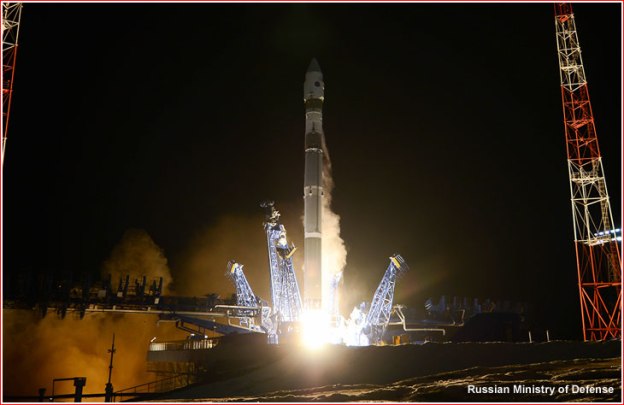
Kosmos 2542, a Russian satellite that was launched in November 2019, was “like Russian nesting dolls”. Eleven days after its launch it disgorged another satellite, labelled Kosmos 2543. Then, on July 15th, Kosmos 2543 itself spat out another object, which sped off into the void. Merely a “small space vehicle” to inspect other satellites, said the Russians. Nonsense, said the Americans; it was a projectile. The intentl.. was to signal Russia’s ability to destroy other nations’ satellites….In January 2020, America complained that Kosmos 2542 and 2543 had tailed a spy satellite in an “unusual and disturbing” way (American satellites have also sidled up to others in the past).
Anti-satellite weapons are not new. During the cold war, America and the Soviet Union developed several ways to blow up, ram, dazzle and even nuke each other’s satellites. The countries conducted two-dozen anti-satellite tests between them. Ten were “kinetic”, involving a projectile physically striking a target. But new competitors, and new technologies, mean anti-satellite warfare is a hot topic once again. China has conducted ten tests over the past 15 years, including a kinetic one in 2007 that created a great deal of space debris. India conducted its first kinetic test in 2019. America, Russia and China have all manoeuvred their satellites close to others, sometimes provocatively so. New methods of attack are being tested, including lasers and cyber-attacks.
Some satellites, such as America’s GPS constellation, blur the distinction between military and civilian assets. Over the past decade, America’s armed forces have put payloads on three commercial satellites, and plan to pay Japan to host others on its own navigation satellites….Then there is the question of what counts as an attack. Michael Schmitt, a law scholar, and Kieran Tinkler, a professor at the us Naval War College, say it is unclear whether jamming a civilian satellite would violate the general prohibition on attacking civilian objects. Blowing up a military one, meanwhile, might or might not constitute an indiscriminate (and hence illegal) attack, depending on whether it could have been disabled by other means and how much debris was produced.
Perhaps the biggest difference between space war and terrestrial war is how long the consequences can last. Much of the debris from China’s 2007 test, for instance, will still be in space at the turn of the next century. The more debris, the greater the likelihood of accidental collisions with other satellites, which generates more debris in turn. Enough debris could lead to a chain reaction known as Kessler syndrome, which could render entire swathes of near-Earth space unusable for decades…
Space Junk
The Outer Space Treaty of 1967 requires states to consult each other on actions that “would cause potentially harmful interference”, though the rule has rarely been heeded. Most countries accept that, in wartime, a body of existing laws known as international humanitarian law would apply, as on Earth—something America confirmed in its “Spacepower” doctrine, published on August 10, 2020. International humanitarian law is based on principles such as distinction (between combatants and civilians) and proportionality (between civilian harm and military advantage). But how to apply such ideas in a place with few humans is not always obvious.
Russia and China would like a formal treaty banning all weapons in space. Both are keen to prevent America from deploying space-based anti-missile systems which might threaten their own nuclear forces. America and its allies resist this. They argue that it is impossible to define a space weapon—anything that manoeuvres in orbit could serve as one—and that it would be easy to cheat. The European Union has instead proposed a voluntary code of conduct. Many non-Western countries would prefer a binding treaty…. Though most are not space powers, many are likely to become so in the future, so their buy-in is important.
Excerpts from Satellite warfare: An arms race is brewing in orbit, Economist, Aug. 15, 2020
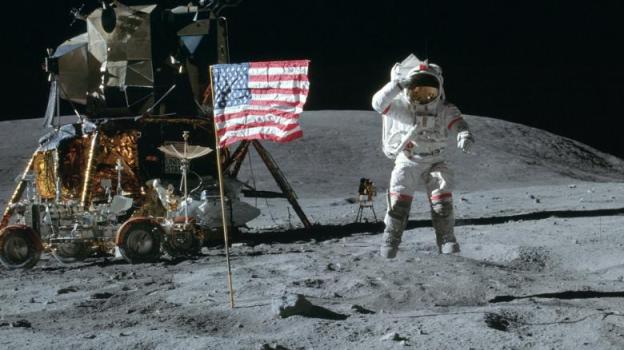
The US government is starting to lay down the groundwork for diplomacy on the moon. On 15 May, 2020 NASA administrator Jim Bridenstine released a set of principles that will govern the Artemis Accords on the exploration of the moon. The accords are named after NASA’s Artemis programme, the US initiative to explore the moon, with a planned launch of astronauts to the lunar surface in 2024. Other countries are also increasingly turning towards the moon, which is concerning when a landing on the moon can send up clouds of potentially hazardous dust that travel a long way across the surface and even into orbit…
At the moment, there is little practical international law governing activities on the moon. TheOuter Space Treaty of 1967 deals with general space exploration, while the more specific Moon Agreement of 1984 states that “the moon and its natural resources are the common heritage of all mankind”, prohibiting the ownership of any part of the moon or any resources from the moon….However, no nation capable of human space flight has signed the Moon Agreement, effectively rendering it moot. In fact, in April 2020, US president Donald Trump issued an executive order supporting moon miningand taking advantage of the natural resources of space.
The Artemis Accords aim to protect historic locations like the Apollo landing sites but encourage mining in other areas. They also promote transparency and communication between nations, requiring signatories to share their lunar plans, register any spacecraft sent to or around the moon and release scientific data to the public. That transparency requirement might be a stumbling block for potential parties to the accords, says Forczyk. “I really don’t know how much countries are going to be willing to share some of their more delicate, sensitive information,” she says. “
The rest of the stipulations of the Artemis Accords are about safety: nations will be able to set “safety zones” to protect their activities on the moon, they will have to work to mitigate the effects of debris in orbit around the moon and they will agree to provide emergency assistance to any astronauts in distress.
Rather than attempting to put together an international treaty, which could be difficult to negotiate before NASA’s next crewed launch to the moon, the US will sign bilateral agreements with individual countries.
Excerpts from Leah Crane, NASA’s Artemis Accords aim to lay down the law of the land on the moon, New Scientist, May 20, 2020
The North Atlantic Treaty Organization (NATO) is looking to classify space as a domain for warfare in an attempt to deter China’s growing military power. If NATO’s proposal succeeds, the international alliance could move forward with the development and use of space weapons. According to NATO diplomats, the international organization is preparing to release an agreement that will officially declare space as a war domain. This means that aside from land, air and sea, space could also be used for military operations during times of war.
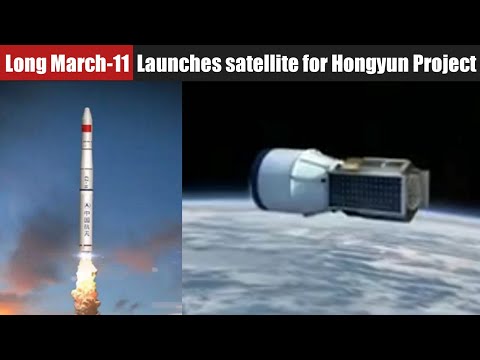
Although NATO’s partner countries currently own 65% of the satellites in space, China is reportedly preparing to launch a massive project that involves releasing constellations of satellites in low Earth orbit. China Aerospace Science and Industry Corp (CASIC) is planning to put in orbit 150 or more Hongyun satellites by 2023. Some of these satellites will provide commercial services like high-speed internet while others would be controlled by the Chinese military. These militarized satellites can be used to coordinate ground forces and to track approaching missiles.
“You can have warfare exclusively in space, but whoever controls space also controls what happens on land, on the sea and in the air,” according to Jamie Shea, a former NATO official. “If you don’t control space, you don’t control the other domains either.”
Excerpts from Inigo Monzon , NATO Prepares For Space Warfare By Militarizing Low Earth Orbit, International Business Times, June 24, 2019
 Law-In-Action