Monthly Archives: October 2015

Privatization of Army: Nigeria

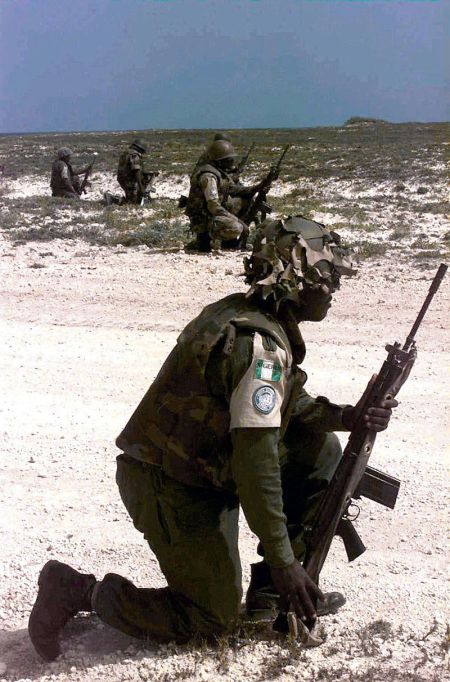
Private security is big business in Nigeria. The country suffers bombings in the north, sectarian violence in the centre and simmering insecurity in the oil-producing south-east. Red24, a Scottish security firm, says more than 600 people are kidnapped in the country every year, putting it among the five worst for that sort of crime…  [There are] 1,500 and 2,000 private security companies in Nigeria. Because they cannot legally carry weapons, armed units must be hired from national forces….Private companies pay the security forces handsomely. But that also encourages commanders to hire out their men. The result is a privatisation of public security, reckons Rita Abrahamsen, a professor at the University of Ottawa. In 2011 a retired deputy inspector-general estimated that up to 100,000 police officers (about a third of the country’s total) were working for “a few fortunate individuals”, and questioned what that meant for regular Nigerians. Martin Ewence, a British naval commander turned consultant, reckons that the navy in effect has “given over its maritime security responsibilities”.

In the worst cases, the private-security culture fuels conflict. Oil companies in the Niger delta have been criticised for arming Nigeria’s Joint Task Force in a bid to secure their assets. The task-force’s combination of police, army and naval personnel, whose houseboats are moored in the delta’s greasy creeks to “tax” passing barges, are accused of human-rights abuses and involvement in the theft of oil.

Private security in Nigeria: Rent-a-cop, Economist, Oct. 17, 2015, at 54

Nuclear Waste-Idaho National Laboratory


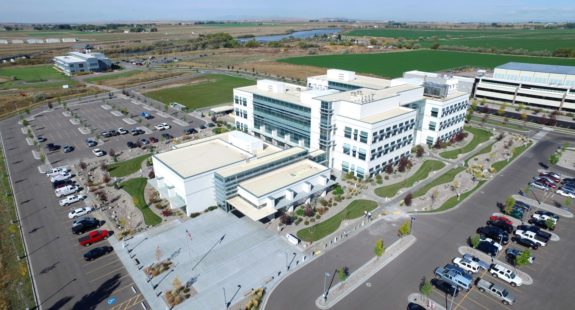
The U.S. Energy Department has canceled  in October 2015 a plan to ship to the Idaho National Laboratory spent nuclear fuel from commercial reactors out of state, a controversial proposal that drew protests from two former governors and a lawsuit from one of them. Incumbent Governor C.L. “Butch” Otter and state Attorney General Lawrence Wasden in January 2015 expressed conditional support for two proposed deliveries of the high-level radioactive waste, saying it would raise the lab’s profile and boost the local economy around Idaho Falls, where the facility is located.

But talks between the Department of Energy (DOE) and Idaho broke down amid mounting opposition to the plan by two of Idaho’s former governors, one of whom filed a lawsuit last month seeking information he said the federal agency was concealing about the proposal.

Cecil Andrus, a Democrat who served four terms as governor, said at the time that he suspected DOE’s intent was to turn the sprawling research facility along the Snake River into a de facto nuclear dump in the absence of a permanent repository for high-level radioactive waste elsewhere in the United States.  Earlier this year, Andrus and former Governor Phil Batt, a Republican, accused DOE of violating a 1995 agreement that banned such shipments to Idaho.Specifically, they said the Energy Department had not yet complied with a provision of the accord requiring removal of nuclear waste already stored at the lab to reduce impacts on an aquifer that supplies drinking water to tens of thousands of Idaho residents.

In a statement sent Friday to Idaho National Lab workers, the director, Mark Peters, said he had been informed that the state and DOE “were unable to reach an understanding that would have enabled the first of two recently discussed shipments of research quantities of spent nuclear fuel to come to INL.” [see also 2011 Memorandum of Agreement on Storage of Research Quantities of Commercial Spent Fuel at the Idaho National Laboratory]  Peters said in his statement that the spent nuclear fuel in question would be delivered instead to “another DOE facility,” though it was not made clear where the materials were now destined.

Energy Department cancels plan to ship nuclear waste to Idaho, Reuters, Oct. 23, 2015

Mining in Peru: China

Finance Minister Alonso Segura said in an interview in 2015 that Peru is in good shape to weather the biggest flight of capital from emerging markets in a quarter century. It has foreign exchange reserves of more than $60 billion, or about 30 percent of gross domestic product.  With 2.4 percent growth forecast this year, the Peruvian economy will still easily outperform Latin America, whose overall output the IMF expects to shrink by 0.3 percent… What Peru lacks is both strong innovation and public institutions. The World Economic Forum ranks Peru in the bottom fifth globally in both.And so it remains heavily dependent on wooing mining investment with incentives including comparatively lax regulation.  In June 2014, Peru enacted a law further easing environmental rules.

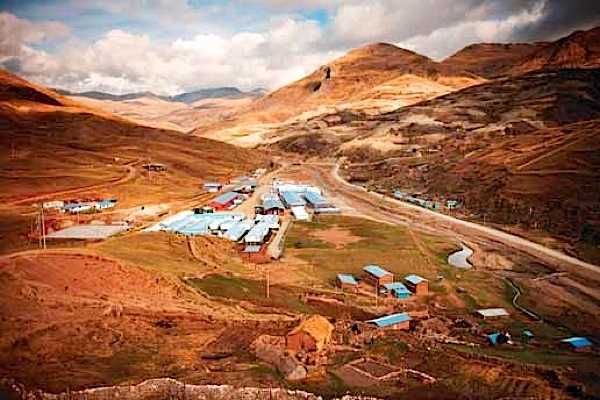
Carlos Monge, Latin America director for the New York-based nonprofit Natural Resource Governance Institute, blames that law for triggering a protest last month in which four people were killed by police bullets at a $7.4 billion Chinese-owned copper mining project.  Protest leaders complained that Las Bambas’ mine owner, China Minmetals Corp., altered the project’s plans without local consent, eliminating plans for a mineral pipeline. Instead, instead crushed ore was to be trucked through communities, increasing contamination.  In May, 2015 five people were killed as farmers in a rice-growing valley mobilized against another copper-mining project, this one Mexican-owned.  In both disputes, the government declared states of emergency and suspended civil liberties locally.  Said Monge: “More conflicts is a very possible scenario, as the government is seeking mining projects at all costs.”

Excerpts from Celebration of Peru’s economic boom comes late, Associated Press, Oct. 9, 2015

Drones in Peacekeeping Operations: South Sudan

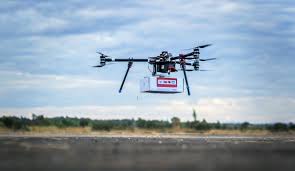
The U.N. Security Council is urging the use of unarmed drones in the peacekeeping mission in South Sudan, but the government there says that could cause “disagreement and hostility” as a peace deal tries to take hold.  The council on October 9, 2015 adopted a U.S.-drafted resolution requesting the U.N. secretary-general to “prioritize” the deployment of remaining troops, plus military helicopters and drones. The U.N. is exploring the use of drones in a growing number of peacekeeping missions after first using them in Congo in 2013.  But deploying the drones — even getting them into South Sudan — needs government consent. “The mission requires the collaboration and cooperation from the host authorities for its operations, including air and aviation ones,” a U.N. official said. The official spoke on condition of anonymity because they were not authorized to speak publicly.  Ambassador Francis Deng told the council that requesting drones without consulting his government is “to invite controversy.”

South Sudan’s rival sides signed a peace deal in August 2015, but numerous cease-fire violations have been reported. Each side blames the other for the violations. Meanwhile, more than 100,000 civilians remain sheltered in U.N. bases throughout the country. Thousands have been killed in the conflict fueled by the rivalry between President Salva Kiir and former vice president Riek Machar.  The council resolution also extends the peacekeeping mission’s mandate until Dec. 15 while supporting the implementation of the peace deal. The mission has more than 12,500 uniformed personnel on the ground.

Excerpts from UN Wants Peacekeeping Drones in South Sudan, Which Objects, Associated Press, Oct. 10, 2015

Climate Change 2015


Global carbon emissions were 58% higher in 2012 than they were in 1990. The atmospheric concentration of carbon dioxide has risen from just under 340 parts per million in 1980 to 400 in 2015.  To stand a fair chance of keeping warming to just 2°C by the end of the century—the goal of global climate policy—cumulative carbon emissions caused by humans must be kept under 1 trillion tonnes. Estimates vary but, according to the Intergovernmental Panel on Climate Change, the total had hit 515 billion tonnes by 2011. Climate Interactive, a research outfit, reckons that if emissions continue on their present course around 140 billion tonnes of greenhouse gases will be released each year and temperatures could rise by 4.5°C by 2100. And even if countries fully honour their recent pledges, temperatures may still increase by 3.5°C by then.

The world is already 0.75°C warmer than before the Industrial Revolution….

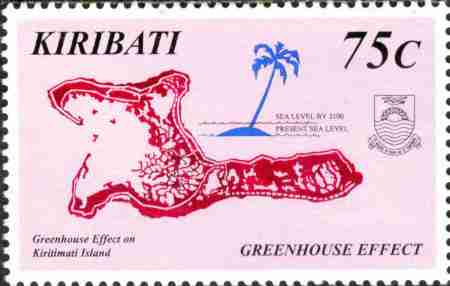
Melting glacier ice, and the fact that warmer water has a larger volume, mean higher sea levels: they have already risen by roughly 20cm since 1880 and could rise another metre by 2100. That is perilous for low-lying islands and flat countries: the government of Kiribati, a cluster of tropical islands, has bought land in Fiji to move residents to in case of flooding. Giza Gaspar Martins, a diplomat from Angola who leads the world’s poorest countries in the climate talks, points out that they are particularly vulnerable to the effects of a warming planet. Money alone, he argues, will not fix their problems. Without steps to reduce emissions, he predicts, “there will be nothing left to adapt for.”…

For every 0.6°C rise in temperature, the atmosphere’s capacity to hold water grows by 4%, meaning storms will pour forth with greater abandon. The rains of the Indian monsoon could therefore intensify, cutting yields of cereals and pulses.

Climate change seems also to be making dry places drier, killing crops and turning forests into kindling. Forest fires in Indonesia, more likely thanks to the current El Niño weather phenomenon, could release 2 billion tonnes of carbon dioxide, about 5% of annual emissions due to human activity, says Simon Lewis of University College London. In recent months fires have swallowed more than 2.4m hectares of American forests. Alaska suffered 80% of the damage—a particular problem because the soot released in these blazes darkens the ice, making it less able to reflect solar radiation away from the Earth.

Developments in the Arctic are worrying for other reasons, too. The region is warming twice as fast as the rest of the world, a trend that could start a vicious cycle. Around 1,700 gigatonnes of carbon are held in permafrost soils as frozen organic matter. If they thaw, vast amounts of methane, which is 25 times more powerful as a global-warming gas than carbon dioxide when measured over a century, will be released. One hypothesis suggests that self-reinforcing feedback between permafrost emissions and Arctic warming caused disaster before: 55m years ago temperatures jumped by 5°C in a few thousand years…

And on September 29th Mark Carney, the governor of the Bank of England, warned that though measures to avoid catastrophic climate change are essential, not least for long-term financial stability, in the shorter term they could cause investors huge losses by making reserves of oil, coal and gas “literally unburnable”.

Excerpts from Climate Change: It’s Getting Hotter, Economst, Oct. 3, 2015, at 63


Leaked Papers on US Drone War: 2015

The Obama administration has portrayed drones as an effective and efficient weapon in the ongoing war with al Qaeda and other radical groups. Yet classified Pentagon documents obtained by The Intercept reveal that the U.S. military has faced “critical shortfalls” in the technology and intelligence it uses to find and kill suspected terrorists in Yemen and Somalia.
Those shortfalls stem from the remote geography of Yemen and Somalia and the limited American presence there. As a result, the U.S. military has been overly reliant on signals intelligence from computers and cellphones, and the quality of those intercepts has been limited by constraints on surveillance flights in the region.

The documents are part of a study by a Pentagon Task Force on Intelligence, Surveillance, and Reconnaissance. They provide details about how targets were tracked for lethal missions carried out by the Joint Special Operations Command, or JSOC, in Yemen and Somalia between January 2011 and summer 2012. When the study was circulated in 2013, the Obama administration was publicly floating the idea of moving the bulk of its drone program to the Pentagon from the CIA, and the military was eager to make the case for more bases, more drones, higher video quality, and better eavesdropping equipment.

Yet by identifying the challenges and limitations facing the military’s “find, fix, finish” operations in Somalia and Yemen — the cycle of gathering intelligence, locating, and attacking a target — the conclusions of the ISR study would seem to undermine the Obama administration’s claims of a precise and effective campaign, and lend support to critics who have questioned the quality of intelligence used in drone strikes.

One of the most glaring problems identified in the ISR study was the U.S. military’s inability to carry out full-time surveillance of its targets in the Horn of Africa and Yemen. Behind this problem lies the “tyranny of distance” — a reference to the great lengths that aircraft must fly to their targets from the main U.S. air base in Djibouti, the small East African nation that borders Somalia and sits just across the Gulf of Aden from Yemen. Surveillance flights are limited by fuel — and, in the case of manned aircraft, the endurance of pilots. In contrast with Iraq, where more than 80 percent of “finishing operations” were conducted within 150 kilometers of an air base, the study notes that “most objectives in Yemen are ~ 500 km away” from Djibouti and “Somalia can be over 1,000 km.” The result is that drones and planes can spend half their air time in transit, and not enough time conducting actual surveillance….

Compounding the tyranny of distance, the ISR study complained, was the fact that JSOC had too few drones in the region to meet the requirements mandated for carrying out a finishing operation.  The “sparse” available resources meant that aircraft had to “cover more potential leads — stretching coverage and leading to [surveillance] ‘blinks.’” Because multiple aircraft needed to be “massed” over one target before a strike, surveillance of other targets temporarily ceased, thus breaking the military’s ideal of a “persistent stare” or the “unblinking eye” of around-the-clock tracking.

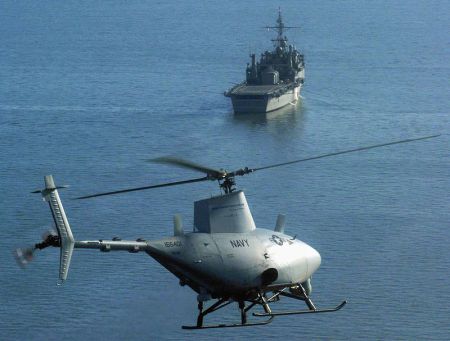
JSOC relied on manned spy planes to fill the orbit gap over Yemen. In June 2012 there were six U-28 spy planes in operation in East Africa and the Arabian Peninsula,..Only in the summer of 2012, with the addition of contractor-operated drones based in Ethiopia and Fire Scout unmanned helicopters, did Somalia have the minimum number of drones commanders wanted. The number of Predator drones stationed in Djibouti doubled over the course of the study, and in 2013, the fleet was moved from the main U.S. air base, Camp Lemonnier, to another Djibouti airstrip because of overcrowding and a string of crashes.

Expanding the use of aircraft launched from ships.

JSOC already made use of Fire Scout helicopter drones and small Scan Eagle drones off the coast of Somalia, as well as “Armada Sweep,” which a 2011 document from the National Security Agency, provided by former contractor Edward Snowden, describes as a “ship-based collection system” for electronic communications data. (The NSA declined to comment on Armada Sweep.)…

The find, fix, finish cycle is known in the military as FFF, or F3. But just as critical are two other letters: E and A, for “exploit and analyze,” referring to the use of materials collected on the ground and in detainee interrogations..  F3EA became doctrine in counterinsurgency campaigns in Iraq and Afghanistan in the mid-2000s…

[But] Assassinations are intelligence dead ends.  The ISR study shows that after a “kill operation” there is typically nobody on the ground to collect written material or laptops in the target’s house, or the phone on his body, or capture suspects and ask questions. Yet collection of on-the-ground intelligence of that sort — referred to as DOMEX, for “document and media exploitation,” and TIR, for “tactical interrogation report” — is invaluable for identifying future targets.,,,[Another issue is whether the US government can rely on foreign governments for intelligence]….In 2011, for example, U.S. officials told the Wall Street Journal that they had killed a local governor because Yemeni officials didn’t tell them he was present at a gathering of al Qaeda figures. “We think we got played,” one official said. (The Yemeni government disputed the report.)…
With limited ability to conduct raids or seize materials from targeted individuals in Yemen and Somalia, JSOC relied overwhelmingly on monitoring electronic communications to discover and ultimately locate targets.  The documents state bluntly that SIGINT is an inferior form of intelligence. Yet signals accounted for more than half the intelligence collected on targets, with much of it coming from foreign partners. The rest originated with human intelligence, primarily obtained by the CIA. “These sources,” the study notes, “are neither as timely nor as focused as tactical intelligence” from interrogations or seized materials.  Making matters worse, the documents refer to “poor” and “limited”capabilities for collecting SIGINT, implying a double bind in which kill operations were reliant on sparse amounts of inferior intelligence.

The disparity with other areas of operation was stark, as a chart contrasting cell data makes clear: In Afghanistan there were 8,900 cell data reports each month, versus 50 for Yemen and 160 for Somalia. Despite that, another chart shows SIGINT comprised more than half the data sources that went into developing targets in Somalia and Yemen in 2012.  Cellphone data was critical for finding and identifying targets, yet a chart from a Pentagon study shows that the military had far less information in Yemen and Somalia than it was accustomed to having in Afghanistan….

After locating a target, usually by his cellphone or other electronics, analysts would study video feeds from surveillance aircraft “to build near-certainty via identification of distinguishing physical characteristics.”

A British intelligence document on targeted killing in Afghanistan, which was among the Snowden files, describes a similar process of “monitoring a fixed location, and tracking any persons moving away from that location, and identifying if a similar pattern is experienced through SIGINT collect.” The document explains that “other visual indicators may be used to aid the establishment of [positive identification]” including “description of clothing” or “gait.” After a shot, according to the British document and case studies in the Pentagon’s ISR report, drones would hover to determine if their target had been hit, collecting video and evidence of whether the cellphone had been eliminated...  Yet according to the ISR study, the military faced “critical shortfalls of capabilities” in the technologies enabling that kind of precise surveillance and post-strike assessment. At the time of the study, only some of the Reaper drones had high-definition video, and most of the aircraft over the region lacked the ability to collect “dial number recognition” data.

Excerpts from Firing Blind, Intercept, the Drone Papers, Oct. 2015
Markets for Natural Resources: China

A nationwide  carbon-trading scheme, to be set up in 2017, is the most visible example of a broader trend in China towards using market mechanisms in environmental matters…[A] reform plan issued by the government on September 21st, 2015  laying out the basis of future policy, talks about developing “a market system which allows economic levers to play a greater role in environmental governance”. If the plan is to be believed, China will go further than any other country in developing environmental market mechanisms.

The plan talks of selling “green” bonds, ie, those financing projects certified as environmentally sound. The government will improve financial guarantees for low-carbon projects. But those are becoming common. More fundamentally, the reform says China will separate the ownership of all natural resources from the rights to use them—and sell the usage rights at market.

This is much more radical. The idea is rooted in communist dogma, which says all natural resources—land, rivers, minerals and so on—are collectively owned. The reform plan begins by calling for a massive Domesday-like inventory of who owns what, whether central government, provincial governments or lower tiers. It then says, with utter insouciance, that “with the exception of natural resources which are ecologically important [eg, national parks], the ownership rights and use rights for all other natural resources can be separated”. And, having separated them, the usage rights can be bought and sold, rented out, used as collateral or as the basis of loan guarantees, and so on.

The carbon-trading scheme suggests what this could mean in practice. It is like a market in energy-usage rights, with the carbon treated as part of the cost of using fossil fuels. A market in water rights will also be set up. Trials will be held in Gansu and Ningxia, two north-western provinces. The plan talks cryptically of setting up a “natural resource asset exchange”.

Excerpts from Markets and the environment: Domesday scenario, Economist, Oct. 3, 2015, at 46

Bio-Electrical Brains: Military

DARPA has selected seven teams of researchers to begin work on the Agency’s Electrical Prescriptions (ElectRx) program, which has as its goal the development of a closed-loop system that treats diseases by modulating the activity of peripheral nerves…. Ultimately, the program envisions a complete system that can be tested in human clinical trials aimed at conditions such as chronic pain, inflammatory disease, post-traumatic stress and other illnesses that may not be responsive to traditional treatments.

“The peripheral nervous system is the body’s information superhighway, communicating a vast array of sensory and motor signals that monitor our health status and effect changes in brain and organ functions to keep us healthy,“ said Doug Weber, the ElectRx program manager and a biomedical engineer who previously worked as a researcher for the Department of Veterans Affairs. “We envision technology that can detect the onset of disease and react automatically to restore health by stimulating peripheral nerves to modulate functions in the brain, spinal cord and internal organs.”

The oldest and simplest example of this concept is the cardiac pacemaker, which uses brief pulses of electricity to stimulate the heart to beat at a healthy rate. Extending this concept to other organs like the spleen may offer new opportunities for treating inflammatory diseases such as rheumatoid arthritis. Fighting inflammation may also provide new treatments for depression, which growing evidence suggests might be caused in part by excess levels of inflammatory biomolecules. Peripheral nerve stimulation may also be used to regulate production of neurochemicals that regulate learning and memory in the brain, offering new treatments for post-traumatic stress and other mental health disorders.

Circuit Therapeutics (Menlo Park, Calif.), a start-up co-founded by Karl Deisseroth and Scott Delp, is a new DARPA performer. The team plans to further develop its experimental optogenetic methods for treating neuropathic pain, building toward testing in animal models before seeking to move to clinical trials in humans.

A team at Columbia University (New York), led by Elisa Konofagou, will pursue fundamental science to support the use of non-invasive, targeted ultrasound for neuromodulation. The team aims to elucidate the underlying mechanisms that may make ultrasound an option for chronic intervention, including activation and inhibition of nerves.

A team at the Florey Institute of Neuroscience and Mental Health (Parkville, Australia), led by John Furness, is a first-time DARPA performer. Team members will seek to map the nerve pathways that underlie intestinal inflammation, with a focus on determining the correlations between animal models and human neural circuitry. They will also explore the use of neurostimulation technologies based on the cochlear implant —developed by Cochlear, Inc. to treat hearing loss, but adapted to modulate activity of the vagus nerve in response to biofeedback signals—as a possible treatment for inflammatory bowel disease.

A team at the Johns Hopkins University (Baltimore), led by Jiande Chen, aims to explore the root mechanisms of inflammatory bowel disease and the impact of sacral nerve stimulation on its progression. The team will apply a first-of-its-kind approach to visualize intestinal responses to neuromodulation in animal models.

A team at the Massachusetts Institute of Technology (Cambridge, Mass.), led by Polina Anikeeva, will aim to advance its established work in magnetic nanoparticles for localized, precision in vivo neuromodulation through thermal activation of neurons in animal models. The team’s work will target the adrenal gland and the splanchnic nerve circuits that govern its function. To increase specificity and minimize potential side effects of this method of stimulation, the team seeks to develop nanoparticles with the ability to bind to neuronal membranes. Dr. Anikeeva was previously a DARPA Young Faculty Awardee.

A team at Purdue University (West Lafayette, Ind.), led by Pedro Irazoqui, will leverage an existing collaboration with Cyberonics to study inflammation of the gastrointestinal tract and its responsiveness to vagal nerve stimulation through the neck. Validation of the mechanistic insights that emerge from the effort will take place in pre-clinical models in which novel neuromodulation devices will be applied to reduce inflammation in a feedback-controlled manner. Later stages of the effort could advance the design of clinical neuromodulation devices.

A team at the University of Texas, Dallas, led by Robert Rennaker and Michael Kilgard, will examine the use of vagal nerve stimulation to induce neural plasticity for the treatment of post-traumatic stress. As envisioned, stimulation could enhance learned behavioral responses that reduce fear and anxiety when presented with traumatic cues. Dr. Rennaker is a U.S. Marine Corps veteran who served in Liberia, Kuwait and Yugoslavia.

“Using the peripheral nervous system as a medium for delivering therapy is largely new territory and it’s rich with potential to manage many of the conditions that impact the readiness of our military and, more generally, the health of the nation,” Weber said. “It will be an exciting path forward.”

Press Release: Work Begins to Support Self-Healing of Body and Mind
Integrated, international efforts under ElectRx program blend mapping of neural circuits and development of novel bio-electrical interfaces  OUTREACH@DARPA.MIL, Oct. 5, 2015

The Costs of Stopping Biopiracy

Botanists think there are up to 80,000 wild species of flowering plant left to discover. But a scarcity of funds hampers efforts to collect them. The UN Convention on Biological Diversity of 1992, ratified by 195 states and the European Union, made things more complicated. It recognised plants as part of countries’ national heritage and outlawed “biopiracy”—profiting from plants without compensating the countries in which they were found.

That made exploiting plants fairer but collecting them harder. Some officials saw a chance to get rich. “Suddenly everyone thought these plants were incredibly valuable,” says Mr Hawtin. Getting permission to go on a collecting trip became nearly impossible. “Anybody could say no to a collecting expedition and very few people could say yes.”

Permits became sine qua non, but in poorer countries the environment ministries that were expected to issue them did not always exist. Collectors might see their applications bounced from one department to another, each unwilling to wield its rubber stamp. “No one wanted to be accused in their local paper of helping the biopirates,” says Mr Hawtin.

Persistent botanists have since earned some governments’ trust. It is now much easier to get approval for expeditions than it was in the 1990s, though often with restrictions on what may be collected. “Things are much better now than they were ten years ago,” says Sandy Knapp, head of the plants division at the Natural History Museum in London. A three-year permit from the Peruvian government allows her to collect specimens of Solanaceae, the family that includes tomatoes, potatoes and aubergines…The Millennium Seed Bank now holds workshops in many countries on collection and conservation techniques. It collaborates on expeditions and produces guidebooks to help locals locate and collect seeds for themselves. Yet some countries persist in imposing self-defeating restrictions. India’s biodiversity law, passed in 2002, makes exporting seeds very difficult and sits poorly with its international obligations. If governments fail to understand the urgency of preserving—and sharing—their biodiversity, there may soon be precious little left to collect.

Excerpts from Botany and bureaucracy: A dying breed, Economist,  Sept. 12, 2015, at 55

Kill Without Leaving Fingerpints: Iraq War

The Iraq war was, in part, a proxy battle between the US and Iran….By early 2007, some US intelligence estimates held that as many as 150 Iranian operatives were in Iraq. Many were member of the Quds Force, the covert arm of Iran’s Shi’ite theocracy. Their mission was to coordinate the violent campaign being waged against US forces by Iraq’s Shi’ite militias.“It was 100 percent, ‘Are you willing to kill Americans and are you willing to coordinate attacks?’ ” said an officer who studied the Quds Force’s approach closely. “ ‘If the answer is “yes,” here’s arms, here’s money.’ ”

The Joint Special Operations Command (JSOC) set up a new task force, named Task Force 17.Its mandate was simple: go after “anything that Iran is doing to aid in the destabilization of Iraq,” said a Task Force 17 officer…But political restrictions hobbled Task Force 17, particularly as the US lowered its profile in Iraq. The country’s Shi’ite-dominated government, headed by Prime Minister Nouri al-Maliki, wasn’t happy with any attacks that targeted Iran operatives or their Iraqi proxies.  But for a small number of Shi’ite targets, JSOC found a way around the political restrictions by killing its enemies without leaving any US fingerprints.  The command did this using a device called the “Xbox.”

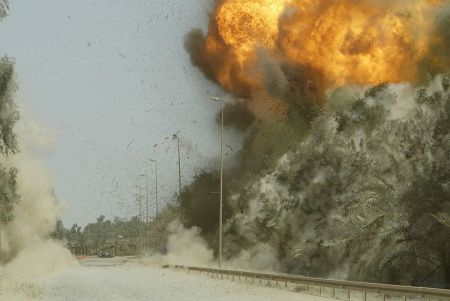
Developed jointly by Delta Force and SEAL Team 6, the Xbox was a bomb designed to look and behave exactly like one made by Iraqi insurgents, using materials typically found in locally made improvised explosive devices…[The Xbox] was made by the Delta and Team 6 explosive ordnance disposal (EOD) personnel… After capturing some IEDs intact on the Afghan and Iraqi battlefields, the EOD troops set about taking them apart.  It wasn’t long before they realized they could build them as well..  At first, the officer said, JSOC’s bomb makers used components typically found in the Afghanistan-Pakistan theater: “Chinese circuits and Pakistani parts . . . and explosives from old Soviet munitions, et cetera.”  The intent was to create a device that if it were sent to the FBI’s Terrorist Explosive Device Analytical Center in Quantico, Va., the Bureau’s experts would mistakenly trace the bomb back to a particular terrorist bomb maker because of certain supposedly telltale signature elements of the design that JSOC’s explosive ordnance disposal gurus had managed to re-create.

But the Xbox was different from regular IEDs in several ways… First, unlike many IEDs, such as those detonated by vehicles running over pressure plates, it had to be command detonated, meaning an operator somewhere was watching the target and then pressing a button. Another design requirement was that the Xbox device had to be extremely stable, to avoid the sort of premature explosions that often kill terrorists.

JSOC wanted to use the device to kill individuals, rather than crowds…JSOC used reconnaissance operators, who are typically some of Delta’s most experienced, because getting the device into position, by placing it in the target’s vehicle, for example, was “a lot of work,” he said. It usually involved surveillance of the target for days on end, understanding his pattern of life — his daily routines — so that the operators could predict when they would be able to gain access to his vehicle unobserved….[A] senior Team 6 source, who questioned the morality of using the device [said]: “[It’s] a great tool, but as many of us have said — hey, we’re no different than the enemy if we’re just blowing people up with booby traps.”

Excerpted from Sean Naylor “Relentless Strike: The Secret History of Joint Special Operations Command” (2015)

Biodiversity: the wild relatives of crops

“Crop wild relatives”—the wild ancestors of cultivated plants—are a valuable weapon in the fight against hunger. Together with varieties used by traditional farmers, they contain a wealth of genetic diversity. Yet they are under-researched and under-collected. With their survival threatened by population growth and environmental damage, the race is on to find them before it is too late.

Climate change is expected to cause higher temperatures and more frequent droughts, changing the distribution of pests and diseases. Population growth will add to the pressure on productive land: the UN expects the number of people in the world to rise from 7.3 billion today to 9.7 billion by 2050. …Dependence on a few staples worsens the consequences of any crop failure. Just 30 crops provide humans with 95% of the energy they get from food, and just five—rice, wheat, maize, millet and sorghum—provide 60%. A single variety of banana—Cavendish—accounts for 95% of exports. A fast-spreading pest or disease could see some widely eaten foodstuffs wiped out.

That makes it even more important to preserve the genetic diversity found in crop wild relatives and traditional varieties as an insurance policy. Alas, much of it has already disappeared. The FAO estimates that 75% of the world’s crop diversity was lost between 1900 and 2000. As farming intensified, commercial growers favoured a few varieties of each species—those that were most productive and easiest to store and ship.

According to Cary Fowler of the Global Crop Diversity Trust, an international organisation based in Germany, in the 1800s American farmers and gardeners grew 7,100 named varieties of apple. Today, at least 6,800 of them are no longer available, and a study in 2009 found that 11 accounted for more than 90% of those sold in America. Just one, “Red Delicious”, a variety with a thick skin that hides bruises, accounts for 37%.

Seed banks are the best hope of preserving those that remain. Dehydrating and freezing seeds means that they can be kept for hundreds, perhaps even thousands, of years, and still sprout when given light and water (as botanists need to do on occasion). Some 7.4m samples are already in seed banks around the world, but huge gaps exist.

As part of a study to be published later this year, Colin Khoury and Nora Castañeda-Álvarez of the International Centre for Tropical Agriculture (CIAT), a research facility in Colombia, studied the state of conservation of more than a thousand crop wild relatives in seed banks. They found that for over 70% there were either too few samples for safety or none at all.

The Millennium Seed Bank (MSB) in Sussex, part of Britain’s Royal Botanic Gardens, is the world’s largest wild-plant seed bank, housing 76,000 samples from more than 36,000 species. It co-ordinates “Adapting Agriculture to Climate Change”, a $50m, ten-year international programme funded by Norway to collect and store wild relatives of 29 important crops, cross them with their domesticated kin and share the results with breeders and farmers. Its freezers are solar-powered and its vault is built to withstand a direct hit by a plane (Gatwick airport is close by). Other seed banks are more vulnerable. Staff at the International Centre for Agricultural Research in the Dry Areas, an institute once based in Syria, now found in Lebanon, shipped 150,000 samples to save them from being damaged in the former country’s civil war; seed banks in Afghanistan and Iraq have been destroyed. The Philippines lost one to fire.

Located in Cali, Colombia’s third-largest city, CIAT is home to more than 300 scientists. It has a mandate from the UN to protect, research and distribute beans and cassava, staple foodstuffs for 900m people around the world. Its seed bank, housed in a former abattoir, contains over 36,000 samples of beans, more than any other seed bank, and varieties developed there feed 30m people in Africa.

For many years CIAT’s researchers concentrated on creating varieties that could cope with poor soils and drought. But they have now turned their attention to heat resistance. Earlier this year they announced that they had found heat resistance in the tepary bean, a hardy cousin of the common bean cultivated since pre-Columbian times in northern Mexico and America’s south-west. Crosses with commonly cultivated beans such as pinto, black and kidney beans show potential to withstand temperatures up to 5°C higher than those common varieties can cope with. Even a lesser increase in heat resistance, of 3°C, would mean beans could continue to be cultivated in almost all parts of central and eastern Africa, says Steve Beebe of CIAT’s bean-breeding programme…

The International Treaty on Plant Genetic Resources for Food and Agriculture, which came into effect in 2004 and has been signed by 135 countries and the European Union, identifies 35 food crops that are considered so important to global food security and sustainable agriculture that their genetic diversity should be widely shared. But it has worked less well than hoped. In 2013 a group of Norwegian researchers sent letters to 121 countries requesting seeds. Only 44 complied. Communication broke down with 23 and 54 did not even reply.

If a big crop were to fail, a single useful gene lurking in one wild relative could prevent calamity. PwC, an accountancy firm, values the genes derived from the wild relatives of the 29 crops regarded as most important by the MSB at $120 billion. Preserving the genetic diversity that remains would be an excellent investment.

Agricultural Biodiversity, Banks for Bean Counters, Economist, Sept. 12, 2015, at 54