Monthly Archives: March 2023

Pledge and Renege: Drilling for Oil in the Alaska Arctic

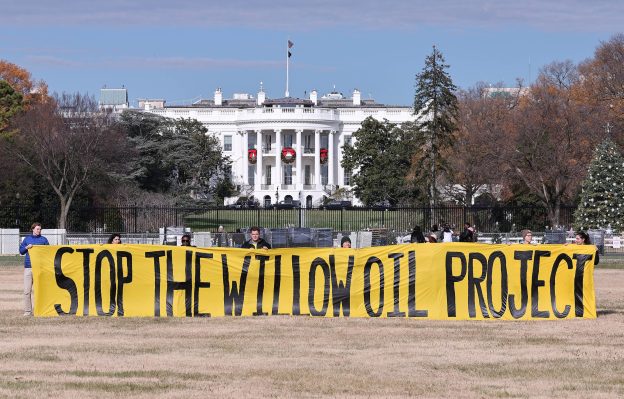
The Biden administration approved the massive Willow oil-drilling project in the Alaskan Arctic in March 2023 over the objections of environmentalists and many Democrats who wanted the project scuttled. The green light means Houston-based ConocoPhillips can start construction on its roughly $7 billion project in Alaska’s National Petroleum Reserve, which the company expects will produce about 180,000 barrels of oil a day at its peak—equivalent to about 40% of Alaska’s current crude production…The Bureau of Land Management (BLM) has estimated that oil and gas extracted from its recommended version of the Willow project would generate more than 270 million metric tons of carbon dioxide over the project’s lifetime. 

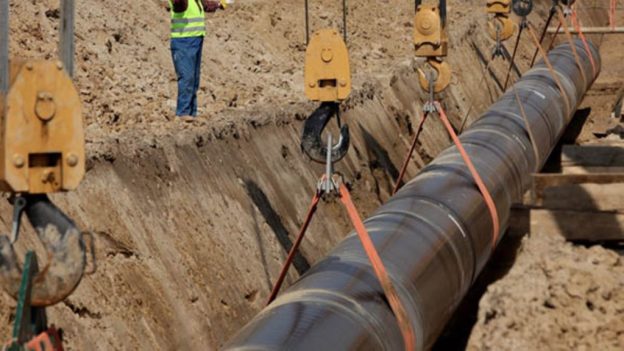
The approval paves the way for ConocoPhillips to build an airstrip, more than 430 miles of ice roads and nearly 270 miles of individual pipelines, among other infrastructure, according to the BLM’s environmental review of the project… 

The company, which is the largest crude producer in Alaska, sits on abundant reserves in the state. As of the end of 2021, it owned about 1.6 million net undeveloped acres in the state, according to ConocoPhillips. Approval of the project means that ConocoPhillips now has a hub from which to further expand into Alaska… The initial build-out from Willow will allow ConocoPhillips to develop more wells and infrastructure in the coming years, he said. “It will be in many ways the gift that keeps on giving…”

Excerpts from Benoît Morenne, Biden Administration Approves Willow Oil-Drilling Project in Alaskan Arctic, WSJ, Mar. 13, 2023

Farm-bred Monkeys, Real Monkeys and Drug Testing

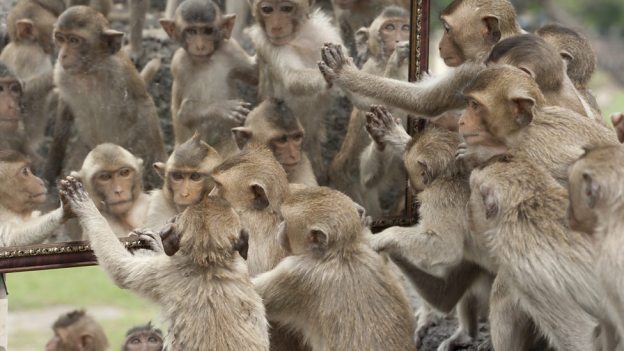
While many of us would prefer not to give it much thought, monkeys are often used in laboratory tests during the development of key medical products such as the Covid-19 vaccines. Sadly, the global trade in nonhuman primates can involve murky dealings, including smuggling of illegal animals. The resulting blowback is of great concern to America’s world-leading medical research. Due to rising biomedical-research needs—and the limited supply of long-tailed macaques from breeding farms in Southeast Asia—there has long been a black market for monkeys caught in the wild. Rampant smuggling was a key reason behind the International Union for Conservation of Nature’s decision in 2022 to change long-tailed macaques’ status from “vulnerable” to “endangered.”

The U.S., the world’s largest importer of the animals, finally is doing something about it, but coordination among various government agencies has been faulty. Federal prosecutors in November  2022  charged eight people with running an international operation to poach wild monkeys. Among those charged were two Cambodian wildlife officials, one of whom was arrested in the U.S.—while traveling to an endangered-species conference. The largest U.S. monkey importers have received subpoenas as part of the probe, leading them to temporarily halt shipments from Cambodia.

The crackdown is exacerbating a shortage of nonhuman primates for research in the U.S. About 60% of the 30,000 biomedical-research monkeys imported annually to the U.S. used to come from China, but Beijing banned those exports during the pandemic, forcing American companies to pivot to Cambodia. The Chinese move, many in the industry say, was designed to give that nation an edge in the biomedical field in the midst of a pandemic and a trade war between the two superpowers… The shortage has driven up the cost of a nonhuman primate to more than $30,000 in 2023, from about $2,500 prepandemic, according to Elizabeth Anderson, an analyst at Evercore ISI.

The shortage is leading to a scramble to find different sources for research primates. But raising monkeys for laboratory testing takes years, so there is no immediate fix, even though alternate sources are growing in places like Mauritius, Indonesia, Vietnam and the Philippines.

Excerpts from David Wainer, Monkey Business Threatens U.S. Drug Discovery, WSJ, Mar. 3, 2023

Fear of the Enemy Within: Unrestricted Surveillance

The Supreme Court declined to hear a constitutional challenge to a secretive government surveillance program, dealing a setback to privacy groups including the American Civil Liberties Union ahead of a looming debate in Congress over whether to renew the law that authorizes the intelligence tool.

In a brief order issued on February 2023, the high court said it wouldn’t hear arguments challenging the legality of the National Security Agency program known as “Upstream,” in which the intelligence agency collects and monitors internet communications without obtaining search warrants. Classified details about the program were among those exposed a decade ago by former intelligence contractor Edward Snowden, who has been charged with theft of government property and violating espionage laws and lives in Russia.

The legal challenge was brought by Wikimedia, the nonprofit owner of the Wikipedia online encyclopedia. Wikimedia was represented by lawyers at the ACLU, Cooley LLP and the Knight First Amendment Institute at Columbia University. Wikimedia’s lawyers urged the high court to rein in the “state secrets privilege,” a legal doctrine that allows the government to shut down lawsuits that could jeopardize sensitive national-security information. 

“The Supreme Court’s refusal to grant our petition strikes a blow against an individual’s right to privacy and freedom of expression—two cornerstones of our society and the building blocks of Wikipedia,” said James Buatti, Wikimedia’s legal director, in a statement.

Excerpts from  Jan Wolfe  and Dustin Volz, Justices Won’t Hear Challenged to NSA Surveillance, Feb. 22, 2023

Visible and Vulnerable: the Power Grid and Terrorism

Physical attacks on the U.S. power grid rose 71% last year compared with 2021 and will likely increase this year, according to a confidential industry analysis viewed by The Wall Street Journal. A division of the grid oversight body known as the North American Electric Reliability Corporation found that ballistic damage, intrusion and vandalism largely drove the increase. The analysis also determined that physical security incidents involving power outages have increased 20% since 2020, attributed to people frustrated by the onset of the pandemic, social tensions and economic challenges.

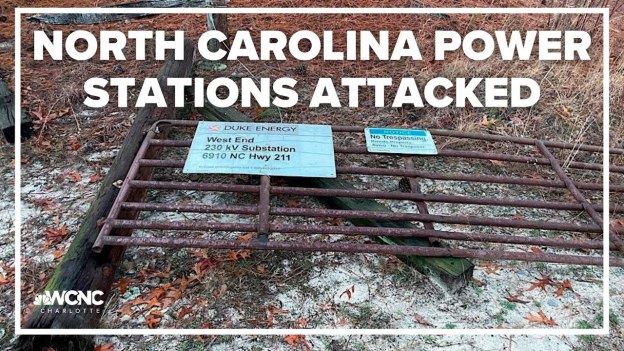
The NERC division, known as the Electricity Information Sharing and Analysis Center, or E-ISAC, recorded the sharp increase in incidents in 2022, driven in part by a series of clustered attacks on infrastructure in the Southeast, Midwest and Pacific Northwest. One of the most significant incidents occurred in early December 2022 when attackers targeted several substations in North Carolina with gunfire, leaving roughly 45,000 people in the dark…The number of politically or ideologically motivated attacks appears to be growing though it is difficult to identify the reasons for each one.  There seems to be a pattern where people are targeting critical infrastructure, probably with the intent to disrupt. In 2013, snipers targeted a large-scale transmission substation near San Jose, Calif., and raised fears that the country’s power grid was vulnerable to terrorism. The attack took out 17 transformers critical to supplying power to Silicon Valley, authorities said. A former federal regulator at the time called the event “the most significant incident of domestic terrorism involving the grid that has ever occurred.”

Excerpts from Katherine Blunt, Power-Grid Attacks Surge and Are Likely to Continue, Study Finds, WSJ, Feb. 22, 2023

Pollution as an Entitlement of the Rich

The East African Crude Oil Pipeline, a 900-mile pipeline between Uganda and Tanzania at the Murchison Falls National Park, is about to be built. The $10 billion project has become a flashpoint in the global battle against climate change, as some African governments with unexplored natural resources seek to resist a global push to limit investment in new fossil-fuel projects.

Opponents such as the U.S.-based Climate Accountability Institute, France’s Friends of the Earth and the European Parliament say the pipeline, which needs to be heated to 50 degrees Celsius (122 degrees Fahrenheit) to keep Uganda’s waxy crude liquid, would produce 34.3 million tons in annual greenhouse-gas emissions… But the governments of Uganda and Tanzania are arguing that they can’t afford not to exploit their natural resources while the world still runs on fossil fuels. It is unfair, they say, to ask poor countries to safeguard global carbon sinks and nature reserves that rich Western countries, which are responsible for most historic emissions, destroyed long ago in pursuit of their own economic development.

Nothing will stop this project,” Uganda’s President Yoweri Museveni, said from the garden of his official residence in Kampala. “We shall not accept any pressure from anybody. We know what we are doing.” TotalEnergies SE and China’s Cnooc Ltd. are involved in the project. Fitch Solutions estimates that Uganda could earn as much as $2 billion a year in taxes and royalties from the 230,000 barrels-a-day fields and the pipeline, a significant bump to the $4.5 billion it currently collects in domestic taxes.

Uganda’s neighbor, the Democratic Republic of Congo, has faced criticism, including from the Biden administration, over its plans to auction off oil-and-gas drilling sites inside its famed Virunga National Park, home to some of the world’s last remaining mountain gorillas, and peatland and rainforest areas that absorb carbon. Further south, the government of Namibia is under pressure from the United Nations to put a stop to exploratory oil drilling in the Okavango Delta, a UNESCO World Heritage site. 

The moves aren’t confined to Africa. In Mexico, President Andrés Manuel López Obrador has bet big on fossil energy. He is building a large oil refinery, the first one in the country since 1979, which is expected to start production in July, and ramped up public investment in oil exploration and production. In response to criticism from the U.S. and environmental groups, Mr. López Obrador has said that climate change became a fashionable topic among rich countries and accused some them of being hypocritical for defending reducing gas emissions while at the same time boosting oil output.

In the case of the East African Crude Oil Pipeline, more than a dozen international banks and insurers—including HSBC, Barclays and major French lenders that have helped finance previous TotalEnergies projects—have publicly said they won’t support it. ..TotalEnergies says it is confident it can raise the financing necessary to build the pipeline, with South Africa’s Standard Bank, the Industrial and Commercial Bank of China and Japan’s Sumitomo Mitsui Bank acting as lead arrangers for the project loans. People familiar with the project say the participating banks are asking for higher interest rates, which has helped raise the cost of the pipeline to $5 billion from $3.5 billion.

Some officials in poorer countries say such restrictions on developing new oil infrastructure in poor countries exacerbate global inequities, by allowing countries that already have the necessary infrastructure to profit from their fossil-fuel reserves, while potential newcomers are locked out. Uganda, like other African countries, saw protests over record-high fuel prices last year, while Tanzania’s government introduced a costly fuel subsidy to cushion the hit on households and businesses.

Excerpts from Ncholas Bariyom Uganda, Other African Nations Push for Fossil-Fuel Projects, WSJ, Feb. 22, 2023
Under Wraps: US-China Hostilities

The mid-air crash in 2001 between an American EP3 spy plane and a Chinese fighter jet that left the Chinese pilot dead and 24 American crew members in detention after an emergency landing in China.

China seized an American underwater drone in the South China Sea in 2016. The U.S. sent radio messages requesting that the drone be returned, but the Chinese ship merely acknowledged the messages and ignored the request. The US subsequently demanded the drone’s return.

The Military Internet: DARPA, Amazon and Space X

Satellites are crucial military infrastructure for spying and communications. They are also vulnerable to attack and disruption. In November 2021, three months before it invaded Ukraine, Russia fired a missile into a defunct satellite. Then, in October, a Russian diplomat declared even commercial satellites could be legitimate targets. Satellite systems used by Ukraine have been hacked and jammed. Ground antennae have been attacked.

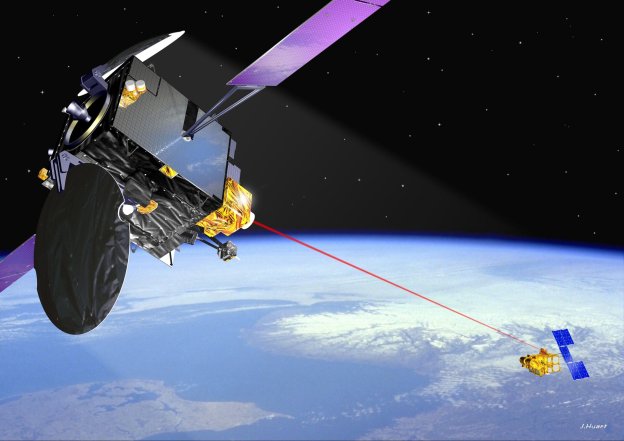
In light of this sort of thing, America’s military establishment is worried that its satellite network is not up to snuff. But it has a plan. The Space-Based Adaptive Communications Node (Space-BACN, or “Space Bacon”) will, if successful, create a laser-enabled military internet in orbit around Earth by piggybacking on a number of satellites that would have been launched anyway.

Space Bacon is a brainchild of DARPA, the special-projects research arm of the Department of Defense, and is an intriguing orbiting echo of the original, terrestrial ARPNET, which evolved into the internet…The plan is to fit as many newly launched satellites as possibly with laser transceivers that will be able to communicate with counterparts as far away as 5,000km. Satellite owners will pay for these transceivers, but will then receive payments from the American government for their use.

Space Bacon promises many benefits. Unlike radio, the normal mode of communication with and between satellites, transmissions by laser beam are hard to intercept and almost impossible to jam. Indeed, adversaries might not even know when a transmission is taking place, a bonus for operational secrecy.

DARPA wants Space Bacon to cost a maximum of $100,000 a satellite, the better to encourage participation. It bodes well that Amazon, SpaceX and Viasat are all designing command-and-control architectures for Space Bacon.

Excerpts from DARPA, lasers and an internet in orbit, Economist, Feb. 11, 2023

The Economics and Conflicts of Near Space: US Balloons

American military and civilian agencies have flown balloons over the U.S. for a growing range of national-security applications, scientific research, intelligence collection and commercial uses… Less known is the extent to which the U.S. has floated balloons over foreign countries, though there are examples in history. In the 1950s during the Cold War, the U.S. flew balloons outfitted with cameras over Soviet airspace, an operation sometimes referred to as Project Moby Dick, before later switching to U-2 spy planes…

The diplomatic confrontation with China over the alleged spy balloon the U.S. shot down off the South Carolina coast in February 2022 is likely to fuel greater interest from government and the private sector in surveillance balloon manufacturing and detection, analysts said. “We’re seeing the exploitation of near space,” said retired Gen. John Jumper…

World View Enterprises Inc., a Tucson, Arizona company that says it has launched more than 120 high-altitude balloon missions in the last decade, rigs balloons with cameras to inspect natural-gas and oil pipelines and sensors to sniff the atmosphere for traces of gases like methane. Balloons hover far closer to earth than satellites’ orbits, enabling them to gather higher quality data…The company says it has provided its remote sensing services to civilian and government agencies and private companies…

Twice a day, meteorologists across the world launch weather balloons to collect information about the atmosphere’s temperature, pressure and humidity to feed short-term weather forecasts as well as longer-term seasonal climate predictions. These simple latex balloons carry a device called a radiosonde that weighs a few ounces and transmits the data back to ground stations as they float up to 115,000 feet before popping after a two-hour flight… 

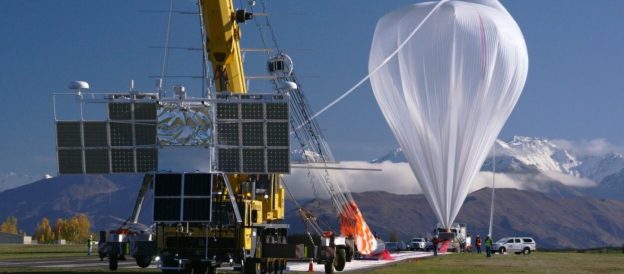
NASA and research agencies from several other Western nations also operate massive research balloons that spend several weeks circling the globe in the stratosphere at altitudes of up to 120,000 feet. Since these balloons travel beyond the limit of a traditional commercial aircraft—which travel generally between 30,000 and 40,000 feet—they can give vital information about atmospheric conditions and chemistry, as well as astronomical observations, that drones or high-altitude aircraft can’t obtain… 

The Pentagon’s Defense Innovation Unit has contracted Aerostar to explore military applications. Aerostar has said its balloons can loiter for weeks or even months in position, using solar panels to recharge onboard batteries.

“Now the stratosphere is very clearly a new and contested domain,” says Mr. Hartman, referring to the region of the atmosphere that runs roughly from four to 30 miles in altitude. “We call it the stratosphere economy.”

Excerpts from Dustin Volz et al., What Does the U.S. Do With Its Own Balloons?, WSJ, Feb. 14, 2023

Mapping the Impossible: Extreme Weather Events

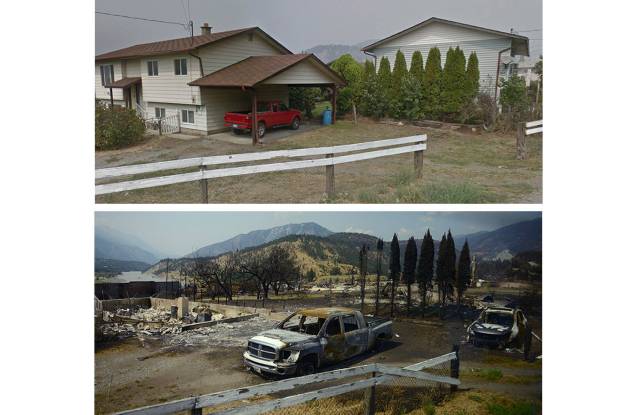
The heatwave that struck parts of North America’s Pacific coast in 2021 propelled temperatures in Lytton, a village in British Columbia, to 49.6°C—4.6° higher than the previous record. On the fourth day of this torment the place erupted in flames and was almost completely destroyed. These events were so out of the ordinary that, in a press conference held some weeks later by climate modelers, they struggled to explain how circumstances had conjured them.

Climatologists reckon the North American heatwave of 2021 was one of the most extreme deviations from meteorological norms ever recorded, anywhere. But others have come close. As the world gets hotter, phenomena once considered rare are becoming common and others, believed impossible, are happening.

This shift in weather patterns has inspired modelers to pay more attention to the tails of the frequency distributions of meteorological possibility which their models generate (see chart), in search of such unprecedented extremes. One recent exercise, led by Erich Fischer at eth Zurich, a technology university in Switzerland, shows how the heatwave that destroyed Lytton could have been foreseen with data available at the time….The approach Dr Fischer used is one of several developed recently. Another, from Britain’s Met Office, is UNSEEN  (Unprecedented Simulation of Extremes with Ensembles)…Researchers in the UK are looking at another sort of extreme event—the risk of “wind droughts” which would wipe out a lot of the country’s wind-turbine-base electricity supply. It would be ironic indeed if Britain’s huge effort to combat climate change in this way were, itself, to fall victim to a changing climate.

The Paris Olympics, to be held in 2024, will take place during that city’s hottest weeks. A group of meteorologists from various French research institutes therefore wondered just how bad a heatwave manifesting itself then might be. Using yet another approach, they found a chance of temperatures being more than 4°C higher than they were during a catastrophic heatwave in 2003, in which tens of thousands died. Since that happened, France has built a “heat plan” which includes an early-warning system and provisions for opening cool spaces if needed.

Excerpts from How to predict record-shattering weather events, Economist, Feb. 11, 2023