Category Archives: geoeconomics

US Government Lobbying for Biotechnology Industry

American diplomats lobbied aggressively overseas to promote genetically modified (GM) food crops such as soy beans, an analysis of official cable traffic revealed on Tuesday.  The review of more than 900 diplomatic cables by the campaign group Food and Water Watch showed a carefully crafted campaign to break down resistance to GM products in Europe and other countries, and so help promote the bottom line of big American agricultural businesses.

The cables, which first surfaced with the Wikileaks disclosures two years ago, described a series of separate public relations strategies, unrolled at dozens of press junkets and biotech conferences, aimed at convincing scientists, media, industry, farmers, elected officials and others of the safety and benefits of GM producs…The public relations effort unrolled by the State Department also ventured into legal terrain, accotrding to the report. US officials stationed overseas opposed GM food labelling laws as well as rules blocking the import of GM foods. The report notes that some of the lobbying effort had direct benefits. About 7% of the cables mentioned specific companies, and 6% mentioned Monsanto. “This corporate diplomacy was nearly twice as common as diplomatic efforts on food aid,” the report said….

In some instances, there was little pretence at hiding that resort to pressure – at least within US government circles. In a 2007 cable, released during the earlier Wikileaks disclosures, Craig Stapleton, a friend and former business partner of George Bush, advised Washington to draw up a target list in Europe in response to a move by France to ban a variety of GM Monsanto corn.  “Country team Paris recommends that we calibrate a target retaliation list that causes some pain across the EU since this is a collective responsibility, but that also focuses in part on the worst culprits,” Stapleton wrote at the time.”The list should be measured rather than vicious and must be sustainable over the long term, since we should not expect an early victory. Moving to retaliation will make clear that the current path has real costs to EU interests and could help strengthen European pro-biotech voices,” he wrote.

Excerpts, Suzanne Goldenberg,Diplomatic cables reveal aggressive GM lobbying by US officials, Guardian, May 15, 2013

Choking Uranium Markets to Stop Nuclear Weapons

Making nuclear weapons requires access to materials—highly enriched uranium or plutonium—that do not exist in nature in a weapons-usable form.   The most important suppliers of nuclear technology have recently agreed guidelines to restrict access to the most sensitive industrial items, in the framework of the Nuclear Suppliers Group (NSG). Nevertheless, the number of countries proficient in these industrial processes has increased over time, and it is now questionable whether a strategy based on close monitoring of technology ‘choke points’ is by itself a reliable barrier to nuclear proliferation.  Time to tighten regulation of the uranium market?

Not all the states that have developed a complex nuclear fuel cycle have naturally abundant uranium. This has created a global market for uranium that is relatively free—particularly compared with the market for sensitive technologies….

Many African states have experienced increased investment in their uranium extractive sectors in recent years. Many, though not all, have signed and ratified the 1996 African Nuclear Weapon Free Zone (Pelindaba) Treaty, which entered into force in 2009. Furthermore, in recent years, the relevant countries have often worked with the IAEA to introduce an Additional Protocol to their safeguards agreement with the agency…

One proliferation risk inherent in the current system is that inadequate or falsified information connected to what appear to be legitimate transactions will facilitate uranium acquisition by countries that the producer country would not wish to supply….

A second risk is that uranium ore concentrate (UOC) is diverted, either from the site where it was processed or during transportation, so the legitimate owners no longer have control over it. UOC is usually produced at facilities close to mines—often at the mining site itself—to avoid the cost and inconvenience of transporting large quantities of very heavy ore in raw form to a processing plant.,,,UOC is usually packed into steel drums that are loaded into standard shipping containers for onward movement by road, rail or sea for further processing. The loss of custody over relatively small quantities of UOC represents a serious risk if diversion takes place regularly. The loss of even one full standard container during transport would be a serious proliferation risk by itself. There is thus a need for physical protection of the ore concentrate to reduce the risk of diversion at these stages.

A third risk is that some uranium extraction activity is not covered by the existing rules. For example, uranium extraction can be a side activity connected to gold mining or the production of phosphates. Regulations should cover all activities that could lead to uranium extraction, not only those where uranium extraction is the main stated objective.

Restricting access to natural uranium could be an important aspect of the global efforts to obstruct the spread of nuclear weapons

Excerpts, from  Ian Anthony and Lina Grip, The global market in natural uranium—from proliferation risk to non-proliferation opportunity, SIPRI, Apr. 13, 2013

Multinational Corporations in US Courts: Kiobel v. Shell

The Alien Tort Statute (ATS)… grants American district courts jurisdiction over “any civil action by an alien for a tort only, committed in violation of the law of nations or of a treaty of the United States”. At the age of 190 it sprang back to life on April 6th 1979, when it was used to allow two Paraguayans to sue a former Paraguayan policeman in an American court for acts of torture committed in Paraguay.Since then, roughly 150 lawsuits have been filed against American and foreign corporations for actions committed around the world. Four local plaintiffs used the ATS to sue Unocal in a federal court in Los Angeles for human-rights violations allegedly committed during the construction of an oil pipeline in Myanmar. A human-rights organisation used it to sue Yahoo on behalf of two Chinese democracy activists for actions committed in China by a subsidiary. ATS suits against DaimlerChrysler and Rio Tinto, among others, are pending. Though most ATS cases have been dismissed or settled, the costs of settlements can be high and the negative publicity damaging.

Multinational companies will therefore cheer the Supreme Court’s unanimous decision in Kiobel v Royal Dutch Petroleum (Shell), released on April 17th, 2013. It dramatically limits the ability of plaintiffs to file suit against corporations in American courts for actions committed abroad.  The ruling stems from a case brought in New York by 12 Nigerian plaintiffs living in America. They allege that Shell was complicit in human-rights violations—including murder, rape, theft and destruction of property—committed by Nigeria’s armed forces in the region of Ogoniland. A federal appeals court dismissed their suit, arguing that the ATS provides no grounds for corporate-liability lawsuits. But as the 150 ATS suits show, other courts have disagreed. The Supreme Court agreed to hear the case in order to settle the question.

In an earlier ruling, in 2004, the court cautiously ruled that the ATS permitted lawsuits for “a modest number of international law violations”, such as piracy and crimes involving ambassadors, which would have been recognised when it was adopted. The court’s Kiobel ruling goes much further. It holds that the ATS does not apply to actions committed by foreign companies, and noted a strong presumption against applying American law outside the United States, “There is no indication,” wrote John Roberts, the chief justice, “that the ATS was passed to make the United States a uniquely hospitable forum for the enforcement of international norms”.  In a separate concurrence, four of the court’s liberals took a slightly softer tack, arguing that the ATS should allow suits that prevent America from becoming “a safe harbour…for a torturer or other common enemy of mankind”. But that reasoning still does not permit foreign nationals to use American courts to sue foreign companies for acts committed on foreign soil.

Extraterritoriality: The Shell game ends, Economist, Apr. 20, 2013, at 34

Foreign Corporate Immunity: Chevron/Canada v. Ecuador

A Toronto judge halted on May 1, 2013 an effort to enforce a $19 billion Ecuadorean judgment against U.S. oil company Chevron Corp in Canada, finding that his Ontario provincial court was the wrong place for the case.  The action is the latest skirmish in a two-decade conflict between Chevron and residents of Ecuador’s Lago Agrio region over claims that Texaco, which Chevron acquired in 2001, contaminated the area from 1964 to 1992.

Citing Chevron’s promise to fight the plaintiffs until “hell freezes over, and then fight it out on the ice,” Justice David Brown of the Ontario court foresaw a “bitter, protracted” battle that would be costly and time consuming.  “While Ontario enjoys a bountiful supply of ice for part of each year, Ontario is not the place for that fight,” Brown wrote in his ruling on Wednesday. “Ontario courts should be reluctant to dedicate their resources to disputes where, in dollars and cents terms, there is nothing to fight over.”

Alan Lenczner, principal lawyer in Toronto for the Ecuadorean plaintiffs, said they would definitely appeal, arguing that a multinational company could not be immune from enforcement in a country where it earns so much. “Chevron Corp itself earns no money,” he said in a statement. “All its earnings and profits come from subsidiaries including, importantly, Chevron Canada.”  Chevron Canada’s assets are worth more than $12 billion, the plaintiffs had said, and alongside separate actions in Argentina and Brazil, they had sought to persuade the Ontario court to collect the damages awarded to them by the South American court.

Chevron, the second-largest U.S. oil company, has steadfastly refused to pay, saying the February 2011 ruling by the court in Lago Agrio was influenced by fraud and bribery. A related fraud case goes to trial in New York in October.  The Supreme Court of Canada has ruled that the country’s courts can recognize and enforce foreign judgments in cases where there is a “reasonable and substantial connection” between the cause of the action and the foreign court. Chevron called Brown’s ruling a “significant setback” to the Ecuadoreans’ strategy of seeking enforcement against subsidiaries that were not parties to the Ecuador case.  “The plaintiffs should be seeking enforcement in the United States – where Chevron Corporation resides. In the U.S., however, they would be confronted by the fact that eight federal courts have already found the Ecuador trial tainted by fraud,” Chevron said in a statement. Last month, a consulting firm whose work helped lead to the $19 billion award against Chevron disavowed some environmental claims used to obtain the judgment.

Excerpt, Judge halts Chevron-Ecuador enforcement action in Canada, Reuters, May 1, 2013

Tax Havens: Micro-States in Europe

Armed with a cache of more than 2m documents, leaked from two offshore service providers, a group of investigative journalists has spent the past week publishing articles that lift the lid on thousands of companies and trusts set up in the British Virgin Islands and Cook Islands. The vast client list ranges from Asian politicians to Canadian lawyers—and no fewer than 4,000 Americans. For an industry that peddles secrecy and likes to operate in the shadows it is all rather embarrassing.

Opinions vary on the impact of the leaks. Tax campaigners have cheered it as a “game changer”. Offshore operators counter that most of the activity uncovered is legal. So what if President François Hollande’s former campaign treasurer has a Cayman Islands company? So do thousands of banks and hedge funds. Nevertheless, the affair will add to international scrutiny of tax havens. The pressure on them has grown as governments scramble to plug fiscal holes and push for the systematic exchange of tax information across borders. Germany’s finance minister welcomed the leak, hopeful that it would provide leverage to force more co-operation from “those who have been more reticent” to rein in the havens.

Faced with an end to the days of easy money, offshore jurisdictions are being forced to rethink their strategies. One of the more proactive has been Liechtenstein, nestled between Switzerland and Austria. The principality has long been popular with European tax dodgers, but growth accelerated when Swiss banks hawked Liechtenstein foundations to clients worldwide. This lucrative niche was damaged in 2008 when the former head of Germany’s postal service and many others were caught hiding money in the principality.

Under pressure from Germany and America, Liechtenstein buckled, agreeing to dilute bank secrecy and to exchange tax information. It has since signed many bilateral tax agreements and clamped down on money-laundering. The local financial industry has paid a high price for this. Liechtenstein banks’ client assets declined by almost 30% in the five years to 2011, to SFr110 billion ($118 billion)…

Other offshore centres must also attempt to square this circle. Next may be Luxembourg, a leader in offshore banking and tax avoidance. Bowing to greatly intensified pressure from its neighbours since the Cyprus debacle, the Grand Duchy has dropped its long-held opposition to swapping information about non-resident depositors with other EU countries. Jean-Claude Juncker, the prime minister, said the policy shift was about “following a global movement”, not caving in to German demands. Whether automatic information exchange can be introduced “without great damage”, as he confidently declared, remains to be seen.

Offshore finance: Leaky devils, Economist, April 13, 2013, at 71

Tibet – Mineral Resources, Fragile Ecology

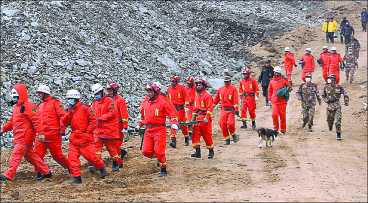
The ecology of the Tibetan plateau, noted the Ministry of Land and Resources two years ago, is “extremely fragile”. Any damage, it warned, would be difficult or impossible to reverse. But, it went on, the China National Gold Group, a state-owned company, had achieved “astonishing results” in working to protect the environment around its mine near the region’s capital, Lhasa. On March 29th at least 83 of the mine’s workers lay buried under a colossal landslide. Its cause is not yet certain, but critics of Tibet’s mining frenzy feel vindicated.

The disaster at the Jiama copper and gold mine, about 70km (45 miles) north-west of Lhasa, has clearly embarrassed the government in Beijing. According to China Digital Times, a California-based media-monitoring website, the Communist Party ordered newspapers to stick to reports issued by the government and the state-owned news agency, Xinhua.

Foreign reporters are rarely allowed into Tibet, least of all to cover sensitive incidents. The official media have avoided speculation about any possible link between the landslide and mining activities in the area. They say the landslide covered a large area with 2m cubic metres of rubble. By the time The Economist went to press, 66 bodies had been pulled out by teams of rescuers with sniffer dogs. The high altitude and lack of oxygen made rescue work hard. A deputy minister of land and resources, Xu Deming, said preliminary investigations had shown that the landslide was caused by a “natural geological disaster”. Fragments of rock left behind by receding glaciers are being blamed, though officials do not explain why the workers’ camp was set up so close to such an apparent hazard.

The Tibetan government-in-exile based in India says it fears the disaster was caused by work related to the mine, which appears to have grown rapidly since construction began in 2008. It was formally opened two years later, at a ceremony attended by Tibet’s most senior officials. The $520m investment was described at the time as the biggest in Tibet’s mining industry by a firm belonging to the central government. The mine is owned by China Gold International Resources, a company listed in Hong Kong and Toronto. China National Gold Group is the controlling shareholder.

Tibet has been trying hard in recent years to encourage such companies to dig up the plateau’s metals and minerals. It has a lot of them to offer: China’s biggest reserves of copper and chromite (used in steel production), among the world’s biggest of lithium (used to make batteries), as well as abundant reserves of uranium, gold, borax (a component of ceramics and glass) and oil. Extracting these, however, often involves boring into a landscape considered sacred by Tibetans.

The Jiama mine, in a valley known to Tibetans as Gyama and revered as the birthplace of a seventh-century Tibetan king, has been the focus of protests by locals angered by environmental and other issues. Water from the valley flows into the Lhasa river. Woeser, a Tibetan activist based in Beijing, has blogged about locals’ fear that their water supplies will be polluted.

Tibetan resentment has been fuelled by the mining industry’s failure to provide much direct employment.

Excerpts, Mining in Tibet: The price of gold, Economist, April 6, 2013, at 54

Gas as Tool of Foreign Policy: Gazprom

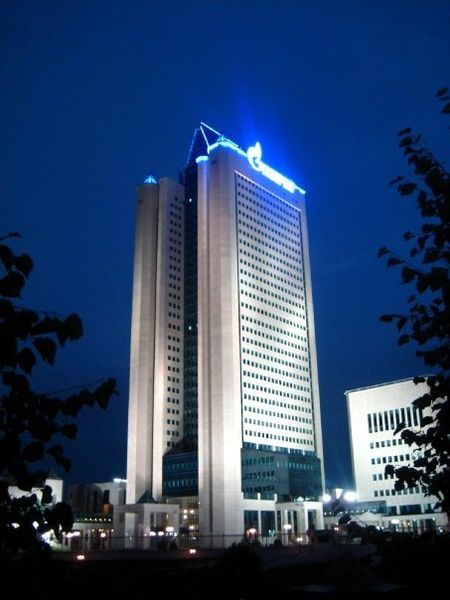
The good times for Gazprom once seemed like they would never end. The world’s largest natural-gas producer, founded out of the old Soviet gas ministry, enjoyed sky-high gas prices for years. The gas flowed along pipelines into Europe; the profits flowed back. Gazprom began work on a $1.9 billion headquarters in St Petersburg and acted as a bottomless wallet for Russia’s rulers. Whatever problems it encountered, it could “drown with money”, as Natalia Volchkova of the New Economic School in Moscow puts it.  All this is now under threat. Its ageing gasfields are in decline. Thanks to America’s shale boom, gas is more plentiful on the world market. Gazprom’s European customers are realising that they have other choices. The prices it can charge are falling, and with them the firm’s prospects.

Years of easy money have made Gazprom fat and slow. It dominates its domestic market, producing 75% of Russia’s gas. It enjoys a monopoly over exports of the stuff. Until recently, it had a tight grip on western Europe, where it supplies around 25% of gas. It retains an even tighter grip on former Soviet-bloc countries in eastern Europe. For a long time, this insulated Gazprom from shifts in global gas markets.

Gazprom is not a normal company. It serves two masters. As a firm that issues shares to outside investors, it should in theory strive to maximise profits in the long run. But since it is majority-owned by the Russian state, it pursues political goals, too.  In practice, it serves one master more assiduously than the other. As President Vladimir Putin consolidated his power in the early 2000s, he built Gazprom into a main instrument of Russia’s new state capitalism. He appointed allies to top positions. He used Gazprom as a tool of foreign policy, for example by cutting off gas supplies to Georgia, Ukraine, Belarus and Moldova during political rows.  Gazprom’s deep pockets have helped Mr Putin at home, too. It sells gas cheaply in Russia, so that the poor do not freeze in winter. Oddly for an energy company, it has bought television stations and newspapers, all of which are now friendly to the Kremlin. Mikhail Krutikhin of RusEnergy, a consultancy, says, “Gazprom has one manager: Putin.”

With friends in high places, Gazprom has enjoyed low taxes and privileged access to gasfields. But its costs are startlingly high…And some projects favoured by Mr Putin are of questionable economic value. For example, he is dead set on building a $21-billion South Stream pipeline between southern Russia and Austria via eastern Europe. This project has political appeal because it would bypass troublesome Ukraine as the main transit route for gas to Europe. But given weak prices and demand, it is “commercial idiocy”, says Mr Krutikhin. The opening in 2011 of Nord Stream, an offshore pipeline to Germany, was a diplomatic coup for Mr Putin, but it is still running far below capacity….

Gas on the spot market is often much cheaper than Russian gas delivered under long-term contracts… Because so many of its customers are tied to contracts, the full effects of the global gas glut on Gazprom’s bottom line will not be felt straight away….   The final threat to Gazprom’s old way of doing business is legal. An antitrust probe launched by the European Commission alleges that Gazprom is using its dominant position in central and eastern Europe to restrict competition and hike prices. If it loses the case, it could face a fine of up to $14 billion and lose the mighty lever of being able to charge some European countries more than others.  An adverse ruling might also threaten its strategy of trying to dominate the European gas market by owning both the supplies and the means of distributing them. Gazprom has quietly bought gas pipelines and storage facilities. It has tried to strike deals whereby it lends money to impoverished European utilities in order to secure their custom. If this strategy stops working, Gazprom will no longer be such a potent foreign-policy tool for the Kremlin….

Gazprom’s future may involve more robust competition even at home. Two domestic rivals have emerged: Novatek, a gas producer part owned by Gennady Timchenko, an old acquaintance of Mr Putin’s, and Rosneft, a state-owned oil firm led by Mr Putin’s trusted adviser, Igor Sechin. Put together, non-Gazprom firms now account for a quarter of all Russian gas production….

The other way to get gas to Asia would be via pipeline. The obvious destination is China, which sits on Russia’s doorstep and is potentially the world’s biggest market for gas. The two countries have haggled unsuccessfully for a decade. In February they revealed they had agreed to everything related to pipeline exports apart from the price. China has signed up to import gas from Central Asia, Australia, the Middle East and west Africa; almost everywhere, in fact, except Russia. China refuses to pay Asian prices; Gazprom won’t budge.

Gazprom: Russia’s wounded giant, Economist, Mar. 30, 2013, at 69

Hunting Down Somali Pirates: British Empire

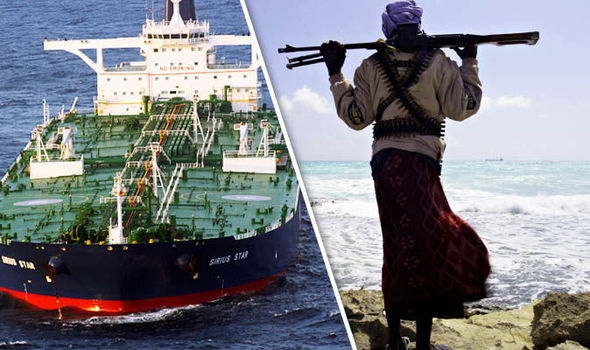
Times are tough and getting worse for Somali pirates, as their targets take countermeasures. The number of attacks off the Horn of Africa tumbled from 236 in 2011 to no more than 72 in 2012, according to the International Maritime Bureau, a body that monitors crime at sea.

Now a private naval effort is adding to their woes. A company called Typhon will use a 10,000 tonne “mother ship” to accompany convoys of merchant vessels. With 60 mostly armed, mostly British ex-soldiers on board, it will deploy speedboats and unmanned drones to watch and intercept hostile boats.  Anthony Sharp, Typhon’s boss, says customers will find that more efficient than putting armed guards on every ship. It will also spare them keeping guns on board (which is tricky in law). Typhon plans to have three large ships by the year end, with at least one based in the Gulf of Guinea, a hotspot for pirate attacks last year, and ten by 2016.

Its backers include Simon Murray, a former foreign legionnaire who is now chairman of Glencore, a commodities giant due soon to merge with Xstrata, a mining behemoth. The new outfit will be a big potential customer for Typhon. But Mr Sharp downplays comparisons with Britain’s East India Company, which ran a private empire with its own navy. His is “actually quite a boring business,” he claims. Not for the pirates.

Piracy: Privateers,Economist, Jan.12, 2013, at 54

Rare Earths Pollution: Australia, Malaysia and Lynas Corp.

According to the Oeko Institute, a non-profit association: The facility for refining Australian ore concentrate rich in rare earth metals of Lynas Corporation in Malaysia has several deficiencies concerning the operational environmental impacts. The environment is affected by acidic substances as well as from dust particles, which are emitted into the air in substantially larger concentrations than would be state-of-the-art in off-gas treatment in Europe. The storage of radioactive and toxic wastes on site does not prevent leachate from leaving the facility and entering ground and groundwater. For the long-term disposal of wastes under acceptable conditions concerning radiation safety a sustainable concept is still missing. These are the results of a study of Oeko-Institute on behalf of the Malaysian NGO SMSL.

In its facility in Kuantan/Malaysia Lynas refines ore concentrate for precious rare earth metals. These strategic metals are applied for example to produce catalysts…The ore concentrate to be refined in Malaysia additionally contains toxic and radioactive constituents such as Thorium. The NGO commissioned Oeko-Institute to check whether the processing of the ore leads to hazardous emissions from the plant or will remain as dangerous waste in Malaysia.

Storage of wastes insufficient

The storage of wastes, that are generated in the refining process, shall be stored in designated facilities on the site, separately for three waste categories. According to chemist and nuclear waste expert Gerhard Schmidt, there will be problems with the pre-drying of wastes that is of a high Thorium content. “Especially in the wet and long monsoon season from September to January, this emplacement process doesn’t work”, says Schmidt. “The operator has not demonstrated how this problem can be resolved without increasing the radiation doses for workers”.

Additionally the storages are only isolated with a one-millimeter thick plastic layer and a 30 cm thick clay layer. This is insufficient to reliably enclose the several meters high and wet waste masses. “For the long-term management of these wastes Lynas has urgently to achieve a solution”, claims Gerhard Schmidt, and adds: “in no case those wastes should be marketed or used as construction material, as currently proposed by the operator (Lynas) and the regulator (AELB/MOSTI). According to our calculations this would mean to pose high radioactive doses to the public via direct radiation”.

One of the most serious abnormalities is that in the documents relevant data is missing, which prevents reliably accounting for all toxic materials introduced”, says project manager Gerhard Schmidt. “So it is not stated which and to what amount toxic by-products, besides Thorium, are present in the ore concentrate. Also in the emissions of the facility via wastewater only those constituents are accounted for that are explicitly listed in Malaysian water regulation, but not all emitted substances.” The salt content of the wastewater is as high that it is comparable to seawater. This is discharged without any removal into the river Sungai Balok.

The scientists at Oeko-Institute evaluate the detected deficiencies as very serious. Those deficiencies should have been already detected in the licensing process, when the application documents were being checked. However the operator received a construction license in 2008 and a temporary operating license in 2012.

Especially for the safe long-term disposal of the radioactive wastes a suitable site that meets internationally accepted safety criteria has to be selected urgently. A consensus has to be reached with the affected stakeholders, such as the local public and their representatives. “If it further remains open how to manage those wastes in a long-term sustainable manner, a future legacy associated with unacceptable environmental and health risks is generated”, considers Schmidt. “The liability to prevent those risks and to remove the material is so shifted to future generations, which is not acceptable.”

Rare earths are important metals that are used in future technologies such as efficient electro motors, lighting and catalysts. In its study from 2011 “Study on Rare Earths and Their Recycling” Oeko-Institute showed that no relevant recycling of these metals is performed so far. Albeit recent positive developments in this direction: satisfying the prognosticated global requires the extension of the worldwide primary production.

Rare earth refining in Malaysia without coherent waste management concept, Oeko Institute Press Release, Jan. 28, 2013

See also  Oeko Report on Lynas (pdf)e

The Arctic Challenger: ready for Arctic oil spills

Shell Oil has been building and testing equipment designed for the Arctic Ocean in Puget Sound, Seattle, United States.  In September, a key test of underwater oil-spill equipment was a spectacular failure.  It forced the energy giant to postpone drilling into oil-bearing rocks beneath the Arctic Ocean until next summer. Shell and its federal regulators have been tight-lipped about the failed test.  But a freedom-of-information request reveals what happened beneath the surface of Puget Sound.

Before Shell can drill for oil in the Arctic Ocean, it needs to prove to federal officials that it can clean up a massive oil spill there. That proof hinges on a barge being built in Bellingham called the Arctic Challenger.  The barge is only one component of Shell’s plans for handling oil spills off the remote north coast of Alaska. But the Obama Administration won’t let oil drilling get under way until the 36-year-old barge and its brand new oil-spill equipment are in place,  On board the Arctic Challenger is a massive steel “containment dome.” It’s a sort of giant underwater vacuum cleaner. If efforts to cap a blown-out well don’t work, the dome can capture spewing oil and funnel it to a tanker on the surface.

The Arctic Challenger passed several US Coast Guard tests for seaworthiness in September. But it was a different story when its oil-spill containment system was put to the test in 150-foot-deep water near Anacortes, Washington.  The federal Bureau of Safety and Environmental Enforcement required the test of the oil-spill system.

According to BSEE internal emails obtained by KUOW, the containment dome test was supposed to take about a day. That estimate proved to be wildly optimistic.

•Day 1: The Arctic Challenger’s massive steel dome comes unhooked from some of the winches used to maneuver it underwater. The crew has to recover it and repair it.

•Day 2: A remote-controlled submarine gets tangled in some anchor lines. It takes divers about 24 hours to rescue the submarine.

•Day 5: The test has its worst accident. On that dead-calm Friday night, Mark Fesmire, the head of BSEE’s Alaska office, is on board the Challenger. He’s watching the underwater video feed from the remote-control submarine when, a little after midnight, the video screen suddenly fills with bubbles. The 20-foot-tall containment dome then shoots to the surface. The massive white dome “breached like a whale,” Fesmire e-mails a colleague at BSEE headquarters.

Then the dome sinks more than 120 feet. A safety buoy, basically a giant balloon, catches it before it hits bottom. About 12 hours later, the crew of the Challenger manages to get the dome back to the surface. “As bad as I thought,” Fesmire writes his BSEE colleague. “Basically the top half is crushed like a beer can.”

Representatives of Shell Oil and of BSEE declined to answer questions or allow interviews about the mishaps. In an email, Shell spokeswoman Kelly op de Weegh writes:  Our internal investigation determined the Arctic Challenger’s dome was damaged when it descended too quickly due to a faulty electrical connection, which improperly opened a valve. While safety systems ensured it did not hit the bottom, buoyancy chambers were damaged from the sudden pressure change.

Environmental groups say the Arctic Challenger’s multiple problems show that Shell isn’t prepared for an Arctic oil spill.

Excerpt, By John Ryan, Sea Trial Leaves Shell’s Arctic Oil-Spill Gear “Crushed Like A Beer Can”, Kuow.org. Nov. 30, 2012

An Independent Kurdistan? Ask the Oil Companies

Iraq is blessed with abundant oil that is cheap to extract and close to newly built export terminals. Production has hit a three-decade high and continues to rise steadily. By 2035, predicts the International Energy Agency (IEA) Iraqi output could more than double, to 8.3m barrels per day (b/d).  But Western oil firms are increasingly reluctant to play a part in this boom. ExxonMobil appears keen to sell its stake in West Qurna, one of the giant fields in southern Iraq that will provide much of the production growth. Royal Dutch Shell and BP are both still working in the south, but unhappily so. Suffocating bureaucracy and onerous contract terms make life difficult. Heavier-than-expected costs and delays to infrastructure undercut profits.

Three years ago when they signed contracts with the Iraqi government, the oil majors were prepared to accept hiccups. But their patience has thinned with the arrival of an alternative source of Iraqi oil. Kurdistan, the semi-autonomous province in the country’s north, has been offering competing and much more lucrative deals. ExxonMobil’s decision last year to acquire six blocks in the region angered the central government, which considers the deal illegal and lays claim to Kurdish oil. But the world’s largest oil company started a trend. In July Total, Chevron and Gazprom all signed contracts with the Kurdistan regional government, potentially dooming their chances of winning future business in the south. BG, a British firm, was in Erbil, the Kurdish capital, on a scouting mission in late October.

“Kurdistan is 11 years ahead of the rest of Iraq in terms of political and commercial development,” says Luay al-Khatteeb, head of the Iraq Energy Institute, a London-based think-tank. Kurdistan’s potential oil reserves of around 45 billion barrels are less than a third of those in southern Iraq. Still, the Kurdish oil minister, Ashti Hawrami, believes output of 1m b/d is possible within three years.

The tricky part is getting the oil to market. The Kurds today export around 200,000 b/d through pipelines controlled by the central government. Mr Hawrami wants to build a new Kurdish-owned pipe to Turkey, feeding long-held dreams of Kurdish independence. That unnerves Turkey which is fighting Kurdish separatists in its south-east. Some Turkish officials seem to acknowledge the possibility of an eventual Kurdish state in northern Iraq and seek to make it commercially dependent on Turkey. Co-operating with the Iraqi Kurds would also generate lucrative transit fees and offer Turkey an alternative to oil from Russia and Iran.

The Iraqi government is pondering how to respond. It could sweeten the terms of its contracts with the oil firms in the south. That might staunch the flow of Western capital to Kurdistan. In the meantime, the main beneficiaries of the majors’ receding interest in southern Iraq are Asian oil firms. Chinese will account for about 2m b/d of Iraq’s production by 2020. Fatih Birol, the IEA’s chief economist, talks of a “Baghdad-to-Beijing” axis.

Iraq’s oil: The Kurdish opening, Economist,Nov. 3, at 49