Tag Archives: big data

Nvidia CEO Has a Magic Needle

Nvidia’s market share in China fell to 50% from 95% over the past four years under U.S. restrictions, Huang, Nvidia’s CEO,  said in May 2025.  He visited China at least three times in 2025 to reassure Chinese tech executives and government officials that Nvidia was committed to the market…. Huang has met with top executives of Chinese cloud-computing leader Alibaba, smartphone and automaker Xiaomi and OpenAI challenger MiniMax.People in China’s tech industry said they appreciated Huang’s efforts to modify his chips so they could be sold in China. Engineers there nicknamed him “Magic Tailor” for his skill in designing chips to thread the needle of U.S. regulations.

Knowing the importance of the Chinese market to Nvidia, Beijing increased pressure on the company: China’s cybersecurity regulator recently summoned Nvidia representatives to discuss alleged security risks of the H20 chips, citing comments by U.S. lawmakers about the need for a bill to require tracking capabilities for advanced chips sold abroad….

Excerpt from Lingling Wei et al, With Billions at Risk, Nvidia CEO Buys His Way Out of the Trade Battle, WSJ, Aug. 11, 2025


How They Sold Us Out: Mobile Companies and Data Privacy

On April 29, 2024, the US Federal Communications Commission (FCC) fined the
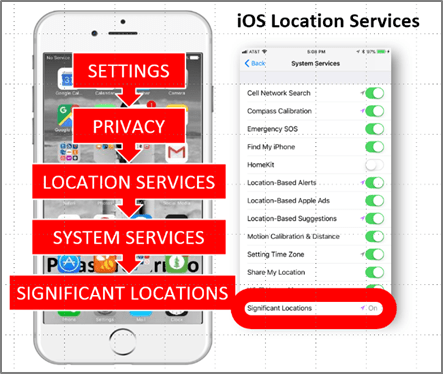
nation’s largest wireless carriers for illegally sharing access to customers’ location information without consent and without taking reasonable measures to protect that information against unauthorized disclosure. Sprint and T-Mobile – which have merged since the investigation began – face fines of more than $12 million and $80 million, respectively. AT&T is fined more than $57 million, and Verizon is fined almost $47 million.

The FCC Enforcement Bureau investigations of the four carriers found that each carrier sold access to its customers’ location information to “aggregators,” who then resold access to such information to third-party location-based service providers. In doing so, each carrier attempted to offload its obligations to obtain customer consent onto downstream recipients of location information, which in many instances meant that no valid customer consent was obtained.

This initial failure was compounded when, after becoming aware that their safeguards were ineffective, the carriers continued to sell access to location information without taking reasonable measures to protect it from unauthorized access. Under the law, including section 222 of the Communications Act, carriers are required to take reasonable measures to protect certain customer information, including location information. Carriers are also required to maintain the confidentiality of such customer information and to obtain affirmative, express customer consent before using, disclosing, or allowing access to such information. These obligations apply equally when carriers share customer information with third parties.

“The protection and use of sensitive personal data such as location information is sacrosanct,” said Loyaan A. Egal, Chief of the FCC Enforcement Bureau and Chair of its Privacy and Data Protection Task Force. “

Excerpts from FCC Fines, ATT&T, Sprint, T-Mobile, and Verizon Nearly $200 billion for Illegally Sharing Access to Customers’ Location Data, FCC Press Release, Apr. 29, 2024

If the United States is a Surveillance State How Does it Differ from China?

In November 2023, Michael Morell, a former deputy director of the Central Intelligence Agency (CIA), hinted at a big change in how the agency now operates. “The information that is available commercially would kind of knock your socks off…if we collected it using traditional intelligence methods, it would be top secret-sensitive. And you wouldn’t put it in a database, you’d keep it in a safe.”

In recent years, U.S. intelligence agencies, the military and even local police departments have gained access to enormous amounts of data through shadowy arrangements with brokers and aggregators. Everything from basic biographical information to consumer preferences to precise hour-by-hour movements can be obtained by government agencies without a warrant.

Most of this data is first collected by commercial entities as part of doing business. Companies acquire consumer names and addresses to ship goods and sell services. They acquire consumer preference data from loyalty programs, purchase history or online search queries. They get geolocation data when they build mobile apps or install roadside safety systems in cars. But once consumers agree to share information with a corporation, they have no way to monitor what happens to it after it is collected. Many corporations have relationships with data brokers and sell or trade information about their customers. And governments have come to realize that such corporate data not only offers a rich trove of valuable information but is available for sale in bulk.

Earlier generations of data brokers vacuumed up information from public records like driver’s licenses and marriage certificates. But today’s internet-enabled consumer technology makes it possible to acquire previously unimaginable kinds of data. Phone apps scan the signal environment around your phone and report back, hourly, about the cell towers, wireless earbuds, Bluetooth speakers and Wi-Fi routers that it encounters….The National Security Agency recently acknowledged buying internet browsing data from private brokers, and several sources have told me about programs allowing the U.S. to buy access to foreign cell phone networks. Those arrangements are cloaked in secrecy, but the data would allow the U.S. to see who hundreds of millions of people around the world are calling.

Car companies, roadside assistance services and satellite radio companies also collect geolocation data and sell it to brokers, who then resell it to government entities. Even tires can be a vector for surveillance. That little computer readout on your car that tells you the tire pressure is 42 PSI? It operates through a wireless signal from a tiny sensor, and government agencies and private companies have figured out how to use such signals to track people…

It’s legal for the government to use commercial data in intelligence programs because data brokers have either gotten the consent of consumers to collect their information or have stripped the data of any details that could be traced back to an individual. Much commercially available data doesn’t contain explicit personal information. But the truth is that there are ways to identify people in nearly all anonymized data sets. If you can associate a phone, a computer or a car tire with a daily pattern of behavior or a residential address, it can usually be associated with an individual.

And while consumers have technically consented to the acquisition of their personal data by large corporations, most aren’t aware that their data is also flowing to the government, which disguises its purchases of data by working with contractors. One giant defense contractor, Sierra Nevada, set up a marketing company called nContext which is acquiring huge amounts of advertising data from commercial providers. Big data brokers that have reams of consumer information, like LexisNexis and  Thomson Reuters, market products to government entities, as do smaller niche players. Companies like Babel Street, Shadowdragon, Flashpoint and Cobwebs have sprung up to sell insights into what happens on social media or other web forums. Location data brokers like Venntel and Safegraph have provided data on the movement of mobile phones…

A group of U.S. lawmakers is trying to stop the government from buying commercial data without court authorization by inserting a provision to that effect in a spy law, FISA Section 702, that Congress needs to reauthorize by April 19. The proposal would ban U.S. government agencies from buying data on Americans but would allow law-enforcement agencies and the intelligence community to continue buying data on foreigners…But many in the national security establishment think that it makes no sense to ban the government from acquiring data that everyone from the Chinese government to Home Depot can buy on the open market. The data is valuable—in some cases, so valuable that the government won’t even discuss what it’s buying. “Picture getting a suspect’s phone, then in the extraction [of data] being able to see everyplace they’d been in the last 18 months plotted on a map you filter by date ranges,” wrote one Maryland state trooper in an email obtained under public records laws. “The success lies in the secrecy.”

For spies and police officers alike, it is better for people to remain in the dark about what happens to the data generated by their daily activities—because if it were widely known how much data is collected and who buys it, it wouldn’t be such a powerful tool. Criminals might change their behavior. Foreign officials might realize they’re being surveilled. Consumers might be more reluctant to uncritically click “I accept” on the terms of service when downloading free apps. And the American public might finally demand that, after decades of inaction, their lawmakers finally do something about unrestrained data collection.

Excerpts from Byron Tau, US Spy Agencies Know Your Secrets. They Bought Them, WSJ, Mar. 8, 2024

See also Means of Control: How the Hidden Alliance of Tech and Government Is Creating a New American Surveillance State by Byron Tau (published 2024).

How Much Are Your Eyes Worth? Altman has an answer

Worldcoin is appealing a decision from Spain that temporarily banned it from scanning people’s eyes in exchange for cryptocurrency tokens…The Spanish Data Protection Agency, or AEPD, ordered a precautionary measure prohibiting Worldcoin’s activities in the country for up to three months after it received several complaints on the collection of data from minors, and what it said were other infringements.

Worldcoin operates as an open-source protocol, according to its website. Users download a wallet app that supports a digital identity known as World ID. To get their identity verified, users stand in front of a physical imaging device known as the orb that relies on sensors to scan their eyes “to verify humanness and uniqueness.” More than 4 million users across 120 countries signed up for World ID, with orb verifications taking place in 36 countries, according to Worldcoin’s website.

The AEPD said its precautionary measure effectively called on Tools for Humanity—the company of which OpenAI Chief Executive Sam Altman is a co-founder—to cease the collection and processing of personal data through its Worldcoin project and to stop using the data it had gathered so far in Spain.

Excerpts from  Mauro Orru, Sam Altman’s Eye-Scanning Worldcoin Venture Appeals, WSJ, Mar. 7, 2024

What Do You Do When You Are Up for Sale?

Under an executive order issued on February 28, 2024, specific classes of Americans’ sensitive data, including genomic, biometric, personal health, geolocation, financial and certain types of personal identifiers, will generally be barred from being sold or transferred in vast tranches to “countries of concern” or vendors known to supply data to them. The countries of concern are China, Russia, North Korea, Iran, Cuba and Venezuela, and have a record of misusing data on Americans, an official said.

In 2023, the U.S. intelligence community issued a groundbreaking report acknowledging that the vast amount of Americans’ personal data available for sale, which are often bought and repackaged by data brokers and then resold through a labyrinthine ecosystem of vendors and resellers, has provided a valuable stream of intelligence for the U.S. government and adversaries alike. The report, commissioned by Director of National Intelligence Avril Haines, admitted that such streams created significant threats to privacy, and had rapidly grown in scale such that they had begun to replicate the results of intrusive surveillance techniques, such as hacking, that are typically more targeted.

The executive order is notably silent on the purchasing of commercially available data sets by the U.S. government.

Excerpts from Dustin Volz, U.S. Limits Sales of Americans’ Personal Data to China, Other Adversaries, WSJ, Feb. 129, 2024

Your Car Leaks Information about You: Who Benefits?

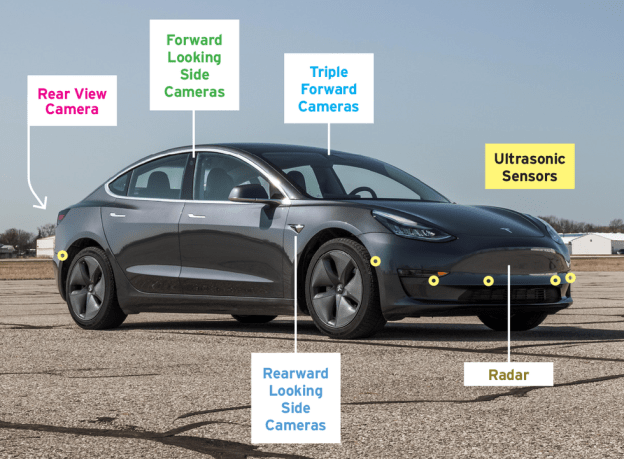
The California Privacy Protection Agency—created under a ballot initiative in 2020 and the only regulator in the nation solely dedicated to privacy issues—will examine the growing amalgamation of data collected by smart vehicles and whether the business practices of the companies collecting that data comply with state law. “Modern vehicles are effectively connected computers on wheels. They’re able to collect a wealth of information via built in apps, sensors, and cameras, which can monitor people both inside and near the vehicle,” Ashkan Soltani, the agency’s executive director, said in a statement in July 2023.

Regulators in Europe also have opened investigations into how the auto industry uses personal information from cars such as location data. In February 2023, Tesla agreed to offer a software update in Europe to change camera settings in cars after the Dutch privacy regulator investigated the company. Tesla disabled vehicles’ external security cameras by default until a driver turns on the function to record activity outside a car and changed the camera settings so they only save the last 10 minutes of footage recorded from outside the cars, compared with one hour of footage they previously had saved.  The Dutch regulator also said it was a privacy violation for the cameras to extensively record people outside of cars without their knowledge. The Tesla update also included features to warn people inside and outside of cars that the external cameras are recording. Headlights blink if the cameras are recording and a message is displayed on a touch screen inside the cars.

Automobiles represent the latest frontier for regulators, raising fresh questions about who will control the data generated by vehicles as they move through the world. Numerous companies are in a position to access the data—including the automakers themselves, companies that make or run in-car navigation or infotainment systems, satellite radio companies and in-vehicle security and emergency services providers. Insurance companies have also been encouraging consumers to share information about their driving behavior, sometimes in exchange for a discount.  

All the data has commercial potential. In some cases, it can be used by insurers in determining how to set rates, evaluate risk and gauge safe driving behavior…In some cases, data brokers make vehicle data available for sale—stripping it of personal information such as names. People’s movement patterns are often unique, however, and their real-world identities can be inferred in large-scale location data sets even when the data is stripped of personal information.

Law-enforcement agencies also can now obtain the historical location of suspects, usually with a warrant. The sensors on modern cars have raised national-security concerns as well. China in 2021 banned certain officials from owning or driving Tesla vehicles citing concerns that data the cars gather could be a source of national-security leaks.

Byron Tau, California Opens Privacy Probe Into Who Controls, Shares the Data Your Car Is Collecting, WSJ, July 31, 2023

Another Wave of Colonization? Africa

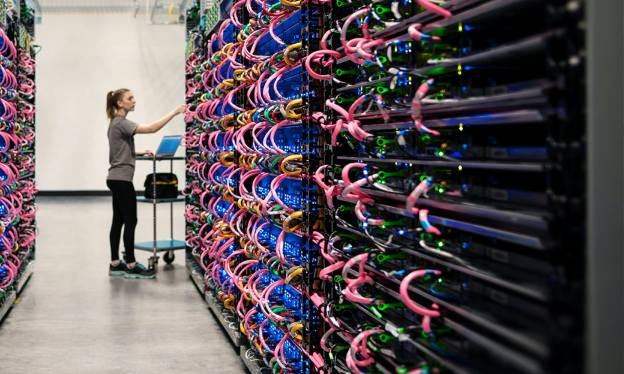
Most of Africa’s data are currently stored elsewhere, zipping down undersea cables that often make landfall in the French city of Marseille….An upheaval is overdue. Africa has more internet users than America, but only as much data-center space as Switzerland.  The boom is partly driven by regulation. Two dozen African countries have passed data-protection laws, or are planning to do so. They often require certain data, such as personal information, to be kept in the country. Another boost comes from competition, says Jan Hnizdo of Teraco, a leading data center in South Africa, where liberalization of the telecoms industry created space for such firms to flourish.

Capital is pouring in. Teraco is building Africa’s largest stand-alone data center in Johannesburg, with backing from foreign funds. Actis, a private-equity firm, is putting $250m into the industry, starting with a majority stake in a Nigerian company, Rack Centre. American investors founded Raxio with an eye on less fashionable markets, from Uganda to Mozambique.

Data centers need power, and lots of it. Keeping their equipment cool consumes almost as much energy as running it, which is why centers are usually in chilly places such as Scandinavia or America’s Pacific north-west. Most of Africa is hot and has a lot of power cuts…To keep servers running, many centers use polluting and expensive diesel generators. Yet the potential gains from offering better connectivity and faster internet services in Africa outweigh the difficulties. Microsoft and Amazon are bringing their cloud services to the region, and have opened data centres of their own in South Africa. Huawei has helped build one for the government of Senegal. Google and Facebook are both involved in projects to lay new cables around Africa’s coasts

Excerpts from Seeding the cloud: Data centers are Taking root in Africa, Economist, Dec. 4, 2021

Tesla as Catfish: When China Carps-Tech CEOs Fall in Line

Many countries are wrestling with how to regulate digital records. Some economies, including in Europe, emphasize the need for data privacy, while others, such as China and Russia, put greater focus on government control. The U.S. currently doesn’t have a single federal-level law on data protection or security; instead, the Federal Trade Commission is broadly empowered to protect consumers from unfair or deceptive data practices.

Behind China’s moves is a growing sense among leaders that data accumulated by the private sector should in essence be considered a national asset, which can be tapped or restricted according to the state’s needs, according to the people involved in policy-making. Those needs include managing financial risks, tracking virus outbreaks, supporting state economic priorities or conducting surveillance of criminals and political opponents. Officials also worry companies could share data with foreign business partners, undermining national security.


Beijing’s latest economic blueprint for the next five years, released in March 2021, emphasized the need to strengthen government sway over private firms’ data—the first time a five-year plan has done so. A key element of Beijing’s push is a pair of laws, one passed in June 2021, the Data Security Law,  and the other a proposal updated by China’s legislature in Apr0il 2021. Together, they will subject almost all data-related activities to government oversight, including their collection, storage, use and transmission. The legislation builds on the 2017 Cybersecurity Law that started tightening control of data flows.

The law will “clearly implement a more stringent management system for data related to national security, the lifeline of the national economy, people’s livelihood and major public interests,” said a spokesman for the National People’s Congress, the legislature. The proposed Personal Information Protection Law, modeled on the European Union’s data-protection regulation, seeks to limit the types of data that private-sector firms can collect. Unlike the EU rules, the Chinese version lacks restrictions on government entities when it comes to gathering information on people’s call logs, contact lists, location and other data.

In late May 2021, citing concerns over user privacy, the Cyberspace Administration of China singled out 105 apps—including ByteDance’s video-sharing service Douyin and Microsoft Corp.’s Bing search engine and LinkedIn service—for excessively collecting and illegally accessing users’ personal information. The government gave the companies named 15 days to fix the problems or face legal consequences….

Beijing’s pressure on foreign firms to fall in line picked up with the 2017 Cybersecurity Law, which included a provision calling for companies to store their data on Chinese soil. That requirement, at least initially, was largely limited to companies deemed “critical infrastructure providers,” a loosely defined category that has included foreign banks and tech firms….Since 2021, Chinese regulators have formally made the data-localization requirement a prerequisite for foreign financial institutions trying to get a foothold in China. Citigroup Inc. and BlackRock Inc. are among the U.S. firms that have so far agreed to the rule and won licenses to start wholly-owned businesses in China…

Senior officials have publicly likened Tesla to a “catfish” rather than a “shark,” saying the company could uplift the auto sector the way working with Apple and Motorola Mobility LLC helped elevate China’s smartphone and telecommunications industries. To ensure Tesla doesn’t become a security risk, China’s Cyberspace Administration recently issued a draft rule that would forbid electric-car makers from transferring outside China any information collected from users on China’s roads and highways. It also restricted the use of Tesla cars by military personnel and staff of some state-owned companies amid concerns that the vehicles’ cameras could send information about government facilities to the U.S. In late May 2021, Tesla confirmed it had set up a data center in China and would domestically store data from cars it sold in the country. It said it joined other Chinese companies, including Alibaba and Baidu Inc., in the discussion of the draft rules arranged by the CyberSecurity Association of China, which reports to the Cyberspace Administration…

Increasingly, China’s president, Mr. Xi, leaned toward voices advocating greater digital control. He now labels big data as another essential element of China’s economy, on par with land, labor and capital.  “From the point of view of the state, anti-data monopoly must be strengthened,” said Li Lihui, a former president of state-owned Bank of China Ltd. and now a member of China’s legislature. He said he expects China to establish a “centralized and unified public database” to underpin its digital economy.

Excerpts from China’s New Power Play: More Control of Tech Companies’ Troves of Data, WSJ, June 12, 2021

Your Phone Is Listening: smart-phones as sniffers

U. S. government agencies from the military to law enforcement have been buying up mobile-phone data from the private sector to use in gathering intelligence, monitoring adversaries and apprehending criminals. Now, the U.S. Air Force is experimenting with the next step.

The Air Force Research Laboratory is testing a commercial software platform that taps mobile phones as a window onto usage of hundreds of millions of computers, routers, fitness trackers, modern automobiles and other networked devices, known collectively as the “Internet of Things.” SignalFrame, a Washington, D.C.-based wireless technology company, has developed the capability to tap software embedded on as many as five million cellphones to determine the real-world location and identity of more than half a billion peripheral devices. The company has been telling the military its product could contribute to digital intelligence efforts that weave classified and unclassified data using machine learning and artificial intelligence.

The Air Force’s research arm bought the pitch, and has awarded a $50,000 grant to SignalFrame as part of a research and development program to explore whether the data has potential military applications, according to documents reviewed by The Wall Street Journal. Under the program, the Air Force could provide additional funds should the technology prove useful.

SignalFrame has largely operated in the commercial space, but the documents reviewed by the Journal show the company has also been gunning for government business. A major investor is Razor’s Edge, a national-security-focused venture-capital firm. SignalFrame hired a former military officer to drum up business and featured its products at military exhibitions, including a “pitch day” sponsored by a technology incubator affiliated with U.S. Special Operations command in Tampa, Fla.

SignalFrame’s product can turn civilian smartphones into listening devices—also known as sniffers—that detect wireless signals from any device that happens to be nearby. The company, in its marketing materials, claims to be able to distinguish a Fitbit from a Tesla from a home-security device, recording when and where those devices appear in the physical world. Using the SignalFrame technology, “one device can walk into a bar and see all other devices in that place,” said one person who heard a pitch for the SignalFrame product at a marketing industry event…

“The capturing and tracking of unique identifiers related to mobile devices, wearables, connected cars—basically anything that has a Bluetooth radio in it—is one of the most significant emerging privacy issues,” said Alan Butler, the interim executive director and general counsel of the Electronic Privacy Information Center, a group that advocates for stronger privacy protections. “Increasingly these radios are embedded in many, many things we wear, use and buy,” Mr. Butler said, saying that consumers remain unaware that those devices are constantly broadcasting a fixed and unique identifier to any device in range.

Byron Tau,  Military Tests New Way of Tracking, WSJ, Nov. 28, 2020

Facebook Denizens Unite! the right to privacy and big tech

The European Union’s (EU) approach to regulating the big tech companies draws on its members’ cultures tend to protect individual privacy. The other uses the eu’s legal powers to boost competition.  The first leads to the assertion that you have sovereignty over data about you: you should have the right to access them, amend them and determine who can use them. This is the essence of the General Data Protection Regulation (GDPR), whose principles are already being copied by many countries across the world. The next step is to allow interoperability between services, so that users can easily switch between providers, shifting to firms that offer better financial terms or treat customers more ethically. (Imagine if you could move all your friends and posts to Acebook, a firm with higher privacy standards than Facebook and which gave you a cut of its advertising revenues.)

Europe’s second principle is that firms cannot lock out competition. That means equal treatment for rivals who use their platforms. The EU has blocked Google from competing unfairly with shopping sites that appear in its search results or with rival browsers that use its Android operating system. A German proposal says that a dominant firm must share bulk, anonymised data with competitors, so that the economy can function properly instead of being ruled by a few data-hoarding giants. (For example, all transport firms should have access to Uber’s information about traffic patterns.) Germany has changed its laws to stop tech giants buying up scores of startups that might one day pose a threat.

Ms Vestager has explained, popular services like Facebook use their customers as part of the “production machinery”. …The logical step beyond limiting the accrual of data is demanding their disbursement. If tech companies are dominant by virtue of their data troves, competition authorities working with privacy regulators may feel justified in demanding they share those data, either with the people who generate them or with other companies in the market. That could whittle away a big chunk of what makes big tech so valuable, both because Europe is a large market, and because regulators elsewhere may see Europe’s actions as a model to copy. It could also open up new paths to innovation.

In recent decades, American antitrust policy has been dominated by free-marketeers of the so-called Chicago School, deeply sceptical of the government’s role in any but the most egregious cases. Dominant firms are frequently left unmolested in the belief they will soon lose their perch anyway…By contrast, “Europe is philosophically more sceptical of firms that have market power.” ..

Tech lobbyists in Brussels worry that Ms Vestager agrees with those who believe that their data empires make Google and its like natural monopolies, in that no one else can replicate Google’s knowledge of what users have searched for, or Amazon’s of what they have bought. She sent shivers through the business in January when she compared such companies to water and electricity utilities, which because of their irreproducible networks of pipes and power lines are stringently regulated….

The idea is for consumers to be able to move data about their Google searches, Amazon purchasing history or Uber rides to a rival service. So, for example, social-media users could post messages to Facebook from other platforms with approaches to privacy that they prefer…

Excerpts from Why Big Tech Should Fear Europe, Economist, Mar. 3, 2019; The Power of Privacy, Economist, Mar. 3, 2019

Who Controls Peoples’ Data?

The McKinsey Global Institute estimates that cross-border flows of goods, services and data added 10 per cent to global gross domestic product in the decade to 2015, with data providing a third of that increase. That share of the contribution seems likely to rise: conventional trade has slowed sharply, while digital flows have surged. Yet as the whole economy becomes more information-intensive — even heavy industries such as oil and gas are becoming data-driven — the cost of blocking those flows increases…

Yet that is precisely what is happening. Governments have sharply increased “data localisation” measures requiring information to be held in servers inside individual countries. The European Centre for International Political Economy, a think-tank, calculates that in the decade to 2016, the number of significant data localisation measures in the world’s large economies nearly tripled from 31 to 84.

Even in advanced economies, exporting data on individuals is heavily restricted because of privacy concerns, which have been highlighted by the Facebook/ Cambridge Analytica scandal. Many EU countries have curbs on moving personal data even to other member states. Studies for the Global Commission on Internet Governance, an independent research project, estimates that current constraints — such as restrictions on moving data on banking, gambling and tax records — reduces EU GDP by half a per cent.

In China, the champion data localiser, restrictions are even more severe. As well as long-established controls over technology transfer and state surveillance of the population, such measures form part of its interventionist “ Made in China 2025 ” industrial strategy, designed to make it a world leader in tech-heavy sectors such as artificial intelligence and robotics.

China’s Great Firewall has long blocked most foreign web applications, and a cyber security law passed in 2016 also imposed rules against exporting personal information, forcing companies including Apple and LinkedIn to hold information on Chinese users on local servers. Beijing has also given itself a variety of powers to block the export of “important data” on grounds of reducing vaguely defined economic, scientific or technological risks to national security or the public interest.   “The likelihood that any company operating in China will find itself in a legal blind spot where it can freely transfer commercial or business data outside the country is less than 1 per cent,” says ECIPE director Hosuk Lee-Makiyama….

Other emerging markets, such as Russia, India, Indonesia and Vietnam, are also leading data localisers. Russia has blocked LinkedIn from operating there after it refused to transfer data on Russian users to local servers.

Business organisations including the US Chamber of Commerce want rules to restrain what they call “digital protectionism”. But data trade experts point to a serious hole in global governance, with a coherent approach prevented by different philosophies between the big trading powers. Susan Aaronson, a trade academic at George Washington University in Washington, DC, says: “There are currently three powers — the EU, the US and China — in the process of creating separate data realms.”

The most obvious way to protect international flows of data is in trade deals — whether multilateral, regional or bilateral. Yet only the World Trade Organization laws governing data flows predate the internet and have not been thoroughly tested through litigation. It recently recruited Alibaba co-founder Jack Ma to front an ecommerce initiative, but officials involved admit it is unlikely to produce anything concrete for a long time. In any case, Prof Aaronson says: “While data has traditionally been addressed in trade deals as an ecommerce issue, it goes far wider than that.”

The internet has always been regarded by pioneers and campaigners as a decentralised, self-regulating community. Activists have tended to regard government intervention with suspicion, except for its role in protecting personal data, and many are wary of legislation to enable data flows.  “While we support the approach of preventing data localisation, we need to balance that against other rights such as data protection, cyber security and consumer rights,” says Jeremy Malcolm, senior global policy analyst at the Electronic Frontier Foundation, a campaign for internet freedom…

Europe has traditionally had a very different philosophy towards data and privacy than the US. In Germany, for instance, public opinion tends to support strict privacy laws — usually attributed to lingering memories of surveillance by the Stasi secret police in East Germany. The EU’s new General Data Protection Regulation (GDPR), which comes into force on May 25, 2018 imposes a long list of requirements on companies processing personal data on pain of fines that could total as much as 4 per cent of annual turnover….But trade experts warn that the GDPR is very cautiously written, with a blanket exemption for measures claiming to protect privacy. Mr Lee-Makiyama says: “The EU text will essentially provide no meaningful restriction on countries wanting to practice data localisation.”

Against this political backdrop, the prospects for broad and binding international rules on data flow are dim. …In the battle for dominance over setting rules for commerce, the EU and US often adopt contrasting approaches.  While the US often tries to export its product standards in trade diplomacy, the EU tends to write rules for itself and let the gravity of its huge market pull other economies into its regulatory orbit. Businesses faced with multiple regulatory regimes will tend to work to the highest standard, known widely as the “Brussels effect”.  Companies such as Facebook have promised to follow GDPR throughout their global operations as the price of operating in Europe.

Excerpts from   Data protectionism: the growing menace to global business, Financial Times, May 13, 2018

Behavior Mining

Understanding and assessing the readiness of the warfighter is complex, intrusive, done relatively infrequently, and relies heavily on self-reporting. Readiness is determined through medical intervention with the help of advanced equipment, such as electrocardiographs (EKGs) and otherspecialized medical devices that are too expensive and cumbersome to employ continuously without supervision in non-controlled environments. On the other hand, currently 92% of adults in the United States own a cell phone, which could be used as the basis for continuous, passive health and readiness assessment.  The WASH program will use data collected from cellphone sensors to enable novel algorithms that conduct passive, continuous, real-time assessment of the warfighter.

DARPA’s WASH [Warfighter Analytics using Smartphones for Health] will extract physiological signals, which may be weak and noisy, that are embedded in the data obtained through existing mobile device sensors (e.g., accelerometer, screen, microphone). Such extraction and analysis, done on a continuous basis, will be used to determine current health status and identify latent or developing health disorders. WASH will develop algorithms and techniques for identifying both known indicators of physiological problems (such as disease, illness, and/or injury) and deviations from the warfighter’s micro-behaviors that could indicate such problems.

Excerpt from Warfighter Analytics using Smartphones for Health (WASH)
Solicitation Number: DARPA-SN-17-4, May, 2, 2018

See also Modeling and discovering human behavior from smartphone sensing life-log data for identification purpose

Deforestation and Supply Chains

366 companies, worth $2.9 trillion, have committed to eliminating deforestation from their supply chains, according to the organization Supply Change. Groups such as the Tropical Forest Alliance 2020, the Consumer Goods Forum and Banking Environment Initiative aim to help them achieve these goals.  Around 70 percent of the world’s deforestation still occurs as a result of production of palm oil, soy, beef, cocoa and other agricultural commodities. These are complex supply chains.  A global company like Cargill, for example, sources tropical palm, soy and cocoa from almost 2,000 mills and silos, relying on hundreds of thousands of farmers. Also, many products are traded on spot markets, so supply chains can change on a daily basis. Such scale and complexity make it difficult for global corporations to trace individual suppliers and root out bad actors from supply chains.

Global Forest Watch (GFW), a WRI-convened partnership that uses satellites and algorithms to track tree cover loss in near-real time, is one example. Any individual with a cell phone and internet connection can now check if an area of forest as small as a soccer penalty box was cleared anywhere in the world since 2001. GFW is already working with companies like Mars, Unilever, Cargill and Mondelēz in order to assess deforestation risks in an area of land the size of Mexico.

Other companies are also employing technological advances to track and reduce deforestation. Walmart, Carrefour and McDonalds have been working together with their main beef suppliers to map forests around farms in the Amazon in order to identify risks and implement and monitor changes. Banco do Brasil and Rabobank are mapping the locations of their clients with a mobile-based application in order to comply with local legal requirements and corporate commitments. And Trase, a web tool, publicizes companies’ soy-sourcing areas by analyzing enormous amounts of available datasets, exposing the deforestation risks in those supply chains…

[C]ompanies need to incorporate the issue into their core business strategies by monitoring deforestation consistently – the same way they would track stock markets.

With those challenges in mind, WRI and a partnership of major traders, retailers, food processors, financial institutions and NGOs are building the go-to global decision-support system for monitoring and managing land-related sustainability performance, with a focus on deforestation commitments. Early partners include Bunge, Cargill, Walmart, Carrefour, Mars, Mondelēz, the Inter-American Investment Corporation, the Nature Conservancy, Rainforest Alliance and more.  Using the platform, a company will be able to plot the location of thousands of mills, farms or municipalities; access alerts and dashboards to track issues such as tree cover loss and fires occurring in those areas; and then take action. Similarly, a bank will be able to map the evolution of deforestation risk across its whole portfolio. This is information that investors are increasingly demanding.

Excerpt from Save the Forests? There’s Now an App for That, World Resources Institute, Jan. 18, 2017