Tag Archives: China-United States trade war

The New Opium War: How the World Got Addicted to China

 A fundamental axiom of economics is that when two individuals or countries trade, both are better off. In the decades after World War II, the U.S. was the world’s largest exporter and economy and as it grew, it imported more, helping its partners. As they grew, they bought more of what the U.S. made. Expanding trade helped everyone specialize, leading to more competition, innovation and choice, and lower costs.

China is now the world’s second-largest economy and its largest exporter, but its philosophy is quite different. It has never believed in balanced trade nor comparative advantage. Even as it imported critical technology from the West, its long-term goal was always self-sufficiency. In 2020, Chinese leader Xi Jinping codified this approach as “dual circulation.” This would, he said, “tighten the international industrial chain’s dependence” on China while ensuring China’s production was “independent” and “self-sustaining.”

And as China expands into high-end manufacturing such as aircraft and semiconductors, Xi has decreed it must not relinquish low-end production such as toys and clothes. Beijing has discouraged Chinese companies that invest abroad from transferring key know-how, such as in the production of iPhones and batteries. Xi has rejected fiscal reforms that would tilt its economy away from investment, exports and saving and toward household consumption and imports.

Excerpt from Greg Ip, World Pays a Price for China’s Growth, WSJ, Dec. 6, 2025

How Does it Feel to Beg China? Netherlands Knows

Dutch chipmaker Nexperia has publicly called on its China unit to help restore supply chain operations, warning in an open letter published on its website  on November 28, 2025 that customers across industries are reporting “imminent production outages.” Nexperia’s Dutch unit said that is open letter followed “repeated attempts to establish direct communication through conventional channels” but did not have “any meaningful response.” The letter marks the latest twist in a long-running saga that has threatened global automotive supply chains and stoked a bitter battle between Amsterdam and Beijing over technology transfer.

In a statement, Wingtech Technology, Nexperia’s Chinese parent stated that Nexperia’s true intent is to buy time ” to construct a ‘de-China-ized’ supply chain and permanently strip Wingtech of its shareholder rights.”

The situation began in September 2025, when the Dutch government invoked a Cold War-era law to effectively take control of Nexperia. The highly unusual move was reportedly made after the U.S. raised security concerns.

Beijing responded by moving to block its products from leaving China, which, in turn, raised the alarm among global automakers as they faced shortages of the chipmaker’s components.

In an apparent reprieve on November 19, 2025, however, the Dutch government said it had suspended its state intervention at Nexperia following talks with Chinese authorities…But while the measures to seize the Dutch Nexperia subsidiary have been lifted, the restoration of the corporate structure and relation with parent company Wingtech has yet to be accomplished.

Excerpt from Sam Meredith, What’s going on at Nexperia? China’s Wingtech escalates war of words with Dutch chipmaker, CNBC, Nov. 28, 2028

Can the United States Drown in Disease? China has the Answer

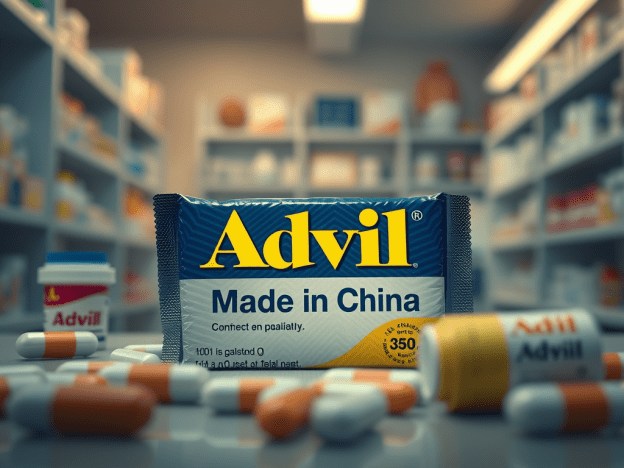
While drugs sold in U.S. pharmacies or over the counter typically don’t say “made in China,” the country often supplies active pharmaceutical ingredients in the drugs or precursor chemicals used to make those active ingredients. Most of the acetaminophen and ibuprofen imported into the U.S. comes from China. Those are the active ingredients in Tylenol and Advil, respectively. China is also a significant producer of antibiotic ingredients. The U.S. imports many branded drugs from Europe, while for generics, it relies heavily on India. Still, a significant amount of the active ingredients used in India-made generics originates in China.

Perhaps aware of the sensitivity of turning medicine into a political tool, China hasn’t often threatened to cut off drug supplies to the U.S. Still, it signaled awareness of its leverage early in the Covid-19 pandemic, when the world faced shortages of masks and personal protection equipment owing to supply disruptions from China. In March 2020, the official Xinhua News Agency said that if China were to restrict exports of medical goods, the “U.S. will be plunged into the vast ocean of coronavirus.”

Excerpt from Yoko Kubota, How China’s Chokehold on Drugs, Chips and More Threatens the U.S., WSJ, Nov.  4, 2025

While United States Hibernated, China Salivated

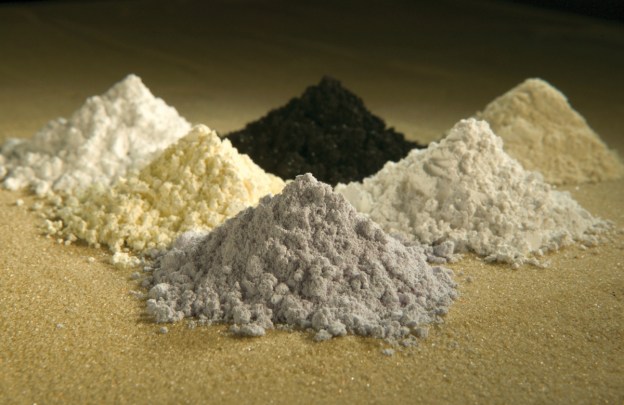
When China tightened restrictions on rare-earth exports in October 2025, stunning the United States, it was the latest reminder of Beijing’s control over an industry vital to the world economy. China’s dominance was decades in the making. Since the 1990s, China has used aggressive tactics to build up and maintain its lock over rare-earth minerals, which are essential to making magnets needed for cars, wind turbines, jet fighters and other products. Beijing provided financial support to the country’s leading companies, encouraged them to snap up rare-earth assets abroad, and passed laws preventing foreign companies from buying rare-earth mines in China. It eventually consolidated its domestic industry from hundreds of businesses into a few giant players, giving it further leverage over prices…

In 1995, Chinese state-linked companies received U.S. government approval to buy the rare-earth materials and magnet business started by General Motors, called Magnequench. In the following years, the Chinese ownership shut down all its rare-earth plants in the U.S. and shipped the equipment to China. Top American engineers were offered opportunities to go to China and set up new plants there.  “There were some colleagues that were dead set against it, saying they would never help China learn our technology,” said one magnet expert who ultimately agreed to go to China. “When I arrived, I could not believe what I was seeing. The number of new factories being built, and the rate at which they were being built, was mind-blowing,” he said….  By the mid-2000s, the U.S. rare-earth industry had been all but wiped out. Mountain Pass, America’s major rare-earth mine, had been shut down, as had virtually all American facilities that processed rare earths and turned them into magnets. China produced around 97% of the world’s rare earths, giving it what was effectively a global monopoly…

By 2021, the U.S. government was growing more worried about China’s ability to weaponize rare earths, causing prices to jump. Washington began offering large-scale funding for new rare-earth plants, including a refinery in Texas to be built by Lynas, an Australian rare-earth company. But in 2021, the Association of China Rare Earth Industry issued a warning: to China’s leadership If Beijing wanted to maintain “China’s absolute dominant position,” the country needed to relax state production quotas. Beijing responded in 2022 by pushing up output by 25%, the most in years, with another large increase the following year. Prices tanked, hitting the bottom lines of Western producers and leading some to unload assets…Beijing also introduced new measures preventing the transfer of its rare-earth processing technology abroad.

Excerpt from Jon Emont, How China Took Over the World’s Rare-Earths Industry, WSJ. Oct. 19, 2025

Nationalizing a Crown Jewel: the case of Nexperia

U.S. officials’ warning to their Dutch counterparts was stark: If they wanted a Netherlands-based chip maker to avoid being put on a trade blacklist, it would almost certainly have to remove its Chinese owner as CEO. “The fact that the company’s CEO is still that same Chinese owner is problematic,” American officials said in a June 2025 meeting on the topic. The Americans soon got their wish. In September 25, 2025, the Dutch economy ministry seized control of Nexperia from China’s Wingtech Technology. The next day, a Dutch court granted an emergency petition to suspend Wingtech founder Zhang Xuezheng as Nexperia’s CEO and put all but one of the semiconductor company’s shares under external management.

China quickly fired back at the seizure, ordering Wingtech in early October to suspend exports of Nexperia of chips that the company has long sent for packaging and testing in China…The Dutch economy minister said in a letter to parliament that he moved to seize control of Nexperia based on evidence that the CEO was moving quickly to shift production capacity, financial resources and intellectual property to China, not because of pressure from any other country… The Dutch government and Dutch and German executives of the company had tried for months to ringfence the company’s business from Chinese control to accommodate domestic concerns—and avoid being hit by the U.S. blacklist… Dutch officials told Nexperia that the coming expansion of U.S. trade restrictions could lead to restrictions on the business, unless measures were taken to limit the transfer of knowledge and capabilities to China.

In the past, Nexperia relied on its European factories and contract manufacturers in Taiwan to make chips for China. In 2020, Zhang set up a wafer factory in Shanghai. The business, called Wingskysemi, started production in 2023 and has become one of Nexperia’s key suppliers….

Excerpt from Sam Schechner et al, , How U.S. Pressured Netherlands to Oust CEO of Chinese-Owned Chip Maker, WSJ, Oct. 14, 2025

How China Plans to Destroy the U.S. AI Industry

China’s restrictions on rare-earth materials announced on October 9, 2025 would mark a nearly unprecedented export control*** that stands to disrupt the global economy, giving Beijing more leverage in trade negotiations and ratcheting up pressure on the Trump administration to respond.

The rule, put out by China’s Commerce Ministry, is viewed as an escalation in the U.S.-China trade fight because it threatens the supply chain for semiconductors. Chips are the lifeblood of the economy, powering phones, computers and data centers needed to train artificial-intelligence models. The rule also would affect cars, solar panels and the equipment for making chips and other products, limiting the ability of other countries to support their own industries. China produces roughly 90% of the world’s rare-earth materials.

Global companies that sell goods with certain rare-earth materials sourced from China accounting for 0.1% or more of the product’s value would need permission from Beijing, under the new rule. Tech companies will probably find it extremely difficult to show that their chips, the equipment needed to make them and other components fall below the 0.1% threshold, industry experts said. The rules could cause a U.S. recession if implemented aggressively because of how important AI capital spending is to the economy… “It’s an economic equivalent of nuclear war—an intent to destroy the American AI industry,” said Dmitri Alperovitch, co-founder of the Silverado Policy Accelerator think tank.

Excerpt from Amrith Ramkumar,et al., China’s Rare-Earth Escalation Threatens Trade Talks—and the Global Economy, WSJ, Oct. 9, 2025

***The new export controls mark the first time China has applied the foreign direct product rule (FDPR)—a mechanism introduced in 1959 by the United States and long used United States to restrict semiconductor exports to China. The FDPR enables the United States to regulate the sale of foreign-made products if they incorporate U.S. technology, software, or equipment, even when produced by non-U.S. companies abroad. In effect, if U.S. technology appears anywhere in the supply chain, the United States can assert jurisdiction. See CSIS

While United States Sleeping, China Made Ships

A $16 billion merger of two state-controlled shipbuilders in China was set for completion the week of August 11, 2025 creating the world’s biggest shipbuilder while the U.S. searches for a path back into the business.  American shipbuilders are playing catch-up after decades of maritime-industry decline…but Trump’s threat to impose higher fees on ships made in China is giving South Korean and Japanese rivals an opening to win back market share.

The Chinese champion is called China State Shipbuilding, or CSSC. In August 2025, it is scheduled to absorb its merger partner, China Shipbuilding Industry, and take the sole listing on the Shanghai Stock Exchange… Beijing is currently looking to consolidate state-led companies in sensitive industries, particularly those connected with the military. CSSC’s main business is commercial, but it is also an important contractor for the Chinese navy. China Shipbuilding Industry designed and built China’s first homegrown aircraft carrier, the Shandong.

Beijing set its sights on dominating the shipbuilding industry decades ago, and now Chinese shipbuilders make up more than half of the global market. China-built ships accounted for about 55% of global tonnage in 2024, compared with less than 0.05% for the U.S. China possesses 232 times the shipbuilding capacity of the U.S., according to the U.S. Navy…


Meanwhile, smaller rivals in Japan are looking to reclaim market share after decades of being pushed into a corner by lower-cost Chinese and South Korean rivals. A proposal in June in 2025 from Japan’s ruling Liberal Democratic Party calls for extensive subsidies for local shipyards to protect national security, including a $6.7 billion public-private fund. “If we fail to act now, Japan risks losing its shipbuilding industry entirely, as Europe and the United States did,” the party said.

Excerpt from China Creates World’s No. 1 Shipbuilder, Driven by Rivalry With U.S., WSJ, Aug. 11, 2025

Climate Change Can Wait: China’s Greed for Oil

China’s thirst for oil drove global demand for decades…Chinese officials have long worried that the U.S. and its allies could hamstring the nation’s economy by choking off its supply of foreign oil. So China has poured hundreds of billions of dollars into weaning itself off the imported stuff by reviving domestic production and swiftly building the world’s leading electric-vehicle industry. “The energy rice bowl must be held in our own hands,” Chinese leader Xi Jinping has said.

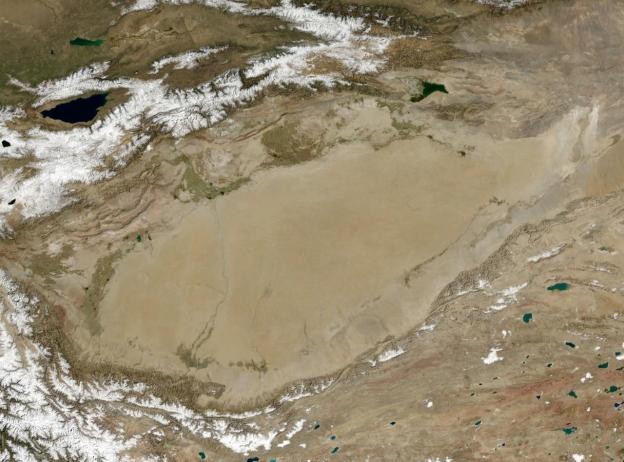
In a remote corner of China. the Tarim Basin, called the “sea of death” for its harsh conditions, oil workers are trying to coax more crude out of the ground by drilling holes as deep as Mt. Everest is high. State-owned PetroChina reported $38 billion of capital expenditures in 2024, nearly as much as Exxon Mobil’s and Chevron’s combined. China’s desire for energy independence dates all the way back to former leader Mao Zedong, who once dispatched tens of thousands of workers to search for oil in China’s northeast to ensure China wouldn’t be dependent on imports…

In July 2018, Xi personally ordered state-owned companies to revive domestic oil production to safeguard national security. Three state-owned oil majors invested an additional $10 billion the following year in exploration and production. They zeroed in on offshore areas such as the South China Sea and the Bohai Sea off the country’s northeast coast, as well as remote reserves near China’s western border with Kyrgyzstan, in a region called the Tarim Basin

In the deserts of the Tarim Basin crews are exploring some of the nation’s deepest reserves. Summer temperatures can top 120 degrees, and in the winter they can hit minus 20. Such ultradeep exploration is expensive, with some wells costing three times as much as shallower traditional wells, a Chinese oil executive told state media.  In 2023, Xi held a video call with Tarim Basin oil workers, praising their “indispensable contributions” to the nation. About 5% of China’s total oil and gas output in 2024 came from the basin’s deep reservoirs, a number Chinese oil executives intend to increase.

As of May 2024, PetroChina’s parent company, China National Petroleum, said it had drilled 193 wells in the Tarim Oilfield at least 5 miles deep. In the U.S., many wells are a mile or two deep.

Excerpt from Brian Spegele, How China Curbed Its Oil Addiction—and Blunted a U.S. Pressure Point, WSJ, July 21,2025

Nvidia CEO Has a Magic Needle

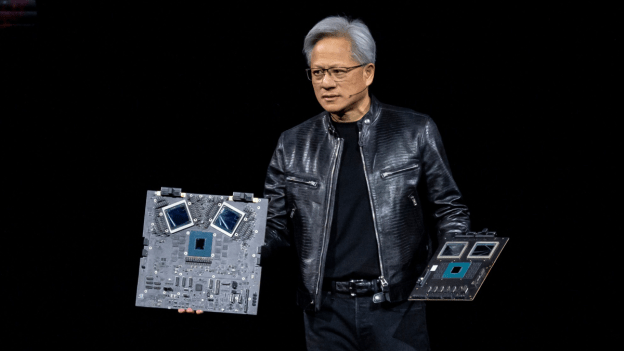
Nvidia’s market share in China fell to 50% from 95% over the past four years under U.S. restrictions, Huang, Nvidia’s CEO,  said in May 2025.  He visited China at least three times in 2025 to reassure Chinese tech executives and government officials that Nvidia was committed to the market…. Huang has met with top executives of Chinese cloud-computing leader Alibaba, smartphone and automaker Xiaomi and OpenAI challenger MiniMax.People in China’s tech industry said they appreciated Huang’s efforts to modify his chips so they could be sold in China. Engineers there nicknamed him “Magic Tailor” for his skill in designing chips to thread the needle of U.S. regulations.

Knowing the importance of the Chinese market to Nvidia, Beijing increased pressure on the company: China’s cybersecurity regulator recently summoned Nvidia representatives to discuss alleged security risks of the H20 chips, citing comments by U.S. lawmakers about the need for a bill to require tracking capabilities for advanced chips sold abroad….

Excerpt from Lingling Wei et al, With Billions at Risk, Nvidia CEO Buys His Way Out of the Trade Battle, WSJ, Aug. 11, 2025


The Cat-and-Mouse Game: US-China, Chip Giants

The U.S. on March 28 2025 added dozens of Chinese companies to a trade blacklist over national security concerns. American businesses seeking to sell technology to these companies will need approval from the government. Among those added were subsidiaries of Inspur Group, China’s largest server maker and a major customer for U.S. chip makers such as Nvidia, Intel and Advanced Micro Devices. Companies linked to China’s largest supercomputer maker, Sugon, were also added…

Nearly 80 companies were put on the Commerce Department’s blacklist, known as the entity list…including the U.S. server maker Aivres Systems that is wholly owned by Inspur Electronic. The latter is one-third owned by Inspur Group, according to corporate records. Aivres has been assembling high-end artificial-intelligence equipment for Nvidia. The AI-chip giant has said that Aivres will make servers using chips in the Blackwell family, Nvidia’s newest and most powerful processors.  Aivres advertises on its website that it sells servers and infrastructure powered by Blackwell chips, which are banned from sale into China…About two months after Inspur Group was added to the trade blacklist in March 2023, California-based Inspur Systems changed its name to Aivres Systems.

Excerpts from Liza Lin, Trump Takes Tough Approach to Choking Off China’s Access to U.S. Tech, WSJ, Mar. 26, 2025

What Ails the West: the Forgotten Art of Industrialization

For the past few years, the West has been trying to break China’s grip on minerals that are critical for defense and green technologies. Despite their efforts, Chinese companies are becoming more dominant, not less. They are expanding operations, supercharging supply and causing prices to drop. Their challengers can’t compete. Take nickel, which is needed for electric-vehicle batteries. Chinese processing plants that dot the Indonesian archipelago are pumping out vast quantities of the mineral from new and expanding facilities, jolting the market. Meanwhile, Switzerland-based mining giant Glencore is suspending operations at its nickel plant in New Caledonia, a French territory, concluding it can’t survive despite offers of financial help from Paris. The U.K.’s Horizonte Minerals, whose new Brazilian mine was expected to become a major Western source, said last month that investors had bailed, citing oversupply in the market. Lithium projects in the U.S. and Australia have been postponed or suspended after a surge in Chinese production at home and in sub-Saharan Africa. 

The only dedicated cobalt mine in the U.S. also suspended operations last year, five months after local dignitaries attended its opening ceremony. Its owners say they are struggling against a flood of Chinese-produced cobalt from Indonesia and the Democratic Republic of Congo.

Last year, non-Chinese production of refined cobalt declined to its lowest level in 15 years… The share of lithium mining done within China or by Chinese companies abroad has grown from 14% in 2018 to 35% this year… Over the same time, lithium processing done within China has risen from 63% in 2018 to 70%…China has many advantages in the race to lock up minerals. Its miners are deep-pocketed and aggressive, making bets in resource-rich countries that Western companies have long viewed as corrupt or unstable, such as Indonesia, Mali, Bolivia and Zimbabwe. State banks provide financing for power plants and industrial parks abroad, paving the way for further private Chinese investment.

China’s rapid industrial development also means its companies have spent decades fine-tuning the art of turning raw ore into metals. They can set up new facilities quickly and cheaply. A paper published in February by the Oxford Institute for Energy Studies pegs the costs of building a lithium refinery outside China as three to four times higher than building one within the country. In eastern Indonesia, Chinese companies have built a fleet of highly efficient nickel and cobalt plants over the past few years after mastering a technology Western miners long considered glitchy and expensive. The plants run on coal power, some of it new, at a time when the world is looking to phase out dirty energy. “It’s just a simple, straightforward engineering capability that the Chinese have that has been lost in the rest of the world,” said Jim Lennon, managing director for commodities strategy at Macquarie, an Australian bank. “The Chinese have this overwhelming competitive advantage now that can’t really be addressed.”….

Excerpts from Jon Emont, China Is Winning the Minerals War, WSJ, June 19, 2024

Delete America: China’s Document 79

A 2022 Chinese government directive aims to get US technology out of China—an effort some refer to as “Delete A,” for Delete America.  Document 79 was so sensitive that high-ranking officials and executives were only shown the order and weren’t allowed to make copies… It requires state-owned companies in finance, energy and other sectors to replace foreign software in their IT systems by 2027. 

American tech giants had long thrived in China as they hot-wired the country’s meteoric industrial rise with computers, operating systems and software. Chinese leaders want to sever that relationship, driven by a push for self-sufficiency and concerns over the country’s long-term security…Document 79, named for the numbering on the paper, targets companies that provide software—enabling daily business operations from basic office tools to supply-chain management. The likes of  Microsoft  and Oracle are losing ground in China

Excerpts from Liza Lin, China Intensifies Push to ‘Delete America’ From Its Technology, Mar. 7, 2024

Great Fear and Uphill Struggle: US, Japan and China

In Japan’s glory days of the the late 1980s, the country accounted for about half of the global semiconductor industry, and the U.S. was left to beg, plead and threaten as it tried to get a small slice of the Japanese market. A bestselling book in Japan during the Cold War’s waning days called “The Japan That Can Say No” suggested that Tokyo could leverage its dominance in semiconductors to control the world’s military balance—and perhaps help the Soviet Union instead of the U.S.

Today, the great fear driving chip investments in both U.S. and Japan is China. The U.S. policy calls for helping allies such as Japan build a supply chain that is less exposed to risks posed by a hostile Beijing. While the U.S. is expanding its own chip production through the Chips and Science Act, which includes some $53 billion of spending, people involved in the Rapidus project (between U.S. and Japan) said the U.S. needed further global diversification. ..The Rapidus project aims to get Japan back into the heart of the business of chip making by building facilities on the northern island of Hokkaido, known for its ski resorts. Rapidus says it wants to begin pilot production in 2025 and full-scale production in 2027. Some 6,000 workers are being drafted to put up the factory.

Japan’s Ministry of Economy, Trade and Industry has said that it intends to help Rapidus achieve its goals, and that it wants the Japanese semiconductor industry to have revenue of some $100 billion in 2030, triple the 2020 figure. The ministry is pitching in billions of dollars for additional projects in Japan. TSMC is building an $8.6 billion factory on the southern island of Kyushu and is in talks about a second. Assuming it gets the money, Rapidus still has to master a level of manufacturing technology attained so far by only two companies, TSMC and South Korea’s Samsung Electronics. Both are projected to have the ability to mass-produce 2-nanometer chips by 2025.

Excerpts from Peter Landers and  Yang Jie, Japan’s Plan to Become a Chipmaking Champ Hinges on This Football-Loving Engineer, WSJ, July 6, 2023

Our Cold War Roots: Weaponizing China’s One Child Policy

The elite US special operations forces are ill-equipped for high-tech warfare with China and Russia, experts warn, as the Trump administration pivots from the “war on terror” to a struggle with geopolitical rivals. Special operations, known for kicking down doors and eliminating high-value targets, number 70,000 personnel, cost $13bn a year and have carried much of the burden of the war on terror. But it is unclear what role they will play as the Pentagon moves to redeploy troops from Afghanistan to the Indo-Pacific to counter China’s regional ambitions.

General Richard Clarke, commander of special operations command (Socom), told an industry conference this week that the US needed to develop new capabilities to “compete and win” with Russia and China. He added that Socom must develop cyber skills and focus on influence campaigns rather than “the kill-capture missions” that characterised his own time in Afghanistan after the September 11 2001 attacks. Socom’s fighters include US Navy Seals, Army Green Berets and Marine Corps Raiders. Defence officials say China has raised military spending and research with the aim of exploiting American vulnerabilities, while Russia has tested out new technology during combat in Syria. “Maybe we are further behind than we know,” Colonel Michael McGuire told the annual Special Operations Industry Conference

McGuire highlighted US vulnerabilities in cyber security, and soft-power tactics by America’s enemies that could “drive fissures through some of our alliances”. He proposed shifting focus to defence over attack.   “You could have hundreds and thousands of engagements every single day in a fight against China. We are just not fast enough, dynamic enough or scaleable enough to handle that challenge,” said Chris Brose, chief strategy officer at Anduril…. He added “Most of the US-China competition is not going to be fighting world war three,” he said. “It’s going to be kicking each other under the table.”….

US special operators have for years had the run of the battlefield. But they face very different conditions in any fight against China, which has developed an arsenal of missiles, fighter jets, spy planes and other eavesdropping and jamming techniques that would make it hard for America to conceal troops, transport and communications. Special operations forces are not ready for operations against a near-peer foe, such as China, in a direct engagement… He called for a return to their cold war roots. “Vintage special operations forces is about stealth, cunning and being able to blend in — they were triathletes rather than muscle-bound infantrymen with tattoos,” said the former officer. 

David Maxwell, a former Green Beret and military analyst, is among those who favour a shift towards political warfare.One such idea of his would involve a popular writer being commissioned to pen fictionalised war stories based in Taiwan intended to discourage Beijing from invading the self-governing island. He told a gathering of Pacific special forces operators in February 2020 that fictional losses could “tell the stories of the demise of Chinese soldiers who are the end of their parents’ bloodline”. He argued that Beijing’s former one-child policy could be weaponised to convince China that war would be too costly. But Mr Maxwell said such ideas have yet to catch on. He added that psyops officers lamented to him that it was “easier to get permission to put a hellfire missile on the forehead of a terrorist than it is to get permission to put an idea between his ears”.

Excerpts from Katrina Manson , US elite forces ill-equipped for cold war with China, FT, May 16, 2020

Made in China, Always? COVID-19, the Survival of Resilience

As they walk through the valley of the shadow of death brought by COVID-19 chief executives and corporate strategists are beginning to look to the post-covid world to come. What they think they see, for good or ill, is an acceleration. Three existing trends—the deglobalisation unpicking the business world that grew up in the 2000s; the infusion of data-enabled services into ever more aspects of life; a consolidation of economic power into the hands of giant corporations—look likely to proceed at a faster rate than before, and perhaps to go further, too…

China’s government may encourage its state-owned firms to go global by buying distressed car companies in Europe. The share price of Daimler is less than half what it was when Geely, a Chinese carmaker, bought a 10% stake in 2018. Car companies may also see offers from technology giants keen to improve co-operation between metal bashers and the engineers of autonomy—currently wary at best. The healthier airlines, such as Qantas and IAG, owner of British Airways, will snap up airport slots from their bankrupt rivals and may try to acquire others only just staying aloft. Private-equity firms, which have mountains of committed investor cash, may start buying up fundamentally sound but impecunious suppliers in various industries, aware that when demand returns such companies will see its first fruits…

In 2019 many global firms sought to reduce their dependency on China. One of their favoured strategies was to put more business into factories elsewhere in Asia.  But the acute stage of China’s covid-19 crisis made it clear how essential China remains as a provider of inputs to such factories elsewhere in Asia and around the world. “What people thought was a global supply chain was a Chinese supply chain,”…

Joerg Wuttke, president of the EU Chamber of Commerce in China, says that if there is one lesson people are drawing from the pandemic in this regard it is that “single source is out and diversification is in.” In other words, companies do not just need suppliers outside China. They need to build out their choice of suppliers, even if doing so raises costs and reduces efficiency

Excerpts from Sinking, Swimming and Surfing, Economist,  Apr. 11, 2020, at 13