Tag Archives: lithium batteries

While United States Hibernated, China Salivated

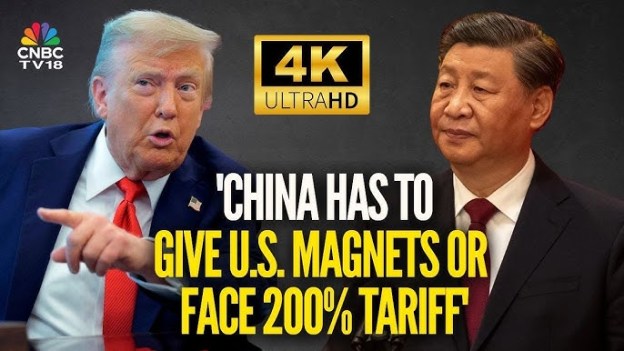
When China tightened restrictions on rare-earth exports in October 2025, stunning the United States, it was the latest reminder of Beijing’s control over an industry vital to the world economy. China’s dominance was decades in the making. Since the 1990s, China has used aggressive tactics to build up and maintain its lock over rare-earth minerals, which are essential to making magnets needed for cars, wind turbines, jet fighters and other products. Beijing provided financial support to the country’s leading companies, encouraged them to snap up rare-earth assets abroad, and passed laws preventing foreign companies from buying rare-earth mines in China. It eventually consolidated its domestic industry from hundreds of businesses into a few giant players, giving it further leverage over prices…

In 1995, Chinese state-linked companies received U.S. government approval to buy the rare-earth materials and magnet business started by General Motors, called Magnequench. In the following years, the Chinese ownership shut down all its rare-earth plants in the U.S. and shipped the equipment to China. Top American engineers were offered opportunities to go to China and set up new plants there.  “There were some colleagues that were dead set against it, saying they would never help China learn our technology,” said one magnet expert who ultimately agreed to go to China. “When I arrived, I could not believe what I was seeing. The number of new factories being built, and the rate at which they were being built, was mind-blowing,” he said….  By the mid-2000s, the U.S. rare-earth industry had been all but wiped out. Mountain Pass, America’s major rare-earth mine, had been shut down, as had virtually all American facilities that processed rare earths and turned them into magnets. China produced around 97% of the world’s rare earths, giving it what was effectively a global monopoly…

By 2021, the U.S. government was growing more worried about China’s ability to weaponize rare earths, causing prices to jump. Washington began offering large-scale funding for new rare-earth plants, including a refinery in Texas to be built by Lynas, an Australian rare-earth company. But in 2021, the Association of China Rare Earth Industry issued a warning: to China’s leadership If Beijing wanted to maintain “China’s absolute dominant position,” the country needed to relax state production quotas. Beijing responded in 2022 by pushing up output by 25%, the most in years, with another large increase the following year. Prices tanked, hitting the bottom lines of Western producers and leading some to unload assets…Beijing also introduced new measures preventing the transfer of its rare-earth processing technology abroad.

Excerpt from Jon Emont, How China Took Over the World’s Rare-Earths Industry, WSJ. Oct. 19, 2025

When Lakes Become a Soup of Minerals: the Fate of Great Salt Lake

In the summer 2024, a California startup plans to start construction on a project to suck up water from the Great Salt Lake, Utah, United States to extract one of its many valuable minerals: lithium, a critical ingredient in the rechargeable batteries used in electric vehicles. The water will then be reinjected back into the lake, which Lilac Solutions says addresses concerns about the damaging effects of mineral extraction. At its peak, Lilac says it will use a series of pipes to suck up 80,000 gallons of water a minute to harvest the mineral. The company plans to eventually produce up to 20,000 tons of battery-grade lithium a year.

The effort is one of dozens of projects across the U.S. racing to build up a domestic supply of lithium and other battery minerals as the Biden administration is dedicating billions of dollars to strengthening the U.S. battery supply chain and reducing reliance on China, which dominates the global production of battery minerals.

One common extraction method of lithium pumps briny underground water into vast man-made ponds, where evaporation separates lithium from other elements over 18 months or more. Mining companies in Chile and elsewhere have used the approach, which drains scarce water resources and can leave deposits of toxic residues.

Lilac says its technology is much faster, taking a matter of hours from the time of extraction, while preserving water levels. Its method deploys reusable ceramic “beads” that attach to lithium atoms to separate them from the brine.

At the Great Salt Lake, mineral extraction is nothing new. The lake has been shrinking for decades because of agricultural, industrial and other diversions of its feed waters. Extraction of minerals accounts for about 13% of its water diversion, according to a 2019 study. Meanwhile, the lake has become a concentrated soup of minerals, since it doesn’t have an outlet that lets it discharge the ones that flow into it.

Scott Patterson, The Great Salt Lake Is Full of Lithium. A Startup Wants to Harvest It, WSJ, Feb. 12, 2024

The Sacrificial Lambs of Green Energy

Lithium Americas, a Canadian company, has plans to build a mine and processing plant at Thacker Pass, near the southern tip of the caldera in Nevada. It would be America’s biggest lithium mine. Ranchers and farmers in nearby Orovada, a town of about 120 people, worry that the mine will threaten their water supply and air quality. Native American tribes in the region say they were not properly consulted before the Bureau of Land Management (BLM), a federal agency that manages America’s vast public lands, decided to permit the project. Tribes also allege that a massacre of their ancestors took place at Thacker Pass in 1865…

The fight over Thacker Pass is not surprising. President Joe Biden wants half of all cars sold in 2030 to be electric, and to reach net-zero emissions by 2050. These ambitious climate targets mean that battles over where and how to mine are coming to mineral-rich communities around the country. America is in need of cobalt, copper and lithium, among other things, which are used in batteries and other clean-energy technologies. As with past commodity booms, large deposits of many of these materials are found in America’s western states . America, of course, is not the only country racing to secure access to such materials. As countries pledge to go carbon-free, global demand for critical minerals is set to soar. The International Energy Agency, a forecaster, estimates that by 2040 demand for lithium could increase by more than 40 times relative to 2020. Demand for cobalt and nickel could grow by about 20 times in the same period.

Beyond its green goals, America is also intent on diversifying mineral supplies away from China and Russia (big producer of nickel), which—by virtue of its natural bounty and muscular industrial policy—has become a raw-materials juggernaut… The green transition has also turned the pursuit of critical minerals into a great-power competition not unlike the search for gold or oil in eras past. Mining for lithium, the Department of Energy (DOE) says, is not only a means of fighting climate change but also a matter of national security.

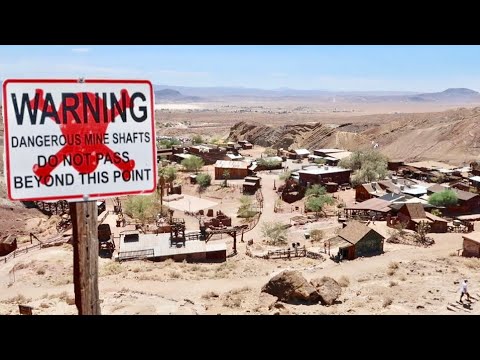
Westerners have seen all this before, and are wary of new mines…The economic history of the American West is a story of boom and bust. When a commodity bubble burst, boomtowns were abandoned. The legacy of those busts still plagues the region. In 2020 the Government Accountability Office estimated that there could be at least 530,000 abandoned hardrock-mine features, such as tunnels or waste piles, on federal lands. At least 89,000 of those could pose a safety or environmental hazard. Most of America’s abandoned hardrock mines are in 13 states west of the Mississippi River…

Is it possible to secure critical minerals while avoiding the mistakes of previous booms? America’s debates over how to use its public lands, and to whom those lands belong, are notoriously unruly. Conservationists, energy companies, ranchers and tribal nations all feel some sense of ownership. Total harmony is unlikely. But there are ways to lessen the animosity.

Start with environmental concerns. Mining is a dirty business, but development and conservation can coexist. In 2020 Stanford University helped broker a national agreement between the hydropower industry and conservation groups to increase safety and efficiency at existing dams while removing dams that are harming the environment….Many worry that permitting new development on land sacred to tribes will be yet another example of America’s exploitation of indigenous peoples in pursuit of land and natural resources. msci, a consultancy, reckons that 97% of America’s nickel reserves, 89% of copper, 79% of lithium and 68% of cobalt are found within 35 miles of Native American reservations.

TThe BLM is supposed to consult tribes about policies that may affect the tribes but the  consultation process is broken. Often it consists of sending tribes a letter notifying them of a mining or drilling proposal.

Lithium Americas has offered to build the town a new school, one that will be farther away from a road that the firm will use to transport sulphur. Sitting in her truck outside a petrol station that doubles as Orovada’s local watering hole, Ms Amato recalled one group member’s response to the offer: “If all I’m going to get is a kick in the ass, because we’re getting the mine regardless, then I may as well get a kick in the ass and a brand new school.”

Excerpt from America’s Next Mining Boom: Between a Rock and a Hard Place, Economist, Feb. 19, 2022

The Plight of Electric Cars: Cobalt Batteries and Mining

About 60% of the world’s cobalt is found in Congo, scattered across the copperbelt that stretches east into Zambia. The people of Kawama, Gongo grumble that too much land has been sold to mining firms. “We used to dig freely,” says Gerard Kaumba, a miner. “But now the government has sold all the hills.” There are still some sites where miners can turn up and dig, but they have to sell to whoever owns the concession. A sweltering day’s work might earn you $7. Many people have found they can make more at night, pilfering cobalt from industrial mines.

Glencore, a commodities giant with two mines in Congo, reckons that some 2,000 people sneak into its pits every day. Other companies have even more robbers to contend with. In 2019 Congolese soldiers chased thieves out of a mine owned by China Molybdenum where, it was reckoned, 10,000-odd people were then illegally digging. Sneaking into Glencore’s mines is hardest, says a Kawaman, as its guards do not collude with thieves—and often chase them away with dogs.

Congo’s industrial miners are not all angels.  Gécamines, the state-owned company, has enriched crooked politicians for half a century. Global Witness, a watchdog based in London, says Congo’s treasury lost $750m of mining revenues to graft between 2013 and 2015. ENRC, which has mines in Congo, has faced allegations of corruption and an investigation by Britain’s Serious Fraud Office (it denies wrongdoing). So has Glencore, which has worked with Dan Gertler, an Israeli billionaire. Mr Gertler, a close friend of a former Congolese president, Joseph Kabila, is under American sanctions… 

While big firms rake in millions, many of the little guys languish in jail. The prison in Kolwezi, the largest city in the mining region, is crammed with men caught stealing copper and cobalt. More than a hundred inmates occupy one stinking room, sitting in rows on the ground, each wedged between another’s legs. Prissoners are allowed to use the toilet only once a day, so they often urinate in their clothes

Excerpt from Cobalt blues: In Congo the little guys are jailed for stealing minerals. Economist, Oct. 17, 2020

An Impossible Made Possible: the Green Energy Revolution

Since the cost of renewable energy can now be competitive with fossil fuels. Government, corporate and consumer interests finally seem to be aligning.  The stock market has noticed. After years of underperformance, indexes that track clean-energy stocks bottomed out in late 2018. The S&P Global Clean Energy index, which covers 30 big utilities and green-technology stocks, is now up 37% over two years, including dividends, compared with 18% for the S&P 500.

This year’s Covid crisis will delay some renewable projects, but could speed up the energy transition in other ways. Alternative-energy spending has held up much better than spending on oil and gas. Globally, clean-energy investment is now expected to account for half of total investment in the entire energy sector this year, according to UBS.  Moreover, the crisis has pushed governments to spend money, including on renewable technologies. The massive stimulus plan announced by the European Union last month is decidedly green. The German government increased electric-car subsidies as part of its pandemic-related stimulus package rather than rolling out a 2009-style “cash-for-clunkers” program. China’s plans include clean-energy incentives, too.

Solar and wind are now mature technologies that provide predictable long-term returns. Big lithium-ion batteries, such as those that power Teslas, are industrializing rapidly. More speculatively, hydrogen is a promising green fuel for hard-to-decarbonize sectors such as long-haul transport, aviation, steel and cement.  Many big companies—the likes of Royal Dutch Shell, Air Liquide and Toyota —have green initiatives worth many hundreds of millions of dollars. They are, however, a relatively small part of these large businesses, some of whose other assets may be rendered obsolete by the energy transition… Early-stage electric-truck maker Nikola jumped on its market debut this month to a valuation at one point exceeding that of Ford.

Investors might be better off looking at the established specialists in between. Vestas is the world’s leading manufacturer of wind turbines. Orsted, another Danish company, has made the transition from oil-and-gas producer to wind-energy supplier and aspires to be the first green-energy supermajor. More speculatively, Canadian company Ballard has three decades of experience making hydrogen fuel cells.

Rochelle Toplensky, Green Energy Is Finally Going Mainstream, WSJ, June 24, 2020