Tag Archives: Microsoft underwater data center

Big Tech and Military: Microsoft – Israel Force

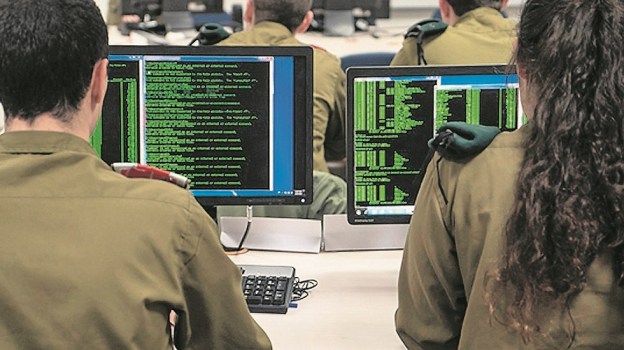
Microsoft terminated in September 2025 the Israeli military’s access to technology it used to operate a powerful surveillance system that collected millions of Palestinian civilian phone calls made each day in Gaza and the West Bank, according to Guardian. Microsoft told Israeli officials that Unit 8200, the military’s elite spy agency, had violated the company’s terms of service by storing the vast trove of surveillance data in its Azure cloud platform.

Equipped with Azure’s near-limitless storage capacity and computing power, Unit 8200 had built an indiscriminate new system allowing its intelligence officers to collect, play back and analyze the content of cellular calls of an entire population.

The project was so expansive that, according to sources from Unit 8200 – which is equivalent in its remit to the US National Security Agency – a mantra emerged internally that captured its scale and ambition: “A million calls an hour.

The enormous repository of intercepted calls – which amounted to as much as 8,000 terabytes of data – was held in a Microsoft data center in the Netherlands. Within days of the Guardian publishing, Unit 8200 appears to have swiftly moved the surveillance data out of the country.

Excerpt from Harry Davies and Yuval Abraham, Microsoft blocks Israel’s use of its technology in mass surveillance of Palestinians, Guardian, Sept. 25, 2025

The Quick and Dirty AI Boom

Nowhere else on Earth has been physically reshaped by artificial intelligence as quickly as the Malaysian state of Johor. Three years ago, this region next to Singapore was a tech-industry backwater. Palm-oil plantations dotted the wetlands. Now rising next to those tropical trees 100 miles from the equator are cavernous rectangular buildings that, all together, make up one of the world’s biggest AI construction projects…

TikTok’s Chinese parent company, ByteDance, is spending $350 million on data centers in Johor. Microsoft just bought a 123-acre plot not far away for $95 million. Asset manager Blackstone recently paid $16 billion to buy AirTrunk, a data-center operator with Asia-wide locations including a Johor facility spanning an area the size of 19 football fields. Oracle last week announced a $6.5 billion investment in Malaysia’s data-center sector, though it didn’t specify where. In all, investments in data centers in Johor, which can be used for both AI and more conventional cloud computing, will reach $3.8 billion this year, estimates regional bank Maybank.

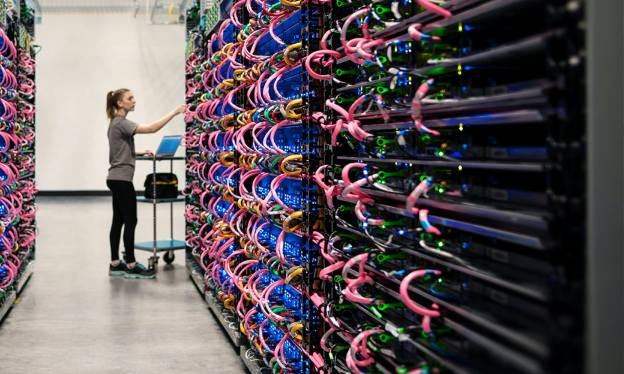
To understand how one of the first boomtowns of the AI era sprouted at the southern tip of the Malay Peninsula, consider the infrastructure behind AI. Tech giants want to train chatbots, driverless cars and other AI technology as quickly as possible. They do so in data centers with thousands of computer chips, which require a lot of power, as well as water for cooling…Northern Virginia became the world’s biggest data-center market because of available power, water and land. But supply is running low. Tech companies can’t build data centers fast enough in the U.S. alone. Enter Johor. It has plentiful land and power—largely from coal—and enough water. Malaysia enjoys generally friendly relations with the U.S. and China, reducing political risk for companies from the rival nations. The other important factor: location. Across the border is Singapore, which has one of the world’s densest intersections of undersea internet cables. Those are modern-age highways, enabling tech companies to sling mountains of data around the world.

Excerpt from Stu Woo, One of the Biggest AI Boomtowns Is Rising in a Tech-Industry Backwater, WSJ, Oct.  8, 2024

Who Owns the Real Information System

In January 2022, the head of the UK’s armed forces has warned that Russia submarine activity is threatening underwater cables that are crucial to communication systems around the world. Admiral Sir Tony Radakin said undersea cables that transmit internet data are ‘the world’s real information system,’ and added that any attempt to damage then could be considered an act of war.

The internet seems like a post- physical environment where things like viral posts, virtual goods and metaverse concerts just sort of happen. But creating that illusion requires a truly gargantuan—and quickly-growing—web of physical connections. Fiber-optic cable, which carries 95% of the world’s international internet traffic, links up pretty much all of the world’s data centers…

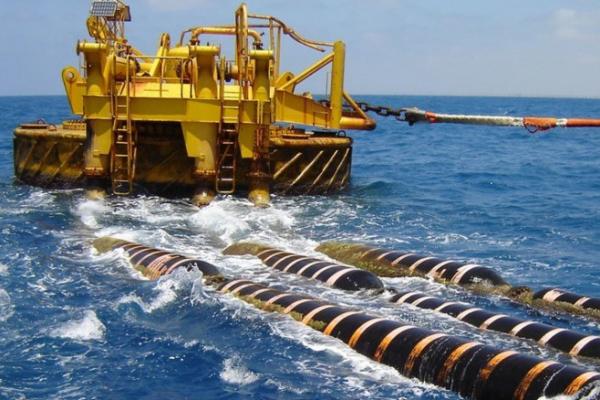
Where those fiber-optic connections link up countries across the oceans, they consist almost entirely of cables running underwater—some 1.3 million kilometers (or more than 800,000 miles) of bundled glass threads that make up the actual, physical international internet. And until recently, the overwhelming majority of the undersea fiber-optic cable being installed was controlled and used by telecommunications companies and governments. Today, that’s no longer the case.

In less than a decade, four tech giants— Microsoft, Google parent Alphabet, Meta (formerly Facebook ) and Amazon —have become by far the dominant users of undersea-cable capacity. Before 2012, the share of the world’s undersea fiber-optic capacity being used by those companies was less than 10%. Today, that figure is about 66%.  In the next three years, they are on track to become primary financiers and owners of the web of undersea internet cables connecting the richest and most bandwidth-hungry countries on the shores of both the Atlantic and the Pacific.

By 2024, the four are projected to collectively have an ownership stake in more than 30 long-distance undersea cables, each up to thousands of miles long, connecting every continent on the globe save Antarctica. In 2010, these companies had an ownership stake in only one such cable—the Unity cable partly owned by Google, connecting Japan and the U.S. Traditional telecom companies have responded with suspicion and even hostility to tech companies’ increasingly rapacious demand for the world’s bandwidth. Industry analysts have raised concerns about whether we want the world’s most powerful providers of internet services and marketplaces to also own the infrastructure on which they are all delivered. This concern is understandable. Imagine if Amazon owned the roads on which it delivers packages.

But the involvement of these companies in the cable-laying industry also has driven down the cost of transmitting data across oceans for everyone, even their competitors….Undersea cables can cost hundreds of millions of dollars each. Installing and maintaining them requires a small fleet of ships, from surveying vessels to specialized cable-laying ships that deploy all manner of rugged undersea technology to bury cables beneath the seabed. At times they must lay the relatively fragile cable—at some points as thin as a garden hose—at depths of up to 4 miles.

All of this must be done while maintaining the right amount of tension in the cables, and avoiding hazards as varied as undersea mountains, oil-and-gas pipelines, high-voltage transmission lines for offshore wind farms, and even shipwrecks and unexploded bombs…In the past, trans-oceanic cable-laying often required the resources of governments and their national telecom companies. That’s all but pocket change to today’s tech titans. Combined, Microsoft, Alphabet, Meta and Amazon poured more than $90 billion into capital expenditures in 2020 alone…

Most of these Big Tech-funded cables are collaborations among rivals. The Marea cable, for example, which stretches approximately 4,100 miles between Virginia Beach in the U.S. and Bilbao, Spain, was completed in 2017 and is partly owned by Microsoft, Meta and Telxius, a subsidiary of Telefónica, the Spanish telecom.  Sharing bandwidth among competitors helps ensure that each company has capacity on more cables, redundancy that is essential for keeping the world’s internet humming when a cable is severed or damaged. That happens around 200 times a year, according to the International Cable Protection Committee, a nonprofit group. 

There is an exception to big tech companies collaborating with rivals on the underwater infrastructure of the internet. Google, alone among big tech companies, is already the sole owner of three different undersea cables

Excerpts from Christopher Mims, Google, Amazon, Meta and Microsoft Weave a Fiber-Optic Web of Power, WSJ, Jan. 15, 2022
Another Wave of Colonization? Africa

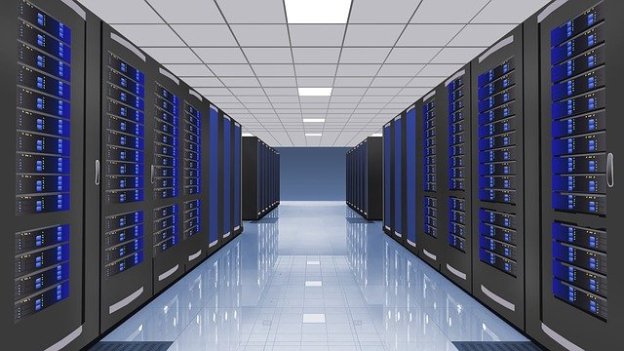
Most of Africa’s data are currently stored elsewhere, zipping down undersea cables that often make landfall in the French city of Marseille….An upheaval is overdue. Africa has more internet users than America, but only as much data-center space as Switzerland.  The boom is partly driven by regulation. Two dozen African countries have passed data-protection laws, or are planning to do so. They often require certain data, such as personal information, to be kept in the country. Another boost comes from competition, says Jan Hnizdo of Teraco, a leading data center in South Africa, where liberalization of the telecoms industry created space for such firms to flourish.

Capital is pouring in. Teraco is building Africa’s largest stand-alone data center in Johannesburg, with backing from foreign funds. Actis, a private-equity firm, is putting $250m into the industry, starting with a majority stake in a Nigerian company, Rack Centre. American investors founded Raxio with an eye on less fashionable markets, from Uganda to Mozambique.

Data centers need power, and lots of it. Keeping their equipment cool consumes almost as much energy as running it, which is why centers are usually in chilly places such as Scandinavia or America’s Pacific north-west. Most of Africa is hot and has a lot of power cuts…To keep servers running, many centers use polluting and expensive diesel generators. Yet the potential gains from offering better connectivity and faster internet services in Africa outweigh the difficulties. Microsoft and Amazon are bringing their cloud services to the region, and have opened data centres of their own in South Africa. Huawei has helped build one for the government of Senegal. Google and Facebook are both involved in projects to lay new cables around Africa’s coasts

Excerpts from Seeding the cloud: Data centers are Taking root in Africa, Economist, Dec. 4, 2021

Under-Water Data Centers: Reliable, Cool and Cheap

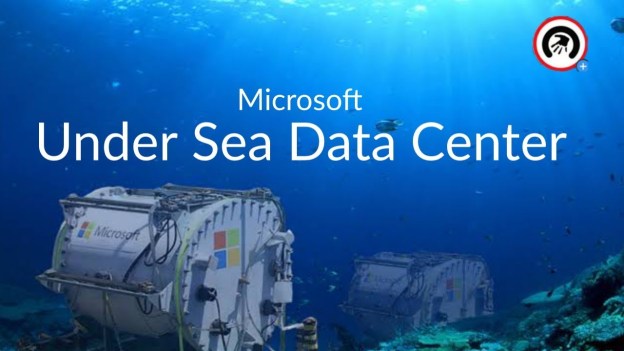
Earlier this year a ship hauled a large, barnacle-covered cylinder sporting a Microsoft logo from the seas off the Orkney islands. Inside were a dozen server racks, of the sort found in data-centres around the world. Sunk in 2018, and connected to the shore by cable, the computers had spent the past couple of years humming away, part of an experiment into the feasibility of building data-centres underwater.

On September 14th, 2020 Microsoft revealed some results. The aquatic data-centre suffered equipment failures at just one-eighth the rate of those built on land. Being inaccessible to humans, the firm could fill it with nitrogen instead of air, cutting down corrosion. The lack of human visitors also meant none of the bumping and jostling that can cause faults on land.

Microsoft hopes some of the lessons can be applied to existing, land-based data-centers. In the longer term, though, it notes that building underwater offers advantages beyond just reliability. Immersion in seawater helps with cooling, a big expense on land. Data-centres work best when placed close to customers. Land in New York or London is expensive, but nearby sea-floor is cheap. More than half the world’s population lives within 120 miles (192km) of the sea. Ben Cutler, the engineer in charge of the project, says submarine data-centres could be co-located with offshore wind farms as “anchor” customers. The cylinder fits in a standard shipping container, so could be deployed to remote places like islands, or even disaster areas to support relief efforts.

Excerpts from Cloud computing: Davy Jones’s data-center, Economist, Sept. 19, 2020